Florida Roof Escrow Holdbacks: 120% Funding and Contractor Docs
A roof escrow holdback works in Florida but only under narrow conditions. Your lender has to approve it in writing, the title company has to administer a real escrow agreement with hard deadlines, and the roof problem itself has to be minor enough that it doesn’t threaten insurability or habitability. If the roof has structural damage or active leaks into livable space, most lenders will insist on repairs before closing, not after. Your first move: get a written contractor estimate and take it to your loan officer before you sign anything.
TL;DR:
- Lenders require written approval and proper documentation, including a detailed scope and timelines, before funding a roof escrow holdback in Florida.
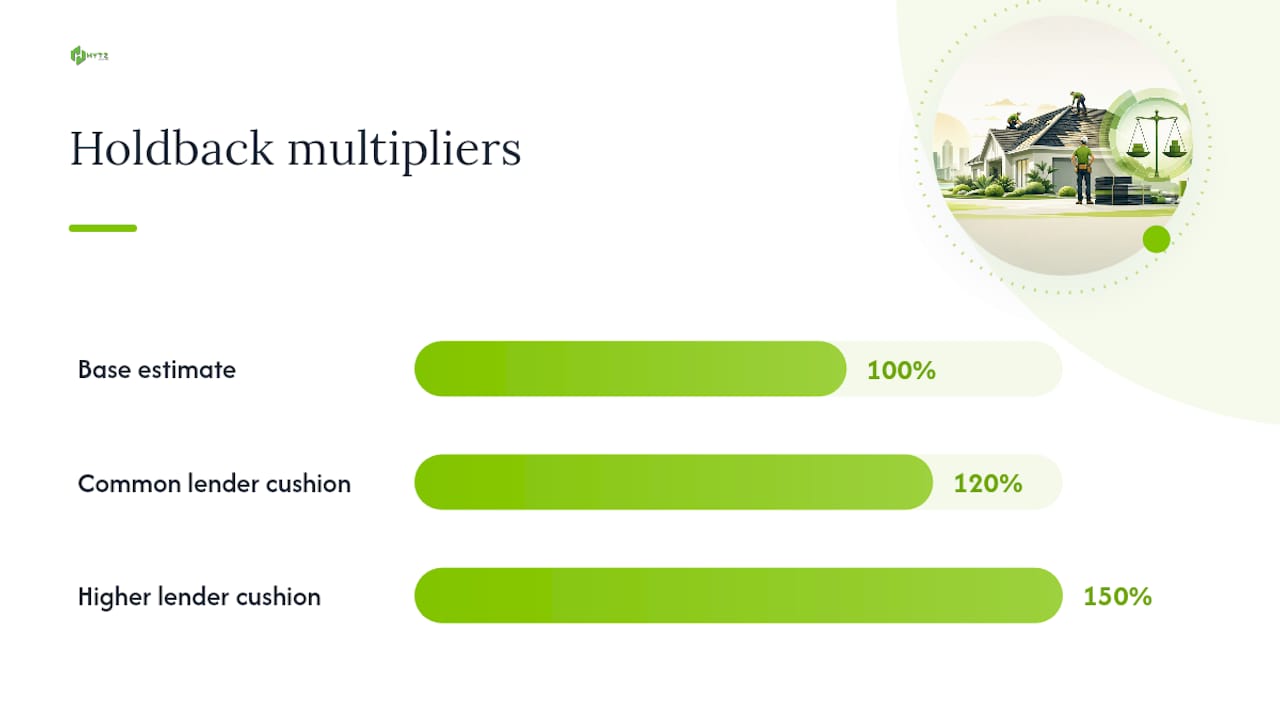
- The holdback amount should be based on a licensed contractor’s estimate multiplied by 120% to 150%, with allowances for permits and unexpected damages.
- Only minor, non-structural repairs that don’t threaten insurability qualify for escrow holdbacks, while active leaks or structural issues must be repaired before closing.
- The process mandates clear, measurable agreement terms, including deadlines, proof of work completion, permit sign-offs, and lender approval.
- Disputes over work completion often require legal intervention, so thorough upfront documentation and timely communication with lenders are critical.
Table of Contents
- What Is a Roof Escrow Holdback in Florida, and When Does It Apply?
- How Do Mortgage Lenders Handle Roof Holdbacks in Florida?
- How a Florida Roof Holdback Gets Set Up, Funded, and Released
- Who Pays the Holdback, and How Do You Set the Amount?
- Risks and Red Flags Buyers and Sellers Should Watch For
- Negotiation Checklist: What to Insist On Before You Sign
- Florida Roofing Realities That Shape a Holdback’s Odds of Approval
- When to Push for Repairs Before Closing vs. Accepting a Holdback
- Get a Lender-Ready Roof Estimate Before You Negotiate a Holdback
- Where to Verify Lender and Title Rules on Florida Roof Holdbacks
- Sources
- FAQ
What Is a Roof Escrow Holdback in Florida, and When Does It Apply?
A roof escrow holdback is money pulled from the seller’s proceeds at closing and parked in a segregated account until agreed repair work gets done. The funds come directly off the seller’s settlement statement, not out of the buyer’s pocket, and they sit with the title company or closing agent until release conditions are met. Florida title companies handle these deposits under state trust-account rules, which means the money has to stay separate from operating funds and can’t be released on a handshake.
The mechanism exists because closings in Florida rarely wait for perfect weather or perfect timing. A roofer booked solid through hurricane season, a permit stuck at the county office, a shingle color on backorder. These are the situations where a holdback makes sense.
Here’s where it typically gets used on Florida roof deals:
- Minor localized repairs, like a section of missing shingles or a cracked pipe boot
- Weather or supply delays pushing a scheduled repair past the closing date
- Pending permit sign-off on work that’s already substantially complete
- Punch-list items flagged during a Florida roof inspection that don’t affect the roof’s structural integrity
Contrast that with a roof that’s actively leaking into the attic, has exposed decking, or failed a wind mitigation inspection outright. Lenders and appraisers treat those as collateral problems, not paperwork problems. An escrow holdback keeps a transaction moving when repairs can’t finish before closing, but it was never meant to replace a roof that shouldn’t be insured in its current state.
How Do Mortgage Lenders Handle Roof Holdbacks in Florida?
Every financed Florida transaction needs one non-negotiable ingredient: the lender’s written sign-off. Real estate agents sometimes treat holdbacks as something buyer and seller can just agree to between themselves. That’s true for cash deals. It’s not true the moment a mortgage is involved, because the lender’s collateral is the house, and a damaged roof changes what that collateral is worth.
Statistic Callout: Rocket Mortgage requires escrow holdback accounts to be funded at 120% of the estimated repair cost, a cushion built in to cover cost overruns without reopening negotiations mid-repair. FHA and VA loans layer on their own program rules, often with stricter caps or specific documentation requirements before a holdback gets approved at all.
Lenders generally look at three things before approving a roof holdback in Florida:
- Whether the roof issue affects the home’s current insurability
- Whether the scope of work is clearly defined and priced by a licensed contractor
- Whether the funding cushion is large enough to guarantee full completion, not just a partial fix
A loan sold to Fannie Mae or Freddie Mac after closing adds another wrinkle. The funding cushion Rocket Mortgage builds in isn’t arbitrary. GSE guidelines are strict about what a loan file can carry once it’s sold on the secondary market, so a lender may refuse a holdback structure that would otherwise be fine on a portfolio loan.
Pro Tip: Call your loan officer before you draft holdback language into the purchase agreement. Getting verbal interest isn’t the same as getting written approval, and title companies won’t fund an escrow account on a maybe.
How a Florida Roof Holdback Gets Set Up, Funded, and Released
The process runs in a specific order, and skipping a step is usually what turns a simple holdback into a dispute. Here’s the sequence Florida title companies and agents typically follow:
- Get a written contractor estimate. This becomes the basis for the entire holdback amount and scope.
- Draft the holdback agreement. It needs the exact repair scope, the dollar amount held, a hard completion deadline, and what happens if the seller misses it.
- Fund the account at closing. The title company deducts the agreed amount from the seller’s proceeds and moves it into a segregated escrow account, following ALTA best practices and Florida trust-account rules.
- Complete the repair. The seller (or whoever’s contractually responsible) hires a licensed roofer to do the work within the deadline.
- Submit release documentation. Release typically requires a paid invoice and a final inspection or sign-off from the buyer, and sometimes the lender, depending on the agreement.
- Title company disburses the funds. Once conditions are met, the escrow agent releases the holdback to the party entitled to it, usually the contractor or the seller as reimbursement.
If buyer and seller disagree about whether the work was done to spec, the title company doesn’t get to decide who’s right. Florida escrow agents facing a genuine dispute will often file an interpleader action, asking a court to determine who gets the funds. That process takes time and money, which is exactly why a clean agreement upfront matters more than people expect.
Who Pays the Holdback, and How Do You Set the Amount?
The seller almost always funds the holdback, and it comes straight out of their sale proceeds at the closing table. In some cases a seller who wants to close fast will deposit the funds directly before closing rather than waiting for it to come off the settlement statement, but the money is still theirs either way.
Sizing the holdback correctly avoids a second negotiation later. The starting point is a written contractor estimate, then add the lender’s required cushion on top:
- Base the holdback on a licensed contractor’s itemized, written estimate, not a verbal ballpark.
- Add the lender-required multiplier, commonly 120% to 150% of the estimate, to cover overruns.
- Build in an allowance for hidden damage discovered once repairs start, especially on older Tampa Bay roofs with unknown decking condition.
- Include permit fees in the total if the scope requires a pulled permit.
Pro Tip: If a buyer ends up fronting the repair cost and getting reimbursed from escrow later, get that reimbursement mechanism written into the agreement in dollar terms, not vague language like “actual costs.” Vague language is what turns a $2,000 shingle repair into a legal fee.
For buyers who’d rather size their own expectations before negotiating, a Florida roof replacement cost breakdown is a useful gut check on whether a seller’s estimate is realistic.
Risks and Red Flags Buyers and Sellers Should Watch For
The single biggest risk in any roof holdback is a lender pulling funding approval mid-transaction because the roof affects insurability or safety. That’s not a paperwork glitch. It can stall or kill the closing entirely if it surfaces late.
Watch for these red flags before you agree to a holdback instead of insisting on pre-closing repair:
- Vague release conditions. “Repairs completed to buyer’s satisfaction” is not enforceable. Insist on objective proof: paid invoices, a final inspection report, permit sign-off.
- No permit pulled. In Miami-Dade and other high-velocity hurricane zone jurisdictions, roof work often requires Miami-Dade NOA-approved materials and a permit that adds real time to the schedule.
- Unlicensed or uninsured contractors. A cheap bid from an unlicensed crew can void a manufacturer warranty and give the lender grounds to reject the release documentation outright.
- No completion deadline. A holdback with no hard date can leave funds tied up in escrow for months while both sides point fingers.
A holdback is a funded guarantee, not a permission slip to leave a real defect unrepaired. Treat it that way in every clause you write.
Negotiation Checklist: What to Insist On Before You Sign
Every term in a roof holdback agreement should be measurable, dated, and enforceable. Vague language is where these deals fall apart later, usually in front of a judge instead of at the closing table.
Work through these in order when drafting or reviewing the agreement:
- Attach the contractor’s written quote as an exhibit. The scope of work should match it line for line, not summarize it loosely.
- Set a hard completion deadline, stated in days from closing, not “as soon as possible.”
- Add default and automatic-release language. Spell out what happens to the funds if the deadline passes without completed work.
- Require proof of licensing and insurance from the contractor doing the work, plus invoices explicitly marked “paid in full.”
- Require permit sign-off where applicable, and a buyer inspection sign-off before release.
- Add a lender sign-off clause if the transaction is financed, matching whatever written approval the lender already gave.
- Include the title company’s specific escrow instructions by reference, so there’s no ambiguity about who administers the release.
- Address leftover funds. State plainly whether unused holdback money returns to the seller or gets split, so nobody’s guessing after the work wraps.
Pro Tip: Ask your agent to include a “time is of the essence” clause on the deadline. Florida courts treat that phrase as a real trigger for default remedies, not just a suggestion.
Florida Roofing Realities That Shape a Holdback’s Odds of Approval
Timelines matter more in a holdback than most buyers expect. A localized shingle repair or a flashing fix in Tampa Bay often completes within days, which fits neatly inside a short escrow window. A full permitted re-roof is a different animal entirely: multi-week scheduling, inspection windows, and material lead times that can make a tight holdback deadline unrealistic from the start.
Licensed contractors matter here too, and not just for quality. Lenders and title companies look more favorably on holdbacks tied to work from a GAF Master Elite contractor with manufacturer-backed warranties, because that status signals the repair will hold up to inspection and won’t unravel the deal later.
A documentation package that actually satisfies release conditions should include:
- An itemized invoice marked paid
- Before-and-after photos of the completed work
- Permit and inspection sign-off from the local building department
- A final inspection report confirming the scope was completed as specified
Local code adds another layer. In high velocity hurricane zone jurisdictions, Miami-Dade NOA requirements can restrict which materials qualify for repair, and that restriction alone can make a fast holdback timeline impossible if the approved product isn’t in stock.
When to Push for Repairs Before Closing vs. Accepting a Holdback
Structural roof damage, active leaks, or anything that threatens habitability deserves a firm line: get it fixed before closing, full stop. A holdback is not the tool for that fight, and pushing for one anyway usually just delays the inevitable while the buyer absorbs the risk of an unrepaired roof over their head.
Where a holdback earns its place is the narrow band of legitimate, well-scoped, non-structural work. Weather delays, a backordered material, a permit still moving through the county. In those cases, insist on written lender approval and a release checklist tight enough that nobody’s arguing about what “done” means. Hire licensed local roofers who can produce permit-ready documentation from day one. That single choice does more to protect a holdback than any clause a lawyer can draft after the fact.
— Anthony
Get a Lender-Ready Roof Estimate Before You Negotiate a Holdback
Some roofing contractors provide Florida buyers and sellers an itemized, permit-ready estimate that title companies and lenders can act on immediately, not a verbal ballpark that stalls the closing.
A qualified roofing contractor can pull permits, complete repairs, and provide the documentation package a release requires: written scope, timeline, permit sign-off, and a final inspection report. If you’re heading into a closing with a roof condition on the table, ask for a written repair estimate before you finalize any holdback language, so the number in your agreement matches what the work will actually cost. Buyers weighing a full replacement instead of a patch repair can also check current roof replacement pricing to size the holdback correctly from the start.
Where to Verify Lender and Title Rules on Florida Roof Holdbacks
Program-specific limits change by lender and loan type, so confirm the current rules directly. Rocket Mortgage’s escrow holdback guidance covers funding cushions and standard release requirements. Barnes Walker’s guide to Florida title practices explains how escrow agreements get administered locally. Redfin’s escrow holdback explainer breaks down the basic mechanics in plain terms if you’re new to the concept.
Sources
- Escrow holdback: What it is and how it works | Redfin
- Escrow holdback: How it can help you close on time | Rocket Mortgage
- A Realtor’s Guide to the Escrow Holdback | Barnes Walker
FAQ
Who Pays for an Escrow Holdback?
The seller pays, since the funds come directly out of their sale proceeds at closing. In some cases a seller deposits the money before closing instead, but the seller remains the funding source either way.
What Are the Guidelines for a Roof Escrow Holdback in Florida?
The core guidelines are lender written approval, a segregated escrow account held by the title company, and a written agreement specifying scope, deadline, and release proof. For financed deals, lenders often require the account funded above the repair estimate, commonly around 120%, to cover overruns.
What Are the Escrow Deposit Laws in Florida?
Florida requires title companies and brokers to hold escrow deposits in trust accounts under fiduciary duty, with defined dispute resolution processes when buyer and seller disagree. Funds can’t be released outside the agreed conditions without both parties’ consent or a court order.
What Does Escrow Holdback Mean?
An escrow holdback means a portion of the seller’s proceeds is withheld at closing and placed in a neutral third-party account until agreed repairs are verified complete. It exists to keep a sale moving when work can’t finish before the closing date, not to excuse skipping the repair altogether.
Can Hytz Roofing Help With Documentation for a Roof Holdback?
Yes. Hytz Roofing provides itemized estimates, permit handling, and final inspection reports that title companies and lenders typically require to release held funds for repair work.