Tampa Bay Homeowners: 6 Steps to Beat a Florida Roof Age Nonrenewal
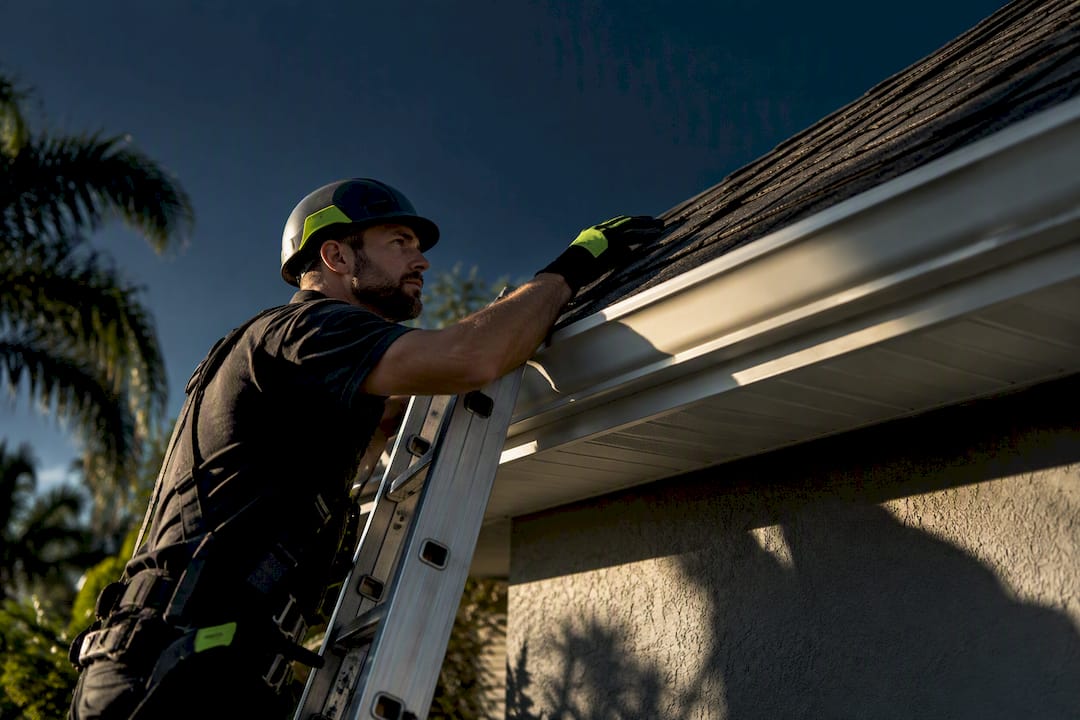
Under Florida law, your roof’s calendar age alone cannot be the sole reason an insurer denies or nonrenews your homeowners policy if that roof is under 15 years old. For roofs 15 years or older, Florida Statute §627.7011 requires insurers to allow a homeowner-paid inspection, and if an authorized inspector documents at least 5 more years of useful life, the insurer cannot refuse coverage based on age.
TL;DR:
- Roofs under 15 years old cannot be denied coverage solely based on age in Florida, but damage or poor condition still justifies a denial.
- For roofs 15 years or older, homeowners must pay for an inspection to prove at least five years of remaining useful life, preventing age-based nonrenewals.
- Licensed inspectors such as contractors or engineers must provide detailed reports with an explicit remaining useful life estimate to validate eligibility.
- If the inspection shows fewer than five years of remaining useful life, options include replacement, shifting to actual cash value coverage, or seeking other insurance carriers.
- Costs for inspection range from $150 to $400, with replacement costs in Tampa Bay generally between $9,000 and $50,000 depending on material and size.
Table of Contents
- What Does Florida’s Roof Age Insurance Law Actually Require?
- Who Can Legally Inspect Your Roof, and How Is Its Age Calculated?
- What Counts as 5+ Years of Remaining Useful Life?
- What Happens After the Inspection: Replacement, ACV, or Switching Carriers?
- Your Step-by-Step Plan When a Roof Age Notice Arrives
- A Tampa Bay Contractor’s View on Why Roofs Fail Inspection
- A Roofer’s Honest Take on Timing and Expectations
- Getting a Qualifying Inspection or Replacement Done Right
- Where to Verify Florida’s Roof Age Rules Yourself
- Sources
- FAQ
What Does Florida’s Roof Age Insurance Law Actually Require?
The rule sounds simple, but the details decide whether it protects you or leaves you exposed. Florida Statute §627.7011 says an insurer “may not refuse to issue or renew” a homeowners policy solely because a roof is less than 15 years old. That single word, “solely,” matters. It doesn’t stop an insurer from acting on a genuinely damaged or poorly maintained roof. It stops them from using age as a blanket excuse.
Once your roof hits the 15-year mark, the law shifts. The insurer must give you the chance to pay for an inspection from an authorized inspector. If that inspector documents 5 or more years of remaining useful life, the insurer cannot deny or nonrenew your policy based on age alone.
A few boundaries matter here:
- The protection applies to homeowners policies issued or renewed on or after July 1, 2022. Older policy terms aren’t covered retroactively.
- Commercial policies and certain surplus lines products fall outside this specific statute.
- Insurers keep the right to act on documented condition problems. Active leaks, missing shingles, or exposed underlayment can still justify a denial, even on a 10 year old roof.
- The law protects against age discrimination. It doesn’t guarantee your premium stays flat or that your insurer can’t adjust terms.
That last point trips up a lot of homeowners. Passing the inspection doesn’t mean anything changes. It means the insurer can’t use your roof’s birthday as the reason to cut you loose.
Who Can Legally Inspect Your Roof, and How Is Its Age Calculated?
Florida law names specific professionals qualified to perform this inspection, and it matters who signs the report. The statute recognizes:
- A Florida-licensed roofing contractor
- A licensed home inspector
- A licensed general contractor
- A professional engineer
- A licensed architect
You pay for this inspection, not the insurer. Costs typically run $150 to $400 depending on roof size, material, and how thorough the report needs to be. Tampa Bay pricing tends to sit toward the higher end for tile or metal roofs, since inspectors need more time to check flashing and fastener patterns than on a standard asphalt shingle roof.
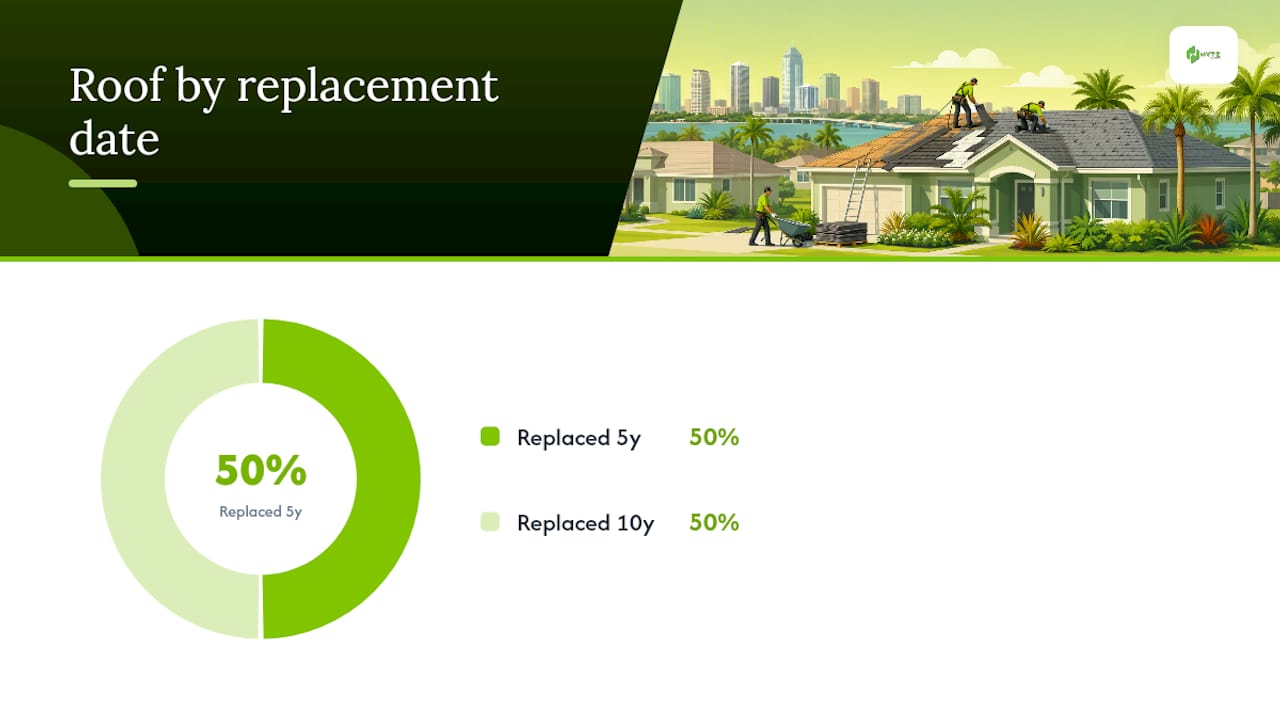
Age calculation trips people up more than anything else in this statute. Partial replacements complicate things. If you replaced half your roof five years ago and the other half ten years ago, the “age” for insurance purposes is usually tied to whichever section wasn’t fully redone, unless documentation shows the full surface eventually reached 100% replacement. That’s why permit records matter more than memory or receipts alone.
What Counts as 5+ Years of Remaining Useful Life?
Remaining useful life, or RUL, is the inspector’s professional estimate of how many more years your roof can perform before it needs full replacement. It’s not a guess. A qualifying report has to back up that number with specific observations, not a vague sign-off.
Inspectors typically evaluate:
- Watertightness — evidence of active or past leaks in the attic or ceiling
- Flashing condition — around chimneys, vents, and roof-to-wall transitions, where Tampa Bay’s afternoon storms find weak points first
- Underlayment integrity — the moisture barrier beneath the visible surface
- Covering condition — granule loss on shingles, cracked tiles, or rust and seam separation on metal
- Attachment and wind rating — whether fasteners and installation still meet the wind resistance the roof was rated for
- Ventilation — poor attic airflow accelerates deterioration from the inside out
Pro Tip: Ask your inspector, in writing, to state the remaining useful life explicitly in years, confirm code compliance, and attach dated photos of flashing, valleys, and any attic staining. A report that says “roof appears serviceable” without a number won’t satisfy most insurers or hold up in a dispute.
Without that explicit RUL figure, some insurers will treat the report as incomplete and proceed with nonrenewal anyway.
What Happens After the Inspection: Replacement, ACV, or Switching Carriers?
If your report shows 5 or more years of remaining life, the insurer generally cannot deny or nonrenew you for age. That said, they may still adjust your premium, change your deductible structure, or request minor repairs to specific defects the inspector flagged.
If the RUL comes back under 5 years, your realistic options narrow to a few paths:
- Replace the roof. This resets the age clock entirely and is often the cleanest way back to standard coverage.
- Accept Actual Cash Value (ACV) coverage on the roof. Many insurers will keep you insured but shift roof-specific claims to depreciated value payouts instead of full replacement cost.
- Shop other carriers, including Citizens Property Insurance or the surplus lines market, which sometimes accept roofs that standard carriers won’t.
- File a complaint with the Florida Office of Insurance Regulation if you believe the insurer violated the statute outright, such as denying you solely for age without offering the inspection option.
Reroofing costs vary by material and roof size, and Tampa Bay pricing runs anywhere from roughly $9,000 for a straightforward asphalt shingle replacement up toward $50,000 for a full tile roof on a larger home, according to Hytz Roofing’s published cost guide. Get multiple quotes before committing, since material choice and roof complexity swing the number significantly.
Your Step-by-Step Plan When a Roof Age Notice Arrives
Insurers commonly send notice 60 to 120 days before renewal when a roof is approaching or past the 15-year mark. That window is your runway, not a countdown to panic.
- Read the notice date carefully and calendar the deadline for your response.
- Pull permit records from your county’s building department to establish your roof’s actual replacement date. Most Florida counties have searchable online permit portals by address.
- Gather existing documentation: prior inspection reports, contractor invoices, and any photos from past repairs.
- Schedule an inspection with a Florida-licensed contractor, home inspector, engineer, or architect, and confirm upfront that the report will state an explicit RUL figure.
- Submit the report to your insurer before the deadline, keeping a copy for your own records.
- If replacement is needed, use a licensed contractor and pull a proper permit. Unpermitted work won’t hold up as proof of a reset age clock later.
Budget roughly $150 to $400 for the inspection itself, and if replacement becomes necessary, revisit those material-based cost ranges above while accounting for your specific roof size and pitch.
A Tampa Bay Contractor’s View on Why Roofs Fail Inspection
In our experience across Tampa Bay, roofs rarely fail these inspections because of age by itself. They fail because of flashing that’s pulled away from a chimney, underlayment that degraded faster than expected under years of afternoon heat, or granule loss so widespread the shingle mat is exposed. Patchwork repairs from a previous owner often make things worse, since inconsistent partial fixes can confuse an inspector trying to pin down when 100% of the surface was actually replaced.
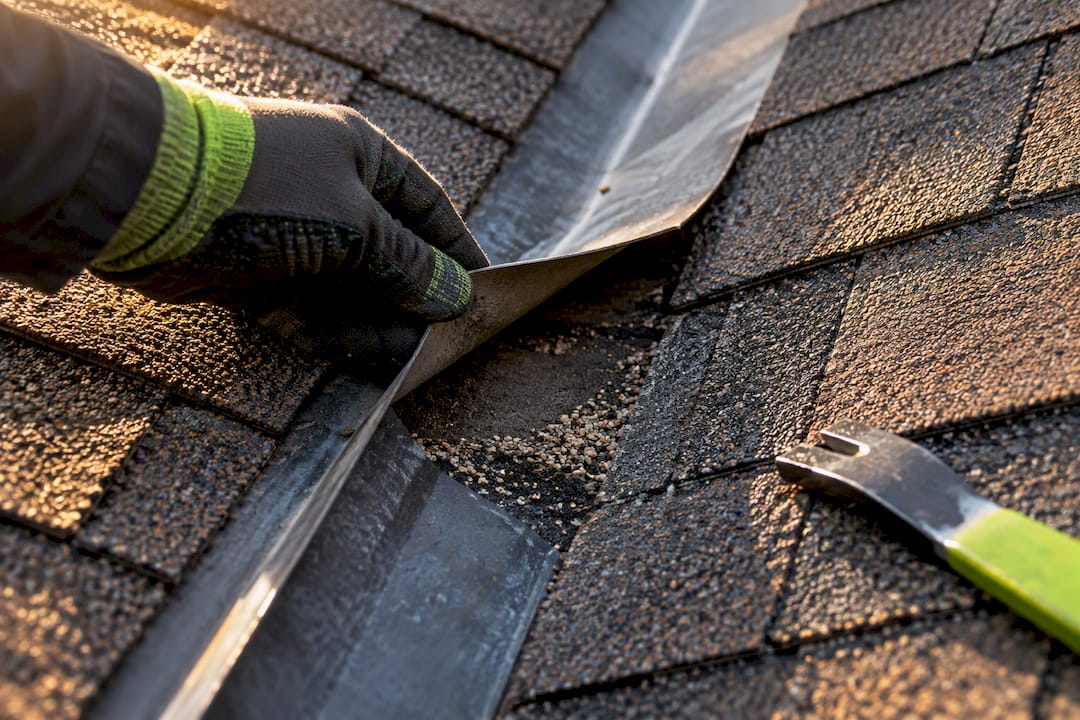
Pro Tip: If you’ve done a phased roof replacement over several years, keep every permit from each phase. A contractor can use that paper trail to demonstrate the roof eventually reached full, code-compliant replacement, which can meaningfully help your age calculation.
A Roofer’s Honest Take on Timing and Expectations
Most homeowners wait for the renewal notice before thinking about their roof’s age. That’s backwards in a state where hurricane exposure makes roof condition a financial issue, not just a legal checkbox. If your roof is pushing past 12 or 13 years, get ahead of it. In most cases across Central Florida, replacing a roof before it forces an insurance crisis costs less stress and less money than scrambling after a nonrenewal notice. Document everything, and only work with licensed contractors who pull real permits. That paperwork is what protects you later.
— Anthony
Getting a Qualifying Inspection or Replacement Done Right
Hytz Roofing is the direct alternative to guessing your way through an insurance roof-age notice. Our team performs certified roof inspections that document remaining useful life clearly, with photos and code-compliance notes built in, so your report actually satisfies what insurers are looking for.
If your inspection points toward replacement, we handle the full process: permit-ready documentation, licensed installation, and direct insurance-claim assistance if storm damage is part of the picture. Roof replacement costs typically run $9,000 to $30,000 depending on size and material, detailed in our cost guide. If the fix is smaller, our repair services start in the several hundreds to low thousands of dollars range for many jobs. Request an inspection or estimate today, and get paperwork that actually holds up with your insurer.
Where to Verify Florida’s Roof Age Rules Yourself
- Florida Statutes §627.7011 — the full statutory text and effective-date language
- Florida Senate Bill 76 — legislative history behind the 15-year rule
- FEMA’s roof systems fact sheet — technical background on roof assemblies and failure modes
This article is general information, not a substitute for advice from a qualified financial advisor. Consult a qualified financial professional about your own circumstances before acting on anything here.
Sources
- Florida Statutes §627.7011
- Florida Senate — Statute text and legislative summary for §627.7011
- Florida Roof Replacement Laws: Insurance and Permits - LegalClarity
FAQ
Will insurance cover a 15-year-old roof in Florida?
Yes, but the insurer can require a paid inspection first. If that inspection documents 5 or more years of remaining useful life under Florida Statute §627.7011, the insurer cannot deny or nonrenew coverage based on age alone.
Is a 13-year-old roof insurable in Florida?
Yes. Roofs under 15 years old are protected from age-based denial without any inspection requirement at all. Insurers can still act on documented damage or poor condition, but not on age by itself.
Will insurance cover a 22-year-old roof?
It depends entirely on the inspection outcome, not the age itself. If an authorized inspector finds fewer than 5 years of remaining useful life, the insurer can require replacement, shift to ACV coverage, or decline the policy; if the roof still has 5+ years of life left, age alone cannot be the reason for denial.
What is Florida’s new law about roofs and insurance?
Florida Statute §627.7011, which took effect for policies issued or renewed on or after July 1, 2022, bars insurers from refusing homeowners coverage solely because a roof is under 15 years old, and it guarantees a homeowner-paid inspection option once a roof hits that 15-year mark. Hytz Roofing’s inspection reports are built to meet the documentation standard insurers expect under this rule, including an explicit statement of remaining useful life.