
Roofing Loan Types Compared: Your 2026 Guide
Roofing loan types outline common financing options, key pros and eligibility considerations, and how to compare repayment terms for roof repairs or replacement.
When your roof needs work, figuring out how to finance a roof can feel just as stressful as the repair itself. Here’s the short version: you have five main options, and the right one depends on how urgent the job is and where your finances stand.
- Personal loans: Fast funding (often 1–3 days), no collateral needed, fixed APRs between 7.99% and 24%. Best for emergencies.
- Home equity loans: Fixed rates between 8% and 9%, but slower to fund (2–6 weeks). Best for large planned replacements.
- HELOCs: Revolving credit with variable rates (8%–10%), with a 2–6 week approval timeline. Good for phased projects.
- Contractor financing: Same-day funding with possible 0% promotional rates but often higher long-term interest rates; watch for deferred interest and potential liens.
- Credit cards: Instant access but with high ongoing APRs between 18% and 29% after any promo period. Best for small repairs only.
Urgency is the first filter. If your roof is actively leaking, you need funding today, not in six weeks.
Table of Contents
- How each roofing loan type stacks up
- Smart strategies to keep your roofing loan costs down
- Why Hytzroofing’s credentials matter when you’re financing a roof
- Key Takeaways
How each roofing loan type stacks up
Understanding the differences between roof financing options saves you real money. Here’s a detailed look at each one.
Personal loans
Personal loans are unsecured, meaning your home is never on the line. They fund quickly and can offer varying loan amounts with fixed rates. Qualification generally depends on credit score, and origination fees vary by lender, so compare carefully.
Home equity loans
A home equity loan gives you a lump sum at a fixed rate, secured by your property, making it important to consider options like secured homeowner loans when planning your financing. Repayment terms can be long, keeping monthly payments lower. The closing process takes multiple weeks and requires a property appraisal. Minimum equity and credit score requirements typically apply. Not suitable for urgent repairs.

HELOCs
A HELOC works like a credit card backed by your home equity. You draw what you need during a draw period (often 5–10 years) and repay over a longer term. Variable rates run 8%–10%, and the same 2–6 week approval timeline applies. HELOCs work well if you’re funding multiple home improvement projects over time, not a single urgent repair. For more on how term length affects cost, it’s worth planning carefully before you commit.
Contractor financing
Some roofing contractors offer financing directly, often through third-party lenders. You might see 0% promotional deals and same-day approval, which sounds great. But contractor financing can carry deferred interest clauses, meaning if you don’t pay the full balance before the promo period ends, you owe all the back interest at once. Some arrangements also place a lien on your home until the loan is repaid. Always read the fine print.
Credit cards
Credit cards are the fastest option and can be suitable for small repairs, especially with a 0% intro APR card. After the promo period, rates typically increase significantly, making carrying a balance costly.
Government-backed loans
If your credit isn’t strong, FHA Title 1 loans allow borrowing up to $7,500 unsecured for home improvements. The FHA 203(k) program lets you roll larger repair costs into a refinanced mortgage. USDA Section 504 loans offer 20-year terms at 1% interest, up to $40,000, for eligible low-income homeowners. These programs have strict eligibility requirements based on income, property type, and location.
Roofing loan comparison at a glance:
| Loan Type | Best Use Case | Funding Speed | Interest Rate | Advantages | Disadvantages |
|---|---|---|---|---|---|
| Personal loan | Emergency repairs | 1–3 days | 7.99%–24% fixed APR | No collateral, fast | Higher rate than equity loans |
| Home equity loan | Large planned projects | 2–6 weeks | 8%–9% fixed | Low rate, long terms | Slow, home as collateral |
| HELOC | Phased improvements | 2–6 weeks | 8%–10% variable | Flexible draws | Variable rate, slow funding |
| Contractor financing | Convenience-focused | Same day | 0%–29% promotional to high APR | Fast, promotional rates | Deferred interest, lien risk |
| Credit card | Small repairs | Instant | 18%–29% APR | Immediate access | Very high ongoing APR |
| Government loans | Low-income homeowners | Weeks | 1%–varies | Low rates, grants available | Strict eligibility |
Smart strategies to keep your roofing loan costs down
Choosing the right loan type is step one. Keeping total costs low is step two.
Use your savings first. Financial advisors consistently recommend applying personal savings toward deductibles and upfront costs before borrowing anything. Every dollar you put in reduces your principal and the interest you’ll pay over the life of the loan.
Match the loan to the urgency. For an emergency leak, prioritize fast funding over rate. For a planned full replacement, take the extra weeks to secure a home equity loan or HELOC at a lower rate. Rushing into a high-APR personal loan for a non-urgent job costs you unnecessarily.
- Pay off any promotional-rate loan before the promo period ends to avoid deferred interest penalties.
- Avoid carrying a credit card balance past the intro APR window.
- Make extra payments when possible on personal loans; most have no prepayment penalties.
- Check whether deferred payment options fit your cash flow before committing.
Your credit score directly affects your rate. A score above 700 gets you the best personal loan rates. Scores between 620 and 680 are typically the floor for home equity products. If your score is below 620, a personal loan or government-backed option may be your most realistic path.
Pro Tip: Get at least three contractor estimates before applying for any loan. Borrowing only what you need prevents over-borrowing and cuts the total interest you’ll pay over the loan term.
Don’t overlook tax implications. Interest on home equity loans and HELOCs may be tax-deductible when the funds are used for home improvements, unlike personal loan interest. Consult a tax professional to see if this applies to your situation.
Why Hytzroofing’s credentials matter when you’re financing a roof
Financing a roof is a significant commitment. You want to know the contractor you’re paying is worth every dollar.
Hytzroofing holds the GAF Master Elite® Contractor designation, which is earned by a select percentage of roofing contractors across North America. That status requires meeting GAF’s standards for licensing, insurance, ongoing training, and community reputation. Hytzroofing went further, earning the GAF President’s Club Award, reserved for the top-performing Master Elite contractors.
Here’s what backs every Hytzroofing project:
- 2024 Brava Roof Tile Excellence Award for outstanding synthetic roofing installation quality
- ⭐ Angi Super Service Award 2025, reflecting consistently high consumer ratings
- ✅ BBB Accredited, A+ rating
- Florida Contractor License #CCC1332551
- ️ GAF Certified™ Commercial Contractor status for flat and low-slope systems
- Full general liability insurance and workers’ compensation coverage
When you’re taking out a loan to fund a roofing project, working with a trusted Tampa roofing contractor means your investment is protected by manufacturer-backed warranties and verified installation standards. That’s not something every contractor can offer.
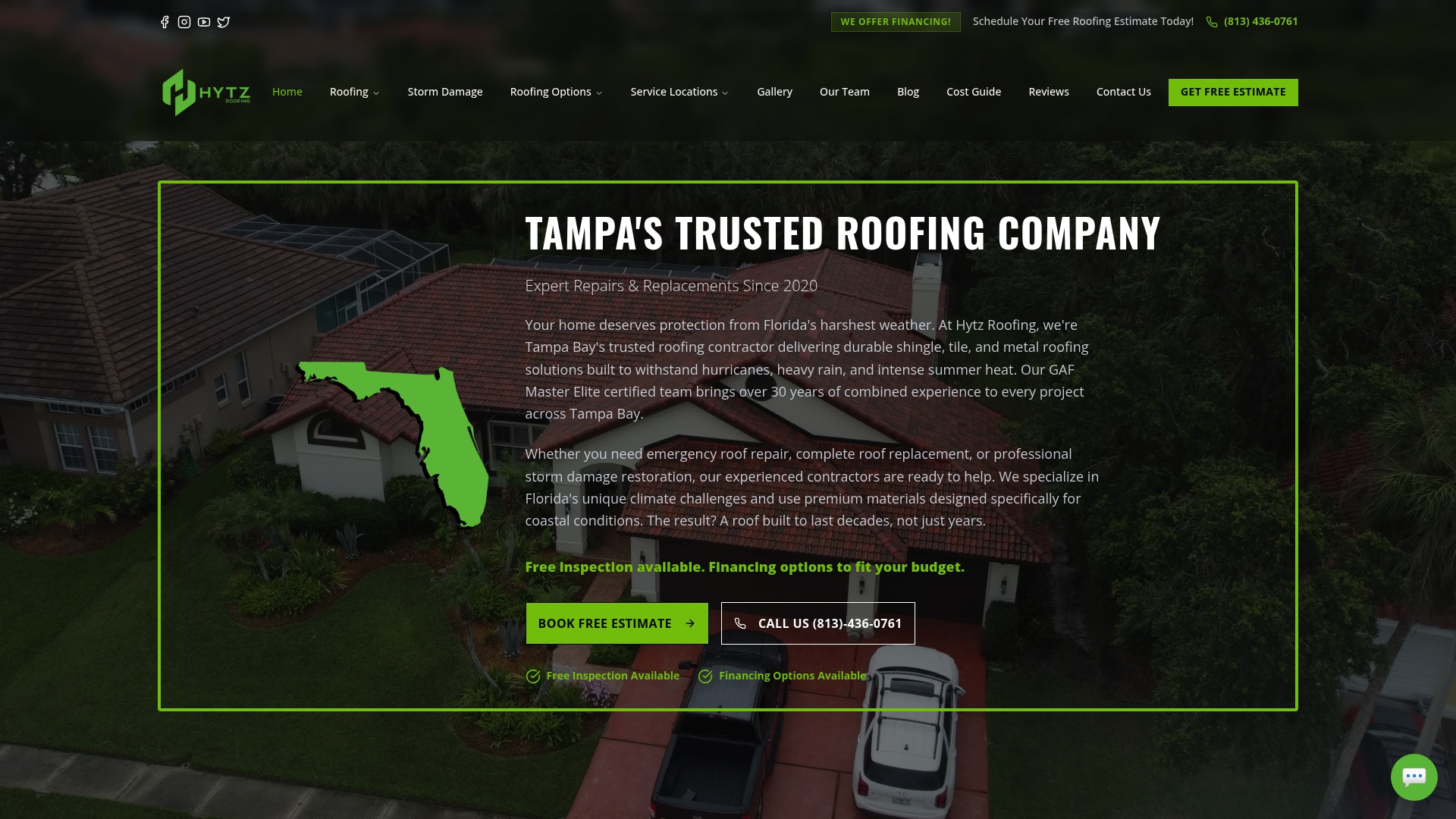
Ready to get an accurate estimate before you apply for financing? Contact Hytzroofing and let our team walk you through your options.
Key Takeaways
The fastest, most cost-effective roofing loan depends on your urgency, credit score, and whether you have home equity to leverage.
| Point | Details |
|---|---|
| Urgency drives loan choice | Emergency repairs need personal loans or contractor financing; planned jobs suit home equity products. |
| Rate range varies widely | Personal loans offer fixed APRs from 7.99% to 24%; credit cards reach ongoing rates between 18% and 29% after promo periods end. |
| Credit score sets your rate | Scores above 700 unlock the best personal loan rates; home equity products typically require 620–680 minimum. |
| Tax deductibility matters | Home equity loan and HELOC interest may be tax-deductible; personal loan interest is not. |
| Get estimates first | Multiple contractor quotes help you borrow only what you need, reducing total interest paid. |
Recommended
- Deferred Payment Roof Financing Options: 2026 Guide | Hytz Roofing
- Roof Financing Term Length: What Homeowners Need to Know | Hytz Roofing
- Choose the Best Roofing Contractor in Tampa Bay, Florida: Your Guide | Hytz Roofing
- What Is a Roofing Scope of Work? Your Clear Guide | Hytz Roofing
Related Hytz Roofing Services
Frequently Asked Questions
- Can I finance a new roof in Florida with bad credit?
- Yes. Several roof financing programs in Florida — including contractor-arranged financing and PACE programs — approve homeowners with credit scores as low as 580. Hytz Roofing works with multiple lenders to find the best option for your situation. Call (813) 436-0761 for a free estimate and financing consultation.
- What is the typical interest rate for roof financing in Florida?
- Rates vary by program: 0% promotional financing is available for qualified buyers through GAF's financing program, while personal loans typically range from 6–18% APR. PACE programs (Property Assessed Clean Energy) offer fixed rates of 5–9% repaid through your property tax bill.
- How long does roof financing approval take?
- Most contractor-arranged financing programs provide same-day approval decisions. PACE financing typically takes 24–48 hours. Bank loans and HELOCs take 2–4 weeks.
- Is 0% financing for roofing too good to be true?
- No — 0% promotional financing is a real product offered through manufacturer programs like GAF's financing. The contractor pays a fee to the lender to subsidize the rate, and you pay nothing in interest if you pay off the balance within the promotional period (typically 12–18 months).
- Does Hytz Roofing offer financing?
- Yes. Hytz Roofing offers 0% financing for qualified homeowners through our GAF financing program, as well as flexible monthly payment options for those who prefer a longer repayment term. Call (813) 436-0761 or visit our roof cost guide for details.