What Is a Roofing Scope of Work? Your Clear Guide

What is a roofing scope of work?
A roofing scope of work is a formal written document that itemizes every task, material, installation standard, and responsibility for your specific roofing project. Think of it as the technical blueprint your contractor works from, not a price sheet and not a legal contract. Those documents serve different purposes. The scope tells everyone exactly what gets done and how.
Here is what a solid scope of work covers:
- Roof type, total squares, pitch, and number of stories
- Tear-off layers and deck preparation requirements
- Material specifications: shingle brand, model, color, and warranty class
- Underlayment type, ice and water shield placement, and drip edge details
- Flashing call-outs for every penetration: chimneys, skylights, pipes, and walls
- Nailing patterns and fastener types per manufacturer specs
- Ventilation plan and ridge vent specifications
- Cleanup protocols including magnetic nail sweeps
- Warranty terms for both materials and workmanship
- Closeout deliverables such as photo documentation
Is a scope of work required, and why does it matter?
A scope of work is not always legally required, but every experienced contractor treats it as best practice for any roofing project. Here is why you should always ask for one:
- Insurance claims: Insurance claims almost always require a full tear-off to bare deck, and specifying this upfront prevents the most common coverage disputes.
- Warranty eligibility: Manufacturer warranties can be voided if installation deviates from published specs. The scope locks in those requirements before work begins.
- Code compliance: Certain jurisdictions require documentation and photographs for final inspections, making a written scope part of the legal record.
- Budget accuracy: A detailed scope prevents surprise costs by defining exactly what is and is not included.
- Project management: It clarifies who pulls the permit, who pays fees, and how weather delays are handled.
What happens if you do not get a scope of work?
Skipping the scope is where roofing projects go sideways. Without one, you have no written record of what was agreed, and disputes become almost impossible to resolve fairly.
Common risks when no scope exists:
- Costly disagreements over what work was included or excluded
- No way to verify that manufacturer or code requirements were met
- Insurance supplements or claim approvals get denied for lack of documentation
- Surprise charges for cleanup, deck repairs, or extra materials
- Warranty claims rejected because installation standards were never specified
Vague language like “flash as needed” is one of the leading causes of disputes between homeowners and contractors. When a chimney leak appears six months later, there is nothing to point to.
What a detailed roofing scope of work includes
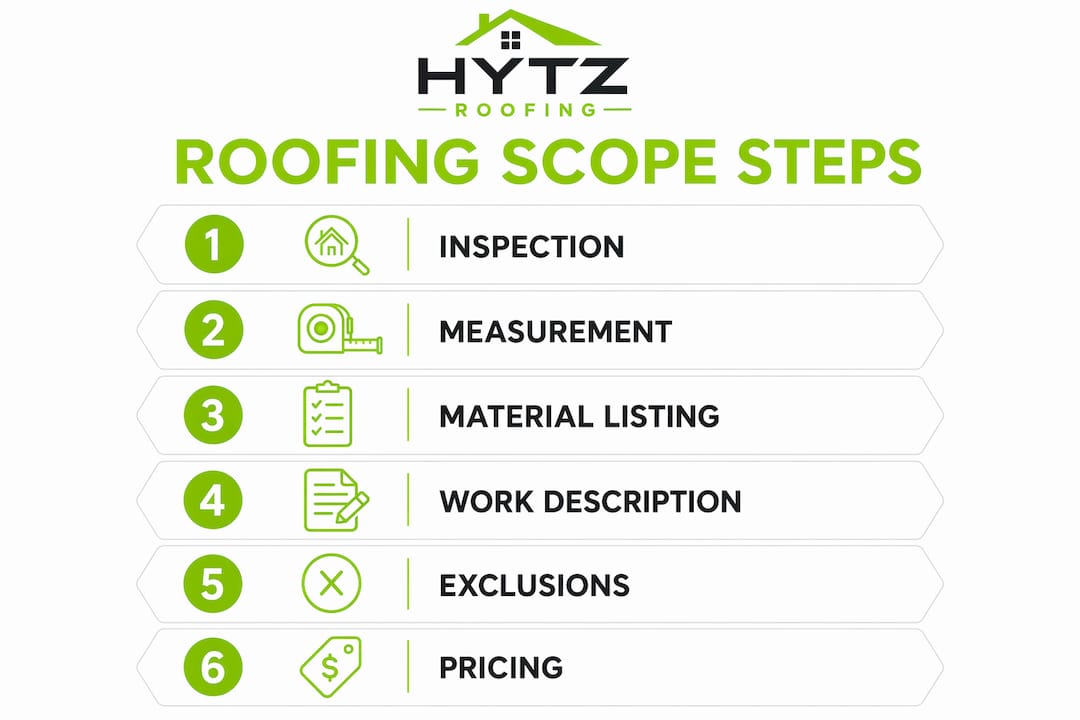
A comprehensive scope covers the full project lifecycle. Here is what each section should spell out:
** Project overview**
- Roof type, total squares, pitch, stories, number of planes, and estimated duration
Tear-off and deck prep
- Number of existing layers removed, whether the job goes to bare deck, and a per-sheet allowance for plywood replacement with unit pricing
Material specifications
- Shingle manufacturer, product line, color, and warranty class. “New shingles” is not a specification.
- Underlayment brand and type, ice and water shield placement zones, drip edge material and color, starter strip, ridge vent brand and linear footage, pipe boot material for every penetration
Installation standards
- Manufacturer-specific nailing patterns and fastener types are mandatory for warranty and windstorm insurance compliance. These must be written into the scope explicitly.
Flashing details
- Step flashing and counterflashing at chimneys, skylight flashing method, pipe boot sizes, kickout diverters, and valley flashing material. Every penetration gets its own line item.
Cleanup and property protection
- Tarps over landscaping and AC units, magnetic nail sweeps (minimum two passes), dumpster placement and removal timeline
Warranty terms
- Manufacturer material warranty vs. contractor workmanship warranty, registration requirements, transferability, and common exclusions like foot traffic damage
Closeout deliverables
- Photographic documentation of underlayment, flashing, and deck nailing before shingles cover them permanently
How a professional scope protects you
A well-written scope is your accountability document from day one. It lists exclusions clearly so you are not blindsided by uncovered issues, and it connects every installation step to a verifiable standard.
Pro Tip: Always ask for unit pricing on deck repairs before signing. A scope that states “replace damaged plywood at $X per sheet, billed at actual count” protects you from open-ended charges if rot is found after tear-off. Failing to specify this is a leading cause of change-order disputes in roofing projects.
Scopes that read like marketing copy, or that run only a paragraph long, signal poor planning. Experienced contractors stress that a scope should focus entirely on technical execution. If yours does not reference nailing patterns, flashing methods by location, or underlayment standards, push back before signing anything. You can check roofing cost expectations alongside the scope to confirm the pricing reflects the actual work described.
How a roofing scope of work gets drafted
The contractor typically drafts the scope after an in-person roof inspection. They measure total squares, assess the existing layers, identify every penetration, and note any visible deck damage. From there, they translate those findings into line-item specifications tied to the materials they plan to use and the manufacturer’s installation requirements. For insurance restoration jobs, the insurance adjuster’s estimate often serves as a starting point, and the contractor’s scope either matches or supplements it with additional line items the adjuster missed.

Who is involved in developing the scope?
Several parties shape the final document. The licensed roofing contractor leads the technical drafting. For insurance claims, the insurance adjuster contributes an initial damage assessment. On commercial projects, a project manager or general contractor may coordinate the scope with other trades. Property managers often work with a roofing consultant to review scope language before approval. In jurisdictions like Florida, the scope becomes part of the permit record and must be signed by the license holder.
How to read and review your scope of work
Start with the tear-off section. Confirm it specifies the number of layers being removed and whether the job goes to bare deck. Most building codes cap asphalt shingle layers at two, but many manufacturers void the warranty if you install over an existing layer, so full tear-off is usually the right call. Next, check that every penetration on your roof has its own flashing line item. Then verify the material section names a specific manufacturer and product, not just a category. Finally, confirm the warranty section separates manufacturer coverage from workmanship coverage and notes any registration steps. For Florida homeowners, reviewing permit requirements alongside the scope helps confirm nothing is missing.
Common roofing terms you will see in a scope
| Term | What it means |
|---|---|
| Squares | A unit of roofing area equal to one roofing square |
| Tear-off | Removing existing roofing layers down to the deck |
| Underlayment | Secondary water barrier installed under shingles |
| Ice and water shield | Self-adhering membrane at eaves, valleys, and penetrations |
| Drip edge | Metal strip at roof edges that directs water into gutters |
| Step flashing | L-shaped metal pieces layered with shingles at walls |
| Counterflashing | Metal cap over step flashing, typically at chimneys |
| Pipe boot | Rubber or metal seal around plumbing vent penetrations |
| Ridge vent | Continuous exhaust vent running along the roof peak |
| Deck / sheathing | Structural wood panels the roofing system attaches to |
Typical problems with roofing scopes of work
The most common issue is vague language. Phrases like “install flashing as needed” or “replace damaged wood” without unit pricing leave too much open to interpretation. A second frequent problem is missing material specs: a scope that says “architectural shingles” without naming the manufacturer gives you no warranty protection if the wrong product gets installed. Scope creep is another challenge, where work expands beyond what was written and the homeowner gets a surprise invoice. Clear project scope documentation prevents exactly this kind of dispute. Finally, some scopes omit closeout requirements entirely, leaving homeowners without photo documentation of hidden components once the job is done.
How a scope of work differs from a contract or estimate
These three documents work together but serve completely different purposes.
- The estimate focuses on price. It tells you what the job will cost, often in broad categories.
- The contract covers legal terms: payment schedule, dispute resolution, liability, and signatures.
- The scope of work is the technical blueprint. It details execution: what gets installed, how it gets installed, and to what standard.
A contract without a scope attached is a legal agreement to do unspecified work. That is a problem. The scope is what gives the contract its technical teeth.
Ready to see what a professional scope looks like in practice? Hytzroofing holds the GAF Master Elite® Contractor designation, earned by fewer than 2% of roofing contractors in North America. Every Hytzroofing project comes with a detailed, line-item scope built to manufacturer specs, code requirements, and insurance standards. Call us or request a free estimate today.
Key Takeaways
A roofing scope of work is the technical blueprint that protects your warranty, supports your insurance claim, and holds your contractor accountable to every material and installation standard agreed upon before work begins.
| Point | Details |
|---|---|
| Scope vs. estimate vs. contract | The scope details technical execution; the estimate covers price; the contract covers legal terms. |
| Insurance and warranty protection | Insurance claims almost always require full tear-off documentation; manufacturer warranties require explicit nailing pattern specs. |
| Vague language creates disputes | Phrases like “flash as needed” are a leading cause of homeowner-contractor disagreements after installation. |
| Photo documentation matters | Photos of underlayment, flashing, and deck nailing verify compliance once shingles cover hidden components permanently. |
| Unit pricing prevents surprises | Specifying a per-sheet price for deck repairs before work starts protects you from open-ended change orders. |