Act Fast: Tampa Bay Insurance Checklist for a Tree on Your Roof
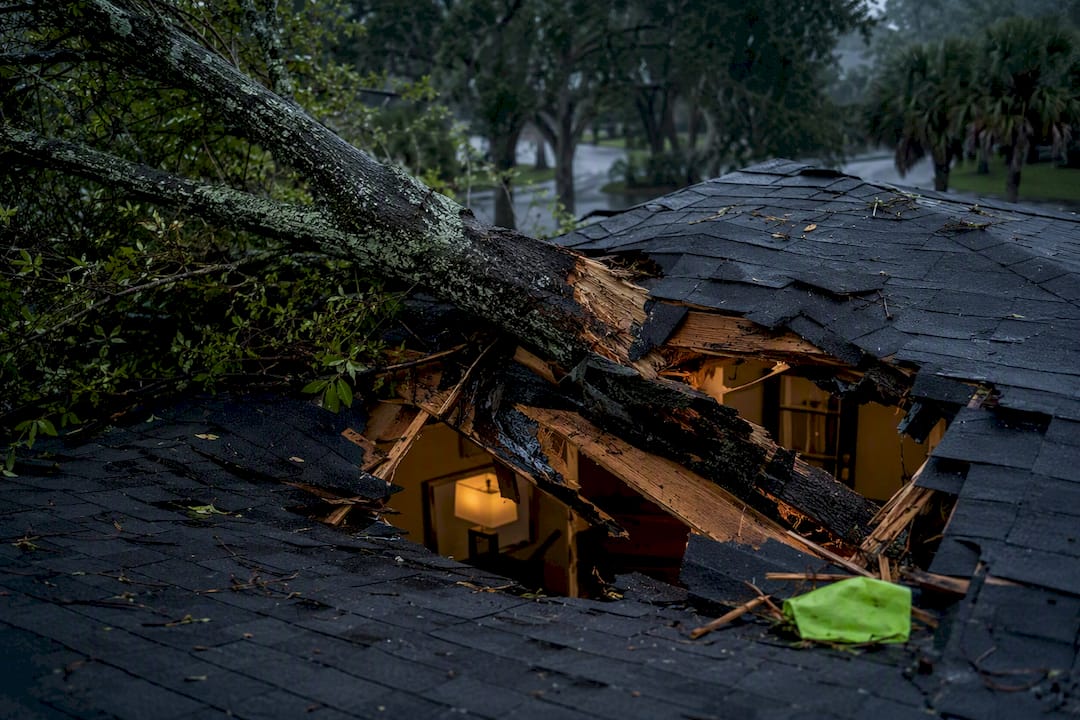
If a tree falls on your roof in Florida, your homeowners policy usually covers the damage when wind, lightning, or another sudden storm event knocks it down. It typically will not cover damage traced back to rot, neglect, or a tree you already knew was dying. Right now, before anything else, check that everyone is safe, photograph the damage, and call your insurer.
TL;DR:
- Most Florida homeowners policies cover damage caused by covered storms, but not damage from neglect, rot, or known hazards before the storm.
- Immediate steps focus on safety and prevention, including Photographing damage, boarding up exposed areas, and saving receipts for emergency repairs.
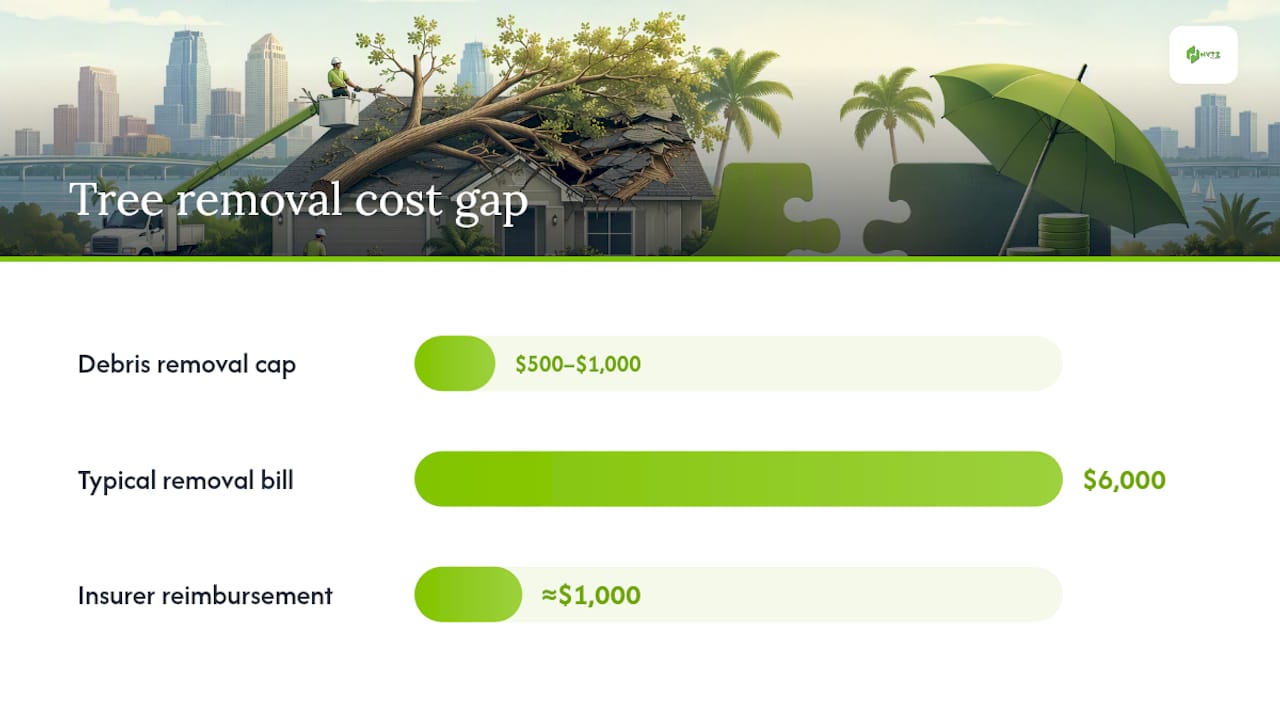
- Insurance payouts depend on whether the damage resulted from sudden, accidental events or long-term neglect, with caps on debris removal around $500 to $1,000.
- Contractors should provide detailed, written estimates matching insurer formats, including specific materials, scope, and warranty details to strengthen claims.
- Avoid common pitfalls such as delaying notification, neglecting maintenance records, or skipping independent estimates, which can reduce or void claim payments.
Table of Contents
- Does Tree Fell on Roof Insurance Cover the Damage in Florida?
- What Should You Do in the First Hours After a Tree Falls?
- How Does Homeowners Insurance Handle Roof Damage From a Fallen Tree?
- How Do You Document Damage and File a Strong Claim?
- What Makes a Reliable Roofing Estimate After Storm Damage?
- What Common Mistakes Reduce or Void a Tree Damage Claim?
- What Should Tampa Bay Homeowners Expect After a Storm?
- How Hytz Roofing Helps Tampa Bay Homeowners After a Tree Falls
- Where Can You Verify Coverage Rules and Claim Steps?
- Sources
- FAQ
Does Tree Fell on Roof Insurance Cover the Damage in Florida?
The short answer is yes, in most cases, but the cause matters more than the tree itself. Insurers look at what made the tree fall, not just the fact that it landed on your house.
A standard homeowners policy usually covers structural damage when a covered peril, like a Tampa Bay thunderstorm’s straight line winds or a lightning strike, brings a tree down onto your roof. That coverage extends to your roof deck, interior ceilings, and even your belongings if rain gets in before you can tarp the hole.
Where things get complicated is intent and origin. Interestingly, insurers generally focus on assessing damage to the structure rather than investigating exactly why a tree fell. That works in your favor. You don’t need to prove the tree was healthy or that a specific gust caused it. You need to show the damage happened suddenly and wasn’t the result of something you ignored for years, like a visibly dead oak leaning toward your roofline that a previous inspection flagged.
What Should You Do in the First Hours After a Tree Falls?
Your first job isn’t paperwork. It’s making sure your family and your house are stable enough to wait for help.
- Evacuate immediately if the tree damaged structural supports, cracked ceiling beams, or pulled down power lines. Call 911 or your local fire department if there’s any doubt.
- Shut off gas or electric only if you’re confident it’s safe and you know exactly which valve or breaker to use. If you’re not sure, wait for a utility crew or first responder.
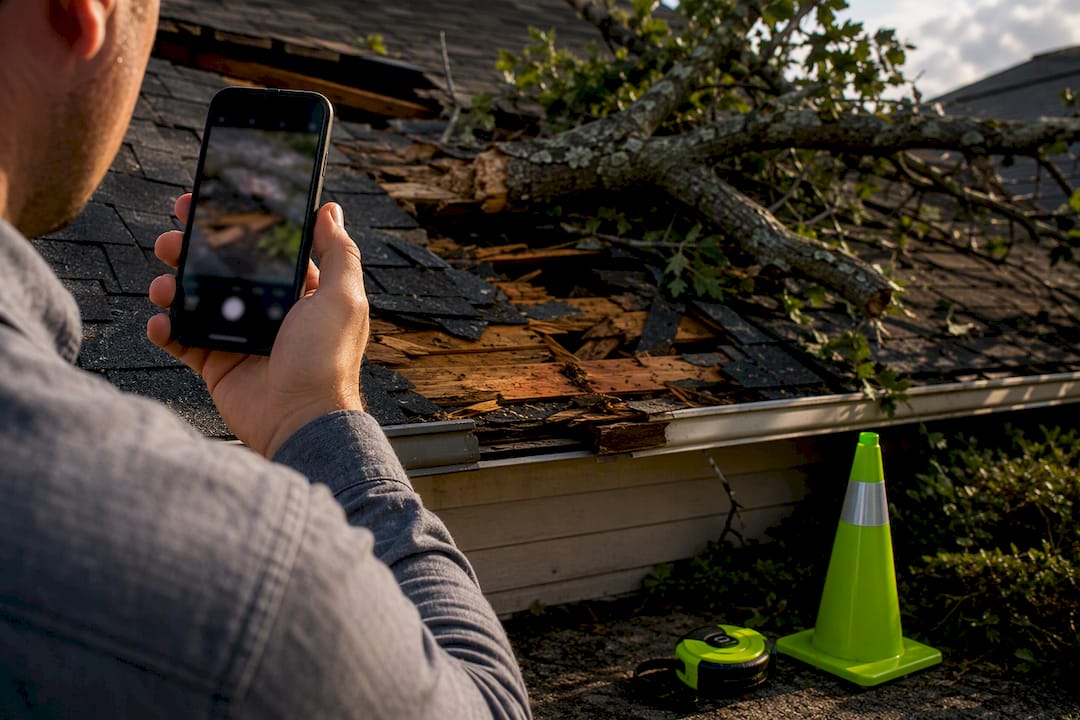
- Photograph and video everything before you move a single branch. Get wide shots of the whole roof, close-ups of cracked shingles or punctures, and interior shots of any leaks or ceiling stains. Timestamps matter here.
- Cover exposed areas with a tarp and board up broken windows to stop secondary water damage. Progressive advises calling a contractor for boarding and tarping rather than climbing onto a compromised roof yourself.
- Save every receipt for temporary repairs. Insurers expect you to prevent further damage, and reasonable emergency costs are almost always reimbursable.
Call a licensed roofer the same day if the tree punched through the deck or you can see daylight from inside the attic. Waiting even one more rainstorm can turn a $3,000 repair into a $15,000 one. Our guide on emergency roof tarping walks through exactly what a safe temporary fix looks like.
Pro Tip: Set your phone’s camera to include location and timestamp data before you start shooting photos. Adjusters and contractors both move faster when the metadata backs up your story.
How Does Homeowners Insurance Handle Roof Damage From a Fallen Tree?
Coverage hinges on one distinction: was this sudden and accidental, or was it years in the making? A branch that snaps off in a February cold front and crashes through your tile roof is a covered peril. A roof that’s been leaking for two years because nobody trimmed an overhanging limb is a maintenance problem, and maintenance problems are excluded on nearly every policy written in Florida.
Your dwelling coverage pays to repair or replace the damaged section when the cause is covered, but the actual numbers on your policy’s declarations page decide how much money lands in your hands. That single page lists your dwelling limit, your deductible, and whether your roof is valued at replacement cost (RCV) or actual cash value (ACV).
- The driveway exception. Travelers notes that debris removal is generally not covered if the tree missed your house entirely, unless it’s blocking your driveway or a wheelchair ramp, in which case many policies still pay to clear it.
- ALE, or loss of use. If the tree makes your home unsafe to live in, your policy may cover hotel stays and reasonable living costs while repairs happen. This is a real benefit many homeowners forget to ask about.
- RCV vs. ACV. A newer roof usually gets paid at replacement cost. An older roof, especially one over 15 to 20 years old, often gets depreciated to actual cash value unless you paid extra for a roof replacement cost endorsement.
Here’s a number worth remembering: that $500 to $1,000 tree removal cap rarely covers what a Tampa Bay tree service actually charges to grind a fallen live oak or removed a split laurel tree off a roofline. Homeowners are frequently surprised when their $6,000 removal bill only nets a four figure reimbursement, which is exactly why documenting the structural damage separately from the removal cost matters so much.
Your deductible applies once per claim, subtracted from the total covered loss before the insurer cuts a check. If your named-storm deductible is a percentage of your dwelling coverage rather than a flat dollar amount, a hurricane season claim can cost you meaningfully more out of pocket than a routine wind event.
How Do You Document Damage and File a Strong Claim?
A weak claim isn’t usually about the damage. It’s about weak evidence. Insurers settle faster and fairer when you hand them something they can’t easily dispute.
- Photograph and video the exterior roof from every angle, then move inside and document ceiling stains, insulation damage, and any structural cracking. Pull up local weather reports from the day of the storm to timestamp the cause.
- Get independent written estimates from licensed local contractors while your claim is still open. Progressive recommends this step specifically because it gives you a comparison point against whatever the adjuster proposes.
- Keep a claims log. Write down every phone call, the adjuster’s name, dates, and reference numbers. Save copies of every email and every receipt tied to emergency repairs or hotel stays.
- Be present for the adjuster’s inspection whenever possible, and ask for their written estimate. Compare it line by line against your contractor’s scope.
- If your contractor finds hidden damage after work begins, like a soaked roof deck under the shingles, request a supplement or an independent appraisal before signing off on the repair.
| What to Track | Why It Matters |
|---|---|
| Photos and video with timestamps | Proves the timeline and extent of damage |
| Weather report from the storm date | Links the damage to a covered peril |
| Written contractor estimates | Gives you leverage against the adjuster’s number |
| Communication log | Protects you if the claim is disputed later |
| Emergency repair receipts | Get reimbursed for tarps, boarding, and cleanup |
What Makes a Reliable Roofing Estimate After Storm Damage?
Get at least two or three written estimates from licensed Florida contractors before you settle on a number with your insurer. A verbal quote scrawled on a business card doesn’t hold up when you’re negotiating a five figure claim.
A trustworthy estimate spells out the materials by brand, the labor scope, permit costs, and a realistic timeline, not just a lump sum. It should also note the emergency steps already taken, like tarping, and any code-driven upgrades Florida’s building requirements now demand on a reroof.
Before you sign anything, check three things: an active Florida contractor license, current general liability and workers’ compensation insurance, and manufacturer certifications that signal real training, not just a sales pitch. A reliable roofing contractor should have an active Florida contractor license, manufacturer certifications that signal real training, and a good rating from the BBB.
- A good estimate lists specific shingle, underlayment, or tile brands, not vague line items like “materials.”
- It should show a detailed removal and replacement scope, including flashing and decking repair if needed.
- It should note the warranty terms in writing, not just mention them verbally.
When a contractor’s estimate is built on Xactimate pricing, the same software most insurance adjusters use, it becomes much easier to reconcile differences and support a supplemental claim for damage discovered mid-repair.
Pro Tip: Ask every contractor for their estimate in the same format your insurer uses. If two contractors give you wildly different numbers for the same scope of work, that’s a red flag worth questioning before you pick either one.
What Common Mistakes Reduce or Void a Tree Damage Claim?
Most denied or reduced claims share the same handful of avoidable mistakes.
- Pre-existing neglect. If your insurer finds evidence of rot, prior storm damage, or a tree you’d been warned about, keep maintenance records and past inspection reports on hand to counter that argument.
- Cosmetic-only damage disputes. Some policies exclude purely cosmetic dents or discoloration on metal roofs. Document functional issues, like leaks or lifted seams, not just appearance.
- Waiting too long. Delaying notification, making permanent repairs before the adjuster inspects, or skipping written estimates altogether all weaken your position.
- Skipping the appeal process. If your claim is denied, request the insurer’s claim notes, gather independent contractor documentation, and consider a formal appraisal or mediation before accepting a lowball offer.
What Should Tampa Bay Homeowners Expect After a Storm?
After a major Tampa Bay storm, adjusters typically visit within a week or two, longer during an active hurricane season when claim volume spikes across the region. Most homeowners assume settlement happens fast once the adjuster leaves. It usually doesn’t. Supplements are common once repair crews open up the roof and find hidden decking damage the initial estimate missed. Realistic repair timelines run several weeks from approval to completion, longer for tile or metal roofing that requires special-order materials.
— Anthony
How Hytz Roofing Helps Tampa Bay Homeowners After a Tree Falls
Hytz Roofing is the local alternative to waiting on a national call center for someone to show up. When a tree comes down on your roof, you need a licensed contractor on-site fast, not a hold queue.
We handle emergency tarping the same day in most cases, followed by a full documented inspection built specifically for your insurance claim. Our estimates are written to align with the same Xactimate pricing your adjuster uses, which makes disputes over scope or cost far easier to resolve, and we handle supplement requests directly when hidden decking or structural damage turns up mid-repair. Whether you’re dealing with a punctured shingle roof or a cracked tile field, our team walks through the full scope with you before any work starts. Request a free storm damage inspection and we’ll document the damage, give you a written estimate, and tell you plainly whether you’re looking at a repair or a full roof replacement.
Where Can You Verify Coverage Rules and Claim Steps?
For policy-level detail beyond this guide, check the Insurance Information Institute on tree removal limits, Progressive on immediate documentation steps, and Erie Insurance on vehicle versus home coverage distinctions.
This article is general information, not a substitute for advice from a qualified financial advisor. Consult a qualified financial professional about your own circumstances before acting on anything here.
Sources
- What to Do When a Tree Falls on Your Property | Progressive
- Frequently Asked Questions About Fallen Trees | Travelers Insurance
- What to do if a tree falls on your neighbor’s property | Erie Insurance
FAQ
Does homeowners insurance cover a tree falling on the roof?
Yes, when the tree fell due to a covered peril like wind or lightning. It typically won’t cover damage caused by neglect, rot, or a tree you knew was hazardous.
How much does insurance pay for tree removal after roof damage?
Most policies cap tree removal reimbursement around $500 to $1,000 per tree, though some calculate it as a percentage of your dwelling coverage instead.
What if the tree fell but didn’t damage anything?
Debris removal is usually not covered if the tree didn’t hit a covered structure, though some insurers make an exception if it’s blocking your driveway.
Will my insurance pay for a hotel if my roof is damaged?
Many policies include Additional Living Expense coverage, which helps pay for hotel stays and necessary living costs if a fallen tree makes your home unsafe to live in.
Should I get my own contractor estimate or just use the adjuster’s number?
Get an independent written estimate from a licensed local contractor while your claim is open, so you have a real comparison point against the adjuster’s figure.
What if my insurance claim gets denied?
Request the insurer’s claim notes, gather documentation from an independent licensed contractor, and consider filing a formal appraisal or mediation request before accepting the denial.