Wind Damage Roof Repair: 5 Immediate Steps for Homeowners
Wind damage roof repair requires quick action to assess hazards, document damage, secure temporary protection, and plan permanent repairs.
If wind likely hit your roof, do these five things right now — before you call anyone, before you file anything, and before you step outside.
🚨 Your first-hour checklist:
- Stay safe first. Don’t climb onto the roof. Watch for downed power lines, gas smells, or structural shifts.
- Document everything. Walk the perimeter from ground level. Photograph shingles in the yard, lifted edges, dented vents, and any interior ceiling stains. Turn on your phone’s timestamp feature before you shoot.
- Protect the interior. Move valuables away from wet ceilings. Place buckets under active drips. If a large section is exposed, call a licensed contractor for emergency tarping rather than attempting it yourself.
- Notify your insurer. Call your homeowner’s insurance carrier the same day. Most policies require prompt notice, and post-storm action planners recommend filing within 48 hours, where possible.
- Call a licensed local roofer. Request a written inspection report before the adjuster arrives. That report is your single most powerful claim document.
Note the exact date and time of the storm, then pull official wind records from the National Hurricane Center or your local National Weather Service office. That weather data ties your damage to a covered event, which is exactly what your insurer needs to see.
Key Takeaways
Wind damage roof repair outcomes depend almost entirely on how fast you document, mitigate, and file — the repair itself is straightforward once those three steps are done correctly.
| Point | Details |
|---|---|
| Document within the first hour | Timestamped photos, weather records, and a contractor report are your strongest insurance tools. |
| File your claim within 48 hours | Most post-storm action planners recommend notifying your insurer the same day and filing within 48 hours. |
| Understand ACV vs. RCV | RCV policies pay recoverable depreciation only after repairs are completed within the policy’s time window. |
| Repair costs vary widely | Minor repairs often run under $1,000; major repairs or full replacements commonly reach —. |
| Hytzroofing for Tampa Bay | Hytzroofing provides emergency tarping, insurance-ready inspection reports, and licensed repairs across Tampa Bay. |
Table of Contents
- How do you identify wind damage on a residential roof?
- What safe immediate actions and temporary repairs can you arrange?
- How do you file an insurance claim for wind damage?
- When should you hire a licensed roofer, and how do you choose one?
- What does a wind-damage roof repair include, and what does it cost?
- What maintenance and upgrades reduce future wind damage risk?
- Why does fast professional mitigation matter? What the research shows
- A Tampa Bay roofer’s honest take on wind damage claims
- Hytzroofing is ready when the storm hits Tampa Bay
- Sources
- FAQ
How do you identify wind damage on a residential roof?
Wind damage isn’t always obvious from the street. A few missing shingles are easy to spot. Lifted tab edges, cracked flashing, and wet attic insulation are not. Knowing what to look for from the ground keeps you safe and gives you a complete damage picture before the adjuster shows up.
External signs to look for
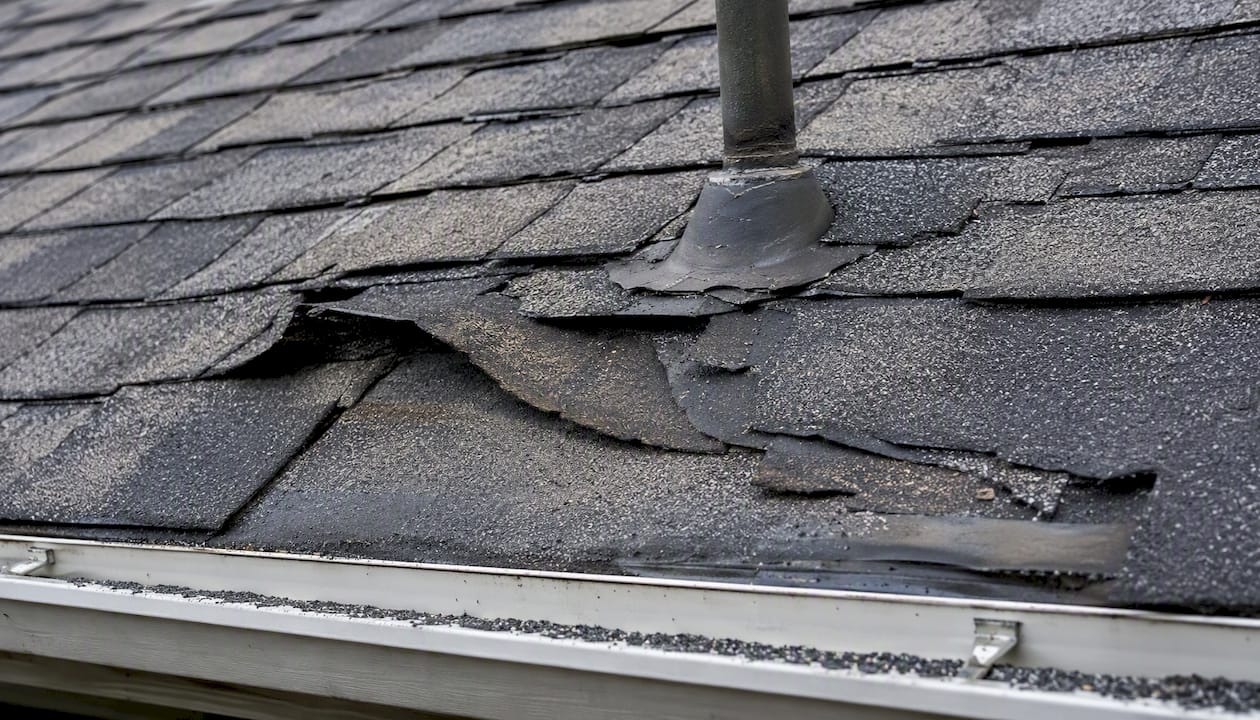
Common wind-damage indicators include blown-off shingles, lifted or flapping tab edges, missing ridge caps, granule loss (look for dark bare patches or granule piles in gutters), damaged flashing around chimneys and vents, and dented or cracked roof vents from debris impact. Even shingles that look intact may have broken sealant bonds underneath — wind uplift creates a low-pressure zone above the roof surface, and aged or poorly adhered shingles fail under moderate winds that newer installations would handle easily.
Interior clues that confirm damage
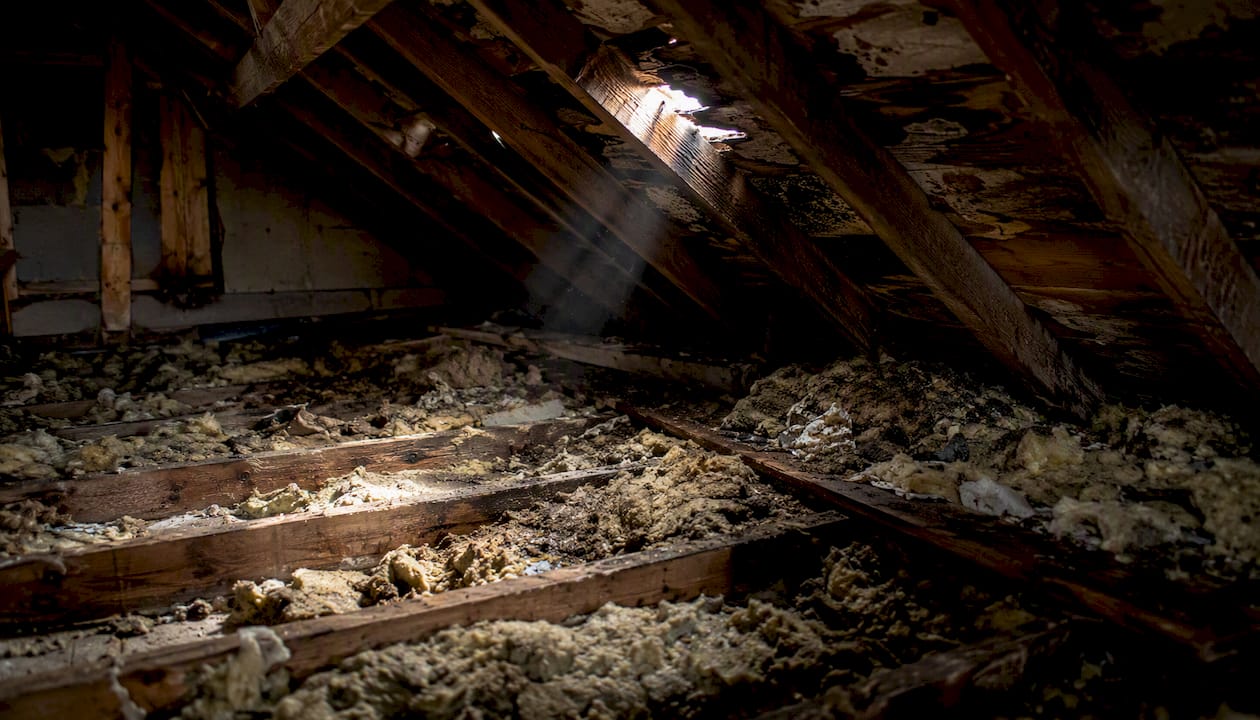
New ceiling stains, wet insulation in the attic, or visible daylight through the decking boards are all signs that the roof membrane has been breached. These interior signals often appear hours or days after the storm, so check your attic the morning after any significant wind event.
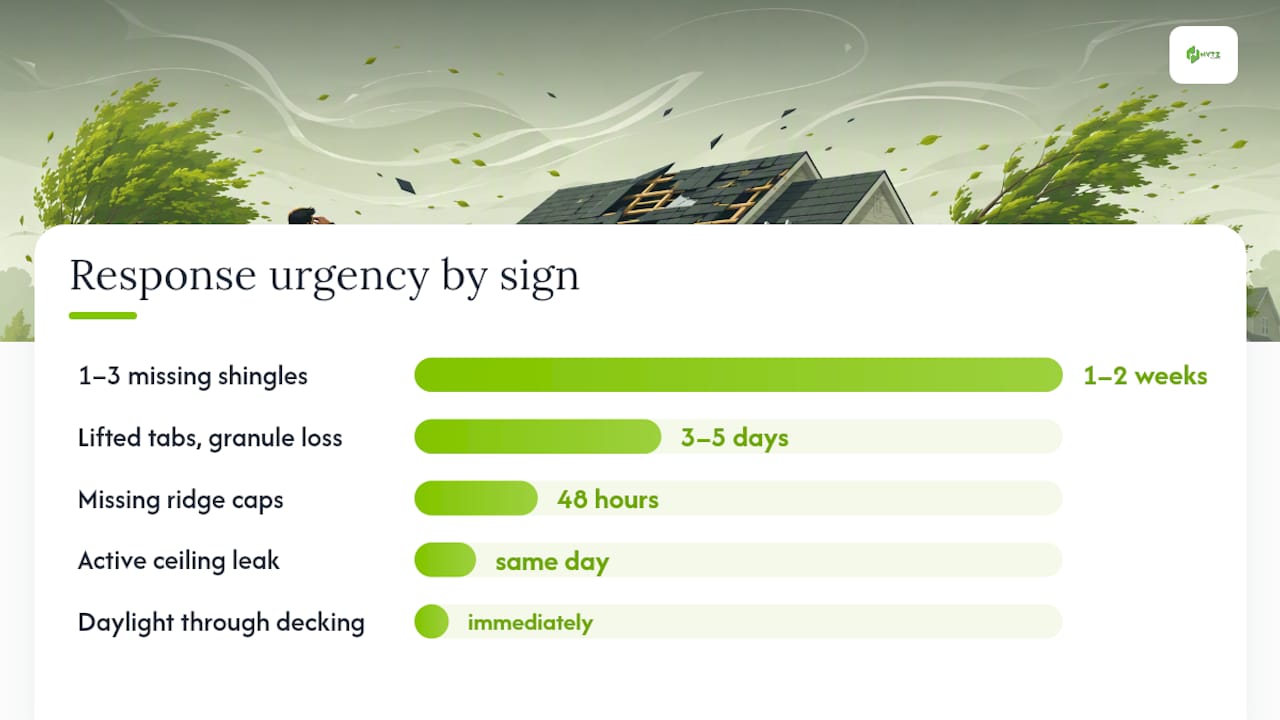
| Visible sign | Likely severity | Urgency |
|---|---|---|
| 1–3 missing shingles, no interior stains | Minor | Schedule repair within 1–2 weeks |
| Lifted tab edges, granule loss, no leak | Moderate | Inspect and repair within 3–5 days |
| Missing ridge caps, exposed underlayment | Moderate–High | Temporary tarp + repair within 48 hours |
| Active ceiling leak, wet insulation | High | Emergency tarping same day |
| Visible daylight through decking | Severe | Emergency response immediately |
Pro Tip: Photograph from four corners of your yard plus any angle that shows shingles in the grass or gutters full of granules. Avoid ladders on wet or sloped surfaces. The NRCA advises that trained professionals, not homeowners, should perform close-up roof assessments after a storm.
What safe immediate actions and temporary repairs can you arrange?
Speed matters here. Every hour a breached roof sits open, water works deeper into your decking, insulation, and framing. Fast professional mitigation prevents secondary water intrusion and limits how far the repair scope grows.
What you can do safely right now
- Stay off the roof. Wet shingles, steep pitches, and hidden structural damage make post-storm climbing dangerous. The NRCA is direct: untrained homeowners should not perform their own on-roof repairs.
- Contain interior leaks. Place buckets or towels under drips. Lay plastic sheeting over furniture and flooring in affected rooms.
- Move valuables. Get electronics, documents, and irreplaceable items away from wet areas before the next rain.
- Secure loose debris. If large branches or debris are resting against the house, keep people away from that zone until a professional assesses structural risk.
- Call for emergency tarping. A licensed contractor can deploy a heavy-duty tarp over exposed sections within hours. This is the single most effective step to stop water intrusion while permanent repairs are scheduled. Hytzroofing’s emergency roof repair team is available for rapid response across Tampa Bay.
- Save every receipt. Materials, labor, and any emergency service costs you pay out of pocket are reimbursable under most policies — but only with documentation. Photograph receipts and note timestamps.
What a licensed emergency crew does
A professional crew will tarp exposed decking using weighted or fastened tarps that won’t blow off in the next weather event, board up any structural openings, and install temporary flashing where ridge caps or vents are missing. This is not a cosmetic fix. It’s structural stabilization that protects your claim and your home.
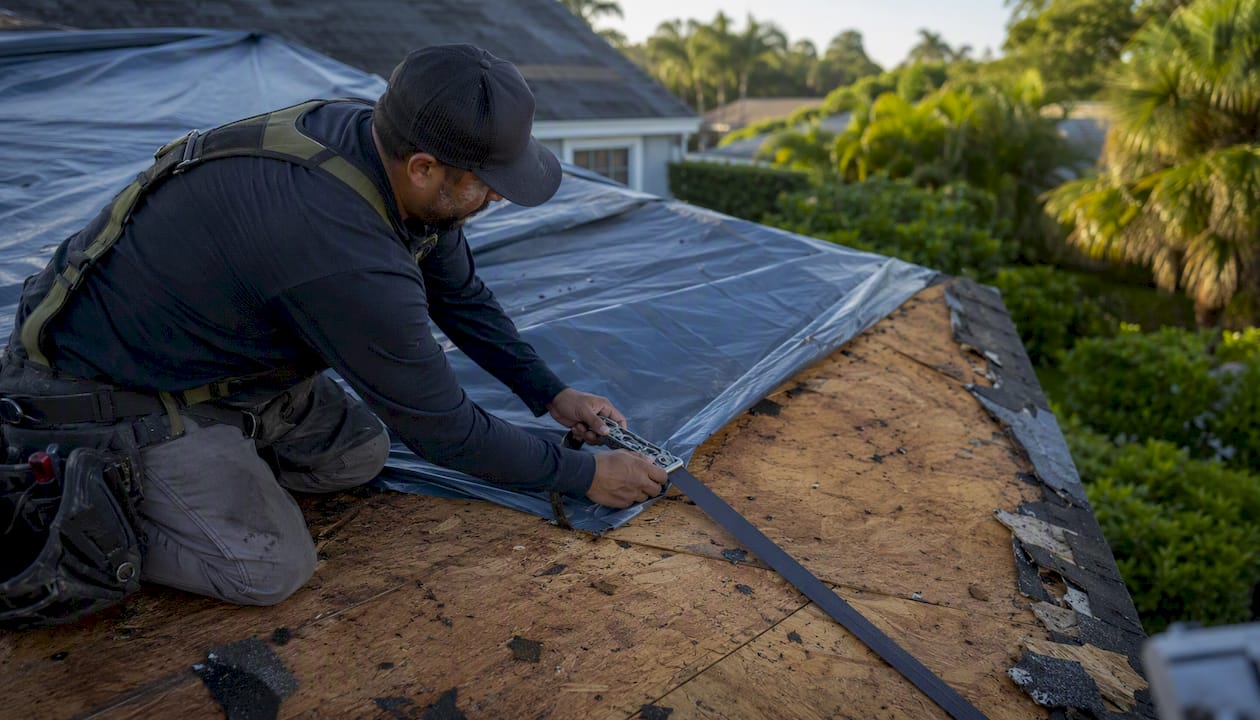
🚨 Storm-chaser warning: If someone knocks on your door within hours of a storm offering a free inspection and asking you to sign anything, slow down. Verify their Florida contractor license, confirm they have a local physical address, and never sign an Assignment of Benefits (AOB) form without reading it with your insurer first. Spotting these red flags early can save you thousands.
Pro Tip: Keep a folder — physical or digital — labeled with the storm date. Drop every photo, receipt, contractor invoice, and insurer communication into it. An organized claim file moves faster and supplements more easily.
How do you file an insurance claim for wind damage?
📋 Filing correctly is as important as filing fast. Insurers evaluate wind-damage claims based on cause-of-loss linkage, documentation quality, and whether the homeowner took reasonable mitigation steps. Insurers commonly dispute claims when damage is labeled pre-existing or when documentation is thin.
Your insurance documentation checklist
- Timestamped photos and video of all exterior and interior damage
- Official weather records from NOAA/NWS or the National Hurricane Center confirming wind speeds at your location on the storm date
- A written contractor inspection report with itemized damage findings
- Receipts for all emergency mitigation work (tarps, boarding, temporary repairs)
- A written timeline: storm date/time, when you first noticed damage, when you called the insurer, when the contractor inspected
ACV vs. RCV: what your policy actually pays
These two terms determine how much money you receive.
- Actual Cash Value (ACV): The insurer pays the depreciated value of your roof at the time of loss. A 15-year-old roof gets paid at 15-year-old value, not replacement cost. You cover the gap.
- Replacement Cost Value (RCV): The insurer pays the full cost to replace damaged materials with like-kind materials. You typically receive an initial ACV payment, then a recoverable depreciation check after repairs are completed and documented.
Timing matters with RCV policies. Most require you to complete repairs within a set window (often 180 days to one year) to collect the recoverable depreciation. Miss that window and you forfeit the second payment.
The claim timeline
Report → Adjuster visit → Estimate → Initial payment → Supplements → Final payment. Your role at each step:
- Report: Call the same day. Confirm your policy number, storm date, and that you’ve taken mitigation steps.
- Adjuster visit: Have your contractor present. Their line-item report often catches items the adjuster misses. Insurers use aerial measurement and Xactimate-style software to estimate costs, which is why a contractor’s detailed report is frequently necessary to supplement or dispute the initial estimate.
- Estimate: Review every line item. Confirm permits, disposal, and hauling are included.
- Supplements: If hidden damage appears during repairs (rotted decking, failed underlayment), your contractor submits a supplement. Keep all photos from that discovery.
Owens Corning’s storm damage checklist reinforces the same sequence: photograph, save receipts, get a contractor inspection before or alongside the adjuster visit.
When should you hire a licensed roofer, and how do you choose one?
The short answer: hire a professional any time you see exposed decking, an active leak, missing ridge caps, or damage covering more than a few shingles. DIY patching on a Florida roof during storm season is a short-term fix that often voids manufacturer warranties and complicates insurance claims.
Decision criteria
Roof age, visible extent of damage, whether decking is exposed, active interior leaks, roof pitch and height, and roofing material all factor in. A steep tile roof with lifted sections is not a homeowner repair. Neither is a flat TPO system with punctures. This Old House’s guidance is clear: when in doubt, call a professional.
How to vet a roofer: step-by-step
- Verify the Florida contractor license. Check the Florida Department of Business and Professional Regulation (DBPR) database. A valid license number (like Hytzroofing’s #CCC1332551) is searchable in seconds.
- Confirm insurance. Ask for a certificate of general liability and workers’ compensation. If a worker is injured on your property and the contractor has no coverage, you may be liable.
- Confirm a local physical address. Out-of-state storm chasers often disappear after collecting payment. A local Tampa Bay contractor has a reputation to protect.
- Ask for references. Two or three recent local jobs with contact information. Call them.
- Get a written, line-item estimate. Materials, labor, permits, disposal, and hauling should each appear as separate line items. A one-line “roof repair: $X” estimate is a red flag.
- Confirm warranty terms. Ask what manufacturer warranty covers materials and what workmanship warranty the contractor offers. GAF Master Elite® contractors, for example, can offer enhanced warranty coverage unavailable through standard installers.
For a deeper contractor vetting checklist specific to Tampa Bay, Hytzroofing has published a full guide.
Red flags to avoid
- Large upfront cash requests (more than 10–15% deposit is unusual)
- High-pressure tactics or same-day signing pressure
- No Florida license or an out-of-state license only
- Generic stock photos instead of local job photos
- No written contract or scope of work
Pro Tip: Ask your contractor to attend the adjuster visit. A contractor who walks the roof with the adjuster and points to each damage item in real time typically produces a more complete initial estimate, which means fewer supplements and faster final payment.
What does a wind-damage roof repair include, and what does it cost?
Repair scope ranges from replacing three shingles to a full tear-off and replacement. Where your job falls depends on how much decking was exposed, how many shingles are compromised, and whether flashing, ridge caps, or underlayment need replacement.
Common repair scopes
- Spot repair: Replace a handful of missing or lifted shingles, reseal flashing, replace one or two ridge caps. Minimal decking involvement.
- Partial re-cover or section repair: Replace shingles across a defined section, repair or replace underlayment in that zone, address flashing and valley metal.
- Full tear-off and replacement: Entire roof stripped to decking, decking inspected and replaced where rotted or cracked, new underlayment, new shingles or tile, new flashing and ridge caps throughout.
Typical cost ranges
Published state-based estimates show minor repairs often under $1,000, while major repairs or full replacements commonly run into several thousand dollars depending on scope, materials, and location. Florida’s labor market, hurricane-grade material requirements, and permit costs push prices toward the higher end of national ranges.
Ranges reflect general U.S. estimates per Modernize. Florida costs vary by material, roof complexity, and permit requirements.
What drives price differences
Roof pitch and accessibility, decking condition (rotted boards add cost quickly), material type (tile and metal cost more than asphalt shingles), permit fees, and whether emergency tarping is included all affect the final number. Always confirm that your estimate includes permit fees and debris hauling — these are frequently omitted from initial quotes.
Repair timeline
Emergency tarping: same day or next day. Permit approval in Tampa Bay: typically 3–7 business days. Material procurement: 1–5 days depending on supply. Active repair work: 1–3 days for most residential jobs. Weather delays are common in Florida, especially during storm season. A realistic total window from inspection to completed repair is 2–4 weeks for moderate jobs.
What maintenance and upgrades reduce future wind damage risk?
Prevention is cheaper than repair. In Tampa Bay, where hurricane season runs June through November, a maintained roof with wind-rated components performs significantly better than a neglected one under the same storm conditions.
Annual maintenance checklist
- Inspect shingles for curling, cracking, or missing tabs before and after hurricane season
- Clean gutters and downspouts so water drains freely and doesn’t back up under the eaves
- Replace any missing or lifted shingles promptly — a single open tab is an entry point for wind uplift
- Check and reseal flashing around chimneys, skylights, and vents
- Inspect attic ventilation to prevent heat and moisture buildup that degrades shingles from below
Upgrade options worth considering
- Wind-rated shingles: Products rated to ASTM D3161 Class F or ASTM D7158 Class H withstand higher wind speeds than standard shingles. In Florida, building codes set minimum wind-resistance requirements, and upgrading beyond the minimum adds meaningful protection.
- Enhanced ridge attachments and secondary underlayment: These reduce the chance of ridge cap loss and give the roof a secondary water barrier if the primary layer is breached.
- Roof-to-wall straps: Metal hurricane straps connecting rafters to wall framing are a structural upgrade that reduces uplift risk significantly.
- Improved flashing: Heavier-gauge flashing at valleys, chimneys, and penetrations resists wind-driven rain better than standard flashing.
Pro Tip: Schedule wind-mitigation upgrades during the off-season (December through February in Florida) when contractor availability is higher and lead times on materials are shorter. Coordinate upgrades with any scheduled roof work to reduce mobilization costs.
Certain wind-mitigation measures, when certified through a licensed inspection, can qualify Tampa Bay homeowners for insurance premium discounts under Florida’s My Safe Florida Home program. Ask your contractor whether your planned upgrades qualify for certification.
Why does fast professional mitigation matter? What the research shows
The case for acting within hours rather than days is well-documented. Steamatic’s guidance on storm damage restoration is direct: fast professional mitigation prevents secondary water intrusion and limits how far the scope expands. Every hour of delay increases the risk of further structural and insulation damage.
Here’s what the research and industry guidance consistently show:
- Water intrusion through a breached roof reaches wall cavities, insulation, and framing within 24–48 hours, creating conditions for mold growth and structural softening.
- Delayed mitigation gives insurers grounds to question whether damage was storm-related or the result of neglect, complicating cause-of-loss determination.
- A stepwise approach — inspection, temporary stabilization, detailed documentation, claim filing, professional repair — is the standard workflow that improves claim outcomes when followed promptly.
- The National Weather Service EF-scale classifies winds above 65 mph as capable of causing significant structural roof damage. Tampa Bay regularly sees gusts in this range during named storms and severe thunderstorm events.
For Tampa Bay homeowners specifically, the combination of high humidity, frequent afternoon thunderstorms, and Atlantic hurricane exposure means a breached roof can go from a moderate repair to a major one in a single rainy afternoon. Florida’s building codes reflect this reality, which is why licensed contractors here are required to pull permits even for significant repair work.
A Tampa Bay roofer’s honest take on wind damage claims
Most homeowners I talk to after a storm are focused on the wrong thing. They want to know how fast the repair can happen. What they should be asking first is whether their documentation is strong enough to support the claim.
I’ve seen complete roof replacements get denied or underpaid because the homeowner waited a week to call, didn’t photograph the damage before tarping, or signed an AOB form with a storm chaser who disappeared. The repair itself is the easy part. Building an airtight insurance file in the first 48 hours is where homeowners lose or win.
Hytzroofing holds Florida Contractor License #CCC1332551, GAF Master Elite® status (earned by fewer than 2% of contractors in North America), and a BBB A+ rating. When we inspect a wind-damaged roof in Tampa Bay, we provide a written, line-item report formatted for insurance submission — not a one-page summary, but a document your adjuster can work from. That’s the difference between a smooth claim and a six-month dispute.
Hytzroofing is ready when the storm hits Tampa Bay
When wind damages your roof, you need a team that moves fast and knows the insurance process as well as the repair process.
Hytzroofing provides same-day emergency tarping, insurance-ready inspection reports, and full repair or replacement services across Tampa Bay and Central Florida. Here’s what you get when you call us:
- ✅ Licensed (FL #CCC1332551), insured, and locally based in Tampa Bay
- ✅ GAF Master Elite® Contractor — manufacturer-backed warranty options unavailable through standard installers
- ✅ Written line-item inspection reports formatted for insurance claim submission
- ✅ Adjuster-visit support so nothing gets missed on the initial estimate
- ✅ 2025 Angi Super Service Award and BBB A+ rating
Ready to move forward? Request your storm damage inspection today, or call us directly for emergency roof repair in Tampa if you have an active leak or exposed decking right now.
Sources
These are the primary authoritative sources referenced throughout this article. Use them to verify guidance, pull official weather records, and confirm insurance expectations.
- Nhc
- Weather
- Roof Repairs After a Storm - National Roofing Contractors Association
- Storm Damage Restoration & Wind Damage Repair | Steamatic
- Wind Damage Roof Repair Guide | Advanced Level Roofing
- Roof Repair Cost (2025) | Prices by Damage Type & Region - Modernize
- Wind Damage Restoration & Insurance Claims | AlliedPA
- Post-Storm Roof Action Planner: State-Specific Steps | Roof Policy
- Roof Storm Damage Checklist What To Do After A … - Owens Corning
Note: Florida insurance deadlines, deductible structures, and claim timelines vary by carrier and policy. Always confirm specifics with your insurer directly.
This article is general information, not a substitute for advice from a qualified financial advisor. Consult a qualified financial professional about your own circumstances before acting on anything here.
FAQ
What is considered wind damage to a roof?
Wind damage includes missing or lifted shingles, blown-off ridge caps, granule loss, damaged flashing, dented vents from debris impact, and any breach that allows water into the decking or attic. Even shingles that appear intact may have broken sealant bonds that leave them vulnerable to the next storm.
Will insurance cover my roof from wind damage?
Most standard homeowner’s insurance policies cover wind as a named peril, but claims are frequently disputed when damage is labeled pre-existing or documentation is poor. Strong timestamped photos, official weather records, and a contractor’s written inspection report are the best protection against a disputed claim.
How much does it cost to repair roof damage from wind?
Minor repairs often cost less, while moderate repairs typically cost several thousand dollars. Major repairs or full replacements commonly cost several thousand dollars to tens of thousands depending on scope, materials, and Florida permit requirements.
How do you fix a wind-damaged roof after a storm?
The correct sequence is: document damage with photos, arrange emergency tarping if the roof is breached, notify your insurer, get a licensed contractor’s written inspection report, attend the adjuster visit with your contractor, then proceed with permitted repairs once the claim scope is agreed upon.
How fast should I act after wind damages my roof?
Act the same day. Notify your insurer immediately, arrange emergency tarping within hours if there’s an active breach, and aim to file your formal claim within 48 hours. Delays allow water intrusion to expand the repair scope and give insurers grounds to question whether damage was storm-related.