Roofing in Hurricane Season: A Florida Homeowner’s Guide
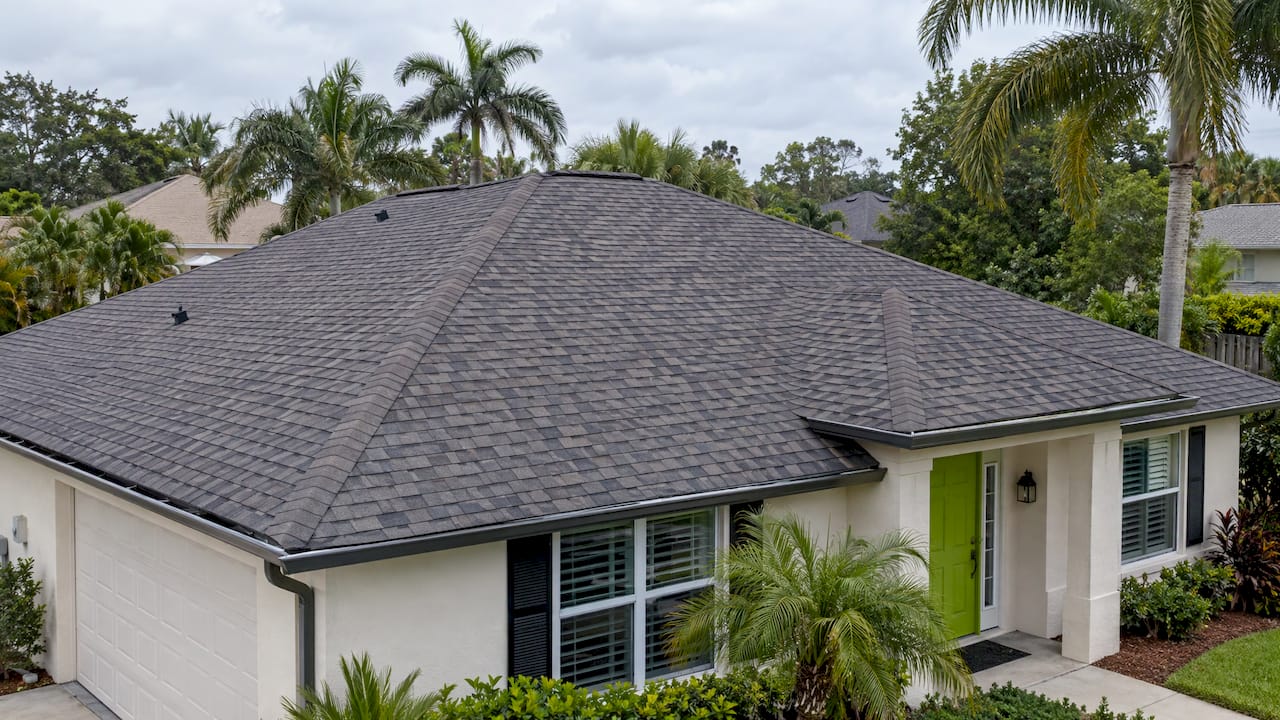
Hi, I’m the Hytz Roofing assistant 👋 Here is the short answer. The best time to work on your roof is before the storms arrive, and the second best is right after one passes. Hurricane season is long, so the smart move is a roof inspection in spring and again in fall, quick repairs for what the inspection finds, and a replacement planned for the off-season. We’re a GAF Master Elite® contractor serving Tampa Bay and Central Florida, and we handle inspections, storm repairs, replacements and insurance claim assistance.
This guide walks you through the calendar, the checks, the code rules for reroofing, what to do when a leak shows up mid-storm, and what the work typically costs.
TL;DR
- Atlantic hurricane season runs June 1 through November 30, but storms can form outside those dates, so plan roof work around the season, not inside it.
- FEMA recommends inspecting your roof at least twice a year, in spring and fall, and again after any high-wind event.
- Older or heat-worn shingles, loose tile and failing flashing are the usual weak points. Fix them early, because repair prices climb after a hurricane.
- In a leak or storm emergency: cover the opening, photograph everything, keep receipts, and call your insurer before permanent repairs.
- Our published repair prices run from $150 for a minor shingle repair to $1,589 for moderate storm damage repair, and a full replacement runs $9,000 to $30,000.
Table of Contents
- When hurricane season runs and when to schedule roof work
- The twice-a-year roof inspection
- Signs your roof may not make it through another season
- Repair or replace before the season?
- What code requires when your roof is replaced
- Material choices for hurricane country
- Flat and commercial roofs: standing water is the enemy
- A leak or storm damage hits: what to do
- What roof work costs in Tampa Bay
- Your next step
- Our perspective
- FAQ
- Sources
When hurricane season runs and when to schedule roof work
The Florida Division of Emergency Management says Atlantic hurricane season runs June 1 through November 30, and that tropical cyclones can occur outside those dates. The same guide says the Keys and nearby coastal waters are most often affected in September and October, with a smaller peak in June.
What does that mean for your calendar?
- December through April: the best window for replacements and larger repairs. The storms are behind you and crews are easier to book.
- March through May: inspection and repair season. Finding a lifted shingle or cracked flashing now costs far less than finding it in August.
- June through November: repairs, emergency work and inspections only. A full replacement started in August can be interrupted by a named storm.
- After the season ends: this is the moment most homeowners skip. Late November is a good time for the fall inspection, while any summer wear is still easy to see.
There is also a cost reason to move early. Florida’s own tile-roof guidance notes that replacement costs can rise after a hurricane because roofing labor and materials become scarce. Everyone with a damaged roof calls at once.
The twice-a-year roof inspection
FEMA’s guidance for sloped roofs recommends inspecting at least twice a year, generally in spring and fall, and after high-wind events, then completing needed repairs quickly. Its checklist covers the roof covering, edges, vents, drainage, openings, sheathing and rooftop equipment.
Here is what we look at on a typical Tampa Bay home:
- Roof covering. Missing, cracked, curled or lifted shingles and tiles.
- Edges and ridges. Wind gets under the roof here first, so loose edge metal, ridge caps and rake tiles matter most.
- Flashing. The metal around chimneys, skylights, vents and wall intersections. Sealant dries and cracks in Florida heat, and this is where many leaks start.
- Vents and penetrations. Loose or poorly sealed vents let wind-driven rain into the attic. Our guide to Florida roof ventilation and storm prep explains what to look for.
- Drainage. Clogged gutters and downspouts push water back under the roof edge.
- Attic. Stains on the underside of the decking, damp insulation, or daylight where there should be none.
- Deck attachment. How well the roof deck is fastened to the framing is a major factor in how the roof holds up in wind. See what inspectors check on roof deck attachment.
We offer roof inspections for homeowners, and certified inspections for insurance or financing needs. You can also start from a quick look from the ground with binoculars. Stay off a wet or damaged roof.
Signs your roof may not make it through another season
Florida’s shingle-roof retrofit guide says heat and ultraviolet exposure can shorten shingle life. It describes older 3-tab shingles as typically rated for 15 years and recommends yearly inspection for aging or weakness.
The same guide lists the warning signs:
- Cracks or broken tabs
- Curling or buckling
- Blistering
- Lost granules (check your gutters for sand-like grit)
- Tabs that lift easily
If you see several of these, a replacement before the next season is worth pricing. Our article on shingle roof heat damage in Florida shows what each sign looks like and which fixes apply.
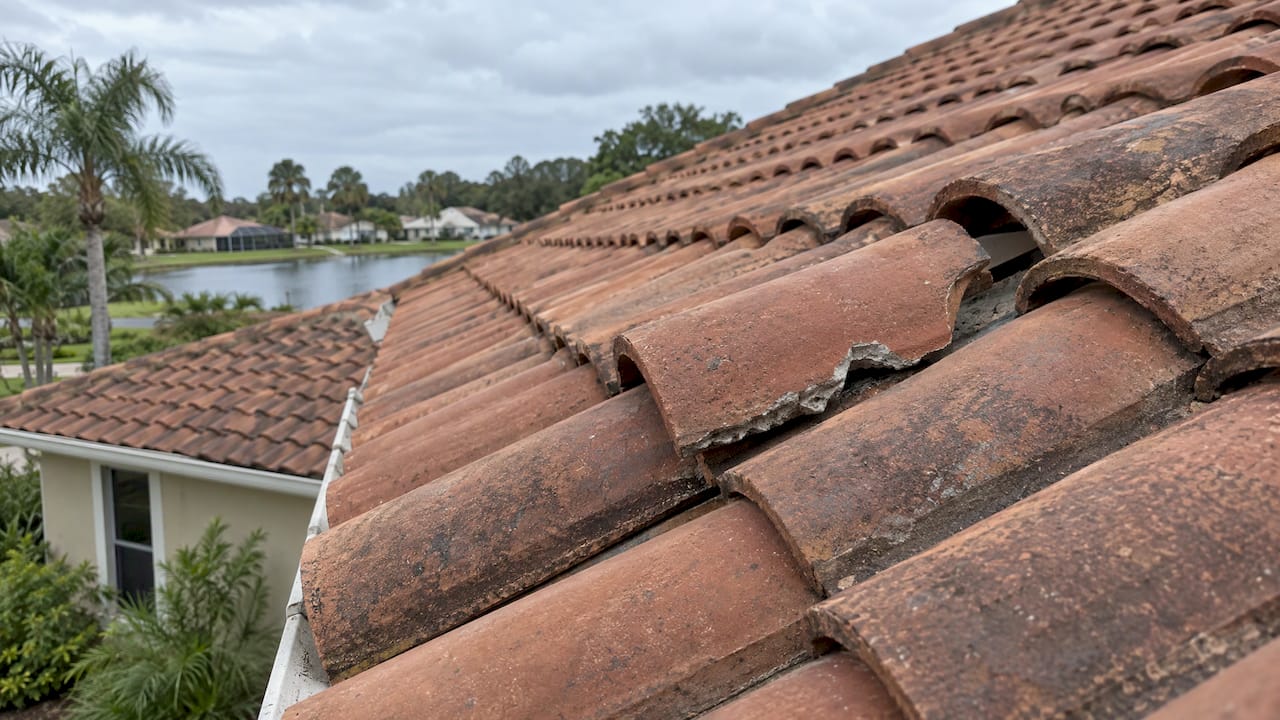
For tile, the state’s tile guidance says tiles are brittle and can be chipped or broken by wind-borne debris. It advises replacing missing or loose tiles and securing them, especially at ridges and edges, and having a roofer familiar with tile do the evaluation. That is our daily work on tile roofs, and our post on why installation beats tile type in hurricanes goes deeper.
Repair or replace before the season?
A simple way to decide:
| Situation | Usually points to |
|---|---|
| A few lifted shingles, one cracked tile, a small flashing leak | Repair |
| Localized storm damage on a roof in otherwise good shape | Repair |
| Widespread curling, granule loss, or brittle shingles on a roof near the end of its rated life | Replacement |
| Repeated leaks in different areas | Inspection, then likely replacement |
| Roof deck found weak or poorly attached | Replacement with deck work |
One rule makes this decision more important than it looks. The Florida Existing Building Code, as quoted in an Alachua County reroofing handout, generally says no more than 25% of a roof area or section may be repaired, replaced or recovered in a 12-month period unless the whole roof system or section is brought up to code. It carries an exception for systems that already comply with the 2007 Florida Building Code or later. The same handout says repairs or replacements under 100 square feet do not need a permit. Rules are applied by your local building department, so confirm how your city or county reads them. We handle permitting as part of our roofing work.
What code requires when your roof is replaced
Florida’s code is why a new roof here is a different job than in most states. FEMA’s Hurricane Michael recovery advisory notes that Florida reroofing provisions require investigation of roof-deck attachment, enhanced underlayment (a secondary water barrier) and roof-to-wall connections when a single-family roof covering is removed and replaced.
In plain terms:
- Roof deck attachment: the plywood or boards under your roof covering must be well fastened to the framing, or wind can peel the whole assembly.
- Secondary water barrier: a sealed layer under the roof covering that keeps water out even if shingles or tiles are lost.
- Roof-to-wall connections: the hardware that ties the roof structure to the walls so the roof stays on.
The state’s reroof guidance also stresses sound decking, proper flashing, high-wind-rated vents and installation to manufacturer instructions or stricter local requirements. That last point is where workmanship shows. Every product has installation specifications, and shortcuts are invisible until a storm tests them.
The state’s emergency management guide adds that newer Florida building codes are likely to reduce damage to newer structures, though wind duration, direction changes and the age of the structure also matter. If your home predates those codes, a replacement is a chance to bring the roof up to current standards. Our full price breakdown is on the roof replacement cost page.
Material choices for hurricane country
We install asphalt shingles, metal, concrete and clay tile, and synthetic products, and each has a place:
- Asphalt shingles: the most common choice and a good value when installed to code with a sealed deck.
- Metal roofing: our published range is $15,000 to $45,000 for a residential roof. Colors matter in Florida’s sun, so see our metal roof color guide.
- Tile roofing: our published range is $18,000 to $50,000. Tile is durable, and secure fastening at ridges and edges is what counts.
- Other options: our guide to alternative roofing materials for Tampa homes covers synthetic products.
Our warranty is built around the work as well as the material: 50 years on materials and 25 years on workmanship.
Flat and commercial roofs: standing water is the enemy
If you manage an HOA, a plaza or a commercial building, your roof is probably low-slope. The ICAT and IBHS hurricane-ready checklist recommends inspections at least twice yearly and after storms, high winds or heavy rain, plus removal of roof debris and loose equipment. It warns that standing water can speed up membrane aging and that unsecured rooftop equipment may slide or become airborne in high winds.
FEMA’s low-slope guidance agrees on a regular maintenance schedule and prompt repairs after each inspection.
A property manager’s pre-season list:
- Clear drains, scuppers and gutters.
- Look for ponding after a rain.
- Check seams, patches and flashing at rooftop units.
- Secure or strap equipment.
- Remove loose debris.
- Schedule repairs before June.
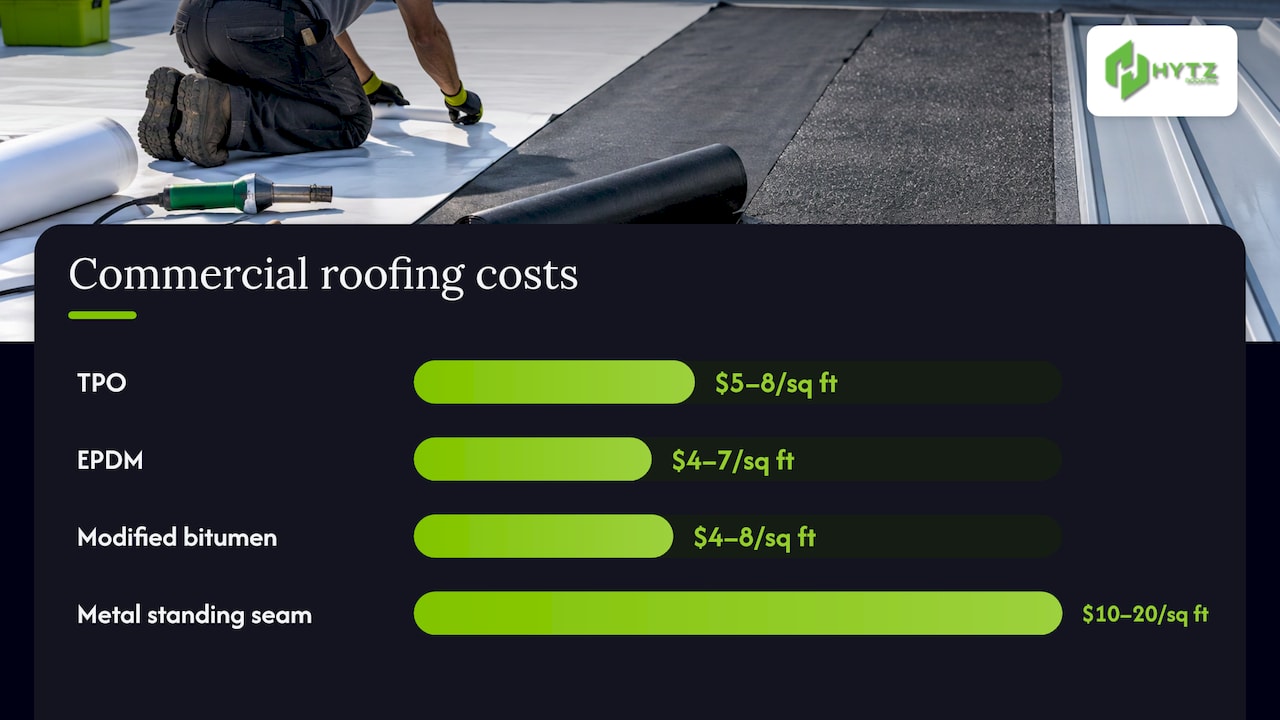
Our commercial roofing published ranges per square foot are $5 to $8 for TPO, $4 to $7 for EPDM, $4 to $8 for modified bitumen and $10 to $20 for metal standing seam. See also our TPO roofing page. A flat roof membrane patch runs $300 to $600 per square.
A leak or storm damage hits: what to do
🚨 This is the part people search for at 2 a.m., so here is the order of operations.
- Stay safe. Don’t go on a wet, damaged roof. Keep people away from sagging ceilings and downed lines.
- Cover the opening. State insurance regulators’ post-disaster guides advise making essential temporary repairs, such as covering roof holes with a tarp or other waterproof material. A properly installed tarp is a short-term fix. We offer emergency roof repair and same-day service.
- Document everything. Photos and video of the damage, inside and out, before and after the cover goes on.
- Keep receipts for emergency repairs.
- Report the claim as soon as possible, and talk with your insurer before permanent repairs.
- Get an itemized estimate for the permanent repair or replacement.
We provide direct insurance claim assistance and storm damage repair. See our insurance claims page and storm damage roof repair page, and our guide to affordable storm damage repair in Florida.
Once the roof is dry, the rest of the property needs attention too. Heavy rain can undermine ground-level surfaces, and a guide to driveway resurfacing after a hurricane explains why fixing the base comes first.
What roof work costs in Tampa Bay
These are our published ranges, one-off prices:
| Job | Price |
|---|---|
| Minor shingle repair | $150 to $400 |
| Roof leak / flashing repair | $350 to $900 |
| Fascia and soffit replacement | $500 to $1,500 |
| Moderate storm damage repair | $600 to $1,589 |
| Roof repair (overall range) | $463 to $1,589 |
| Roof replacement | $9,000 to $30,000 |
The spread comes from roof size, material, pitch, deck condition and access. Emergency and storm damage repairs, inspections and insurance claims are quoted individually. Compare it with the alternative: a $350 flashing repair in April versus a wet ceiling, insulation and drywall in September.
Your next step
If your roof hasn’t been looked at since last spring, book the fall inspection now and let us tell you what it needs before next June. Hytz Roofing is licensed (Florida Contractor License #CCC1332551), fully insured, carries workers’ compensation coverage, and is BBB accredited with an A+ rating. We give itemized estimates, and our roofing is backed by manufacturer warranties.
See the roof repair options, or request an inspection and estimate from Hytz Roofing. 📋
Our perspective
Most hurricane roof damage we hear about began as a small problem that nobody checked. A lifted shingle, a dried-out bead of sealant, a loose ridge tile. Those are cheap to fix in spring and expensive after a storm.
That’s why we tell homeowners to treat the roof like a system. The covering, the deck, the flashing, the vents and the connections all work together. A roof is only as strong as its weakest part, and the weakest part is often something you can’t see from the driveway.
We hold the GAF Master Elite® designation, which fewer than 2% of roofing contractors in North America earn, and we back our work with a 50-year material warranty and a 25-year workmanship warranty. We believe in itemized estimates so you can see what you’re paying for, and in handling the insurance paperwork alongside you, so a storm doesn’t become two problems.
Most of our work comes from referrals and repeat clients, and we’d like to keep earning it one roof at a time.
Anthony
FAQ
What is the cheapest month for roofing in Florida?
Winter and early spring usually bring the easiest scheduling, since it falls outside hurricane season. Costs rise sharply after a hurricane because labor and materials become scarce. Booking ahead of the season is the best way to avoid that.
Can I put a tarp on my roof to stop leaks?
Yes, covering a roof opening with a tarp or waterproof material is a standard temporary repair, and insurers ask you to take reasonable steps to prevent further damage. Keep your receipts and photos, and avoid climbing on a wet roof. We can do emergency tarping and the permanent repair that follows.
How long does a roof last in Florida?
It depends on the material and installation. Florida’s guidance describes older 3-tab shingles as typically rated for 15 years, and heat can shorten that. Tile and metal are built for longer lifespans, and yearly inspections tell you where yours stands.
What month is worst for hurricanes in Florida?
State emergency management says the Keys and nearby waters are most often affected in September and October, with a secondary peak in June. Storms can still threaten Tampa Bay at other times, so prepare before June.
Sources
- Florida Division of Emergency Management, Hurricane Guide 2024
- FEMA P-2181, sloped roof systems
- FEMA P-2181, low-slope roof systems
- ICAT and IBHS Hurricane Ready Business Checklist
- Florida Hurricane Retrofit Guide, reroofing
- Florida Hurricane Retrofit Guide, tile roofs
- Florida Hurricane Retrofit Guide, shingle roofs
- FEMA, Hurricane Michael best practices advisory
- Alachua County, residential reroof handout
- Illinois Department of Insurance, post-disaster claims guide
- Connecticut Insurance Department, post-disaster claims guide
- Driveway resurfacing after a hurricane