
How to Read Roofing Estimate Line Items in 2026
Roofing estimate line items show each charge and a short description so homeowners can identify materials, labor, permits, and disposal costs in a roofing quote.
You got three estimates. The numbers are all different. One is a single page with a total at the bottom. Another is four pages of line items you have never seen before. Sound familiar? Reading roofing estimate line items correctly is the single most important skill you can have before signing anything. A professional roofing estimate is typically multiple pages and covers key distinct sections. A one-line total is not an estimate. It is just a number.
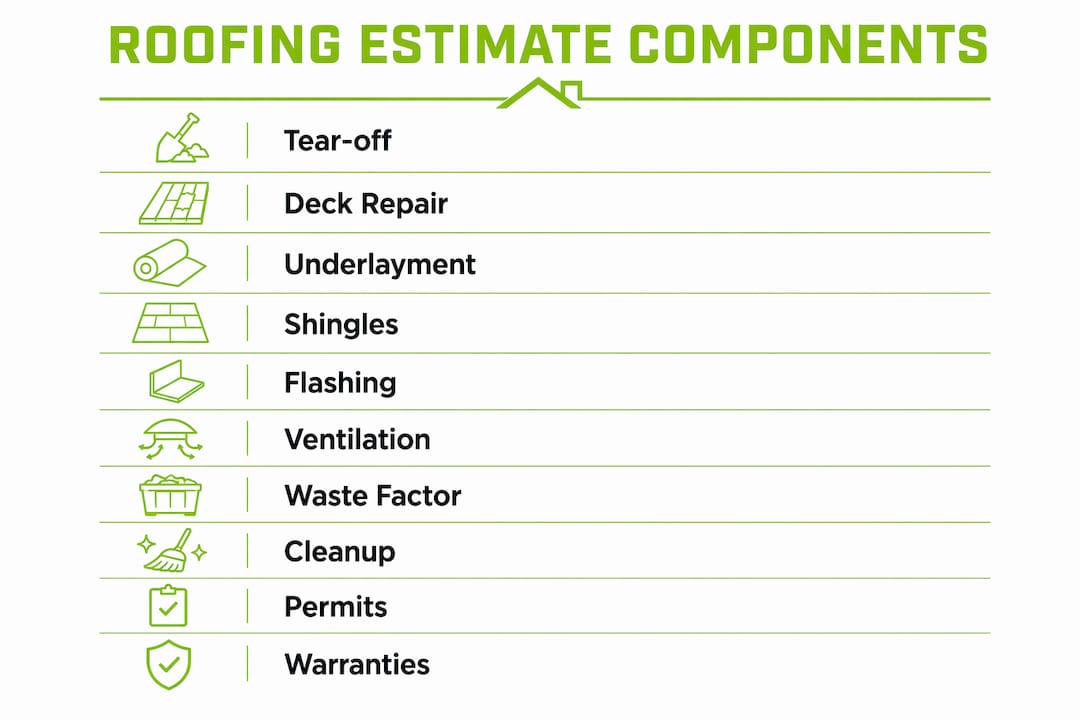
Here is what a complete, professional estimate should include:
- Tear-off and disposal listed as its own line item, with the number of layers being removed
- Deck inspection and repair allowance priced per sheet, not listed as “TBD”
- Underlayment specified by product name and type (synthetic vs. felt)
- Shingles with manufacturer, product line, color, wind rating, and fastening method
- Flashing broken out by type: drip edge, step, chimney, valley, and pipe boots
- Ventilation with ridge vent product and soffit intake details
- Cleanup and debris removal including a magnetic nail sweep
- Permits listed as a separate line, pulled by the contractor
- Warranties stated separately for manufacturer coverage and workmanship
- Contractor credentials including license number, insurance proof, and business info
Material specs matter as much as the line item labels. “Architectural shingles” tells you almost nothing. A specific product name, like GAF Timberline HDZ with a 6-nail fastening pattern and a Class H wind rating, tells you exactly what you are getting and lets you verify it at install.
Table of Contents
- ## 1. Tear-off and disposal
- ## 2. Deck inspection and repair allowance
- ## 3. Underlayment
- ## 4. Shingles with full material specs
- ## 5. Flashing components
- ## 6. Ventilation system
- ## 7. Waste factor
- ## 8. Cleanup and debris removal
- ## 9. Permits
- ## 10. Warranties in writing
- ## 11. Labor cost breakdown
- Why roofing estimates vary and how to compare them fairly
- What trust signals tell you about a contractor’s estimate
- Hytzroofing gives you an estimate you can actually read
- Key Takeaways
## 1. Tear-off and disposal
Tear-off is the removal of your existing roof before any new material goes down. It should always be its own line item, never bundled into a general labor charge. Two things to confirm here: how many layers are being removed, and whether disposal fees are included.
Removal labor has a per-square-foot charge and dumpster rental is a separate flat fee. If disposal is missing from the estimate, expect it to show up on your final invoice. Two-layer tear-off costs more than one, and some contractors miss this during the initial inspection and add it as a change order later.
Any estimate that combines tear-off and installation into a single number is hiding cost. Ask for them separated before you compare anything.
## 2. Deck inspection and repair allowance
Once the old shingles come off, the crew inspects the roof deck for rot, soft spots, and water damage. No contractor can guarantee the exact amount of decking replacement needed before tear-off because the damage is hidden underneath. A responsible estimate handles this with a defined per-sheet rate, for example $75 per sheet of OSB, or a capped allowance covering the first few sheets at a stated rate.
Never accept “decking TBD” or a vague “$500 for any repairs needed.” That open-ended language becomes a surprise charge on day one of the job. Push for a defined per-unit rate in writing before you sign anything.
## 3. Underlayment
Underlayment is the water-resistant layer installed between the roof deck and the shingles. It should be listed by product name and type. Synthetic underlayment is the modern standard. It outperforms traditional felt paper in heat, UV exposure, and tear resistance. If the estimate says “felt paper” without explanation, or leaves underlayment off entirely, ask why.
Two types should appear on a complete estimate. Synthetic underlayment covers the main body of the roof. Ice and water shield, a self-adhering rubberized membrane, goes at eaves, valleys, and around penetrations. GAF warranty terms require ice and water shield for full warranty coverage, so its placement and linear footage should be spelled out clearly.
## 4. Shingles with full material specs
Shingles are usually the largest single line item on the estimate. The spec needs to go beyond “architectural shingles.” A legitimate line item reads something like: GAF Timberline HDZ, Charcoal, Class H wind rating, 6-nail fastening pattern, 23 squares. That level of detail matters because it locks in the product at install and determines your warranty coverage.
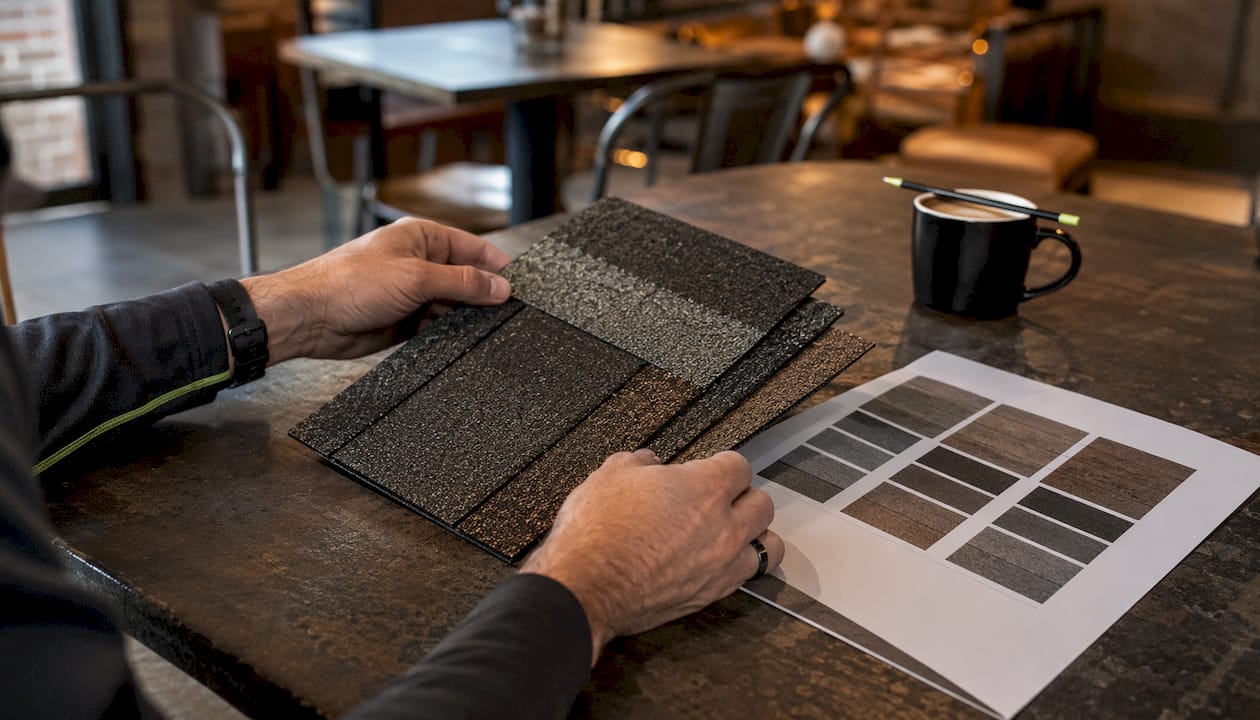
Architectural asphalt shingles typically cost a moderate price per square for materials. Premium shingles often cost more than standard architectural shingles. If you are comparing estimates, verify that each one names the same product line before comparing prices. Vague specs let contractors substitute cheaper material at install without you knowing.
Pro Tip: Ask each contractor to name the shingle product, wind rating, and fastening method in writing. If they resist, that tells you something.
## 5. Flashing components
Flashing is the metal that seals every penetration and transition on your roof. Flashing failures are one of the most common causes of roof leaks, and they are also one of the most commonly omitted items on low-bid estimates. A transparent estimate breaks flashing into specific types: drip edge along the eaves and rakes, step flashing at roof-to-wall intersections, counter flashing at chimneys, valley flashing, and pipe boots around plumbing vents.
Every flashing component should be replaced on a full roof replacement. Old pipe boots crack. Old drip edge corrodes. If the estimate plans to reuse existing flashing, get a direct answer on each component in writing. Drip edge, pipe boots, and chimney flashing each have typical costs that vary by material and complexity.
## 6. Ventilation system
Proper attic ventilation keeps your roof from deteriorating from the inside out. A complete estimate includes a ridge vent line item and accounts for soffit intake ventilation. The IRC R806 standard calls for a net free vent area of 1 square foot per 150 square feet of attic floor space, and most manufacturer warranties require compliance with that ratio.
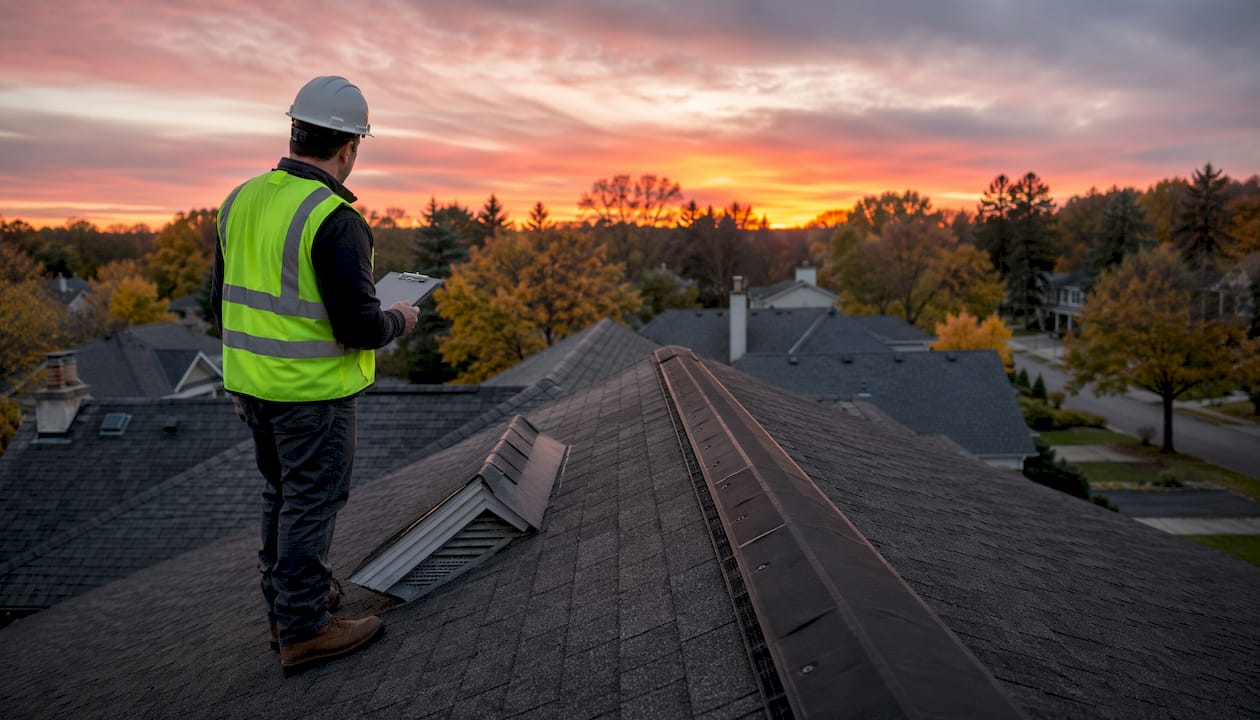
Ventilation is often where corners get cut because it is not visible from the ground after installation. Ridge vent installation has a cost per linear foot that varies by installer and product. If ventilation does not appear on the estimate at all, ask whether it will be installed and why it was not priced separately. A contractor who skips ventilation is shortening the life of the roof they are about to install.
## 7. Waste factor
Roofers include a waste factor of additional material to cover cuts, overlaps, and starter pieces. This is a legitimate cost, not padding. Some estimates list waste as a separate line. Others build it into the materials quantity. Either approach is fine as long as the total material cost is reasonable.
What is not fine: an estimate with no waste factor at all. If the material quantities match the roof’s exact square footage with nothing added, the contractor is either planning to short-order materials or will add a change order mid-job when they run short. Ask directly how waste is handled if you do not see it on the estimate.
## 8. Cleanup and debris removal
A professional estimate specifies daily cleanup, a magnetic nail sweep of the surrounding property, and haul-off of all debris. This protects your landscaping, your vehicles, and your family from roofing nails scattered across the yard. Written property protection plans in estimates, covering tarps over landscaping, AC units, and pool areas, demonstrate accountability before anyone climbs on your roof.
If cleanup is not specified, it may not happen the way you expect. Low-bid contractors frequently skip this detail on paper and in practice. It is a small line item that signals a lot about how a contractor runs a job.
## 9. Permits
Most U.S. cities require a permit for a roof replacement. Permit fees range from $100 to $500 depending on your municipality. The contractor should pull the permit. You should never be asked to pull your own permit for a roofing job.
A contractor who skips permits is also skipping inspections. Unpermitted work can void your material warranty, create problems at resale, and lead to insurance claim denial. If permits are not on the estimate, ask directly whether they plan to pull one at all.
## 10. Warranties in writing
A roofing warranty covers two separate things, and both should appear in writing on the estimate. The manufacturer’s material warranty covers defects in the shingles and materials. The contractor’s workmanship warranty covers installation errors. These are not the same document, and they do not cover the same risks.
Both warranty types must be stated separately with specific terms. A 50-year shingle warranty means little if the workmanship warranty is one year and the company closes in three. Proper installation per manufacturer specs is also required to keep material warranties valid, so the installation method listed in the estimate directly affects your coverage.
## 11. Labor cost breakdown
Labor often represents a substantial portion of the total roofing cost. A well-prepared estimate breaks labor charges by task rather than lumping everything together. Look for a per-square labor rate typical for standard asphalt shingle installation, though it can vary. Steep pitch, multi-story access, and complex roof shapes with lots of valleys and hips all add premiums on top of that base rate.
Some estimates build labor into each material line item. Others list it as a separate category. Either format works. What matters is that labor cost is not hidden inside a single total with no breakdown. If you cannot tell what you are paying for installation versus materials, ask the contractor to separate them before you compare bids.
| Line Item | Typical Unit | Price Range |
|---|---|---|
| Architectural shingles | per square | Within a standard price range |
| Synthetic underlayment | per square | Within a typical price range |
| Ice and water shield | per roll | Within a typical price range |
| Drip edge | per linear foot | Within a typical price range |
| Flashing (chimney) | per chimney | Within a typical price range |
| Pipe boots | each | Within a typical price range |
| Ridge cap shingles | per linear foot | Within a typical price range |
| Ridge vent (installed) | per linear foot | Within a typical price range |
| Tear-off labor | per square foot | Within a typical price range |
| Dumpster rental | flat fee | Within a typical price range |
| Building permit | flat fee | Varies by municipality and project scope |
| Installation labor | per square | Within a typical range based on complexity |
Why roofing estimates vary and how to compare them fairly
Estimates differ for real reasons: roof complexity, material grade, local labor rates, permit costs, and roofing system type all move the number. A metal roof or Brava Roof Tile synthetic system will cost more than standard asphalt, and that difference should show up clearly in the material specs, not just the total. A steep or complex roof with multiple valleys adds labor premiums. Local permit fees vary by municipality. None of this is surprising once you know what to look for.
The problem is when estimates vary because one contractor left things out. A bid that is 30–40% below the others is almost never a bargain. The difference is almost always missing scope: no ice and water shield, no drip edge, no proper ventilation, inferior materials, or skipped permits. Focus on scope and material specs when comparing bids, not just the bottom line.
Pro Tip: Line up all three estimates side by side and check each line item category. If one estimate is missing a category entirely, that cost did not disappear. It will show up as a change order or a callback repair.
Here are the red flags to watch for when reviewing any estimate:
- A single total with no itemization
- Vague material specs like “architectural shingles” with no brand or product line
- Decking listed as “TBD” or “as needed” with no per-unit rate
- No permit line item
- Deposit demand over 30% of the total
- “Price valid today only” pressure
- No license number or insurance documentation on the estimate
- Estimate produced without the contractor walking the actual roof
For homeowners dealing with older homes or complex rooflines, contractors specializing in older homes often provide more detailed decking allowances and flashing specs because they know what surprises tend to hide under older roofs.
What trust signals tell you about a contractor’s estimate
A professional estimate is a preview of how a contractor runs a job. The credentials and certifications behind it tell you whether the contractor is accountable to a higher standard than just their own word.
The GAF Master Elite® designation is held by fewer than 2% of roofing contractors across North America. It requires verified licensing, insurance, ongoing training, and a strong community reputation. Above that sits the GAF President’s Club Award, reserved for the best-performing Master Elite contractors who consistently demonstrate superior service and installation quality. When a contractor holds both, their estimates tend to reflect that standard: named products, stated wind ratings, written warranty terms, and permit responsibility spelled out clearly.
The 2024 Brava Roof Tile Excellence Award recognizes outstanding installation quality using Brava’s premium synthetic roofing products. The Angi Super Service Award 2025 reflects consistently high homeowner ratings across one of the nation’s largest home services platforms. BBB Accreditation with an A+ rating adds a third-party accountability layer that low-bid contractors rarely carry.
Here is what to verify on any estimate before signing:
- ✅ Contractor license number listed and verifiable
- ✅ General liability and workers’ compensation insurance documented
- ✅ Manufacturer warranty terms stated with product-specific coverage
- ✅ Workmanship warranty period and remediation process in writing
- ✅ Permit responsibility assigned to the contractor
- ✅ Property protection plan included (tarps, nail sweep, debris staging)
- ✅ Payment schedule with a deposit under 30% and final payment at completion
Written warranty coverage is where quality contractors separate themselves. Manufacturer warranties cover material defects. Workmanship warranties cover installation errors. On premium installs with a GAF Master Elite contractor, a system warranty can combine both layers into a single document. All three should be in writing before you sign. Choosing the right roofing contractor means verifying these credentials, not just comparing totals.
Hytzroofing gives you an estimate you can actually read
Reading a roofing estimate should not feel like decoding a contract. Hytzroofing provides fully itemized, line-by-line estimates that name every product, state every warranty term, and spell out permit responsibility before anyone touches your roof.
As a GAF Master Elite® and GAF President’s Club contractor with a BBB A+ rating and Florida Contractor License #CCC1332551, Hytzroofing backs every estimate with the credentials to match. The 2024 Brava Roof Tile Excellence Award and the Angi Super Service Award 2025 reflect the same standard in practice. You get a complete scope of work, named materials with wind ratings, written warranties for both manufacturer coverage and workmanship, and a contractor who pulls the permits. No vague line items. No surprise change orders. If you are ready to compare estimates the right way, request a free estimate from Hytzroofing and see exactly what a professional bid looks like.
Key Takeaways
A complete roofing estimate runs 4–8 pages, names every material by brand and product line, and separates labor, tear-off, permits, and warranties into distinct line items. Professional estimates cover about 10 detailed sections and extend to 4–8 pages. Roofing estimate line items show each charge and a short description so homeowners can identify materials, labor, permits, and disposal costs in a roofing quote. | Material specs protect you | Shingles must list manufacturer, product line, wind rating, and fastening method to prevent substitution at install. | | Labor and waste factor | Labor typically accounts for 35–45% of total cost; roofers usually order 10–15% more materials as a waste factor to cover cuts and starter pieces. | | Red flags to reject | Missing permits, vague decking language, deposits over 30%, and no license or insurance info are all reasons to walk away. | | Hytzroofing’s standard | As a GAF Master Elite® and President’s Club contractor, Hytzroofing provides fully itemized estimates with named products, written warranties, and permit responsibility included. |
Recommended
- Roof Financing Term Length: What Homeowners Need to Know | Hytz Roofing
- Choose the Best Roofing Contractor in Tampa Bay, Florida: Your Guide | Hytz Roofing
- Roof Repair in Tampa Bay: Your Guide to Florida’s Elements | Hytz Roofing
- Tampa Roofer | GAF Master Elite | Hytz Roofing
Related Hytz Roofing Services
Frequently Asked Questions
- How long does a roof last in Florida?
- Asphalt shingle roofs in Florida typically last 15–25 years due to intense UV exposure, high humidity, and frequent storm events — shorter than the 25–30 year lifespan in cooler climates. Metal roofs last 40–70 years; concrete tile 30–50 years. Regular maintenance and prompt repairs extend any roof's lifespan significantly.
- How much does a new roof cost in Tampa, Florida?
- A standard asphalt shingle roof replacement in Tampa ranges from $10,000 to $25,000 depending on roof size, pitch, and material selection. Metal roofing runs $18,000–$45,000; tile roofing $20,000–$50,000. Hytz Roofing provides free, no-obligation estimates — call (813) 436-0761.
- Does Hytz Roofing serve my area?
- Hytz Roofing serves the greater Tampa Bay area including Tampa, Brandon, Riverview, Clearwater, St. Petersburg, Sarasota, Lakeland, Orlando, and surrounding communities. Call (813) 436-0761 to confirm service availability in your area.
- What warranty does Hytz Roofing offer?
- Hytz Roofing provides a 25-year workmanship warranty on all installations. As a GAF Master Elite certified contractor, we can also offer the GAF Golden Pledge 50-year warranty — the strongest warranty in the roofing industry — on qualifying GAF material systems.
- How do I get a free roof estimate from Hytz Roofing?
- Call (813) 436-0761 or submit a request at hytzroofing.com/contact. Hytz Roofing provides free same-day inspections and written estimates with no obligation.