Roofing Permits for Storm Repairs: Florida Homeowner Guide
Storm Repair Roofing Permits clarify when and why Florida homeowners need permits for post-storm roof work and what to expect during the permitting process.
A roofing permit is mandatory for all permanent roof repairs and replacements after storm damage in Florida, covering both safety compliance and insurance claim validation. This requirement comes directly from the Florida Building Code, which sets wind-speed resistance standards that every repaired roof must meet. The role of roofing permit storm repairs plays in protecting your home goes well beyond paperwork. Without a permit, your insurer can deny your claim, your repair may fail a future inspection, and your home’s resale value takes a hit. Florida Statute 252.381 and local building departments enforce these rules consistently, and Hytzroofing works within this system every day to protect homeowners from costly mistakes.
What types of storm damage repairs require a roofing permit in Florida?
Permanent roof repairs and replacements require a permit in virtually every Florida municipality, regardless of storm severity. The threshold varies slightly by jurisdiction, but most counties trigger the permit requirement once a repair covers more than 100 square feet of roofing surface. Full replacements always require a permit, no exceptions.
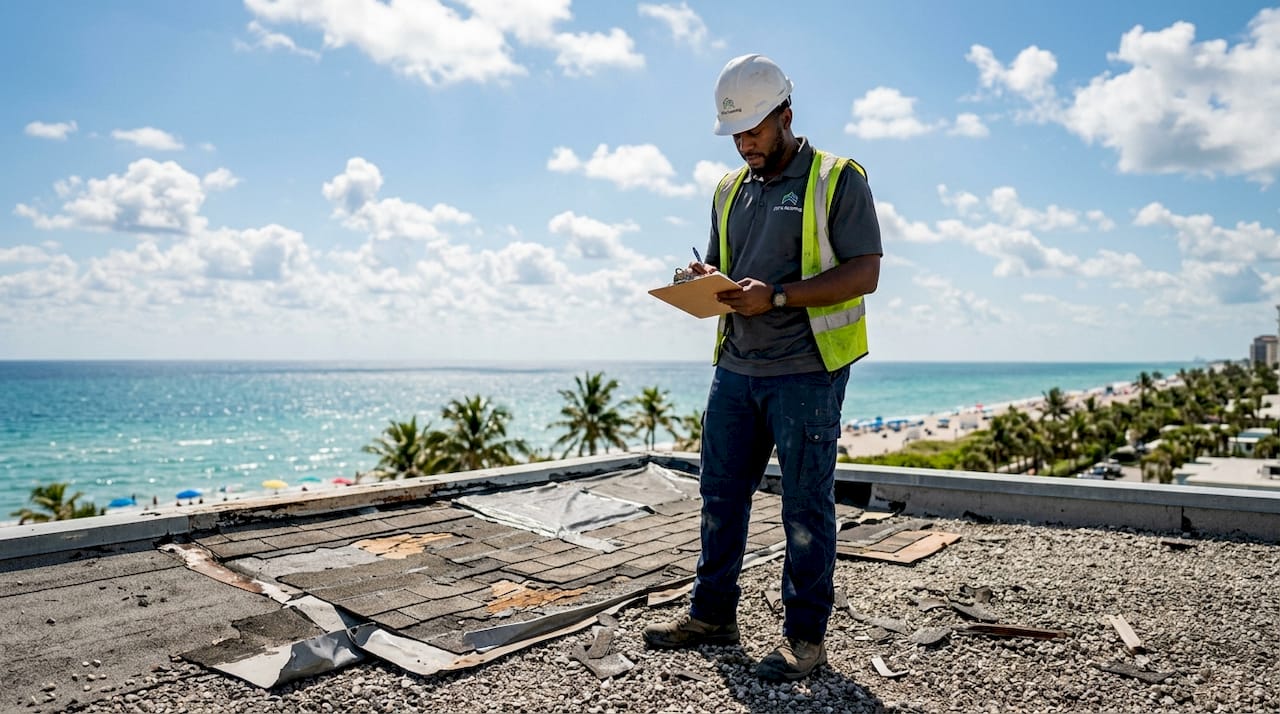
Not every post-storm task falls under permit requirements. Emergency tarping and dry-in measures are universally exempt under International Residential Code Section R105.2.1. You can cover your roof with a tarp the night after a hurricane without pulling a permit. The moment you move to permanent materials, the permit clock starts.
Structural work triggers the strictest requirements. Repairs involving roof sheathing, truss replacement, or rafter reinforcement always require a permit, even if the visible surface area is small. These structural elements directly affect your home’s ability to withstand future storms.
Here is a quick breakdown of what requires a permit and what does not:
- Full roof replacement: Always requires a permit
- Permanent repairs over 100 sq ft: Permit required in most Florida counties
- Sheathing, truss, or rafter work: Always requires a permit, regardless of size
- Tile or shingle repair under threshold: Check with your local building department
- Emergency tarping or dry-in: No permit required
Pro Tip: After a declared disaster, many Florida counties open fast-track permit lanes that process applications within 24–72 hours. Call your local building department the morning after a storm to ask about expedited channels before your contractor even starts the bid.
How does the roofing permit process work for storm damage repairs?
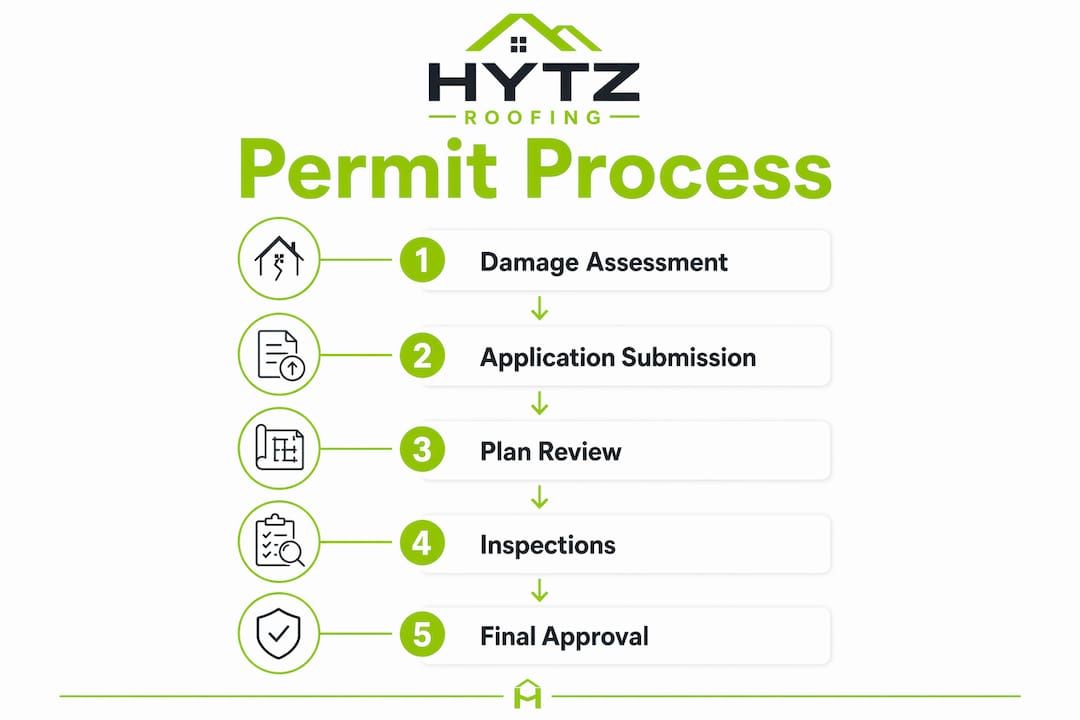
The permit process for storm damage follows a clear sequence. Knowing each step prevents delays and keeps your insurance claim on track.
- Assess and document the damage. Take geotagged photos of every damaged area before any cleanup. Your building department and insurer will both ask for this documentation.
- Hire a licensed contractor. Licensed contractors handle permit applications as part of their service. They know the local forms, fees, and submission portals.
- Submit the permit application. Documentation requirements typically include a signed contract, geotagged photos, and sometimes an engineering assessment for severe structural damage. Miami’s building department processes these through its “Homeowners Express” channel after major storms.
- Receive permit approval. After a declared disaster, fast-track programs prioritize intake and approval, often within 24–72 hours. Fees may be waived, but the application itself is never optional.
- Schedule the mid-roof inspection. This inspection happens after sheathing is installed but before shingles or tiles go on. The inspector verifies that structural work meets Florida Building Code standards.
- Complete the work and pass the final inspection. The final inspection closes the permit and creates the official record your insurer needs to release full payment.
One detail many homeowners miss: inspections remain mandatory even when permit fees are waived after emergencies. Skipping an inspection does not save time. It creates an unpermitted repair that will surface during your next home sale or insurance renewal.
Homes in flood hazard zones face an additional step. A Substantial Damage Assessment may be required before any permit is issued. This assessment determines whether the storm damage triggers full structural code upgrades, which can delay your roof repair until the assessment is approved.
Pro Tip: Ask your contractor to provide you with a copy of the final signed permit card and inspection report. Store these with your home’s important documents. You will need them for insurance, refinancing, and resale.
Why are roofing permits critical for your insurance claim?
A roofing permit is the single most important document your insurer will request before releasing your full settlement. Insurance companies require proof of permitted and inspected repairs to release depreciation holdbacks. Without a final approved permit, that portion of your payment stays with the insurer.
The financial stakes are real. Here is what an unpermitted repair can cost you:
- Withheld depreciation payments: Insurers hold back a portion of your settlement until they confirm code-compliant repairs. No permit means no release.
- Future claim denials: If your roof sustains damage in a later storm, your insurer can deny the claim by citing the prior unpermitted repair as a contributing factor.
- Resale complications: Buyers’ lenders and inspectors flag unpermitted work. You may need to pull an after-the-fact permit, pay fines, and potentially redo portions of the repair before closing.
- Refinancing problems: Lenders require clear permit histories. An unpermitted roof repair can stall or kill a refinance application.
“Insurance companies increasingly tie the release of depreciation holdbacks to receipt of final approved permits, making permits critical for maximizing claim settlements.” — PermitDeck 2026 Guide
The permit also establishes a verifiable record that your roof meets current Florida Building Code wind-speed resistance standards. That record protects you in two ways. First, it gives your insurer confidence that the repair was done correctly. Second, it gives future buyers and their lenders the same confidence.
What are the risks of skipping a roofing permit after storm repairs?
Skipping a permit feels like a shortcut. It rarely works out that way. The consequences compound over time and almost always cost more than the permit would have.
Key risks of unpermitted storm repairs in Florida:
- Fines and after-the-fact permitting costs: Pinellas County waived permit penalties through june 30, 2026, but permit fees still applied and timely compliance remained required. After that date, after-the-fact permitting carries additional fees and requires more labor-intensive inspections.
- Denied insurance claims: An unpermitted repair gives your insurer grounds to deny future storm damage claims on the same structure.
- Personal liability: If an unpermitted repair fails and causes injury or property damage, you bear the legal and financial liability. A licensed contractor’s permit shifts that liability to the contractor and their insurer.
- Home sale delays: Florida real estate transactions require permit disclosure. Unpermitted work surfaces during title searches and buyer inspections, often derailing closings.
- Insurance non-renewal: Some Florida insurers now review permit histories during annual policy renewals. An unpermitted repair can trigger a non-renewal notice.
Working with a licensed contractor is the most direct way to avoid every risk on this list. Licensed contractors carry expertise that reduces errors, delays, and liability compared to homeowner-pulled permits. They know which inspections to schedule, which forms to submit, and how to respond when a building department requests additional documentation.
How can Florida homeowners navigate the permit process efficiently?
Getting through the permit process without delays comes down to preparation and the right contractor. These steps work for most Florida homeowners after a storm:
- Choose a licensed, insured contractor immediately. Demand to see their Florida contractor license number before signing anything. Hytzroofing holds Florida Contractor License #CCC1332551 and manages the full permit process for every job.
- Gather documentation before the application. Geotagged photos, your insurance adjuster’s report, and a signed contractor agreement are the core documents most Florida building departments require.
- Ask about expedited post-storm programs. After a declared disaster, call your county building department and ask specifically about fast-track or emergency permit lanes. These programs exist in most major Florida counties and can cut approval time to 24–72 hours.
- Track your inspections. Confirm the mid-roof inspection date with your contractor before work begins. Missing this window means the inspector cannot verify structural work that is already covered.
- Understand owner-builder risks. You can pull your own permit as an owner-builder, but you take on full legal and financial liability for code compliance. Most homeowners are better served by a licensed contractor who carries that responsibility.
For more detail on storm roof repairs specific to the Tampa area, including what to expect from inspections and insurance adjusters, Hytzroofing’s blog covers the process step by step.
Pro Tip: If your county’s permit portal is overloaded after a major storm, visit the building department in person. Many counties set up temporary field offices after declared disasters specifically to process storm repair permits faster.
Key takeaways
A roofing permit is not optional after permanent storm repairs in Florida. It protects your safety, your insurance claim, and your home’s financial value.
| Point | Details |
|---|---|
| Permits are mandatory for permanent repairs | Any permanent roof repair or full replacement after storm damage requires a permit under Florida Building Code. |
| Emergency tarping is exempt | Temporary tarp and dry-in work is allowed without a permit under IRC Section R105.2.1. |
| Inspections cannot be skipped | Mid-roof and final inspections are required even when permit fees are waived after a declared disaster. |
| Permits protect your insurance settlement | Insurers require a final approved permit to release depreciation holdbacks and full settlement payments. |
| Licensed contractors reduce your risk | A licensed contractor manages permits, inspections, and documentation, shielding you from liability and delays. |
What I have learned about permits after Florida storms
After years of working on roofs across Tampa and surrounding counties, I can tell you that the permit conversation is the one homeowners most often want to skip. I understand why. After a storm, you want your roof fixed fast. The last thing you want is paperwork.
Here is what I have seen happen when permits get skipped. The repair looks fine for a year or two. Then the homeowner tries to sell, or another storm hits, and the unpermitted work surfaces at the worst possible moment. I have watched closings fall apart two days before the scheduled date because of an unpermitted roof repair from years earlier. The cost to fix it at that point, under deadline pressure, is always far higher than the original permit would have cost.
The permit is not bureaucratic red tape. It is proof that your roof can handle the next storm. Florida’s wind-speed resistance requirements exist because the state has learned, storm by storm, what roofs need to survive. A permitted repair means an inspector confirmed your roof meets those standards. That confirmation matters to your insurer, your lender, and your future buyer.
My advice is simple. After a storm, call a licensed contractor before you call anyone else. Let them handle the permit. Focus on your family and your claim. The permit process, done right, protects everything else.
— Anthony
Hytzroofing handles storm repairs and permits for Tampa homeowners
Storm damage is stressful enough without navigating permit applications, inspection schedules, and insurance paperwork on your own.
Hytzroofing manages the full permit process for every storm repair job, from application to final inspection sign-off. As a GAF Master Elite® Contractor in Tampa, Hytzroofing holds an honor earned by fewer than 2% of roofing contractors across North America. That designation means rigorous licensing, insurance, and training standards on every job. Hytzroofing also coordinates directly with insurance adjusters to make sure your claim documentation aligns with your permit record. Contact Hytzroofing today for a permit-compliant storm damage repair estimate in Tampa and the surrounding area.
FAQ
Do I need a permit for roof repairs after a storm in Florida?
Yes. All permanent roof repairs and full replacements require a permit in Florida. Only emergency tarping and temporary dry-in work is exempt.
How long does it take to get a storm damage repair permit in Florida?
After a declared disaster, most Florida counties offer fast-track permit programs that process applications within 24–72 hours. Standard timelines vary by county.
Can my insurer deny my claim if I don’t have a roofing permit?
Yes. Insurers require a final approved permit to release full settlement payments. An unpermitted repair can result in withheld depreciation holdbacks or outright claim denial for future storm damage.
What happens if I skip the mid-roof inspection?
Skipping the mid-roof inspection creates an unpermitted repair record. This complicates home sales, insurance renewals, and future claims. After-the-fact inspections are more expensive and harder to schedule.
Should I pull my own roofing permit or let my contractor handle it?
Let your licensed contractor handle it. Homeowners who pull their own permits take on full legal and financial liability for code compliance. A licensed contractor carries that responsibility and reduces the risk of errors or delays.
Recommended
- Weathering the Storm Expert Tips for Roof Leak Repair in Tampa Fl
- GAF Master Elite Roofer in Tampa, FL | Hytz Roofing
- Introducing Enviroshake to Your Hoa
- Types of Roof Repairs Florida Homeowners Need Most
Related Hytz Roofing Services