Stop Flat Roof Ponding in Tampa Bay: 5 Fixes Ranked by Permanence
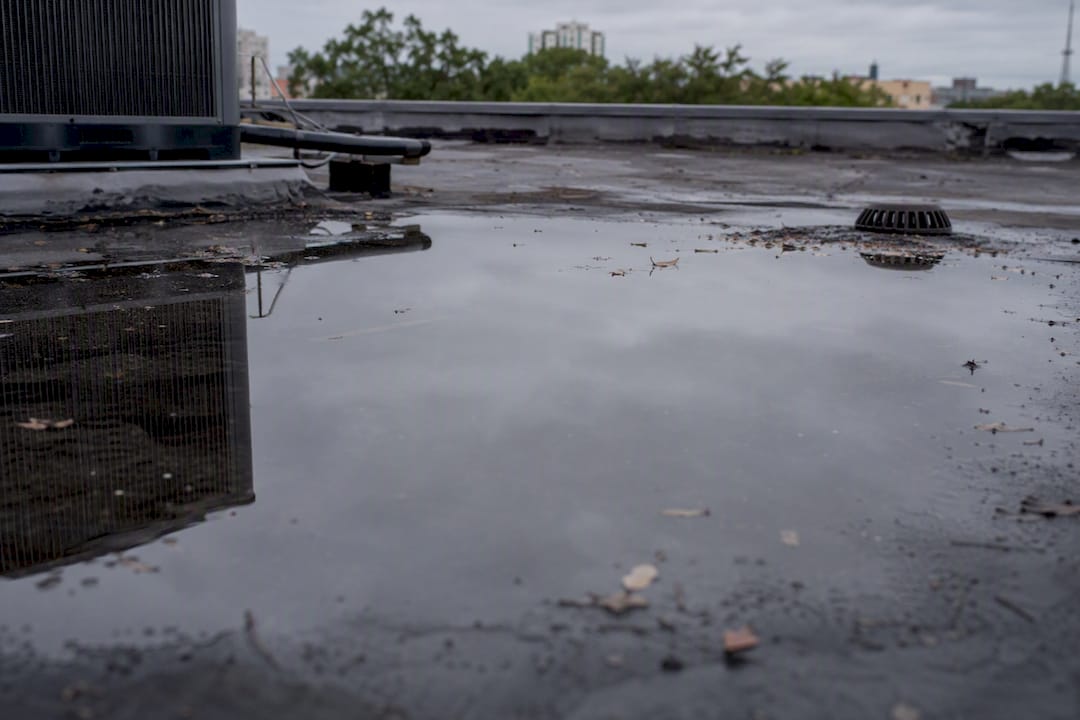
If water is still sitting on your flat roof 48 hours after the rain stopped, you’ve got ponding, not just normal drainage lag. Grab a tape measure and go check your drains first. If the water clears on its own within that window, you’re fine. If it doesn’t, or it keeps coming back in the same spot, that’s added weight sitting on your membrane and your deck, and it’s time to call a roofing pro before a small puddle becomes a much bigger repair.
TL;DR:
- Drains should be checked and cleared regularly, especially after major storms, to prevent ponding that persists beyond 48 hours.
- Structural issues or insufficient slope are the main causes of prolonged ponding, requiring different corrective measures such as tapered insulation or structural reinforcement.
- A small, isolated low spot may be temporarily fixed with patches or drainage adjustments, but widespread or deep ponding indicates the need for a permanent retrofit.
- Water weighing about 5.2 pounds per square foot per inch of depth can cause significant stress and damage if it remains on the roof longer than 48 hours.
- Regular inspections and documentation of ponding patterns can help identify recurring issues early, enabling cost-effective, targeted repairs.
Table of Contents
- What Counts as Flat Roof Ponding Water (The 48-Hour Rule)
- Why Water Is Pooling on Your Roof
- The Real Risk: How Much Does Ponding Water Actually Weigh?
- How to Fix Roof Ponding: Options Ranked by Permanence
- What You Can Check Yourself vs. When to Call a Pro
- Preventing Roof Ponding: A Maintenance Schedule That Works
- What to Expect From a Professional Roof Inspection
- An Editorial Take on Flat Roof Ponding
- Get Your Flat Roof Assessed by Hytz Roofing
- Sources
- FAQ
What Counts as Flat Roof Ponding Water (The 48-Hour Rule)
Not every puddle on a flat roof is a problem. The industry standard defines ponding water as standing water that remains on the roof surface 48 hours or longer after rainfall stops. Water pooling on a flat roof right after a Tampa Bay downpour is normal. Water still sitting there Thursday after a Tuesday storm is not.
Confirming it takes about ten minutes:
- Mark the edges of the pooled area with chalk or tape so you can track whether it’s growing.
- Measure depth at the deepest point with a tape measure or a level laid across the surface.
- Note the exact time the rain stopped, then check back at the 48-hour mark.
- Photograph the pond from the same angle each time for a visual record.
A roof that drains within a day is doing its job. A pond that outlasts two full days, or reappears in the same footprint after every storm, has moved from “normal” to “needs attention.”
Why Water Is Pooling on Your Roof
Most ponding water issues trace back to one of four culprits, and figuring out which one you’re dealing with determines whether you need a maintenance crew or a structural engineer.
- Clogged drains and scuppers. Leaves, granule buildup, and wind-blown debris block outlets, and this is by far the most common cause.
- Insufficient slope. Older flat roofs were often built to 1/8 inch per foot or less. ARMA and NRCA now recommend a minimum slope of 1/4 inch per foot for positive drainage, so plenty of legacy roofs simply weren’t designed to shed water fast enough.
- Structural deflection. Aging trusses, added rooftop equipment, or years of standing water can cause the deck itself to sag, creating a permanent low spot that gets deeper over time.
- Compressed insulation and obstructions. Foot traffic and equipment pads compress insulation unevenly, while HVAC units, parapet walls, and curbs block the path water would otherwise take to the drain.
The Real Risk: How Much Does Ponding Water Actually Weigh?
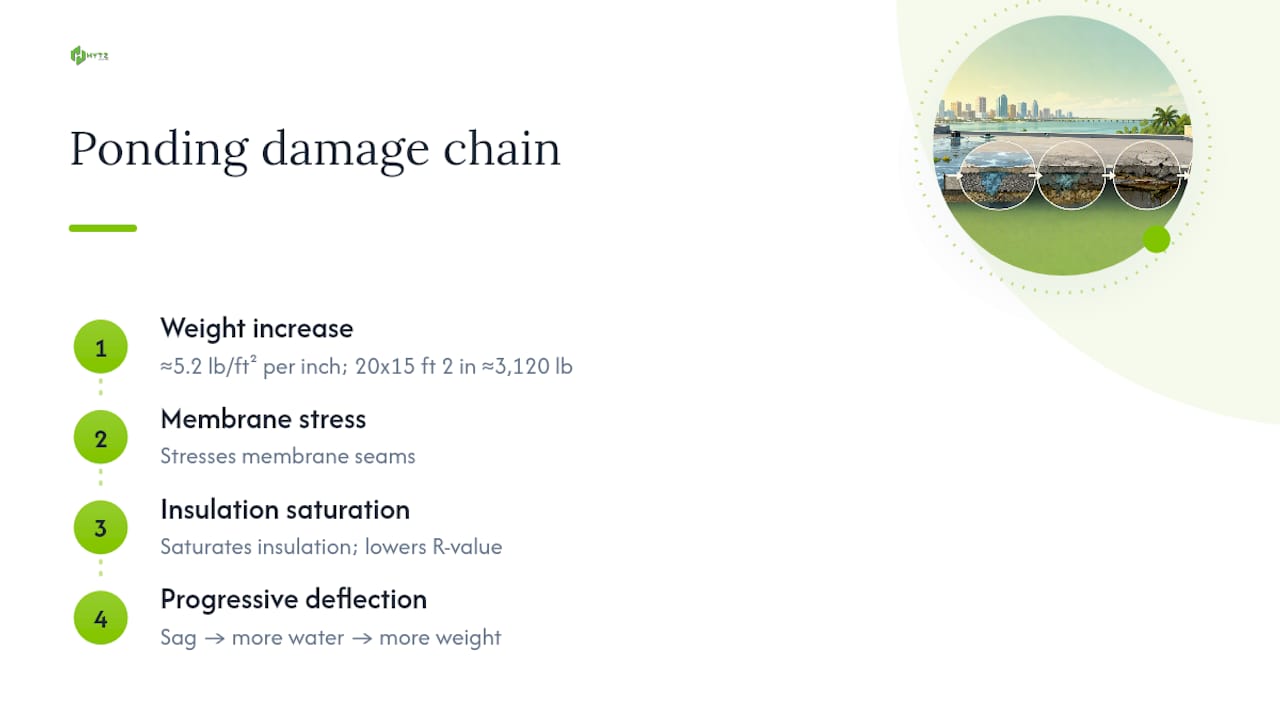
Standing water isn’t cosmetic. Every inch of pooled water adds about 5.2 pounds per square foot of load to your roof deck, load it was never designed to carry indefinitely.
Do the math on your own roof: a 20-by-15-foot pond just 2 inches deep adds roughly 3,120 pounds sitting in one spot. That’s more than a small car parked on your deck, and it doesn’t drive away after the weekend.
Beyond raw weight, ponding stresses membrane seams, saturates insulation and cuts its R-value, and can trigger progressive deck deflection: the roof sags a little, which lets more water collect, which adds more weight, which makes it sag further. Treat a pond as urgent when it persists past 48 hours, measures more than an inch deep, covers more than 100 square feet, or has visibly grown since your last inspection.
How to Fix Roof Ponding: Options Ranked by Permanence
Not every pond needs a full re-roof. Match the fix to the cause and the severity you measured.
- Clear the drains first. Simply unclogging blocked drains resolves ponding in roughly 30% of cases, and it costs almost nothing. Do this before anything else.
- Patch and monitor. Temporary pond-filling compounds or membrane patches buy time on a small, isolated low spot while you plan a permanent fix. Not a long-term answer, just a stop-gap.
- Add or relocate drainage. Installing a new internal drain or scupper, or building a tapered cricket to redirect water toward an existing outlet, solves localized low spots without touching the whole roof.
- Retrofit with tapered insulation. Adding a tapered polyiso insulation system during a re-roof is the standard permanent cure for slope-related ponding. It costs more upfront than flat insulation but eliminates the low spot for good, with costs varying by project scope.
- Address structural deflection. If the deck itself is sagging, no membrane fix will hold. This calls in a structural engineer before any roofing work proceeds.
Silicone coatings deserve a mention here too. They’re widely considered the most ponding-tolerant coating category and work well as interim protection over an existing membrane. Just know their limits: a coating protects the surface, it doesn’t fix bad slope or a sagging deck. Costs vary widely by roof size and scope, but drain clearing costs a few hundred dollars, coatings and patches typically cost a few thousand dollars, and a full tapered insulation retrofit is a significant investment on most commercial roofs. It’s also worth knowing that many manufacturers exclude ponding damage from warranty coverage, since decades of claims data show standing water accelerates membrane failure. Documenting prompt maintenance protects your position if you ever need to file one.
What You Can Check Yourself vs. When to Call a Pro
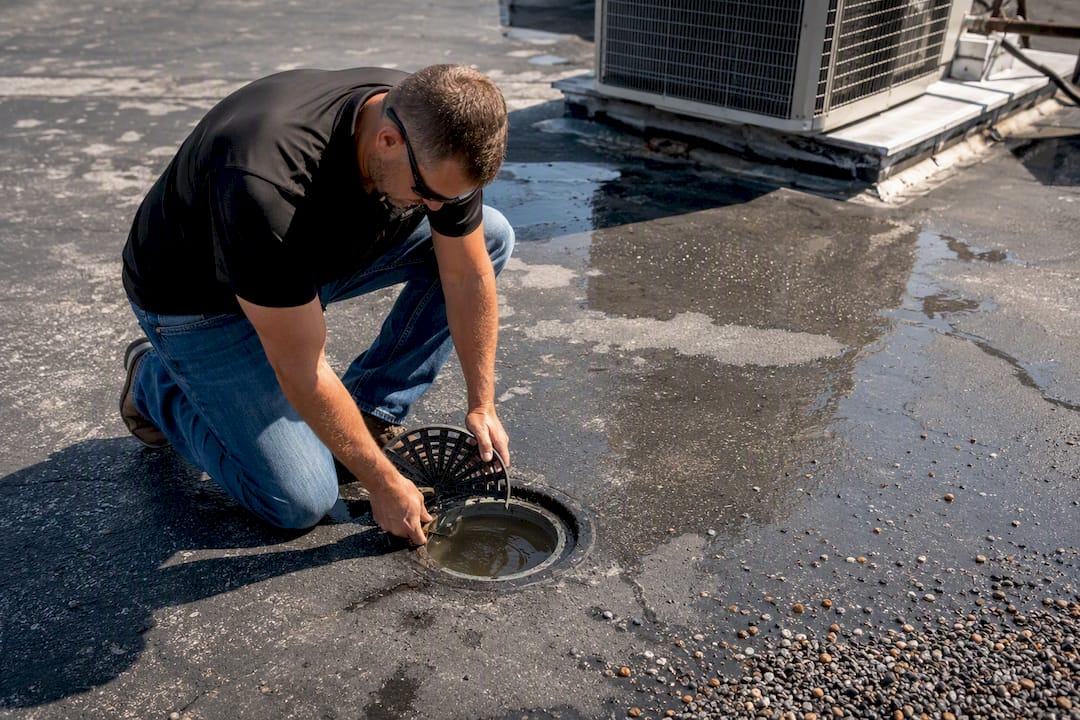
You can safely handle the basics: measure the pond, photograph it, clear visible debris from strainers and drain bowls, and log what you find. That’s useful work and it costs you nothing but time.
Stop and call a professional if you see any of these:
- Ponding that persists after you’ve cleared every drain and strainer
- Standing water deeper than 1 inch across a wide area
- A roof deck that feels soft or spongy underfoot
- Interior ceiling stains, sagging, or active drips below the pond location
Pro Tip: A soft deck or visible interior sag isn’t a roofing call anymore, it’s a structural one. Loop in a structural engineer alongside your roofer so you’re fixing the cause, not just the symptom.
Preventing Roof Ponding: A Maintenance Schedule That Works
Recurring ponds that never quite hit the 48-hour mark are still worth logging. They tend to predict bigger problems down the road, and a documented pattern makes it far easier to justify a permanent fix to ownership or an insurance adjuster.
- Clear drains and scuppers quarterly, and always after major storms.
- Walk the roof annually to re-measure and re-photograph any known low spots.
- Keep a simple roof log with dates, photos, and depth readings for warranty and insurance purposes.
- When you plan your next reroof, specify tapered insulation and secondary overflow drains up front rather than retrofitting later.
Our preventive roof maintenance guide breaks this schedule down further if you’re building a formal maintenance plan for a commercial property.
What to Expect From a Professional Roof Inspection
A qualified contractor doesn’t just eyeball a wet spot. Expect a drain flow test, a full membrane inspection, precise measurement of pond depth and area, and, if wet insulation is suspected, core cuts to confirm it. Our commercial roof inspection process covers exactly what that diagnostic workflow looks like.
From there, ask for a written scope of work, an itemized materials list, a clear statement of warranty impact, and a realistic timeline. Request photos of every issue found, not just a verbal summary. If drainage capacity is part of the fix, a look at drainage system design principles helps you understand why your contractor is recommending a specific pipe size or drain placement.
An Editorial Take on Flat Roof Ponding
Most property owners wait too long because a puddle doesn’t look dramatic. It should. Clear your drains and document what happens over the next 48 hours before you spend a dollar on anything else. If the same spot floods after every storm, stop patching it. Budget for a tapered insulation retrofit instead of paying for temporary fixes year after year that never solve the slope problem underneath.
— Anthony
Get Your Flat Roof Assessed by Hytz Roofing
Hytzroofing gives Tampa Bay property owners something a quick coating job can’t: a permanent fix backed by real drainage engineering, not just a patch that buys you another storm season. As a GAF Master Elite® Contractor and GAF Certified™ Commercial Contractor, we handle everything from drain relocation to full tapered insulation retrofits on flat and TPO roofing systems.

When we inspect a ponding roof, you get a documented report: pond depth and area measurements, drain flow results, and a clear written scope before any work starts. That documentation matters if you’re also filing an insurance claim for storm-related roof damage. If your low-slope roof is holding water past the 48-hour mark, request a free roof replacement estimate and we’ll walk your roof, measure the problem, and lay out your repair options in plain terms.
Sources
- Ponding water flat roof — Flat Roof Report
- Understanding ponding water: common causes and solutions — Polyglass
- Ponding water flat roof: 2026 fix guide — The Roofing Brief
FAQ
How Do You Stop Water From Ponding on a Flat Roof?
If water keeps collecting in the same spot after drains are clear, the fix moves to adding drainage or correcting the slope with tapered insulation.
Is Water Pooling on a Flat Roof Bad?
Temporary pooling right after rain is normal, but water that remains 48 hours or longer adds about 5.2 pounds per square foot of load per inch of depth and accelerates membrane wear. Left unaddressed, it can lead to leaks, wet insulation, and progressive deck sagging.
How Do You Fix a Low Spot in a Flat Roof?
Small, isolated low spots are usually corrected with a tapered cricket or an added drain that redirects water to an existing outlet. Widespread low spots from insufficient slope or structural sagging typically require a full tapered insulation retrofit or, in severe cases, structural repair.
How Long Can Water Sit on a Flat Roof Before It’s a Problem?
Water sitting for more than 48 hours after rain stops meets the industry definition of ponding and should be investigated. Even smaller ponds that clear just short of 48 hours but recur after every storm are worth logging, since that pattern often predicts a growing problem.