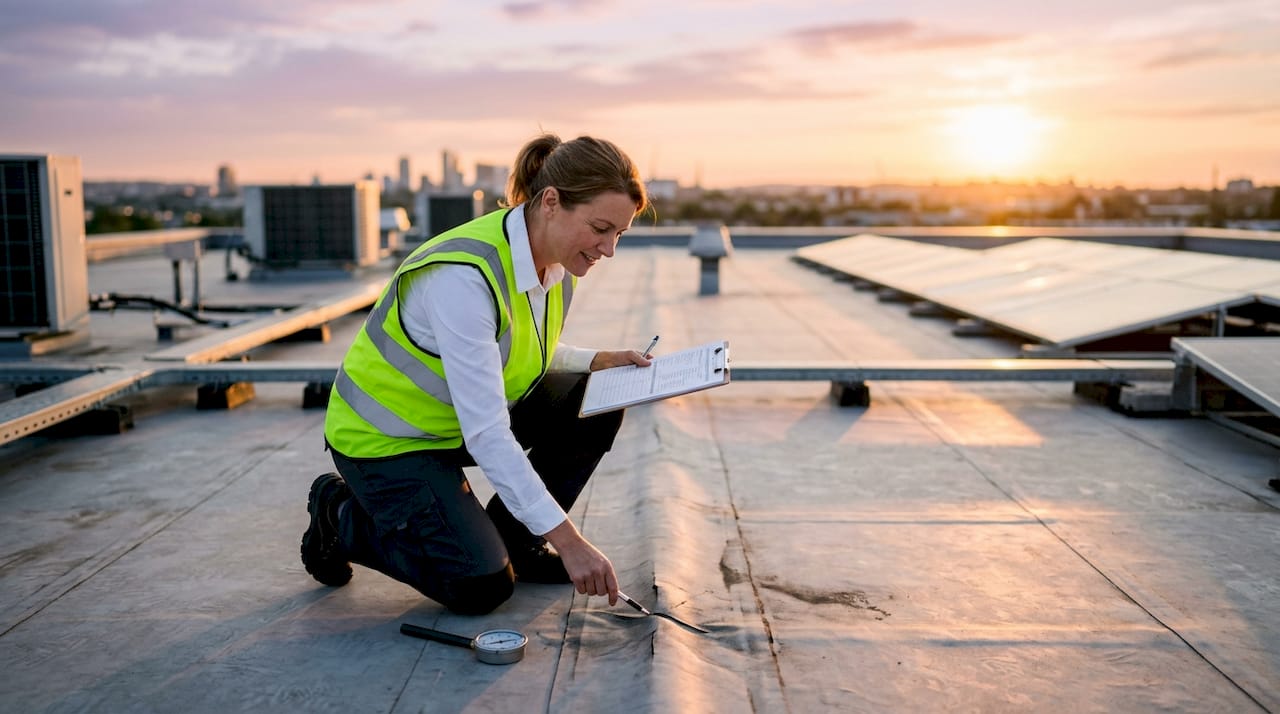
Why Commercial Roofs Need Inspections: A Property Manager’s Guide
Commercial Roof Inspections help property managers detect leaks, document conditions, and prioritize maintenance to protect roof life and reduce unexpected costs.
Last updated: August 8, 2026
Regular commercial roof inspections are not optional maintenance. They are the single most effective way to protect one of your building’s most expensive assets. A biannual inspection program can extend a commercial roof’s lifespan by 25% to 40%, potentially saving tens of thousands in premature replacement costs. Here is what every property manager and building owner needs to know.
Why inspections matter right now:
- Early detection catches membrane separations and insulation saturation before leaks appear
- Documented biannual inspections are required by most manufacturer warranties to keep coverage valid
- Insurance carriers, including FM Global, require maintenance records for favorable claim outcomes
- Post-storm inspections within 48–72 hours are critical for insurance claim substantiation
- ⚠️ Inspections identify rooftop safety hazards that expose property owners to liability
What problems do commercial roof inspections actually find?
Commercial roofs fail quietly. The field membrane can look fine from the ground while seams are opening, drains are backing up, and insulation is absorbing water. Inspections reveal damage invisible to the naked eye, including membrane separations and saturated insulation, long before a leak shows up on a ceiling tile.
Common findings include:
- Membrane damage: Punctures, splits, blistering, exposed reinforcement, and open seams caused by thermal cycling or foot traffic
- Flashing failures: Cracked sealant, loose metal at penetrations, and deteriorated edge details where most commercial leaks originate
- Drainage problems: Standing water, clogged drains, blocked scuppers, and inadequate slope that accelerates wear at seams
- Moisture intrusion: Saturated insulation that reduces R-value, raises HVAC costs, and can lead to microbial growth
- Safety hazards: Loose walk pads, unstable coping, and compromised areas that could fail under a technician’s weight
Pro Tip: If your energy bills have been creeping up with no obvious cause, wet insulation from an undetected roof leak is a common culprit. Schedule an inspection before assuming it is an HVAC issue.
What types of commercial roof inspections should you know about?
Not every inspection serves the same purpose. Knowing which type you need, and when, keeps you compliant and protected.
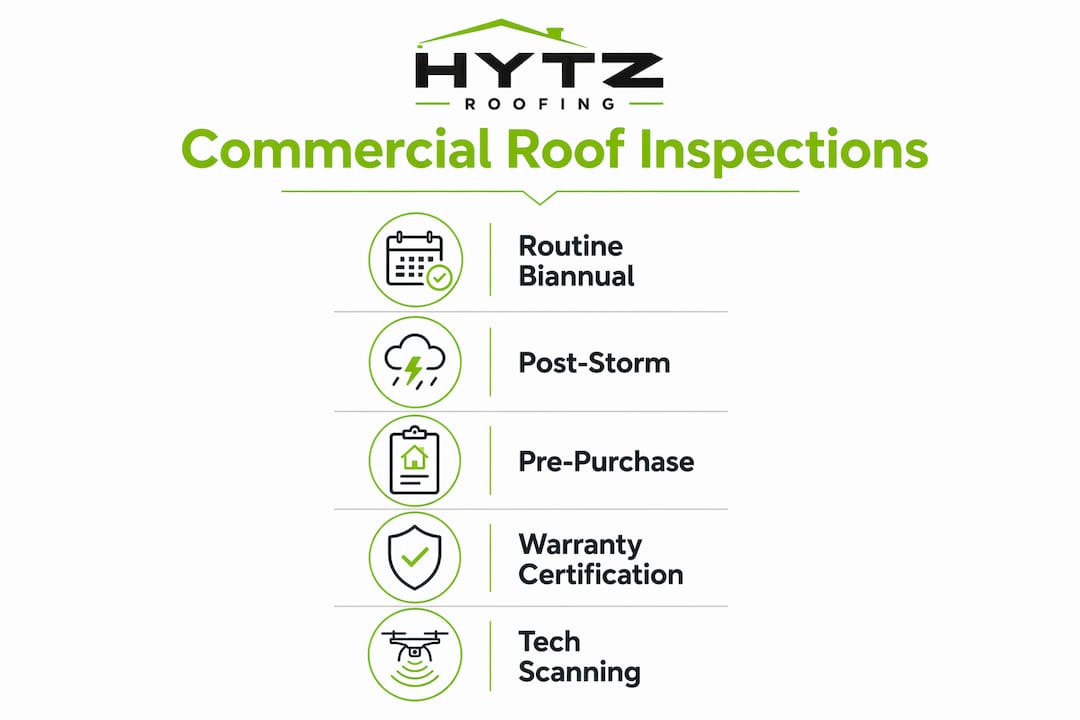
Routine biannual inspections are the baseline. Recommended by the NRCA (National Roofing Contractors Association) and IIBEC (International Institute of Building Enclosure Consultants), these cover the full roof surface, penetrations, drainage, flashings, and edge details. They satisfy most manufacturer warranty requirements and are typically scheduled in spring and fall.
Post-storm inspections are triggered by hail, high winds, heavy snow, or tornado activity. They should happen within 48–72 hours of the event. The goal is detailed photographic documentation of every area of concern before conditions worsen, which is exactly what insurance adjusters need.
Pre-purchase inspections are the most thorough type. They combine a visual assessment, infrared moisture scanning, and core sampling to determine remaining useful life and estimate near-term capital costs. Lenders often require these as part of commercial loan underwriting.
Warranty certification inspections follow a manufacturer-specific format. Some manufacturers, including GAF, require their own report templates. Missing this format is enough to void a claim even when the roof failure was caused by a product defect.
Specialized technology inspections use infrared thermographic scanning and electronic leak detection to map moisture intrusion invisible to visual review. These are particularly valuable on large flat or low-slope roofs where hidden failures can span hundreds of square feet.
How often should you schedule commercial roof inspections?
Twice a year is the standard, and it is not arbitrary. Spring inspections catch damage from winter freeze-thaw cycles. Fall inspections prepare the roof for storm season and cold weather stress. That cadence satisfies most manufacturer warranty clauses and aligns with NRCA guidelines.
Beyond the twice-yearly baseline, schedule an additional inspection after:
- Any severe weather event involving hail, wind above 50 mph, heavy rain, or snow accumulation
- Rooftop equipment work, including HVAC replacements, telecom installations, or antenna additions
- Interior signs like ceiling stains, active drips, or unexplained moisture near exterior walls
Buildings in Florida, Gulf Coast states, or high-wind zones benefit from quarterly visual checks given the frequency of storm activity. If you notice signs of roof damage like interior staining or rising energy costs between scheduled visits, do not wait for the next calendar inspection. Those symptoms often mean water has already entered the assembly.
What does a best-practice commercial roof inspection look like?
A thorough inspection is systematic, not a quick walk across the field membrane. Here is what separates a professional inspection from a surface-level check.
Qualified inspectors matter. Look for contractors with IIBEC certification or documented experience in commercial low-slope systems. A GAF Certified Commercial Contractor brings manufacturer-level knowledge of the specific system on your building.
Full-roof coverage is non-negotiable. The inspection must cover the field membrane, all penetrations, edge details, drainage points, and relevant interior areas. Most commercial leaks originate at details, not in the open field, so skipping penetrations or flashings misses the highest-risk zones.
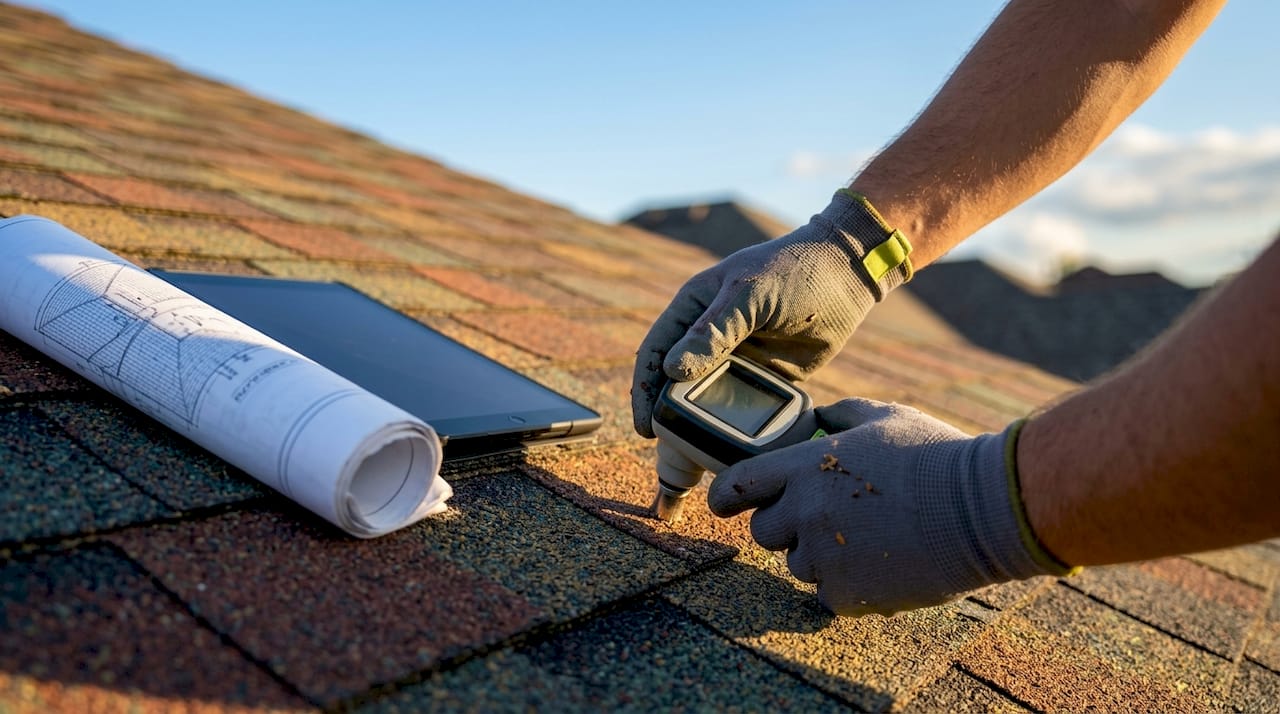
Technology closes the gap. Visual inspection alone misses compressed insulation layers and moisture trapped beneath the membrane. Infrared moisture scanning maps hidden water intrusion without cutting into the roof assembly, giving you a complete picture before deciding on repairs.
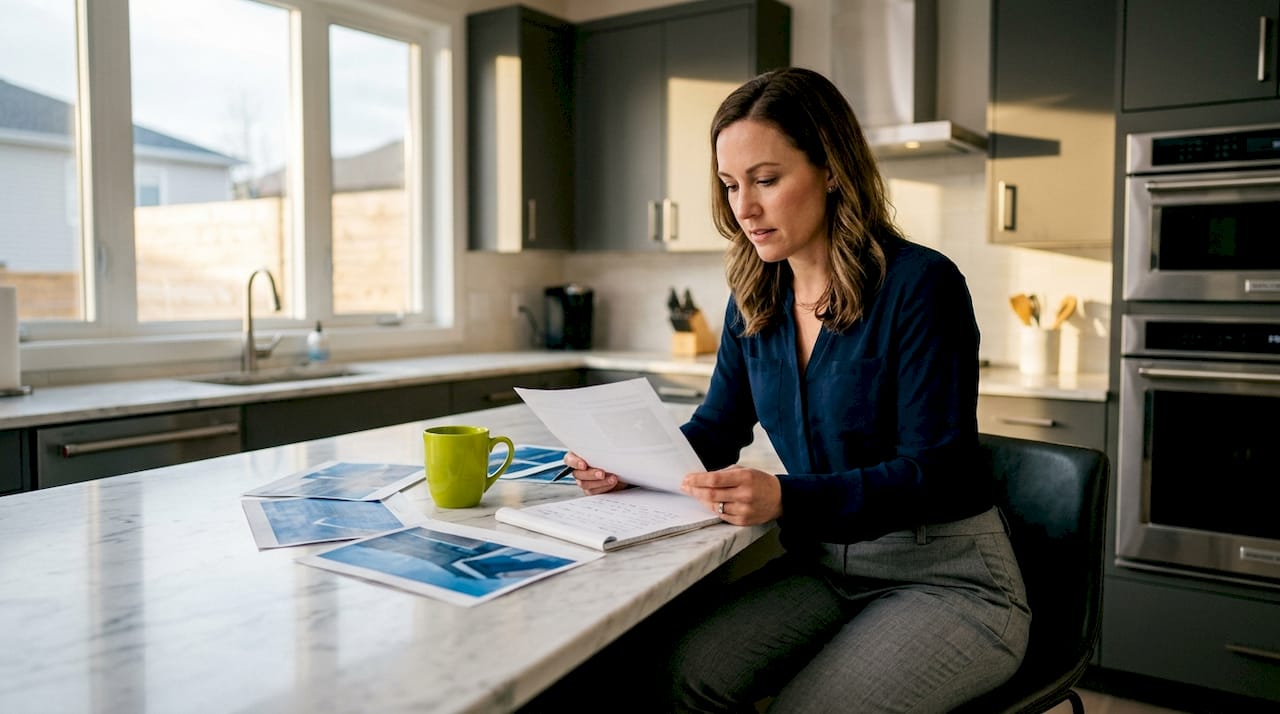
Documentation is the deliverable. A documented roof book containing diagrams, inspection reports, photographs, and maintenance records is what protects you in a warranty dispute or insurance claim. The inspection report itself should prioritize findings into urgent repairs, near-term recommendations, and items to monitor.
Pro Tip: Schedule inspections proactively, not in response to a leak. By the time water shows up inside, the problem has usually been growing for months and the repair scope has already expanded.
How do inspections protect your warranty and insurance coverage?
This is where skipping inspections gets expensive fast. Documented biannual inspections are required by nearly every major manufacturer warranty, and failure to maintain those records is the top reason manufacturers deny claims after damage occurs. A roof that fails due to a manufacturing defect can still result in a denied claim if the owner cannot prove the maintenance schedule was followed.
On the insurance side, commercial property carriers require proof of regular roof maintenance history to offer favorable claim outcomes and competitive premiums. FM Global, one of the largest commercial property insurers in the country, publishes specific roof maintenance requirements in FM Data Sheet 1-29 that many other carriers reference when underwriting.
Pre-loss documentation is equally valuable. When a storm causes damage, a clean inspection history proves the roof was in good condition before the event. Without it, insurers can attribute damage to pre-existing conditions or deferred maintenance, especially on older roofs where depreciation arguments are common. Post-storm, a professional inspection report with photographic evidence and GPS-noted damage locations is what separates a successful claim from a disputed one.
Key fact: Warranty loss often stems from missing roof books and undocumented equipment changes that affect flashing integrity. Keep records of every HVAC replacement or rooftop installation, not just inspection visits.
What happens when you skip commercial roof inspections?
Neglecting inspections does not save money. It defers costs while letting them grow. A small open seam costs a few hundred dollars to repair. Left undetected for one rainy season, that same seam can saturate insulation across a large area, stain interior ceilings, and trigger a repair scope that runs into five figures.
Warranty voidance is an immediate risk. Miss the documented biannual requirement and you lose the manufacturer’s backing entirely, even for defects that have nothing to do with maintenance. Insurance claim denials follow the same logic. Adjusters look for maintenance history first. No records means no favorable outcome.
Liability exposure grows too. Safety hazards like loose walk pads and unstable coping go undetected without regular inspections, putting HVAC technicians and telecom crews at risk every time they access the roof. A documented inspection program reduces that liability. Without one, a workplace injury on your rooftop becomes a much harder situation to defend.
Understanding construction site hazards and how they apply to rooftop environments is part of responsible property management. Inspections are the mechanism that keeps those hazards identified and addressed.
How do inspection costs compare to repair and replacement costs?
The math is straightforward. A professional commercial roof inspection typically costs a fraction of what a single emergency repair runs, and far less than what deferred maintenance eventually demands. The NRCA estimates that $1 spent on preventive roof maintenance saves $5–$10 in future repair or replacement costs.
Replacement costs put that in perspective. A 20,000 square foot commercial roof can cost $100,000–$240,000 to replace, depending on the system and market conditions. Extending that roof’s life through regular inspections translates to years of deferred capital expenditure, often a large amount on a standard TPO system.
Inspections also shift spending from emergency repairs to planned maintenance, which means you control timing, pricing, and contractor access instead of reacting to a crisis on a Friday afternoon. That scheduling flexibility alone has real budget value for any property manager trying to plan capital expenditures responsibly. For context on managing repair costs, understanding roof repair options in your region helps you budget accurately after an inspection identifies issues.
Hytzroofing is ready to inspect and protect your commercial roof
When your roof needs a professional eye, you want a contractor with the credentials to back it up.
Hytzroofing holds GAF Certified™ Commercial Contractor status, meaning we meet the same rigorous installation and inspection standards that GAF requires for its commercial warranty programs. We are also a GAF Master Elite® Contractor, an honor held by fewer than 2% of roofing contractors across North America, backed by a BBB A+ rating and Florida Contractor License #CCC1332551.
Whether you need a routine biannual inspection, a post-storm assessment, or a full pre-purchase evaluation, we bring the documentation, photographic reporting, and manufacturer knowledge your warranty and insurer require. We serve commercial property owners across Florida with the same care and precision that earned us the GAF President’s Club Award and the 2025 Angi Super Service Award.
Ready to protect your investment? Request a commercial inspection from Hytzroofing today and get a clear, documented picture of your roof’s condition before the next storm season arrives.
Key Takeaways
Regular commercial roof inspections are the most cost-effective way to extend roof life, maintain warranty coverage, and prevent emergency repair costs from spiraling.
| Point | Details |
|---|---|
| Inspections extend roof life | Biannual inspections and prompt repairs can extend a commercial roof’s lifespan by 25% to 40%. |
| Warranty compliance requires documentation | Failure to document biannual inspections is the top reason manufacturers deny warranty claims. |
| Insurance depends on maintenance records | Carriers require proof of regular maintenance for favorable claim outcomes and lower premiums. |
| Post-storm timing is critical | Inspections should occur within 48–72 hours of a storm to document damage for insurance claims. |
| Hytzroofing delivers certified inspections | As a GAF Certified™ Commercial Contractor, Hytzroofing provides the documented inspections your warranty and insurer require. |
Recommended
- Roof Repair in Tampa Bay: Your Guide to Florida’s Elements | Hytz Roofing
- Choose the Best Roofing Contractor in Tampa Bay, Florida: Your Guide | Hytz Roofing
- Enviroshake Roofing in Tampa Bay: Ultimate Durability & Value | Hytz Roofing
- Storm Damage Tampa Bay Homeowners Miss After a Storm: The Four Truths That Cost You Thousands | Hytz Roofing
Related Hytz Roofing Services
Frequently Asked Questions
- How often should a roof be inspected in Florida?
- Florida's climate — high humidity, intense UV, frequent thunderstorms, and hurricane exposure — accelerates roof aging. Most roofing professionals recommend inspections every 1–2 years for roofs under 15 years old, and annually for roofs over 15 years. After any named storm, an immediate inspection is advisable regardless of visible damage.
- What does a professional roof inspection include?
- A thorough inspection covers the roof surface (shingles, tiles, or membrane), flashing at all penetrations and transitions, gutters and drainage, soffit and fascia, attic ventilation, and interior signs of water intrusion. Hytz Roofing provides free same-day inspections with a written report and photo documentation.
- Can I inspect my own roof in Florida?
- You can do a visual check from the ground using binoculars, but walking on a roof without training risks injury and can damage shingles. A professional inspector has the equipment and experience to identify issues that are not visible from ground level, including flashing failures and underlayment deterioration.
- How long does a roof inspection take?
- A standard residential roof inspection takes 45–90 minutes depending on roof size and complexity. Hytz Roofing provides a written report with photos within 24 hours of the inspection.
- Does a roof inspection affect my homeowners insurance in Florida?
- Yes — positively. A wind mitigation inspection (a specific type of roof inspection) can reduce your Florida homeowners insurance premium by 10–40%. Hytz Roofing can coordinate a wind mitigation inspection as part of any roofing project.