Preventive Roof Maintenance: A Property Owner’s Guide
Preventive Roof Maintenance is the routine care and inspections that help identify small roof problems early and reduce costly repairs over time.
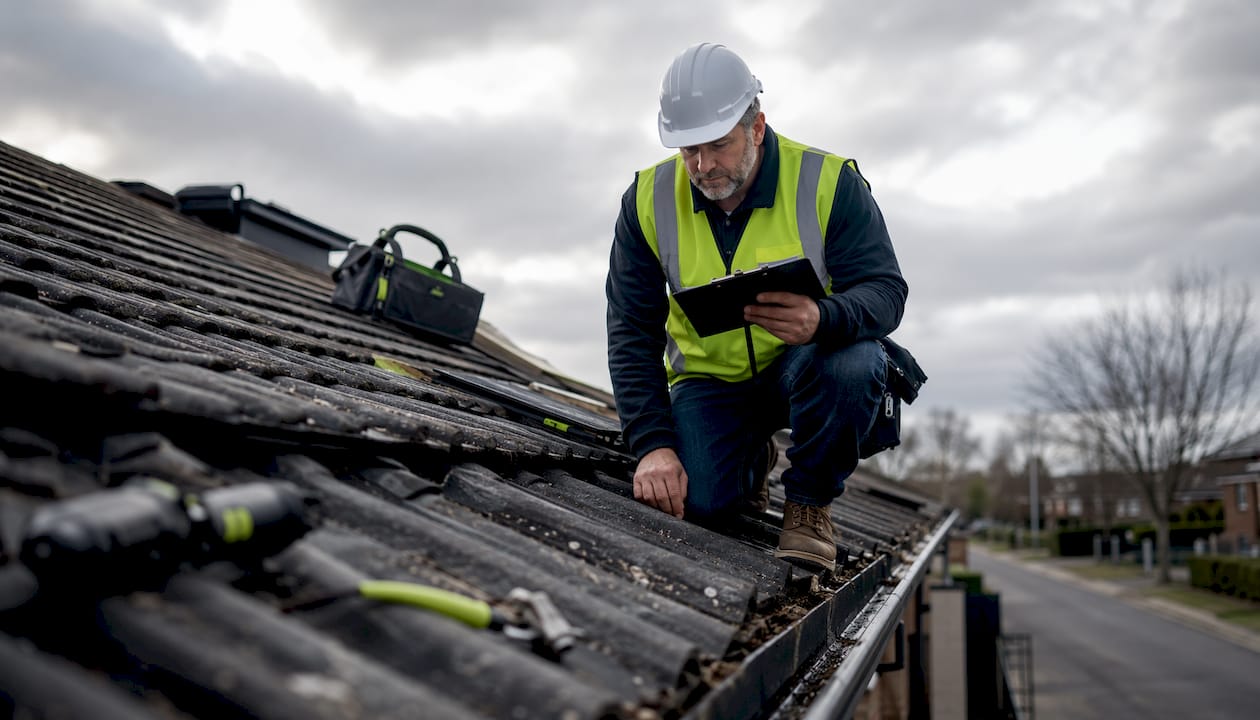
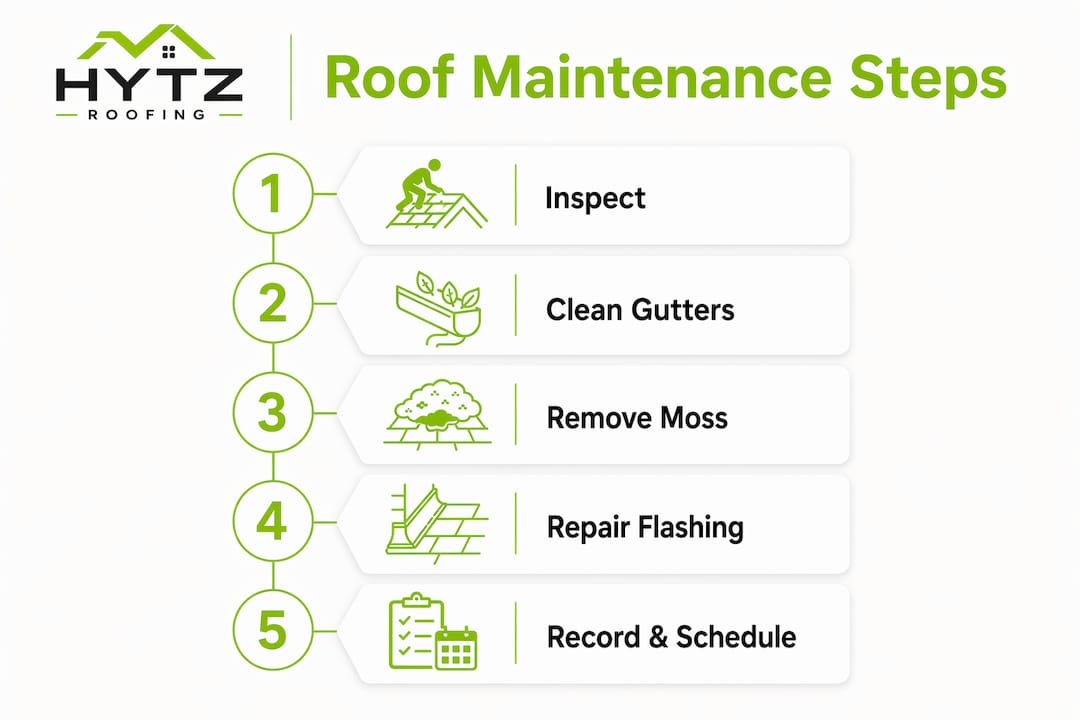
Preventive roof maintenance is a scheduled program of inspections and corrective actions designed to catch small, inexpensive defects before they turn into costly failures. Think of it as routine care for one of your building’s most expensive assets. The core components are straightforward: regular visual inspections, debris and drain clearing, roof surface examination, prompt minor repairs, and thorough documentation. Roofs rarely fail from a single dramatic event. They fail because small problems go unnoticed for too long.
Here is what a complete preventive maintenance program covers:
- Scheduled inspections at least twice per year, plus after major weather events
- Debris removal from the roof surface, gutters, drains, and scuppers
- Roof surface examination for membrane damage, blistering, cracking, and moss or algae growth
- Flashing and sealant checks at penetrations, edges, and equipment curbs
- Minor repairs to loose shingles, small punctures, and compromised sealants
- Documentation with photos and written records of every inspection and repair
The NRCA (National Roofing Contractors Association) sets the industry standard for this kind of structured care, and its guidelines form the backbone of what most roofing professionals recommend today.
What does preventive roof maintenance actually involve?
Knowing the theory is one thing. Knowing exactly what to do, and when, is what protects your property.
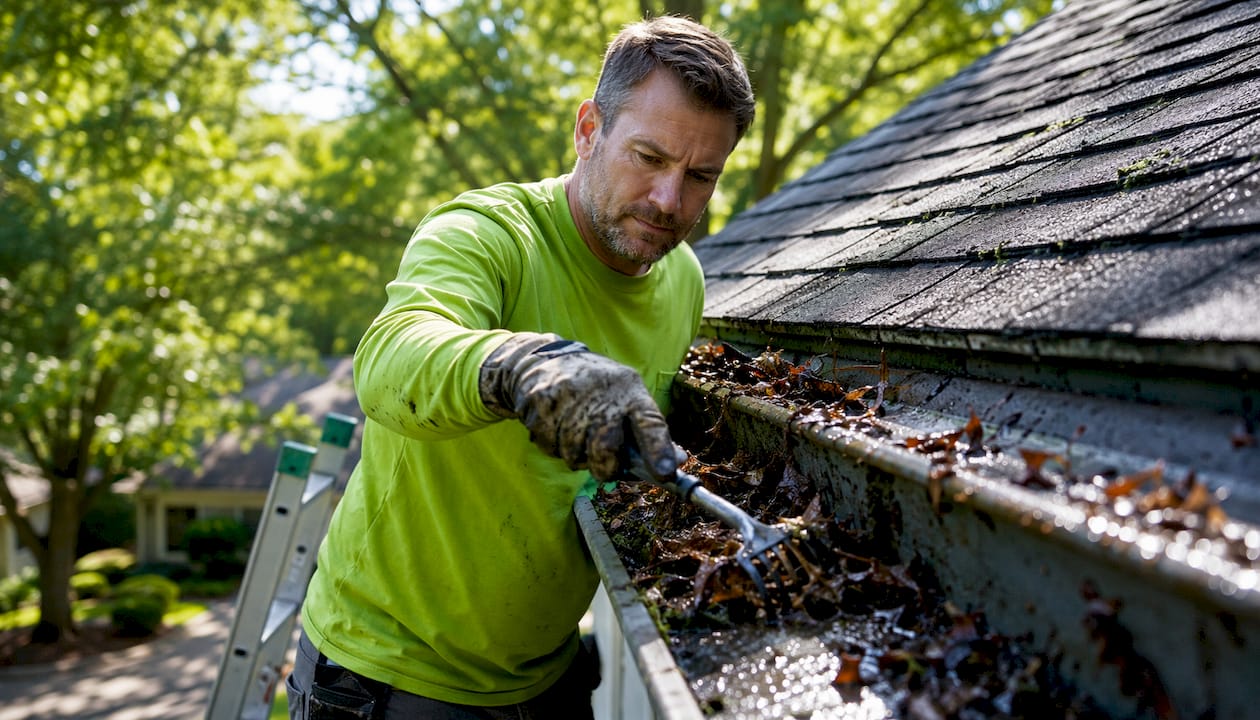
Clearing gutters, drains, and scuppers is the most overlooked task. Blocked drainage causes standing water, which accelerates membrane deterioration and can lead to leaks within months. Clear them every spring and fall, and after any heavy storm drops leaves or debris.
Inspecting the roof surface means looking for blistering, cracking, punctures, and areas where the membrane has separated from the substrate. Pay close attention to perimeter flashings and any penetrations, including HVAC curbs, pipes, and skylights. These are the spots where water finds its way in first.
Moss and algae removal matters more than most property owners realize. Both organisms trap moisture against roofing materials, speeding up deterioration. A simple biocide treatment applied in spring handles most growth before it takes hold.
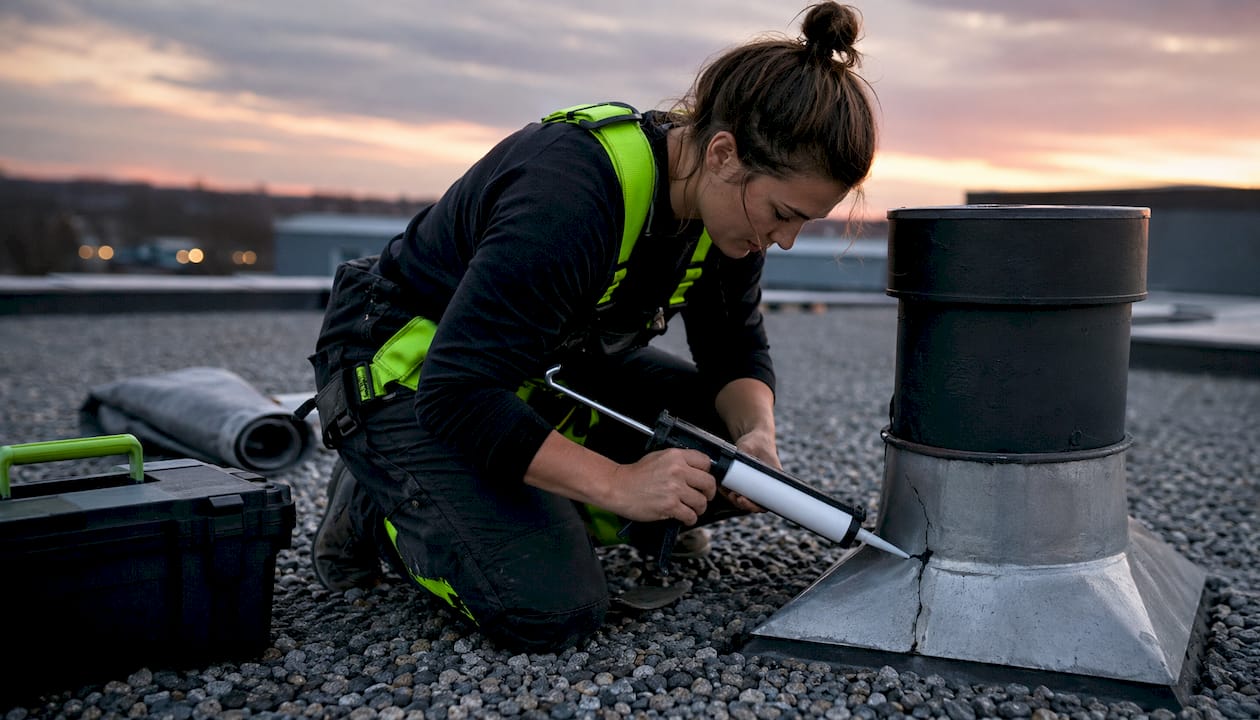
Flashing and sealant maintenance is where prompt repairs pay off most directly. A loose flashing or cracked sealant joint around a pipe penetration can allow water infiltration that damages insulation, decking, and interior finishes before you ever see a ceiling stain.
Seasonal adjustments that matter
Spring inspections focus on winter damage: freeze-thaw cracking, ice dam residue, and any membrane stress from snow loading. Fall inspections shift to preparation, verifying drainage is clear, flashings are sealed, and the roof is ready for cold weather. After severe weather events, particularly large hail or high winds, schedule an additional inspection regardless of where you are in the calendar.
Tools and safety basics
For property managers or owners doing a visual check from the rooftop, bring a flashlight, a camera or smartphone for photos, and a probe to test soft spots in the membrane. Always wear rubber-soled shoes and avoid walking on wet surfaces. For anything beyond a basic visual check, including membrane repairs or flashing work, call a licensed roofing contractor. The risk of personal injury and accidental membrane damage is not worth it.
Pro Tip: Limit rooftop access to authorized personnel only, and establish dedicated walkways in high-traffic areas around HVAC units. Frequent foot traffic causes localized insulation crushing and seam separation that is easy to miss until it becomes a leak.
How often should you schedule roof inspections?
The answer from both NRCA and FM Global is consistent: at minimum twice per year, in spring and fall, plus after any major weather event or rooftop work. Spring catches winter damage while repair conditions are good. Fall prepares the roof before cold weather arrives and drainage becomes critical.
Beyond the calendar, certain events should trigger an immediate inspection:
| Trigger | Recommended Action |
|---|---|
| Spring (post-winter) | Inspect for freeze-thaw cracking, ice dam damage, membrane stress |
| Fall (pre-winter) | Clear drains, reseal flashings, check for summer UV damage |
| Hailstorms | Inspect membrane and flashings for impact damage |
| High winds | Check for lifted flashings, membrane displacement, debris damage |
| Heavy snow load | Assess for structural stress and drainage blockage after melt |
| HVAC or rooftop equipment service | Inspect membrane and sealants around work areas for accidental damage |
| Suspected leak or interior staining | Immediate inspection plus infrared moisture survey if needed |
Record-keeping and technology
Every inspection needs a written record. Photographic documentation of problem areas, dated and organized by roof zone, creates the paper trail you need for warranty claims and insurance purposes. For large commercial facilities with multiple roof sections, an Engineered Management System (EMS) helps track conditions across the entire portfolio.
When leaks are suspected but not visible, an infrared moisture survey is the right diagnostic tool. Wet insulation retains heat longer than dry insulation after sunset, and thermal cameras detect those temperature differences before any visible damage appears. This technology is especially useful before a roof coating or restoration project.
Insurance carriers often require documented roof condition and maintenance records within 30 to 60 days after severe storms. Missing that documentation can jeopardize a claim, even when the damage is clearly storm-related.
Pro Tip: Schedule HVAC servicing and roof inspections on the same day. Rooftop equipment technicians are not trained to spot membrane damage, and their access can cause it. A quick post-service roof check catches problems before they become leaks.
What are the real financial benefits of preventive maintenance?
The math here is hard to argue with. Preventive maintenance costs approximately $0.14 per square foot annually. A premature roof replacement driven by deferred maintenance runs $5 to $16 per square foot, depending on the system and building complexity. For a 20,000-square-foot commercial building, that gap translates to roughly $2,800 per year in maintenance versus $100,000 to $320,000 for an early replacement.
Every dollar spent on preventive maintenance returns $4 to $8 in avoided replacement costs over a 20-year lifecycle.
Disciplined maintenance can extend roof service life from 13 up to 21 years by preventing cumulative deterioration from neglected minor defects. Those extra years represent real capital that stays in your budget.
Warranty preservation is another financial benefit that property owners frequently underestimate. Manufacturers commonly require documented preventive maintenance as a condition of warranty coverage. Skipping inspections or failing to keep repair records can result in denied warranty claims, turning what should be a covered repair into an out-of-pocket expense. A 20-year warranty is only as good as the maintenance record behind it.
Beyond direct cost savings, a well-maintained roof improves energy efficiency by keeping insulation dry and intact. Wet insulation loses thermal resistance, which drives up heating and cooling costs. Maintaining roof integrity also protects property value, a factor that matters whether you are managing a commercial asset or planning to sell a home. For more detail on how deferred repairs compound costs, the true cost of ignoring roof damage is worth understanding before a small problem becomes a big one.
Preventive roof care also supports facility-wide maintenance planning, helping property managers allocate capital on a predictable schedule rather than reacting to emergencies. That predictability alone reduces stress and keeps operations running without interruption.
Key Takeaways
Preventive roof maintenance extends roof service life, preserves warranty coverage, and costs a fraction of what deferred maintenance ultimately demands in emergency repairs and premature replacement.
| Point | Details |
|---|---|
| Inspect twice per year | Schedule spring and fall inspections, plus after any major weather event. |
| Maintenance cost vs. replacement | Annual maintenance runs about $0.14 per square foot versus $5 to $16 per square foot for premature replacement. |
| Extended roof lifespan | Disciplined maintenance can extend roof service life from 13 up to 21 years, while neglected roofs often fail much earlier. |
| Document every inspection | Photographic records support warranty claims and insurance documentation after storm events. |
| ROI on maintenance spending | Every dollar spent on preventive care returns $4 to $8 in avoided replacement costs over a 20-year lifecycle. |
Ready to protect your roof before problems start?
Hytzroofing is a GAF Master Elite® Contractor, an honor held by fewer than 2% of roofing contractors across North America. We serve residential and commercial property owners throughout Florida with inspections, preventive maintenance programs, and repairs backed by manufacturer warranties and a BBB A+ rating.
Whether you need a one-time inspection or a full annual maintenance plan, our team is ready to help. Get a free estimate today and let’s make sure your roof is ready for whatever comes next.
Recommended
- Roof Repair in Tampa Bay: Your Guide to Florida’s Elements | Hytz Roofing
- Choose the Best Roofing Contractor in Tampa Bay, Florida: Your Guide | Hytz Roofing
- Enviroshake Roofing in Tampa Bay: Ultimate Durability & Value | Hytz Roofing
- Storm Damage Roof Repair in Tampa: A Complete Guide | Hytz Roofing
Ready to Work With a Trusted Tampa Roofer?
Hytz Roofing is a GAF Master Elite certified contractor serving Tampa Bay. Explore our services:
Frequently Asked Questions
- How often should a roof be inspected in Florida?
- Florida's climate — high humidity, intense UV, frequent thunderstorms, and hurricane exposure — accelerates roof aging. Most roofing professionals recommend inspections every 1–2 years for roofs under 15 years old, and annually for roofs over 15 years. After any named storm, an immediate inspection is advisable regardless of visible damage.
- What does a professional roof inspection include?
- A thorough inspection covers the roof surface (shingles, tiles, or membrane), flashing at all penetrations and transitions, gutters and drainage, soffit and fascia, attic ventilation, and interior signs of water intrusion. Hytz Roofing provides free same-day inspections with a written report and photo documentation.
- Can I inspect my own roof in Florida?
- You can do a visual check from the ground using binoculars, but walking on a roof without training risks injury and can damage shingles. A professional inspector has the equipment and experience to identify issues that are not visible from ground level, including flashing failures and underlayment deterioration.
- How long does a roof inspection take?
- A standard residential roof inspection takes 45–90 minutes depending on roof size and complexity. Hytz Roofing provides a written report with photos within 24 hours of the inspection.
- Does a roof inspection affect my homeowners insurance in Florida?
- Yes — positively. A wind mitigation inspection (a specific type of roof inspection) can reduce your Florida homeowners insurance premium by 10–40%. Hytz Roofing can coordinate a wind mitigation inspection as part of any roofing project.