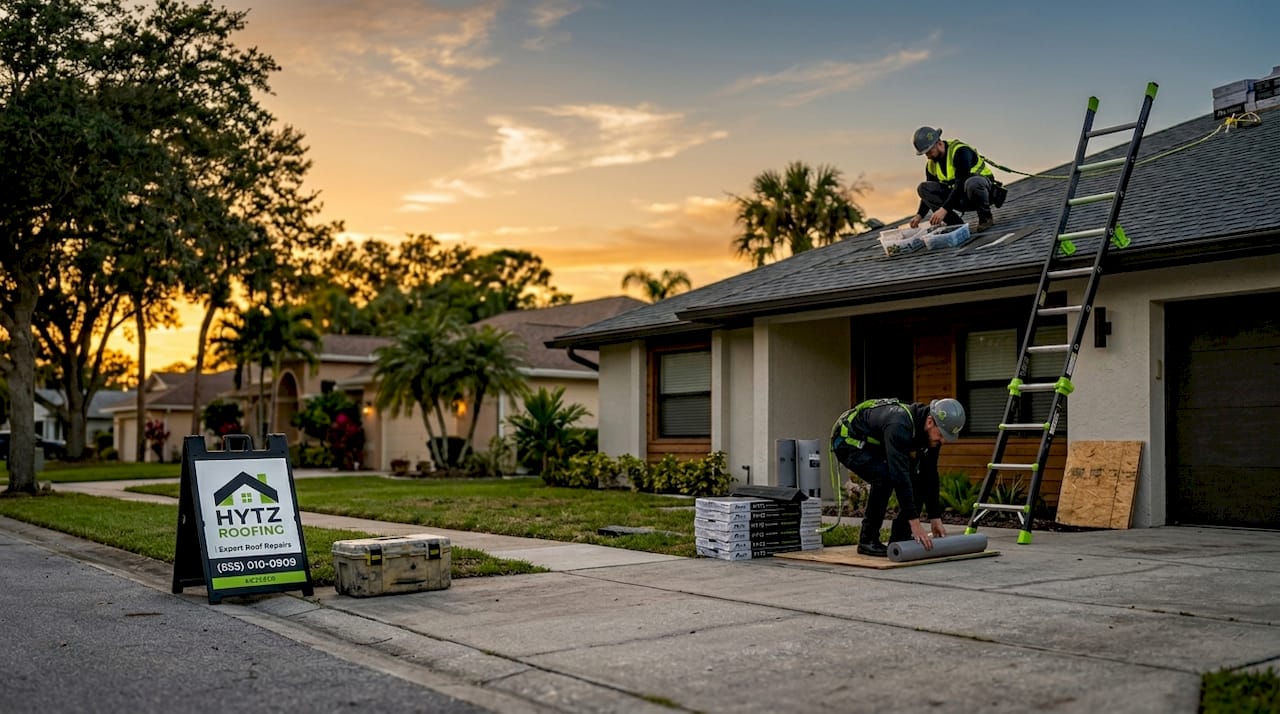
Types of Roof Repairs Florida Homeowners Need Most
Florida Roof Repairs commonly address shingle damage, leaks, flashing failures and storm wear, and show when repair is preferable to replacement.
Last updated: August 8, 2026
The types of roof repairs homeowners need are the targeted fixes that keep a roof watertight, structurally sound, and code compliant. In Florida, where hurricane seasons, intense UV exposure, and heavy rainfall push roofs harder than almost anywhere else in the country, knowing your repair types is not optional. It is how you protect your home’s value and avoid a small problem becoming a $15,000 replacement. This guide covers every major roof repair category, from shingle work and flashing to pipe boots and storm damage, along with what Florida law requires when repairs add up.
1. What are the key types of roof repairs homeowners usually face?
The most common roof repair types fall into six categories: shingle repairs, flashing repairs, pipe boot replacements, leak patching, storm damage repairs, and gutter system corrections. Each one targets a specific failure point, and Florida homeowners face all of them with greater frequency than most.
Damaged or missing shingles are the most visible repair type. Wind, hail, and UV degradation crack, curl, or dislodge shingles, leaving the underlayment exposed. A single missing shingle can allow water to reach the roof deck within one rain event.
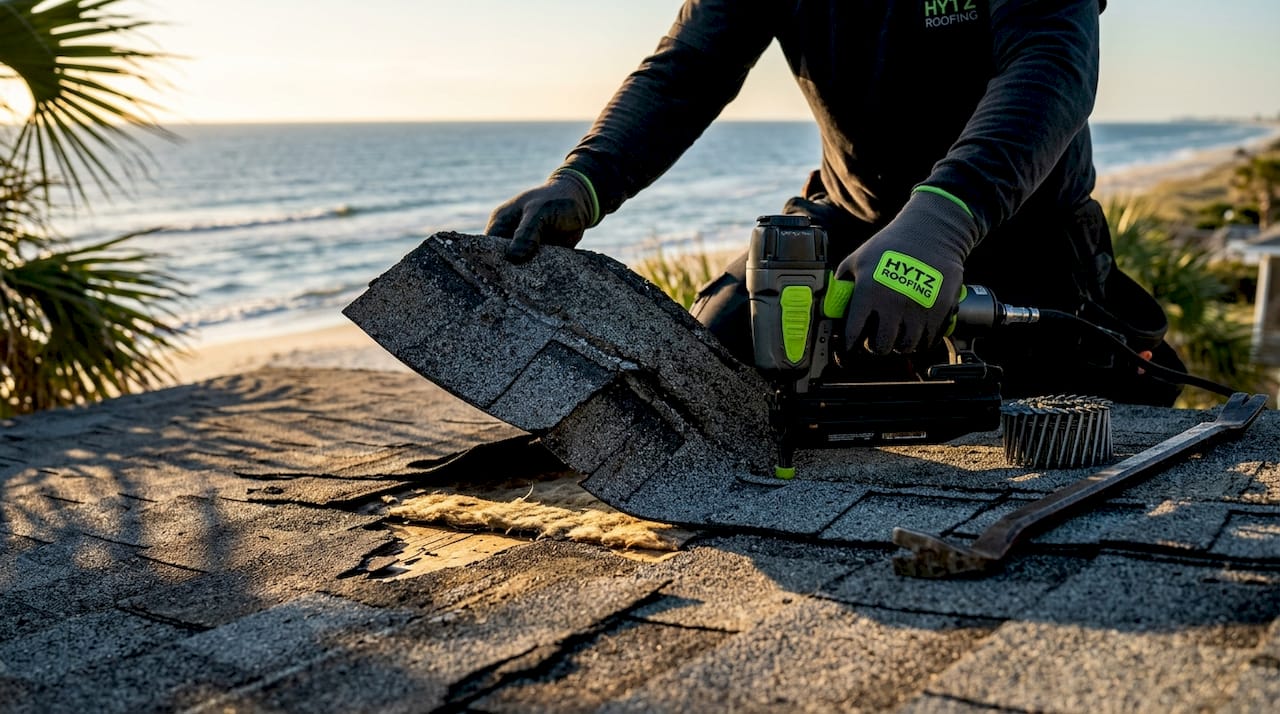
Flashing repairs address the metal strips that seal transitions around chimneys, skylights, vents, and walls. Flashing repairs fix about 65% of all roof leaks, with materials typically costing between $10 and $50. That number tells you flashing is where most leaks actually start, not the shingles themselves.
Pipe boot replacement covers the rubber or metal collars that seal plumbing vents where they exit the roof. Failed pipe boots are one of the most common sources of residential roof leaks, with the rubber seal lasting only 8 to 15 years depending on UV exposure. In Florida’s sun, expect the lower end of that range.
Leak detection and patching is the diagnostic repair type. A licensed roofer traces water stains back to their entry point, which is rarely directly above the interior damage, and seals the source with roofing cement, sealant, or a material patch.
Storm damage repairs cover hail impacts, wind-lifted sections, and debris punctures. Florida’s hurricane exposure makes this category a near-annual concern for many homeowners, not a rare event.
Gutter and drainage repairs round out the list. Clogged, sagging, or disconnected gutters force water to pool at the roof edge and fascia, accelerating rot and leak formation.
Pro Tip: When scheduling repairs, address flashing and pipe boots first. They account for the majority of active leaks and are far cheaper to fix early than after water has reached the roof deck or attic insulation.
2. How to identify and handle roof leaks and water intrusion
Roof leaks rarely announce themselves at the source. By the time you see a water stain on your ceiling, the entry point is usually several feet away and has been active for weeks.
Here is how to trace and handle a leak systematically:
- Check the attic first. Grab a flashlight and look for water stains, dark streaks, or soft spots on the decking. The highest wet point in the attic is usually close to the actual entry point.
- Inspect flashing around all penetrations. Chimneys, skylights, and vent pipes are the most common culprits. Look for gaps, rust, or lifted edges where the flashing meets the roofing material.
- Examine pipe boots. A cracked or shrunken rubber boot around a plumbing vent is one of the easiest leaks to spot and one of the most frequently missed during casual inspections.
- Apply a temporary fix if needed. Emergency roof tarps installed properly buy time before permanent repair but are a short-term solution lasting only a few months. Improper installation can cause additional wind damage.
- Schedule permanent repair promptly. Florida’s humidity and rain frequency mean a temporary patch degrades faster here than in drier climates. A roofing cement patch is not a substitute for proper flashing replacement or shingle repair.
Professional chimney flashing repairs often require removing affected shingles and siding for a full replacement. These repairs exceed DIY scope due to complexity and safety risks, especially on steep-pitch roofs. Know when to call a licensed contractor.
Pro Tip: Use polyurethane sealant for masonry flashing repairs and avoid silicone. Material compatibility directly affects how long a repair holds. The wrong sealant can fail within one season.
3. Florida-specific rules: Building codes, permits, and the 25% threshold
Florida homeowners face a legal layer that most other states do not apply as strictly. Understanding it protects you from unexpected costs and compliance problems.
| Scenario | Permit Required? | Key Implication |
|---|---|---|
| Repair under 25% of roof area in 12 months | No permit typically required | Standard repair work proceeds normally |
| Repair exceeding 25% of roof area in 12 months | Yes, full permit required | Full roof system must meet current code |
| Full roof replacement | Yes, always | Hurricane exposure standards apply |
| Cumulative patches crossing 25% threshold | Yes, triggers compliance | Tracking repair area is legally necessary |
Florida Building Code mandates permits for roof covering replacements exceeding 25% of the roof area within any 12-month period. Crossing that threshold triggers full roof system code compliance, including hurricane exposure standards. This is not a technicality. It directly affects your insurance claim validity and your GAF or manufacturer warranty.
Repeated patch repairs can cumulatively exceed Florida’s 25% threshold without any single repair triggering a permit. Homeowners who do not track their repair areas can find themselves legally required to bring the entire roof into compliance mid-project. Work with a licensed contractor who documents each repair’s square footage.
4. Temporary patches vs. permanent repairs: When to act
Not every roof problem demands an immediate full repair. But every temporary fix has an expiration date, and Florida’s climate shortens it.
What temporary repairs can do:
- Shingle patches typically last 2 to 5 years before permanent repair is needed
- Metal flashing patches hold for 1 to 3 years under normal conditions
- EPDM flat roof patches last 5 to 7 years, making them the most durable temporary option for low-slope roofs
When temporary is no longer enough:
- The same area has been patched more than once
- Water stains reappear within one rain season after a patch
- The patch area is approaching or overlapping the 25% Florida threshold
- Your roof is over 15 years old and showing widespread granule loss
For flat or low-slope roofs, patching technique depends entirely on membrane type. EPDM, TPO, modified bitumen, and built-up roofing each require specific adhesives and materials. Improper patches on flat roofs fail rapidly and can void manufacturer warranties. This is a repair type where material knowledge matters as much as labor skill.
Pro Tip: Before approving any temporary patch, ask your contractor to document the repaired square footage in writing. You will need that record if cumulative repairs approach Florida’s 25% permit threshold.
5. How to maintain your roof and reduce repair frequency
The best roof repair is the one you never need. Consistent maintenance cuts emergency repair costs and extends the time between major interventions.
- Schedule two professional inspections per year. Spring inspections are critical after Florida’s winter weather cycles, which accelerate wear across shingles, flashing, and sealants. Fall inspections prepare the roof for hurricane season.
- Clean gutters at least twice a year. Routine gutter cleaning, combined with trimming overhanging branches and sealing exposed fasteners, directly reduces emergency repair needs. Debris-clogged gutters back water up under shingles at the eave line.
- Trim branches within 6 feet of the roof line. Wind-driven branches are a leading cause of puncture damage and shingle displacement during Florida storms.
- Track every repair by square footage. Keep a simple log with dates, repair locations, and approximate areas. This protects you legally under Florida Building Code and helps you plan financially for a full replacement before it becomes urgent.
- Choose contractors with manufacturer credentials. Inspections fulfill a dual purpose: risk management and warranty preservation, since many manufacturers tie warranty validity to documented inspections and repairs. A GAF Master Elite contractor, for example, can issue warranties that standard contractors cannot.
Wind uplift and storm cycles accelerate shingle granule loss and flashing degradation, making post-storm checks critical for Florida roofs. After any named storm or significant wind event, a visual inspection from the ground and a professional attic check are worth scheduling within 48 hours.
Pro Tip: Add your roof to your home maintenance calendar the same way you track HVAC filter changes. A 30-minute inspection twice a year costs far less than a single emergency call after a leak has reached your drywall.
Key takeaways
Florida homeowners who understand their roof repair types and act on them early avoid the most expensive outcomes: full replacements triggered by neglect and permit violations triggered by unchecked cumulative repairs.
| Point | Details |
|---|---|
| Flashing is the top leak source | Flashing repairs address roughly 65% of roof leaks and cost as little as $10 in materials. |
| Pipe boots fail faster in Florida | UV exposure shortens rubber boot lifespan; inspect and replace every 8 to 10 years in Florida’s climate. |
| The 25% rule is a legal threshold | Cumulative repairs exceeding 25% of roof area in 12 months trigger full permit and code compliance in Florida. |
| Temporary patches have hard limits | Shingle patches last 2 to 5 years; relying on them beyond that window increases leak risk and repair costs. |
| Twice-yearly inspections protect warranties | Many manufacturer warranties require documented inspections to remain valid. |
What I’ve learned about roof repairs after years in Florida
From Anthony at Hytzroofing
The mistake I see most often is homeowners treating roof repairs as isolated events. They fix one shingle section, then a pipe boot two years later, then a flashing strip the year after that. Each repair seems small and reasonable. Then a building inspector or insurance adjuster adds them up and the homeowner discovers they have crossed Florida’s 25% threshold without realizing it. Now a $600 flashing job has triggered a full compliance review.
The second mistake is underestimating flashing. Most homeowners focus on shingles because they are visible. But in my experience, the majority of active leaks trace back to failed flashing or a cracked pipe boot, not a missing shingle. Shingles are the face of the roof. Flashing is the seal.
Florida is not a forgiving climate for deferred maintenance. The UV index here degrades rubber seals and sealants faster than most manufacturers’ published lifespans assume. A pipe boot rated for 15 years in Ohio may last 9 years in Tampa. That gap matters when you are planning repair intervals.
My honest recommendation: find a licensed contractor who documents every repair in writing, tracks your cumulative repair area, and inspects your roof on a schedule. That relationship is worth more than any single repair. You can find solid guidance on roof leak repair in Tampa to understand what local professionals look for in Florida conditions.
— Anthony
Hytzroofing is ready to help with your Florida roof repairs
Hytzroofing is a GAF Master Elite® Contractor serving Florida homeowners, an honor held by fewer than 2% of roofing contractors in North America. That credential means every repair meets GAF’s standards for licensing, insurance, and installation quality. Whether you need a pipe boot replacement, a full flashing repair, or a post-storm inspection, the team at Hytzroofing knows Florida’s building codes and can document every repair to keep you on the right side of the 25% threshold. Ready to protect your home? Schedule your inspection with a licensed, award-winning Florida roofing contractor today.
FAQ
What are the most common roof repairs for Florida homeowners?
The most common repairs are shingle replacement, flashing repair, pipe boot replacement, and storm damage patching. Florida’s hurricane exposure and UV intensity make these repairs more frequent than in most other states.
How do I know if my roof leak needs a temporary or permanent fix?
If the same area has leaked more than once or the roof is over 15 years old, a permanent repair is the right call. Temporary patches like roofing cement or tarps are appropriate only as short-term protection before a licensed contractor can complete a full repair.
Does Florida require a permit for roof repairs?
Florida requires a permit when roof covering replacements exceed 25% of the total roof area within a 12-month period. Crossing that threshold triggers full roof system code compliance, including hurricane exposure standards.
How often should I have my roof inspected in Florida?
Schedule professional inspections at least twice per year, with spring being the priority after winter weather cycles. Post-storm inspections after any named hurricane or significant wind event are also strongly recommended.
Can I repair my own roof flashing in Florida?
Simple flashing repairs on accessible, low-slope sections are manageable for experienced DIYers using the correct sealant. Complex chimney or skylight flashing repairs require removing shingles and siding and carry real safety risks, making a licensed contractor the right choice for those jobs.
Recommended
- Weathering the Storm Expert Tips for Roof Leak Repair in Tampa Fl
- Introducing Enviroshake to Your Hoa
- GAF Master Elite Roofer in Tampa, FL | Hytz Roofing
- 15 Urgent Roof Issues to Fix Before the Next Florida Storm
Related Hytz Roofing Services