Roofing Contractor Red Flags List for Florida Homeowners
Roofing contractor red flags are common warning signs Florida homeowners can use to avoid unreliable contractors and make safer hiring decisions.
Last updated: August 8, 2026
A roofing contractor red flags list is the single most effective tool Florida homeowners have to avoid scams, substandard work, and costly legal trouble. Florida’s storm season creates a perfect environment for predatory contractors who target vulnerable homeowners right after hurricanes and tropical storms. Knowing the warning signs of a bad roofing contractor before you sign anything protects your home, your wallet, and your legal standing. This guide covers every major red flag, from suspicious pricing to illegal insurance practices, so you can hire with confidence.
1. Bids that are suspiciously low
A bid dramatically below market rate is the most common trap in roofing scams. Any bid more than 20% below the national average for a code-compliant roof replacement signals potential fraud or substandard materials. That national average sits at $25,307.08, which means bids under roughly $20,000 for a full replacement deserve serious scrutiny.
Low bids are not accidents. Low bids lure homeowners into contracts, then recoup margins through surprise change orders and inferior materials. By the time you realize what happened, the contractor has your deposit and the leverage.
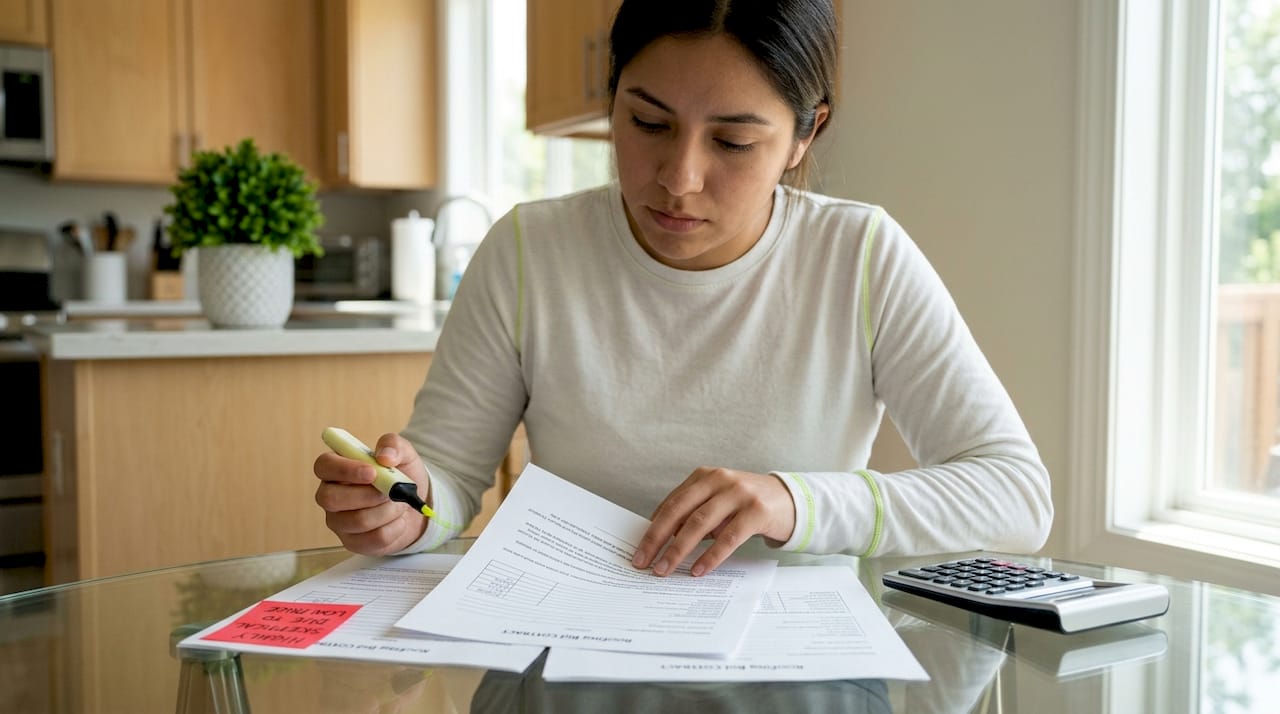
Pro Tip: Request at least three itemized bids from licensed Florida contractors and compare line by line. If one bid is dramatically cheaper, ask the contractor to explain exactly where the savings come from.
2. Unreasonable deposit demands
Industry-standard deposits fall between 10% and 30% of the total project cost. Any contractor demanding 50% or more upfront, before materials even arrive, is showing one of the clearest signs of a bad roofing contractor. Full payment before work begins is a near-certain scam indicator.
Legitimate contractors have supplier relationships and credit lines that let them start work without your full payment in hand. A contractor who cannot operate without your money upfront likely lacks the business stability to finish your project.
3. No written estimate or vague contract language
Legitimate contractors always provide a detailed, written, line-item scope of work. Reluctance to put specifics in writing signals intent to exploit contract ambiguity later. Vague language like “roofing work as needed” gives a contractor room to skip steps, substitute materials, and bill you for extras.
Your written estimate should specify the brand and grade of shingles, underlayment type, flashing materials, ventilation work, and debris removal. If any of these are missing, ask for them in writing before you sign. Check out this guide on Florida business contract red flags if you want a deeper look at what contract language to watch for.
4. No valid Florida contractor license or insurance
Florida law requires roofing contractors to hold a valid state license. Unlicensed operators cannot pull permits, which means your roof replacement may be illegal and could void your homeowner’s insurance policy. Always ask for a contractor’s Florida license number and verify it through the Florida Department of Business and Professional Regulation database.
Insurance is equally non-negotiable. A contractor without general liability insurance and workers’ compensation coverage leaves you financially responsible if a worker is injured on your property. Verify contractor credentials through state databases before any work begins. Hytzroofing, for example, carries Florida Contractor License #CCC1332551, full general liability insurance, and workers’ compensation coverage on every project.
5. Storm-chaser contractors knocking at your door
85.19% of emergency roof repair requests happen within the first seven days after a severe storm. Predatory contractors know this and flood Florida neighborhoods immediately after hurricanes and tropical events, going door to door with urgent pitches. This timing is not coincidence. It is a calculated strategy to catch homeowners while they are stressed and not thinking clearly.
Reputable contractors depend on steady referral pipelines and established reputations, not door-to-door solicitation. If a contractor showed up uninvited after a storm, that alone is a major warning sign. Take your time, check credentials, and call contractors you find through verified sources.
Pro Tip: After a storm, wait at least 48 hours before contacting any contractor. Use that time to document damage with photos and contact your insurance company first.
6. No permanent local address or physical office
A contractor with no verifiable local address is a contractor with no accountability. Out-of-state or transient operators often disappear after collecting payment, leaving homeowners with incomplete work and no legal recourse. Ask for a physical business address and verify it exists before signing anything.
Local presence matters for warranty claims too. If a contractor is not based in Florida, following up on warranty work becomes nearly impossible. Choose contractors with established roots in your community who have a reputation to protect.
7. Pressure to sign immediately ⚠️
High-pressure sales tactics are a textbook sign of an untrustworthy roofing company. Phrases like “this price is only good today” or “I have another job lined up and can start yours now if you sign” are designed to stop you from doing due diligence. No legitimate contractor will walk away from a fair job because you asked for 24 hours to think.
Legitimate roofing companies prioritize education and transparency over sales pressure. A contractor who respects your decision-making process is a contractor who respects the work they do.
8. Offering to waive your insurance deductible
This is not a perk. Waiving or absorbing your insurance deductible is insurance fraud and is illegal in all states, including Florida. Contractors who make this offer are committing a crime, and homeowners who accept can face legal liability themselves.
The scheme works by inflating the invoice to cover the deductible amount, which constitutes fraud against your insurance company. Understanding the difference between builders risk and homeowners insurance helps you recognize when a contractor is crossing legal lines with your policy.
9. Contractors who “handle” your insurance claim
A contractor offering to negotiate your insurance claim is performing a function legally reserved for licensed public adjusters or attorneys. Accepting this offer risks your claim’s validity and exposes you to legal liability. Your contractor’s job is to repair your roof, not to manage your insurance relationship.
“A contractor who inserts themselves between you and your insurance company is not doing you a favor. They are positioning themselves to control the money, not to protect your interests.”
Always communicate directly with your insurance adjuster. Get the claim settlement in writing before authorizing any work.
10. Unresponsive after the deposit
Clear, consistent communication is a baseline expectation, not a bonus. A contractor who becomes hard to reach after you hand over a deposit is showing you exactly how the rest of the project will go. Delayed responses, missed appointments, and vague timelines are common poor roofing contractor traits that signal deeper problems.
Set communication expectations in writing before work starts. Agree on a primary contact, response time standards, and a project schedule with milestones. If a contractor resists putting this in the contract, that resistance is itself a red flag.
11. Uninsured or unsupervised subcontractors ⚠️
Untrained, uninsured subcontract crews without direct supervision skip critical installation steps. Proper underlayment, ventilation, and flashing details get rushed or omitted entirely. The result is a roof that looks fine on day one but fails within a few years.
Ask your contractor directly whether they use subcontractors and whether those crews carry their own insurance. A contractor who cannot answer this question clearly is not managing their job site properly. For context on what legitimate repair work actually involves, this overview of common Florida roof repairs shows what a proper scope of work looks like.
12. No manufacturer certification or warranty eligibility
Manufacturer certifications like the GAF Master Elite® designation are not marketing fluff. They require contractors to meet strict standards for licensing, insurance, training, and installation quality. A contractor without any manufacturer certification cannot offer enhanced warranty coverage, which means you are left with only a basic workmanship warranty, if any.
Fewer than 2% of roofing contractors in North America hold the GAF Master Elite® designation. Hytzroofing holds this certification, along with the GAF President’s Club Award, which is reserved for the top performers within that already selective group. Certifications like these are verifiable and tell you a contractor has been vetted by a third party with real standards.
13. Skipping permits for storm repairs
Pulling a permit is not optional for most roofing work in Florida. A contractor who suggests skipping the permit to “save time” or “keep costs down” is putting you at serious risk. Unpermitted work can result in fines, failed home inspections, and insurance claim denials. This guide on roofing permits for storm repairs explains exactly what Florida homeowners need to know about the permit process.
Permits also create an official record that the work was inspected and approved. Without that record, you have no proof the work meets Florida building code, which matters when you sell your home or file a future insurance claim.
Key Takeaways
Knowing the warning signs of a bad roofing contractor before you hire protects Florida homeowners from financial loss, legal exposure, and structural damage.
| Point | Details |
|---|---|
| Watch for low bids | Any bid more than 20% below market average signals fraud or substandard materials. |
| Verify license and insurance | Confirm Florida license number and insurance certificates before signing anything. |
| Avoid storm chasers | Door-to-door solicitation after storms is the most consistent sign of a predatory contractor. |
| Demand a written contract | A line-item scope of work, materials list, and warranty terms must be in writing. |
| Never accept deductible waivers | Waiving your insurance deductible is illegal in Florida and exposes you to liability. |
What I’ve learned watching Florida’s roofing market up close
Florida homeowners face a roofing market that is unlike almost anywhere else in the country. The combination of hurricane season, aggressive storm chasers, and a high volume of insurance claims creates conditions that bad actors actively exploit. After years of working in this market, the pattern I see most often is homeowners making decisions too fast, right after a storm, when stress is highest and judgment is lowest.
The contractors who cause the most damage are rarely the ones who seem obviously shady. They show up with professional-looking trucks, printed brochures, and confident pitches. The red flags are in the details: no physical address, vague contract language, pressure to sign before your insurance adjuster has even visited. Patience is your best protection.
My honest advice is to treat any contractor who contacts you first with extra scrutiny. Reputable companies in Florida build their business on referrals and reviews, not door-to-door sales. Take the time to check the Florida DBPR database, ask for proof of insurance, and read every line of the contract. If a contractor makes that process difficult, you have your answer.
— Anthony
Hytzroofing: a trusted Florida contractor you can verify
Florida homeowners deserve a contractor who welcomes scrutiny, not one who avoids it.
Hytzroofing holds Florida Contractor License #CCC1332551, GAF Master Elite® Contractor status, and the GAF President’s Club Award. Every project comes with full general liability insurance, workers’ compensation coverage, and a BBB A+ rating. Hytzroofing also received the Angi Super Service Award 2025, reflecting consistent homeowner satisfaction across thousands of verified reviews. You can request a free roofing estimate and verify every credential before committing to anything. That is exactly what a trustworthy contractor should offer.
FAQ
What are the biggest red flags in roofing estimates?
Bids more than 20% below market average, missing line-item details, and no written scope of work are the top red flags in roofing estimates. Legitimate contractors provide itemized quotes that specify materials, labor, and warranty terms.
How do I verify a Florida roofing contractor’s license?
Search the contractor’s license number through the Florida Department of Business and Professional Regulation (DBPR) online database. A valid license confirms the contractor is legally authorized to perform roofing work in Florida.
Is it legal for a contractor to waive my insurance deductible?
No. Waiving or absorbing an insurance deductible is insurance fraud and is illegal in Florida and every other state. Homeowners who accept this offer can face legal liability alongside the contractor.
What should I ask a roofing contractor before hiring?
Ask for their Florida license number, proof of general liability insurance, workers’ compensation certificates, a list of manufacturer certifications, and a written line-item estimate. Also ask whether they use subcontractors and whether those crews are insured.
Why are storm-chaser contractors dangerous?
Storm chasers target homeowners immediately after severe weather, when stress is high and decision-making is rushed. They often lack local licenses, disappear after collecting deposits, and perform work that fails inspection or voids insurance coverage.
Recommended
- Weathering the Storm Expert Tips for Roof Leak Repair in Tampa Fl
- Tampa Roofer | GAF Master Elite | Hytz Roofing
- GAF Master Elite Roofer in Tampa, FL | Hytz Roofing
- Types of Roof Repairs Florida Homeowners Need Most
Related Hytz Roofing Services