1/4 Inch Per Foot Rule: Low Slope Roofing Options in Florida
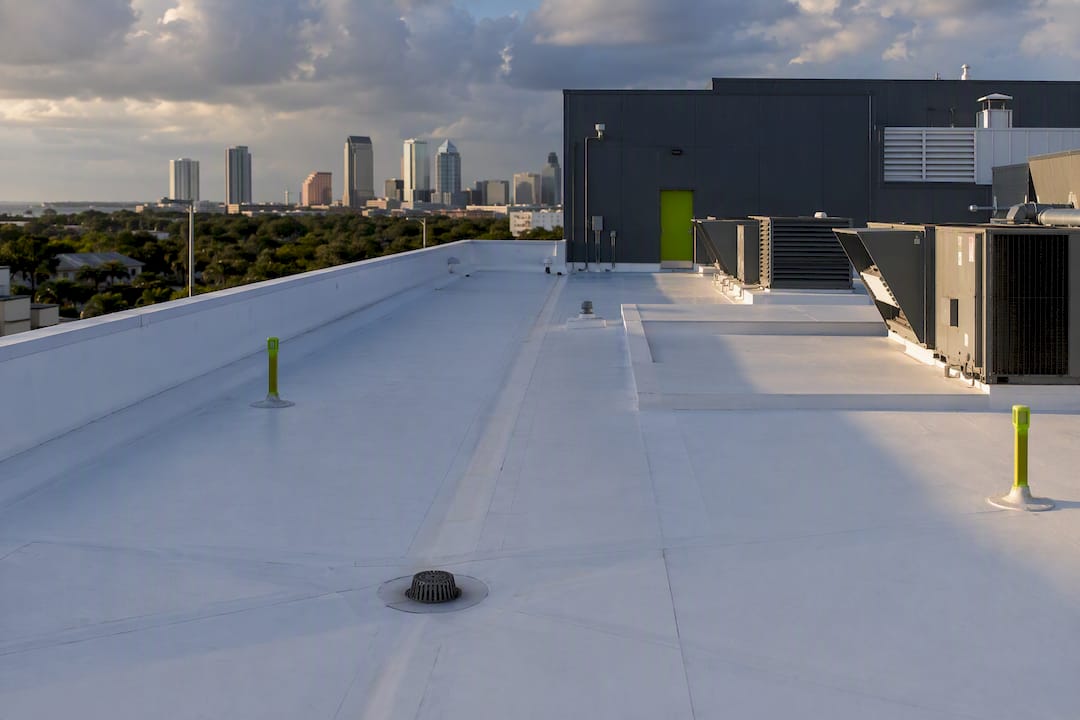
TPO, EPDM, PVC, modified bitumen, built-up roofing, spray polyurethane foam, and standing-seam metal all work on low-slope roofs, but material choice is the second decision, not the first. The factor that determines whether any of them last is slope and drainage. Get that wrong and even a premium membrane fails early; get it right and a mid-tier system often outperforms expectations.
TL;DR:
- Proper drainage with a minimum slope of 1/4 inch per foot is essential to prevent premature membrane failure caused by ponding water.
- White TPO and PVC membranes are best suited for Florida’s hot climate due to their reflective properties, reducing attic temperatures and cooling loads.
- Fully-adhered or mechanically-seamed systems offer superior wind uplift resistance, which is vital for hurricane-prone coastal regions like Tampa Bay.
- Tapered insulation must be installed before membrane application to ensure proper water runoff, as retrofitting slope later is costly and disruptive.
- Cost and lifespan vary: SPF often lasts 30 to 50 years but costs more upfront, while PVC and TPO typically last 20 to 35 years, with material and installer quality influencing durability.
Table of Contents
- Low Slope Roofing Options: Material Profiles Compared
- Florida Building Code and Minimum Slope Requirements
- Best Low Slope Roofing Systems by Climate and Use Case
- Low Slope Roofing Cost and Lifespan Comparison
- What Voids Your Roofing Warranty (and How to Avoid It)
- How to Choose the Right Low Slope Roofing System
- A Contractor’s View on Choosing the Right Low Slope System
- Get a Certified Low Slope Roof Inspection in Tampa Bay
- Sources
- FAQ
Low Slope Roofing Options: Material Profiles Compared
Every system on this list handles water differently, and that difference shows up in cost, seam method, and how long it lasts before you’re calling a contractor again.
TPO (thermoplastic polyolefin) dominates new commercial low-slope installs, and for good reason. Seams are heat-welded into a single continuous sheet, which eliminates the adhesive-seam failures older systems suffered. White TPO reflects sun instead of absorbing it, a real advantage on a Tampa roof baking under July sun for six straight hours. Lifespan typically runs 20 to 30 years depending on membrane thickness. Weakness: cheaper, thinner TPO sheets can shrink or split at seams over time, so thickness and manufacturer matter more than the material category itself.
EPDM (rubber roofing) has been around since the 1960s and remains the budget-friendly workhorse, especially in colder markets where it resists freeze-thaw cracking better than plastic membranes. It’s installed with adhesive, mechanical fasteners, or ballast, and lasts a comparable 20 to 30 years. Its dark surface absorbs heat, which is a drawback in Florida’s climate unless you specify a white EPDM variant.
PVC shares TPO’s heat-welded seam strength but adds chemical resistance, which matters for restaurants venting grease or buildings near industrial exhaust. Expect 25 to 35 years of service life. It costs more upfront than TPO.
Modified bitumen is asphalt reinforced with polymers, installed by torch, hot asphalt, or peel-and-stick. It runs 15 to 25 years and handles foot traffic well, making it a common choice for roofs with HVAC access.
Built-up roofing (BUR), the old “tar and gravel” system, layers asphalt and reinforcing fabric into a thick, puncture-resistant surface lasting 20 to 30 years. It’s heavy and labor-intensive to install, but nothing beats it for abuse tolerance.
Spray polyurethane foam (SPF) creates a seamless, monolithic surface with excellent insulating value, and can reach 30 to 50 years with scheduled recoats. Skip the recoats and UV degrades the foam fast.
Standing-seam metal works on slopes as low as 3/12 with the right underlayment, offering exceptional wind uplift resistance, a critical factor for hurricane-prone Tampa Bay properties.
Florida Building Code and Minimum Slope Requirements
Florida follows the International Residential Code for slope thresholds, and the numbers aren’t flexible. Standard asphalt shingles require a minimum 4/12 slope. Between 2/12 and 4/12, IRC R905 allows shingles only with special underlayment and installation procedures. Below 2/12, shingles are not permitted.
That’s exactly where single-ply membranes, modified bitumen, BUR, and SPF take over. These systems are engineered for near-flat and low-pitch applications where water can’t simply run off the way it does on a steep residential roof.
Why drainage decides everything:
- Ponding water is the single most common cause of premature membrane failure, not UV exposure or material defects.
- A minimum slope of 1/4 inch per foot is the standard baseline for adequate drainage on a low-slope roof.
- When the existing deck is flat or nearly flat, tapered insulation gets installed to create that slope artificially, directing water to drains or scuppers.
- Skipping this step and simply laying a membrane over a flat deck is not a long-term fix. It’s a temporary patch that guarantees a callback.
Pro Tip: Walk your roof after a hard rain. If water is still sitting 48 hours later in low spots, you likely need a tapered insulation retrofit, not just a new membrane.
The most overlooked truth in low-slope roofing: drainage, not the membrane material, is the primary failure point. Tapered insulation has to be planned before installation starts, because retrofitting slope later is expensive and disruptive.
Best Low Slope Roofing Systems by Climate and Use Case
Tampa Bay throws three distinct challenges at a roof: relentless summer heat, seasonal humidity that never really breaks, and hurricane-force wind and rain. Not every system handles all three equally well.
Hot, sun-heavy climates favor reflective membranes. White TPO and white PVC carry high Solar Reflectance Index ratings, and the Cool Roof Rating Council documents exactly how these products test against cooling-load benchmarks. A reflective roof can noticeably cut attic temperatures compared to a dark EPDM surface baking in Central Florida sun for eight months of the year.
Cold and freeze-thaw climates lean toward EPDM and SBS-modified bitumen, both of which flex better than rigid membranes when temperatures swing. This matters less for Tampa Bay itself but matters a lot if you own property farther north.
Coastal and hurricane-exposed roofs need attachment method more than anything else. Fully-adhered or mechanically-seamed systems resist wind uplift far better than loose-laid, ballasted membranes. Standing-seam metal with concealed fasteners performs exceptionally in wind-driven rain events, one reason it’s become popular for Tampa Bay properties preparing for wind mitigation inspections.
High foot-traffic roofs, like those with rooftop HVAC units serviced regularly, do better with:
- Built-up roofing, since its layered asphalt and gravel surface tolerates repeated foot traffic without puncturing.
- Modified bitumen with a granulated surface, which resists abrasion better than smooth single-ply membranes.
- Protective walkway pads specified over TPO or EPDM where technicians need regular access.
Use-case should drive material selection before aesthetics or even price. A high-traffic commercial roof needs puncture resistance; an energy-conscious building needs reflectivity. Trying to make one material do both jobs usually means compromising on one.
Low Slope Roofing Cost and Lifespan Comparison
Installed costs and expected lifespan vary by material, thickness, and local labor conditions, but the ranges below give you a realistic starting point for budgeting.
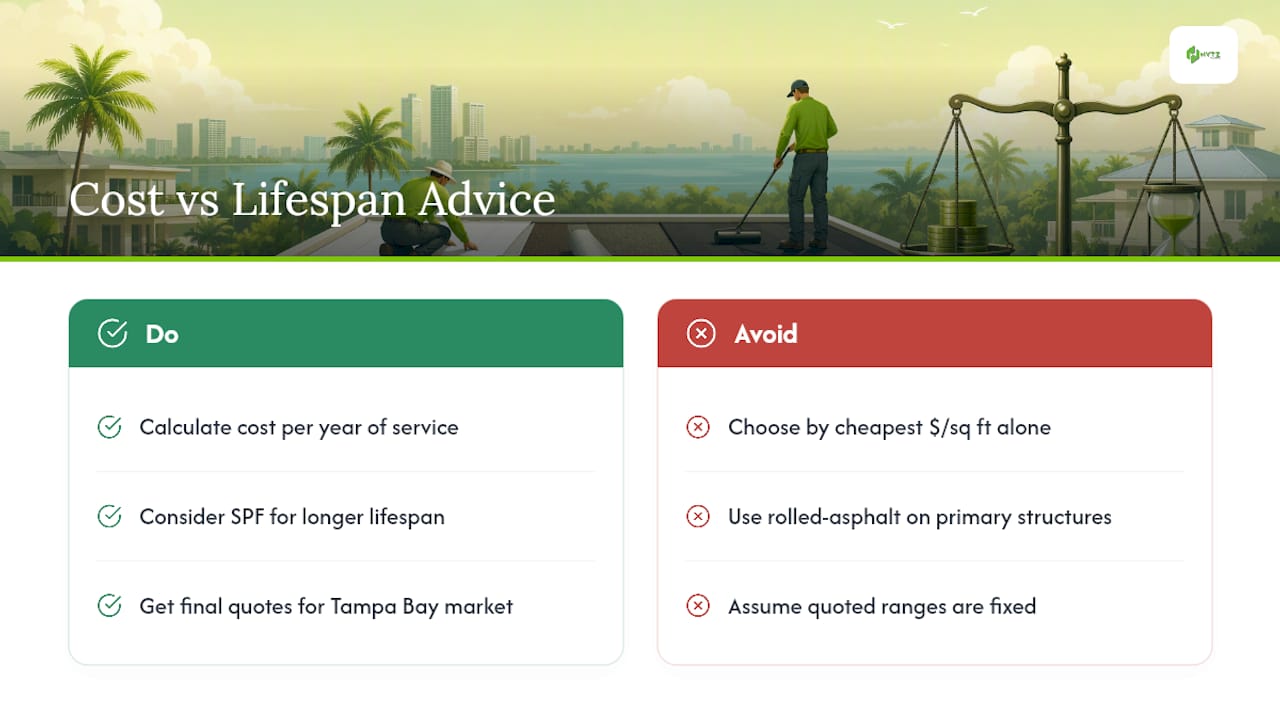
The cheapest option per square foot isn’t always the cheapest per year of service. SPF costs more upfront but can outlast two generations of a rolled-asphalt roof, which typically only lasts 5 to 12 years and belongs on sheds and porches, not primary structures. Run the math on cost divided by expected years, not just the sticker price on the bid.
Every number above is a range. Your final quote depends on roof complexity, deck condition, and local labor rates in the Tampa Bay market.
What Voids Your Roofing Warranty (and How to Avoid It)
Manufacturer warranties on TPO, PVC, and other membranes almost always require a certified installer and specific approved accessories. Use the wrong flashing tape or an uncertified crew, and that 25-year warranty can become worthless the moment you file a claim.
Common failure points we see on Tampa Bay low-slope roofs:
- Ponding at drains due to inadequate taper design or clogged scuppers
- Flashing failures at parapet walls and roof penetrations
- Seam separation from poor heat-welding technique or adhesive shortcuts
- Wrong fastener patterns that don’t meet local wind-uplift requirements
Ask every bidder for a written taper diagram, the exact seam method they’ll use, a fastener schedule, and full warranty terms in writing.
Pro Tip: Ask to see the contractor’s manufacturer certification card for the specific membrane brand they’re quoting, not just a general roofing license.
How to Choose the Right Low Slope Roofing System
Work through these priorities in order, and you’ll land on a system that actually fits your building.
- Does the roof need a re-slope? If water pools anywhere, tapered insulation goes in the scope before anything else.
- What’s the primary use? Energy savings, foot traffic, chemical exposure, and hurricane exposure each point toward different materials.
- How is it attached? Fully-adhered and mechanically-seamed systems resist wind far better than loose-laid ones.
- Is the installer certified for that specific manufacturer’s warranty?
- What’s the lifecycle cost, not just the bid price?
Red flags on any quote: no slope plan, vague material specs, no warranty language in writing, or no proof of manufacturer certification.
A Contractor’s View on Choosing the Right Low Slope System
For a small residential addition with a flat porch roof, TPO with proper taper usually wins on cost and reflectivity. Commercial buildings with rooftop equipment traffic do better with modified bitumen or BUR. Coastal properties need fully-adhered systems rated for uplift, full stop. We approach every low-slope job at Hytzroofing as a drainage problem first and a material selection second, backed by our GAF Master Elite certification. If you want eyes on your roof, request an inspection and an itemized estimate.
— Anthony
Get a Certified Low Slope Roof Inspection in Tampa Bay
Hytzroofing is the alternative to guessing your way through a low-slope roofing decision. We handle the taper layout, the certified membrane install, and the insurance paperwork, so you’re not piecing together three contractors for one roof.
Our crews install TPO roofing systems with full manufacturer warranty backing, which matters given how often warranties get voided by uncertified installers. If your low-slope roof took storm damage, we handle insurance claim assistance directly, and we offer financing options if the upfront cost is the sticking point. Every job comes with Florida Contractor License #CCC1332551, general liability insurance, and workers’ compensation coverage. If you’re weighing a repair against a full roof replacement, start with a free inspection. We’ll walk the roof, check for ponding, and give you a written estimate before you commit to anything.
Sources
Code and slope thresholds referenced in this article come from IRC-based guidance on low-slope materials, reflectivity standards from the Cool Roof Rating Council, material cost and lifespan data from Rooflio’s roofing guide, and installation sequencing from the flat roof installation guide. For regional installation perspective, Smart Roofing & Restoration’s low-slope guide covers similar drainage planning considerations.
- Low-Sloped Roofing Product Types - Cool Roof Rating Council
- Low Slope Roofing Guide 2026 | Systems, Materials, Costs & Installation
- How to Install a Flat Roof: Professional Step-by-Step Guide
FAQ
What is the minimum slope for a low slope roof?
Codes generally require at least 1/4 inch per foot of slope for adequate drainage, and standard asphalt shingles aren’t code-compliant below a 2/12 pitch.
Which low slope roofing material lasts the longest?
SPF can reach 30 to 50 years with regular recoats, while PVC and TPO typically run 20 to 35 years depending on thickness and installer quality.
Is TPO or EPDM better for a Florida roof?
White TPO generally performs better in Florida’s heat because of its reflective surface and Cool Roof Rating Council performance data, while EPDM’s dark surface absorbs more heat unless you choose a white variant.
Can I install shingles on a low slope roof?
No. Standard shingles require a minimum 4/12 slope, and roofs between 2/12 and 4/12 need special underlayment; below 2/12, shingles are not permitted under IRC R905.
Does Hytzroofing install low slope roofing systems?
Yes, Hytzroofing is a GAF Master Elite Contractor installing certified TPO and other low-slope systems throughout Tampa Bay, with warranty-backed workmanship and insurance claim assistance included.