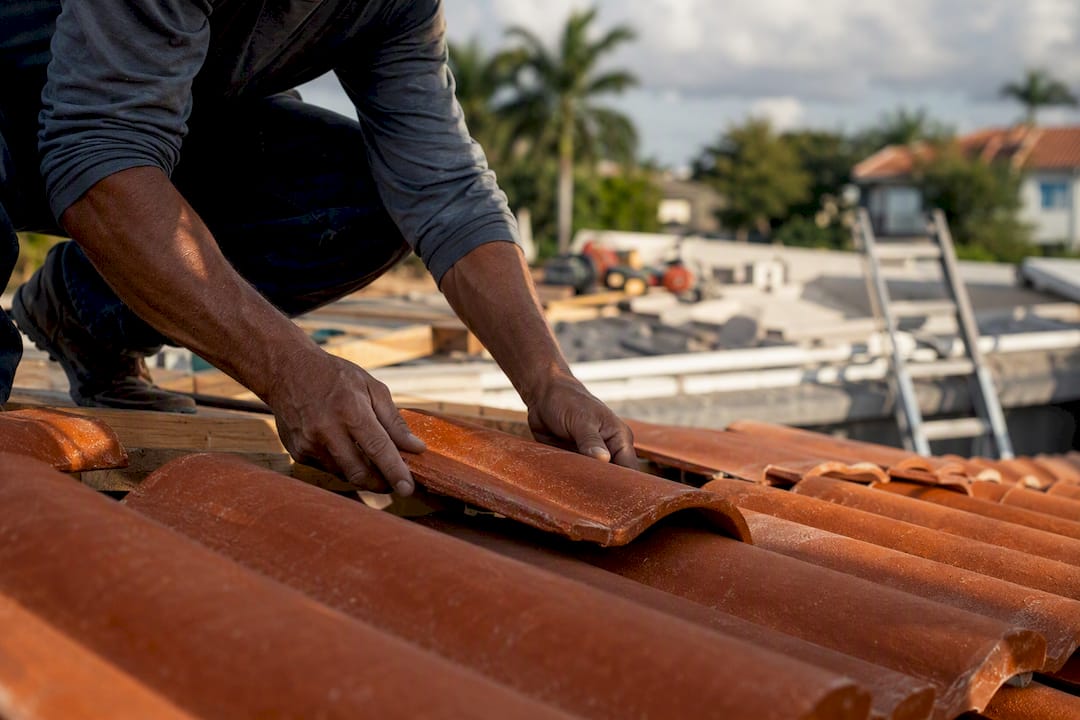
Tile Roof Cost in Florida: What to Expect in 2026
Tile Roof Cost Florida depends on material, roof size, labor and local conditions; this article explains the factors and timelines to consider for 2026.
Most Florida tile roofs run $18,000 to $50,000 installed, or roughly $12 to $28 per square foot, depending on tile material and region. Materials and labor typically split close to 50/50, with permits, tear-off, and disposal layered on top. The biggest swings come from tile type (concrete vs. clay vs. synthetic), roof pitch and complexity, and whether your decking needs structural reinforcement before tile goes down.
TL;DR:
- Tile roof costs in Florida range from $12 to $28 per square foot, with complex or steep projects exceeding $30 per square foot.
- Structural reinforcement, tear-off, and disposal can significantly increase the final price, especially on older or complex homes.
- Florida’s 25% roof replacement rule no longer applies to roofs permitted under codes from March 2009 onward, but homeowners should verify permit history.
- Costs vary by region, with South Florida typically higher due to stricter wind-load codes compared to Central and Northeast Florida.
- Always get detailed, itemized estimates including permits, scope, and warranties to ensure accurate pricing and coverage.
Table of Contents
- How Much Does a Tile Roof Cost in Florida Per Square Foot?
- What Drives the Price of a Tile Roof Up or Down?
- Does Florida’s 25% Roof Replacement Rule Still Apply?
- How Much Do Tile Roofs Cost Across Different Parts of Florida?
- What Should You Ask For in a Tile Roof Estimate?
- Is Tile Worth the Higher Upfront Cost Over Time?
- Why Credentials Matter When You’re Paying for a Tile Roof
- What Florida Homeowners Get Wrong About Repair vs. Replace
- Get a Free Tile Roof Estimate
- Where to Verify Costs and Contractor Credentials
- Sources
- FAQ
How Much Does a Tile Roof Cost in Florida Per Square Foot?
Tile roof installed costs in Florida typically fall between $12 and $28 per square foot, with the material you choose doing most of the heavy lifting on where your number lands. Some national data sets show a slightly wider net, $8 to $18 per square foot for standard jobs, with clay pushing toward the top and concrete sitting toward the low to middle range. Complex or premium projects can climb past $30 per square foot, especially with steep pitches or custom profiles.
Here’s how that breaks down by tile type:
- Concrete tile: generally the most affordable option, often 10% to 40% cheaper than clay, though the added weight sometimes triggers a structural check.
- Clay tile: sits at the premium end, prized for color retention and curb appeal in older Florida neighborhoods, but it costs more per square and more to ship and handle.
- Synthetic tile: lighter than concrete or clay, which can skip the reinforcement conversation entirely, with pricing that lands somewhere in the middle of the pack.
For a rough sense of what that means in real dollars, here’s how the math works out across common Tampa Bay roof sizes:
| Roof size | Concrete (installed) | Clay (installed) | Synthetic (installed) |
|---|---|---|---|
| — | $18,000–$25,000 | $22,000–$34,000 | $19,000–$28,000 |
| — | $20,400–$28,000 | $25,500–$40,000 | $22,000–$32,000 |
| 2,000 sq ft | $22,000–$34,000 | $30,000–$40,000 | $26,000–$37,000 |
Those figures use the $12 to $17 per square foot range for concrete, $15 to $24 for clay, and $13 to $19 for synthetic, blending the ranges above. Full replacements on larger or more complex Florida homes can still land anywhere from $15,000 to $70,000 or more, so treat these as a starting point, not a ceiling, for your specific home.
What Drives the Price of a Tile Roof Up or Down?
Two roofs of the same square footage can carry very different price tags once you account for pitch, access, and what’s underneath the old tile. Roof area sets the baseline, but complexity is what actually moves the number.
- Roof pitch: steeper roofs demand more safety gear, slower footing, and more labor hours. Steeper pitches can add roughly 8% to 12% more labor time compared to a standard slope.
- Tear-off and disposal: removing old tile and hauling it away adds real cost, especially since concrete and clay tile debris is heavy and often needs multiple dumpster loads rather than one.
- Decking repairs: rotted or water-damaged plywood underneath old tile has to be replaced before new underlayment goes down, and tile breakage during removal is common enough that most contractors build in a breakage allowance.
- Structural reinforcement: if your home wasn’t originally engineered for tile weight, reinforcement work can run $1,000 to $5,000 or more, depending on how much bracing the trusses need.
- Access and labor demand: multi-story homes, tight lot lines, or gated coastal communities that require scaffolding all add labor hours, and labor rates tend to run tighter in peak hurricane-season months when every Tampa Bay roofer is booked out.
Pro Tip: Ask your contractor whether their quote already includes a tile breakage allowance and a decking inspection. If it doesn’t, you’re likely to see a change order once the old roof comes off, and that’s the number that actually determines your final bill.
Does Florida’s 25% Roof Replacement Rule Still Apply?
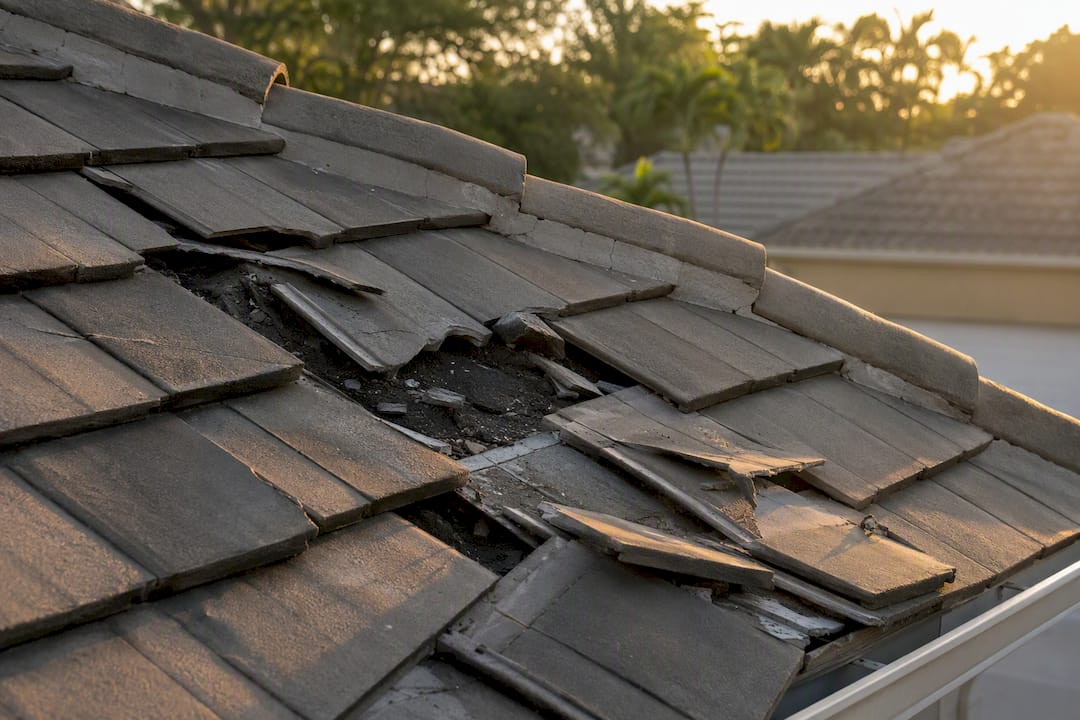
It depends entirely on when your roof was permitted. Florida’s old rule required a full roof replacement whenever repairs covered more than 25% of the roof area within a 12 month span, even if the rest of the roof was in decent shape. Senate Bill 4-D, signed in May 2022, changed that: roofs permitted under the 2007 Florida Building Code, generally those permitted on or after March 1, 2009, are now exempt from the forced full-replacement trigger.
Before you assume you’re covered, check these:
- Pull your home’s permit history from the county to confirm the original roof permit date.
- Keep copies of any prior roof permits and inspection signoffs, since insurers and adjusters will ask for them.
- Budget for code-required wind fastening upgrades on any repair or replacement, since Florida’s high-velocity hurricane zones carry stricter fastening standards than older roofs were built to.
- Ask your carrier directly how they interpret SB 4-D before filing a claim. Some still apply the older 25% standard inconsistently.
Permit fees themselves vary by county and can add a few hundred to a few thousand dollars depending on scope and required inspections.
How Much Do Tile Roofs Cost Across Different Parts of Florida?
Where you live in Florida changes your number more than most homeowners expect. South Florida coastal counties tend to run at the higher end of the range because of stricter wind-load codes, denser permitting requirements, and steady contractor demand. Central Florida, including Tampa Bay, sits closer to the middle, with labor availability and material transport costs playing a bigger role than code differences. Northeast Florida often runs slightly lower, though hurricane-season demand spikes can tighten that gap fast.
Here’s how three common scenarios play out:
- 1,600 sq ft home, South Florida, concrete tile: expect roughly $22,000 on the low end up to $34,000 on the high end, driven mostly by coastal wind-fastening requirements.
- 1,800 sq ft home, Tampa Bay, clay tile: a realistic range runs from about $28,000 to $43,000, with structural reinforcement pushing toward the top if the home wasn’t originally built for tile.
- 2,000 sq ft home, Northeast Florida, synthetic tile: budget somewhere between $27,000 and $37,000, generally on the lower side of statewide averages absent major complexity.
If a quote comes in dramatically below these ranges, that’s worth a second look, not a celebration. A price that low usually means missing scope items like permits, disposal, or underlayment upgrades, and those costs tend to reappear later as change orders.
What Should You Ask For in a Tile Roof Estimate?
A comparable, trustworthy estimate has specific line items, not a single lump number. Before your contractor visit, gather your address, a rough sense of your roof’s age, and any prior repair paperwork.
Ask for these measurement and scope details in writing:
- Total roof squares (100 sq ft units) and pitch measurement, not a rough eyeball estimate
- Exact tile brand and profile being quoted, since substituting a cheaper profile after signing is a common bait-and-switch
- Underlayment type and manufacturer (self-adhered vs. mechanically fastened matters in hurricane zones)
- Flashing detail plan for valleys, chimneys, and skylights
- Attic ventilation plan, since re-roofing is the easiest time to correct poor airflow
Before signing anything, verify the contractor’s Florida license number directly through the Florida Department of Business and Professional Regulation, confirm active general liability and workers’ compensation coverage, and ask which manufacturer certifications they hold. Get warranty language in writing, including whether it’s a workmanship warranty from the contractor or a manufacturer-backed warranty, since those two things aren’t the same and only one usually survives if the contractor goes out of business.
Pro Tip: Watch for “allowance” pricing on decking repair or tile breakage instead of a fixed number. An allowance isn’t dishonest on its own, but ask what happens if the actual cost exceeds it, and get that answer in writing before you sign.
A contractor estimate checklist built around clear scope items is one of the fastest ways to spot which quotes are apples to apples and which ones are missing pieces.
Is Tile Worth the Higher Upfront Cost Over Time?
Tile roofs commonly last 40 to 60 years compared to 15 to 25 years for asphalt shingles in Florida’s climate, which is the real math behind the higher sticker price. You’re not paying more for the same roof. You’re paying once for something that outlasts two or three shingle replacements.
Budget for these recurring items along the way:
- Periodic tile inspections after storms to check for cracked or slipped tiles, usually a few hundred dollars per visit
- Underlayment renewal roughly at the 20 to 25 year mark, even though the tile itself may still be fine
- Flashing repairs around chimneys and valleys as sealant ages, particularly after major wind events
- Occasional individual tile replacement, which is far cheaper than a full re-roof
Tile’s durability can also support better wind mitigation credits on your insurance premium, and it tends to hold resale value better than shingles in Florida’s market, where buyers increasingly ask about roof age and material upfront.
Why Credentials Matter When You’re Paying for a Tile Roof
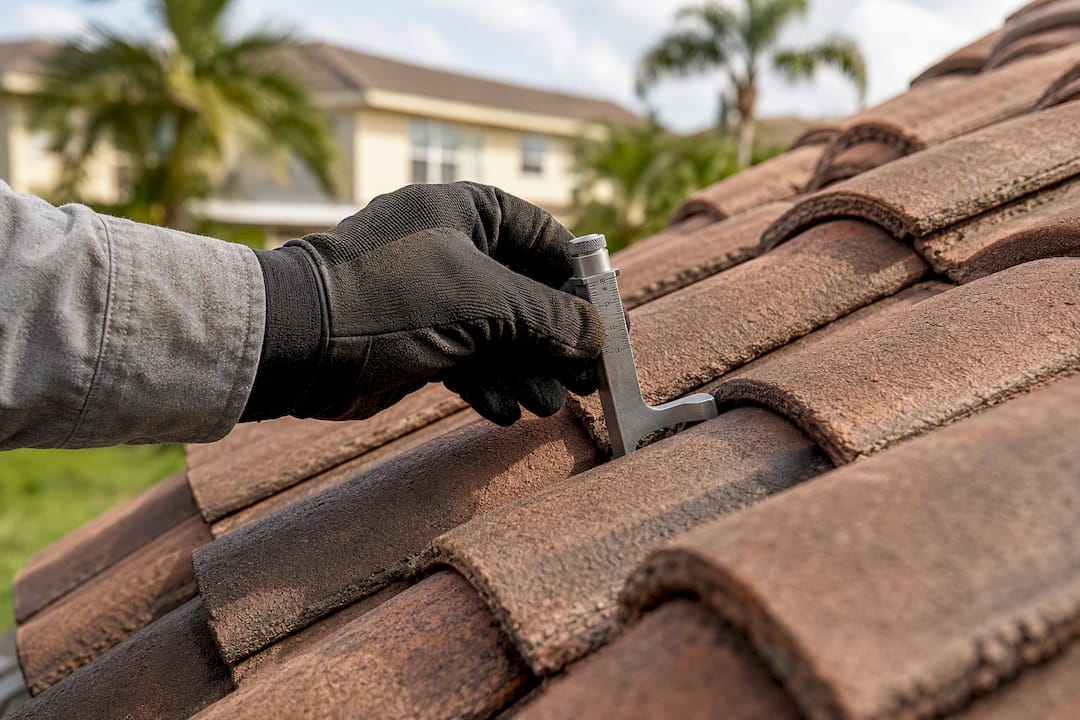
A lower bid loses its appeal fast if the warranty behind it isn’t real. Hytz Roofing holds Florida Contractor License #CCC1332551, full general liability and workers’ compensation coverage, and BBB Accreditation with an A+ rating. As a GAF Master Elite® contractor, a distinction earned by fewer than 2% of roofing contractors in North America, manufacturer-backed warranties on qualifying installations carry more weight and are less likely to get denied over a technicality.
That credential difference shows up in the paperwork you get, too: a detailed written scope, copies of pulled permits, and documented inspection signoffs. That kind of documentation is exactly what protects you if a warranty claim or insurance dispute comes up years later.
What Florida Homeowners Get Wrong About Repair vs. Replace
Most Florida homeowners wait too long on tile roof decisions, hoping a few cracked tiles mean the roof still has years left, when the real tipping point is usually the underlayment and decking underneath, not the tile itself. If you’re staring down a repair quote that keeps growing, schedule a full inspection and pull your roof’s permit history before signing anything. Gather your original roof permit date, any past repair paperwork, and your insurance policy details ahead of that visit. That homework is what turns a confusing estimate into a decision you can actually defend later.
— Anthony
Get a Free Tile Roof Estimate
in Tampa Bay
Hytz Roofing is a licensed, GAF Master Elite® contractor serving Tampa Bay and Central Florida, which means your tile roof quote comes backed by real credentials, not just a low number on a page.
A free estimate from Hytz Roofing includes a detailed written scope broken down by materials, labor, permits, and disposal, a check of your existing permit history to confirm whether SB 4-D applies to your home, and help navigating an insurance claim if storm damage is part of the picture. Every project is covered by Florida Contractor License #CCC1332551, full liability and workers’ compensation coverage, and manufacturer-backed warranties that only certified installers can offer. If you’re ready to compare a real number against the ranges above, request a free tile roof estimate in Tampa and get a written scope you can actually hold a contractor to.
Where to Verify Costs and Contractor Credentials
Check the SB 4-D roof rule details, your county permit office, and verified contractor reviews before signing any tile roof contract.
Sources
- Tile Roof Cost in Florida: Price Ranges, Materials, and Local Labor 2026 – LatestCost
- Tile Roof Cost (2026 Prices) | What Does a Roof Cost?
- Tile Roof Replacement Cost in 2026: By Type And Size
- What Is the 25% Roof Rule in Florida? (2026 Update)
FAQ
What is the 25% roof replacement rule in Florida?
It historically required a full roof replacement if repairs covered more than 25% of the roof in a 12 month period. Senate Bill 4-D exempted roofs permitted under the 2007 Florida Building Code, generally those permitted on or after March 1, 2009, from that forced replacement trigger.
Is tile roofing cheaper than shingles?
No, tile roofing costs more upfront, typically $12 to $28 per square foot installed compared to a lower range for asphalt shingles, but tile often lasts 40 to 60 years versus 15 to 25 years for shingles in Florida’s climate.
Is $30,000 too much for a roof?
Not necessarily for a tile roof. A $30,000 quote fits comfortably within the typical $18,000 to $50,000 installed range for Florida tile roofs, especially on a mid-size home with clay tile or added structural reinforcement.
What is the 15 year roof rule in Florida?
This generally refers to insurance carriers requiring a roof inspection or limiting coverage on roofs older than 15 years, separate from the 25% replacement rule; specific age thresholds vary by insurer, so confirm the exact policy language with your carrier.
Does Hytz Roofing handle insurance claims for tile roof damage?
Yes, Hytz Roofing assists Tampa Bay homeowners with insurance claim documentation and adjuster coordination for storm-damaged tile roofs as part of its licensed roofing services.