How to Qualify for Contractor Financing on Your Roof
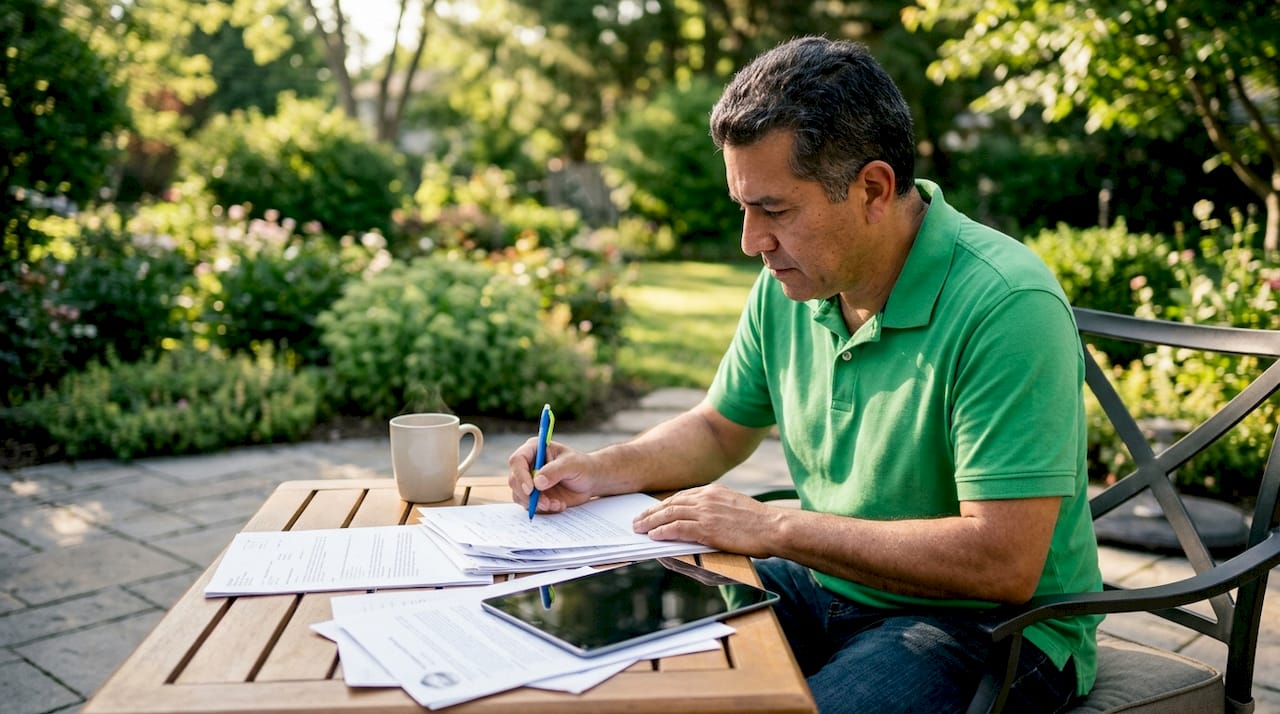
Contractor financing for a roof project is defined as a point-of-sale loan arranged through your roofing contractor and funded by a third-party lender. To qualify for contractor financing on a roof project, lenders evaluate your credit score, income, debt load, and the size of your project. Approval rates on these platforms typically run 60%–85%, which means most Florida homeowners can get approved. The process is faster and simpler than a bank loan, but the terms vary widely depending on your credit profile and the lender your contractor works with.
What credit score do you need to qualify for contractor financing?
Credit score is the single biggest factor lenders use to approve or deny a contractor financing application. Most platforms require a minimum FICO score of 600–650 for standard approval. Your score also determines your interest rate, which makes a real difference in what you pay over the life of the loan.
APRs range from 6.99% to 35.99% depending on your credit tier. That spread is significant. A homeowner with a 720 score might pay 8% APR, while someone at 610 could pay 28% or more on the same loan amount.
Here is how credit tiers typically break down across contractor financing programs:
- 680 and above: Full access to the best rates, longest terms, and promotional offers like 0% APR for 12–18 months
- 640–679: Standard approval with mid-range APRs, usually 12%–20%
- 600–639: Approved but with higher APRs, often 20%–30%, and shorter loan terms
- Below 600: Limited options; Foundation Finance accepts scores as low as 540 but at APRs in the 25%–36% range
Beyond credit score, lenders also review your debt-to-income ratio. If your monthly debt payments already consume a large share of your income, lenders may reduce your loan amount or decline the application entirely. Most programs want to see stable, verifiable income, whether from employment, self-employment, or retirement benefits.
Pro Tip: Pull your free credit report at AnnualCreditReport.com before your roofing estimate. Catching errors early can raise your score fast and unlock better financing terms.

How does the contractor financing application process work in Florida?
The application process for contractor financing is built for speed. Most roofing contractors complete the application with you on a tablet during the estimate visit, or send you a secure link to apply from your phone at home.
Credit decisions typically come back in under 60 seconds, which is a sharp contrast to home equity loans that can take two to six weeks to close. That speed matters when you have storm damage or an active leak.
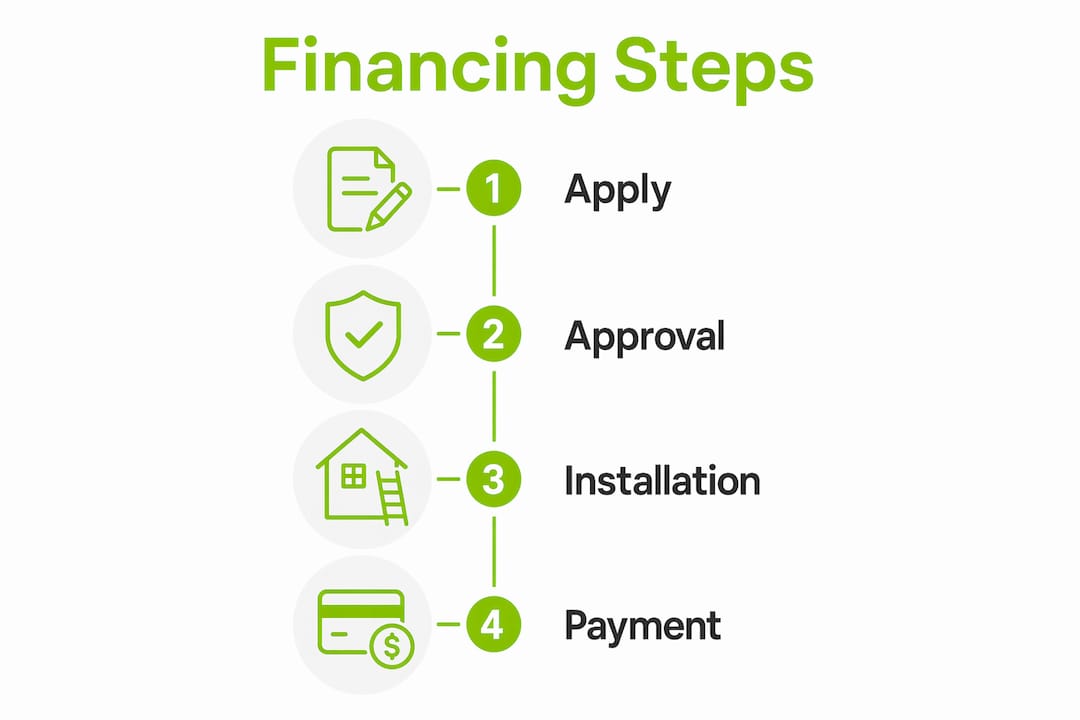
Here is what the typical application process looks like, step by step:
- Receive your project estimate. Your contractor provides a written quote with the total project cost.
- Choose a financing plan. The contractor walks you through available loan amounts, terms, and promotional offers.
- Submit the digital application. You enter your name, Social Security number, income, and address. The whole form takes about five minutes.
- Get an instant credit decision. Approval or denial comes back in seconds. If you have a credit freeze, it can be resolved onsite in minutes without losing your place in the process.
- Review and sign loan documents. Once approved, you sign electronically and the lender funds the contractor directly.
Loan amounts can reach $55,000 depending on the program, which covers most full roof replacements in Florida. Loan terms run from 12 to 180 months, giving you flexibility on monthly payment size.
Compare that to a home equity loan, which requires an appraisal, title search, and underwriting review. Home equity loan APRs run 6.5%–9.5%, which is lower than most contractor financing rates. But the weeks-long wait is a real drawback when your roof needs immediate attention.
| Feature | Contractor financing | Home equity loan |
|---|---|---|
| Approval time | Under 60 seconds | 2–6 weeks |
| APR range | 6.99%–35.99% | 6.5%–9.5% |
| Max loan amount | Up to $55,000 | Based on home equity |
| Documentation needed | ID, income proof, estimate | Full financial package |
| Collateral required | No | Yes (your home) |
What contractor financing options are available for roof projects?
Several third-party lenders power contractor financing programs across Florida. Each has different credit requirements, loan limits, and rate structures. Knowing the differences helps you ask the right questions during your estimate.
GreenSky offers loan terms from 24 to 84 months and works with contractors across Florida. It targets borrowers with scores of 640 and above and offers promotional 0% APR plans. Regions Bank provides similar coverage with terms up to 84 months and competitive rates for borrowers with good credit. Service Finance Company focuses on home improvement loans and accepts a broad credit range, with terms up to 144 months. Foundation Finance accepts the widest credit range, going down to 540, but charges the highest APRs to offset that risk.
Promotional 0% APR offers sound great, but they carry an important catch. These plans use deferred interest, not true 0% financing. If you do not pay the full balance before the promotional period ends, interest accrues retroactively from the original loan date. That can add hundreds of dollars to your total cost overnight.
Dealer fees typically run 3%–15% of the loan amount, depending on the plan type. Contractors pay these fees to the lender for offering the financing. Some contractors absorb the cost; others factor it into their project pricing. A 0% APR promo plan costs the contractor 8%–15% in dealer fees, which is why those offers are not always available on every job.
Pro Tip: Ask your contractor directly whether the financed price differs from the cash price. A contractor who is transparent about this is one you can trust with your roof.
Understanding long-term cost factors before signing any loan helps you avoid surprises. The same principle applies whether you are financing a custom home build or a roof replacement.
How can Florida homeowners improve their chances of qualifying?
Getting approved is one thing. Getting approved at a rate that does not hurt your budget is another. These steps give you the best shot at favorable terms before you sit down with a contractor.
- Check your credit score first. Use a free tool like Credit Karma or your bank’s credit monitoring feature. Know your number before the contractor does.
- Dispute any errors on your credit report. Incorrect late payments or accounts that are not yours can drag your score down by 20–50 points. Fixing them costs nothing and takes two to four weeks.
- Reduce your credit card balances. Keeping your credit utilization below 30% of your available limit can raise your score meaningfully within one billing cycle.
- Gather your documents in advance. Have a government-issued ID, your two most recent pay stubs or tax returns, and a copy of your roofing estimate ready before the application.
- Get pre-qualified before the estimate visit. Some lenders allow soft-pull pre-qualification that does not affect your credit score. This tells you your likely rate range before you commit.
- Compare contractor financing to personal loans and home equity options. Homeowners with good credit and low debt often find home equity loans or personal loans offer lower total costs, even if they take longer to fund.
If your credit score is below 600, consider waiting 60–90 days to apply while you pay down balances and dispute errors. A 40-point improvement can move you from a 30% APR to a 15% APR on the same loan, saving thousands over the loan term.
You can also check our roofing cost guide to understand typical project costs in Florida before you decide how much to finance. Knowing the real numbers helps you borrow only what you need.
Key Takeaways
Qualifying for contractor financing on a roof project comes down to three factors: your credit score, your income stability, and the lender your contractor works with.
| Point | Details |
|---|---|
| Minimum credit score | Most programs require a FICO of 600–650 for standard approval. |
| APR varies widely | Rates run 6.99%–35.99%; a higher score saves you thousands over the loan term. |
| Application is fast | Decisions come back in under 60 seconds with minimal documentation required. |
| Deferred interest risk | Promotional 0% APR plans charge retroactive interest if not paid off in time. |
| Compare your options | Home equity loans offer lower APRs but take weeks; contractor financing is faster but costs more. |
What I have learned about contractor financing after years in Florida roofing
Here is something most homeowners do not hear until it is too late: the financing conversation should happen at the start of the estimate, not at the end. When a contractor drops a $14,000 quote on you and then mentions financing as an afterthought, you are already in a reactive mindset. You are more likely to accept whatever plan is in front of you rather than evaluate it clearly.
I have seen homeowners sign 36-month plans at 28% APR because they did not know a 120-month plan at 12% was available from the same lender. The contractor did not hide it. They just did not explain it. That is a problem.
My honest advice: treat the financing terms with the same scrutiny you give the roofing materials. Ask for the full APR in writing. Ask whether the price changes if you pay cash. Ask what happens if you miss the promotional deadline. Contractors who openly discuss all payment methods build more trust and help you understand the real long-term cost of your decision.
Contractor financing is a useful tool. It is not always the cheapest tool. If you have equity in your home and a few weeks to spare, a home equity loan will almost always cost you less. If your roof is leaking after a storm and you need work done this week, contractor financing may be the right call. The key is making that decision with full information, not under pressure.
— Anthony
Hytzroofing makes roof financing simple for Florida homeowners
Financing a roof replacement does not have to feel complicated. Hytzroofing is a GAF Master Elite® Contractor, one of fewer than 2% of roofing contractors in North America to hold that designation, and we connect Florida homeowners with contractor financing options that fit real budgets.
We walk you through every financing plan available for your project, explain the terms clearly, and help you apply on the spot during your estimate visit. No pressure, no surprises. Whether you need a full roof replacement or storm damage repairs, our team handles the details so you can focus on protecting your home. Visit Hytzroofing’s financing page to schedule your free estimate and get your roof project funded the right way.
FAQ
What is the minimum credit score for contractor financing?
Most contractor financing programs require a minimum FICO score of 600–650 for standard approval. Some lenders accept scores as low as 540, but those loans carry APRs in the 25%–36% range.
How long does contractor financing approval take?
Approval decisions typically come back in under 60 seconds through digital applications completed on a tablet or phone. This is far faster than home equity loans, which take two to six weeks to process.
Can I use contractor financing for storm damage roof repairs in Florida?
Yes. Contractor financing covers both full replacements and storm damage repairs. You can learn more about the permit process for storm repairs to understand what documentation your contractor will need alongside the financing application.
What is deferred interest on a 0% APR roofing loan?
Deferred interest means the interest accrues during the promotional period but is waived only if you pay the full balance before the deadline. If you carry any balance past that date, the full interest charges from day one are added to what you owe.
Is contractor financing more expensive than a home equity loan?
Contractor financing typically costs more. Home equity loan APRs run 6.5%–9.5%, while contractor financing APRs can reach 35.99%. The tradeoff is speed: contractor financing funds in days, while home equity loans take weeks to close.
