Wind Mitigation Roof Inspection: Cut Your Florida Premium
Wind mitigation inspection documents roof features insurers use to evaluate potential premium credits and outlines the key items an inspector verifies.
A wind mitigation inspection for your roof documents the exact features your insurer uses to grant premium credits — roof-to-wall connections, roof geometry, secondary water resistance, and opening protection — and savings commonly range from 10%–40% on the wind portion of your policy. That’s real money back in your pocket, often in the first year.
Here’s what you need to know right now:
- 📋 A certified inspector completes the Uniform Mitigation Verification Inspection Form (OIR-B1-1802) and submits it directly to your insurer.
- 💬 Hytzroofing performs certified wind mitigation inspections across Tampa Bay and Central Florida, backed by Florida Contractor License #CCC1332551 and GAF Master Elite® status.
- 🚨 Check My Safe Florida Home first — eligible homeowners may qualify for a free inspection and matching grants for approved upgrades.
Key Takeaways
A wind mitigation roof inspection is one of the highest-ROI steps a Florida homeowner can take — the inspection fee typically pays for itself within the first policy term through documented premium credits.
| Point | Details |
|---|---|
| Savings range | Credits commonly reduce the wind portion of your policy by 10%–40%, depending on features and carrier. |
| Inspection cost | Standalone Wind Mit runs $75–$150; bundled with a 4-Point inspection, expect —. |
| Attic access is critical | Without it, inspectors default to the lowest credit tier for deck attachment and roof-to-wall connections. |
| Report validity | Florida wind mitigation reports are commonly valid for five years; re-inspect after any reroof or major upgrade. |
| Hytzroofing | Offers certified inspections in Tampa Bay with OIR-form reports, photos, and post-inspection repair quoting. |
Table of Contents
- What does a wind mitigation roof inspection actually check?
- How wind mitigation inspections affect your insurance and hurricane readiness
- What to expect: inspection cost, process, and timeline
- Which roof upgrades generate the biggest mitigation credits?
- How to prepare your home and vet your inspector
- When should you schedule your wind mitigation inspection?
- A Tampa Bay contractor’s honest take on what actually matters
- Hytzroofing’s certified wind mitigation inspections in Tampa Bay
- Sources
- FAQ
What does a wind mitigation roof inspection actually check?
Inspectors work through a structured checklist tied directly to the OIR-B1-1802 form. Every item they mark must be backed by a photo. Here’s what they’re looking at on your roof and in your attic:
- Roof covering: Type of material (shingles, tile, metal) and installation date or permit confirmation.
- Roof deck attachment: Nail type and spacing in the sheathing — 8d ring-shank nails at 6-inch spacing score better than 6d smooth nails.
- Roof-to-wall connection: Toe-nails (lowest credit) vs. single wraps, double wraps, clips, or hurricane straps (highest credit). This is often the biggest credit driver.
- Roof geometry: Hip roofs score better than gable roofs because they shed wind load more evenly. A fully hip roof earns the maximum geometry credit.
- Secondary water resistance (SWR): A self-adhering underlayment or foam-sealed deck that keeps water out if shingles are lost in a storm.
- Opening protection: Impact-rated windows, doors, and shutters — and whether your garage door is reinforced to resist wind pressure.
Why attic access matters so much
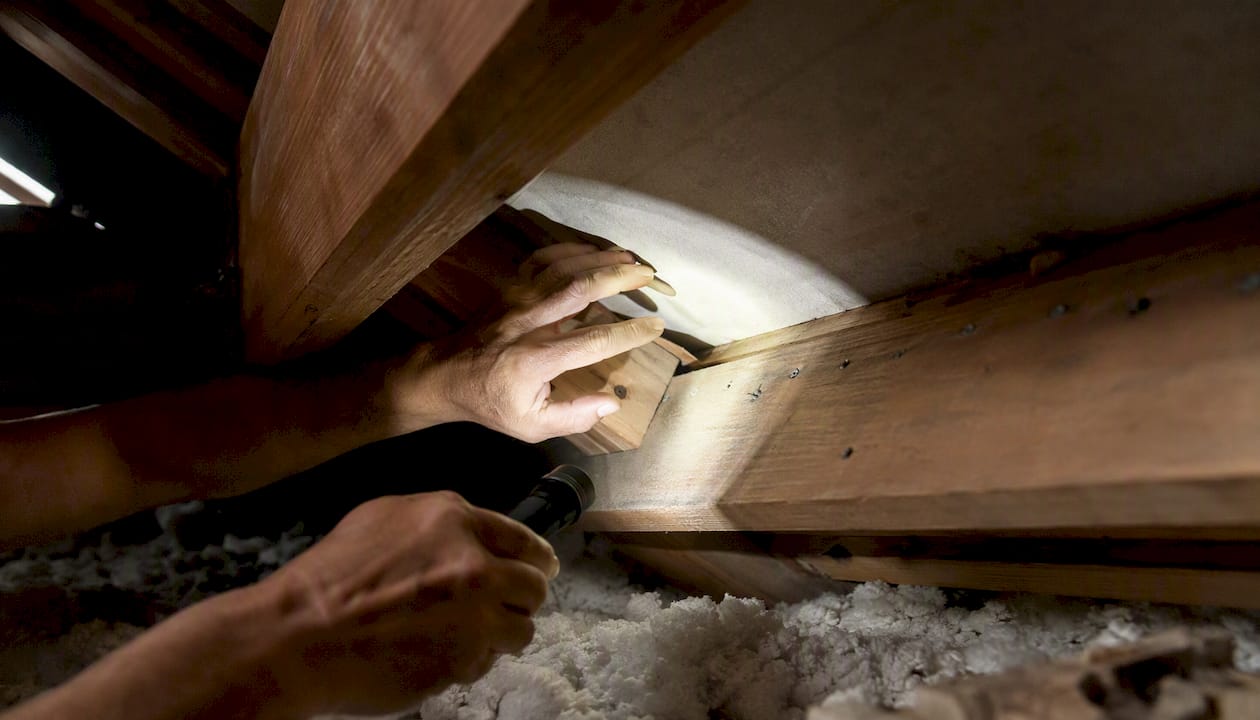
The InterNACHI wind mitigation checklist is clear: inspectors need physical attic access to verify nail size, nail spacing, and roof-to-wall connections. A finished attic or a blocked hatch means the inspector defaults to the lowest credit tier for those items — even if your home was built with excellent hardware. That’s a direct hit to your potential savings.
Pro Tip: Clear your attic hatch the day before the inspection and have a flashlight and step ladder ready. Pull out any permits or receipts for recent roof work, window installs, or hurricane strap additions — the inspector can use those documents to verify features they can’t see directly.
How wind mitigation inspections affect your insurance and hurricane readiness
Insurers discount wind premiums because a mitigated home is statistically less likely to suffer catastrophic loss. When your report is accepted, the credits apply immediately to your renewal or mid-term endorsement.
Industry data shows savings of 10%–40% on the wind component of your policy, depending on your carrier and the features recorded. The wind component often makes up a large share of a Florida homeowners policy, so even a modest percentage translates to meaningful dollars.
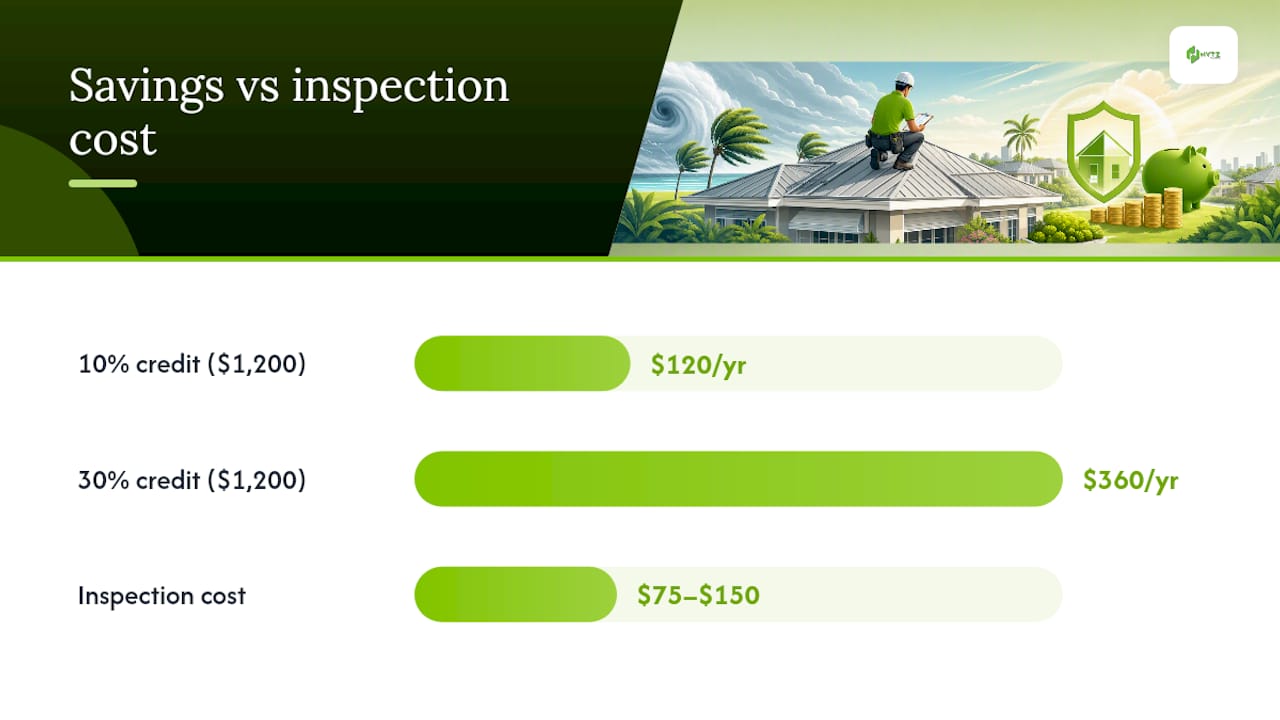
💡 Quick math: If your wind premium is $1,200 and you earn a 10% credit, you save $120/year. At 30%, that’s $360/year — and the inspection itself typically costs $75–$150. Most homeowners recover the inspection fee within the first policy term.
Beyond the premium, the inspection gives you a prioritized list of upgrades that reduce actual storm damage risk. That’s the part most homeowners overlook. A report that shows toe-nail connections and no secondary water barrier isn’t just bad for insurance scoring — it tells you exactly where your home is most vulnerable before the next hurricane season.
Limitations to know: Some policy types (Citizens policies with specific endorsements, surplus lines carriers) handle credits differently. A handful of insurers require their own form or additional photos. If your carrier rejects the report, the most common reasons are missing photos, an unqualified signer, or an outdated form version.
What to expect: inspection cost, process, and timeline
A proper wind mitigation assessment is a focused on-site visit, typically 30–90 minutes, that produces a photo-documented OIR-style form that your insurer accepts.
On-site steps:
- Exterior roof inspection (geometry, covering, visible condition)
- Attic access for deck attachment and connection verification
- Window, door, and garage door documentation
- Minimum one photo per marked attribute
Cost ranges (per InspectorData Florida pricing):
Very low-price offers (under $50) are a red flag. They often skip required photos or use unqualified signers, which leads to carrier rejection. Bundling a Wind Mit with a 4-Point inspection is smart for older Tampa Bay homes — one visit covers both insurer requirements.
Timeline: Most qualified inspectors deliver a signed PDF the same day or within 24–72 hours. You forward it to your agent, who submits it to the carrier. Keep a copy for your records.
Which roof upgrades generate the biggest mitigation credits?
Florida’s own guidance identifies the roof as the most critical mitigation element. These upgrades tend to move the needle most on your insurance score:
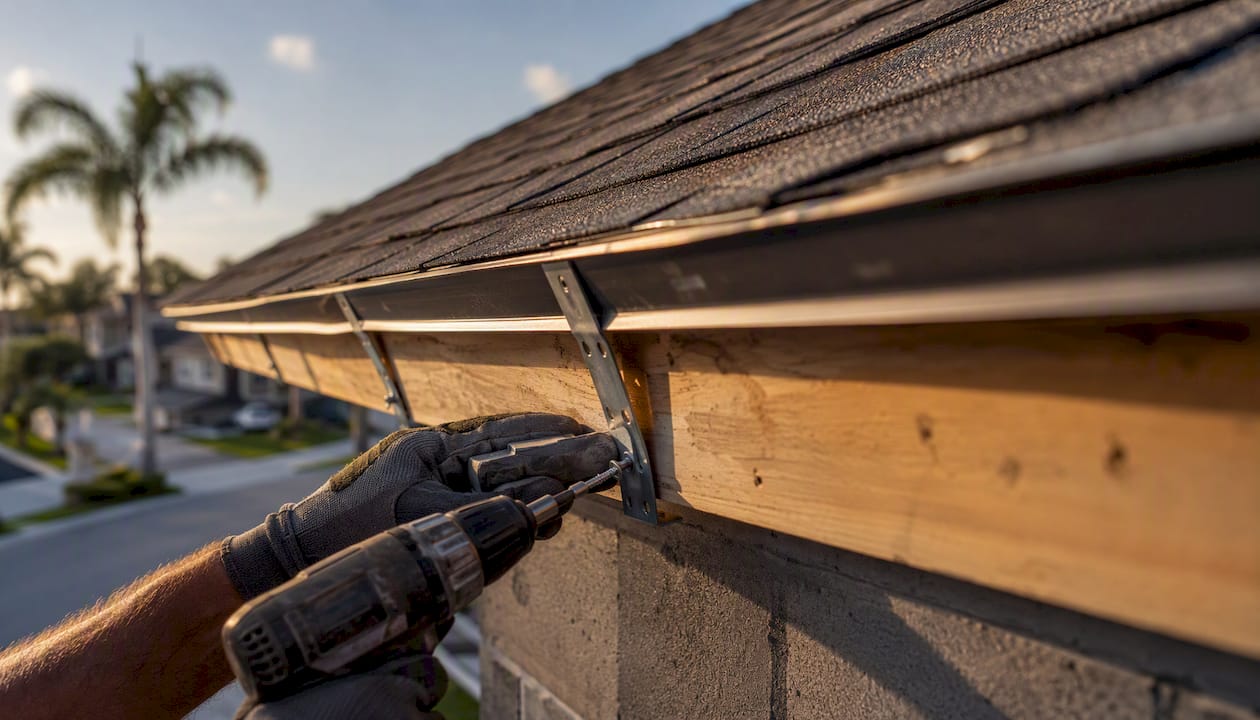
- Hurricane clips or straps (minor cost, major credit): Retrofitting clips or double-wrap straps at every rafter-to-wall connection upgrades your roof-to-wall score significantly. Labor-intensive but not a full reroof.
- Self-adhering secondary water barrier: Applied during a reroof, this underlayment seals the deck against water intrusion if shingles are lost. It’s one of the highest-value credits and adds minimal cost during a replacement.
- Impact-rated windows and doors: Moderate to major cost, but they unlock the opening protection credit and reduce storm damage risk across the whole home.
- Garage door reinforcement: A braced or wind-rated garage door is one of the more affordable upgrades and closes a common vulnerability.
- Full roof replacement with code-compliant covering: A new roof with proper nail patterns, hip geometry where possible, and a secondary barrier can move a home from the lowest credit tier to near the top.
Pro Tip: Before paying for any upgrade privately, check My Safe Florida Home eligibility. Qualified homeowners can receive matching grants for approved work — that can cut your out-of-pocket cost significantly on clips, barriers, and opening protection.
How to prepare your home and vet your inspector
Good preparation means the inspector can verify your best features on the first visit — no return trips, no missed credits.
Prep checklist:
- Clear and safe attic access (remove stored items blocking the hatch)
- Roof permit or receipt from any work done in the last 5–10 years
- Window and door installation receipts showing impact ratings
- Garage door model number or wind-load rating label
- Photos of hurricane clips if you’ve had them installed
Questions to ask before booking:
- Are you a licensed general contractor, residential contractor, PE, architect, or certified building code inspector? (Florida rules specify who qualifies to sign the form.)
- Do you complete the OIR-B1-1802 form with photos for every marked attribute?
- How quickly will you deliver the PDF, and will you assist if the carrier asks for clarification?
Watch out for “free wind mit” offers tied to contractor lead generation. Some are legitimate; others use unqualified signers or skip required photos. Confirm credentials before you commit.
When should you schedule your wind mitigation inspection?
The best time is whenever you can capture the most recent upgrades or when a policy change is coming. Specifically:
- After any reroof or major repair — a new roof with better nail patterns or a secondary barrier changes your credits immediately.
- When shopping or renewing insurance — submitting a fresh report at renewal gives your agent leverage to negotiate credits.
- Before applying for My Safe Florida Home grants — the program requires an inspection as part of the grant process.
- Every five years — wind mitigation reports are commonly valid for five years in Florida; re-inspect after any material change.
- For older homes — if your home hasn’t been inspected and was built before 2002, you may be leaving significant credits on the table.
Post-storm is another trigger. If you’ve had storm damage repaired in Tampa Bay, the repair work may have upgraded your connections or deck attachment — a new inspection captures that.
A Tampa Bay contractor’s honest take on what actually matters
The items that most often block full credits aren’t the expensive ones. In my experience working on roofs across Tampa Bay, the two biggest missed opportunities are attic access and roof-to-wall connections.
Homeowners assume their home has hurricane straps because it was built after a certain year. That’s not always true — and without attic access, the inspector has no choice but to mark the lowest tier. A simple attic cleanout before the inspection has unlocked better credits for homeowners who didn’t realize what was sitting above their ceiling.
The trust signals worth checking for any inspector or contractor you hire: a valid Florida contractor license, GAF Master Elite® credential (held by fewer than 2% of contractors in North America), annotated photos in the delivered report, and a clear, itemized invoice for any recommended upgrades. If an inspector can’t show you those, keep looking.
Hytzroofing’s certified wind mitigation inspections in Tampa Bay
📋 Hytzroofing performs certified wind mitigation inspections throughout Tampa Bay and Central Florida, delivering photo-documented OIR-B1-1802 reports your insurer accepts — with follow-up support if your carrier has questions.
Every inspection is backed by Florida Contractor License #CCC1332551, GAF Master Elite® status, BBB A+ accreditation, and hands-on experience with storm damage restoration and insurance claims. You get a signed PDF fast — same day or within 24–72 hours — and if the inspection reveals upgrades worth making, we quote them clearly and itemized. We also help eligible homeowners navigate My Safe Florida Home grant applications.
Ready to find out what credits your roof qualifies for? Request a certified inspection or free repair estimate from Hytzroofing today. 🚨
Sources
- Plan Prepare Protect: Are You Disaster Ready?
- Grants & Inspections Available - Helping Florida GET READIER for Hurricanes! - My Safe Florida Home
- Wind Mitigation Inspections: Benefits, Process, and Insurance Impacts
- Wind Mitigation Inspection Cost — Florida 2026 Pricing
- InterNACHI wind mitigation checklist
This article is general information, not a substitute for advice from a qualified financial advisor. Consult a qualified financial professional about your own circumstances before acting on anything here.
FAQ
What is a wind mitigation inspection for a roof?
It’s a formal assessment where a qualified inspector documents wind-resistant features on your roof and home using the OIR-B1-1802 form, then submits that report to your insurer to qualify for premium credits.
How much can I save on insurance with a wind mitigation report?
Savings typically range from 10%–40% on the wind portion of your Florida homeowners policy, depending on your carrier and the features your home has.
How long is a wind mitigation report valid in Florida?
Wind mitigation reports are commonly valid for five years. You should re-inspect after a reroof, major repairs, or window upgrades that could change your credits.
Who is qualified to perform a wind mitigation inspection in Florida?
Florida rules allow licensed general or residential contractors, professional engineers, licensed architects, and certified building code inspectors to sign the OIR-B1-1802 form.
Does Hytzroofing perform wind mitigation inspections in Tampa Bay?
Yes. Hytzroofing offers certified wind mitigation inspections across Tampa Bay and Central Florida, delivering photo-documented OIR-style reports with follow-up support for carrier questions.
Recommended
- Enviroshake Roofing in Tampa Bay: Ultimate Durability & Value | Hytz Roofing
- Choose the Best Roofing Contractor in Tampa Bay, Florida: Your Guide | Hytz Roofing
- Best SharpeRoof.com Alternatives for Florida Homeowners | Hytz Roofing
- Roof Repair in Tampa Bay: Your Guide to Florida’s Elements | Hytz Roofing