Why Roofs Fail in Florida’s Humid Climate
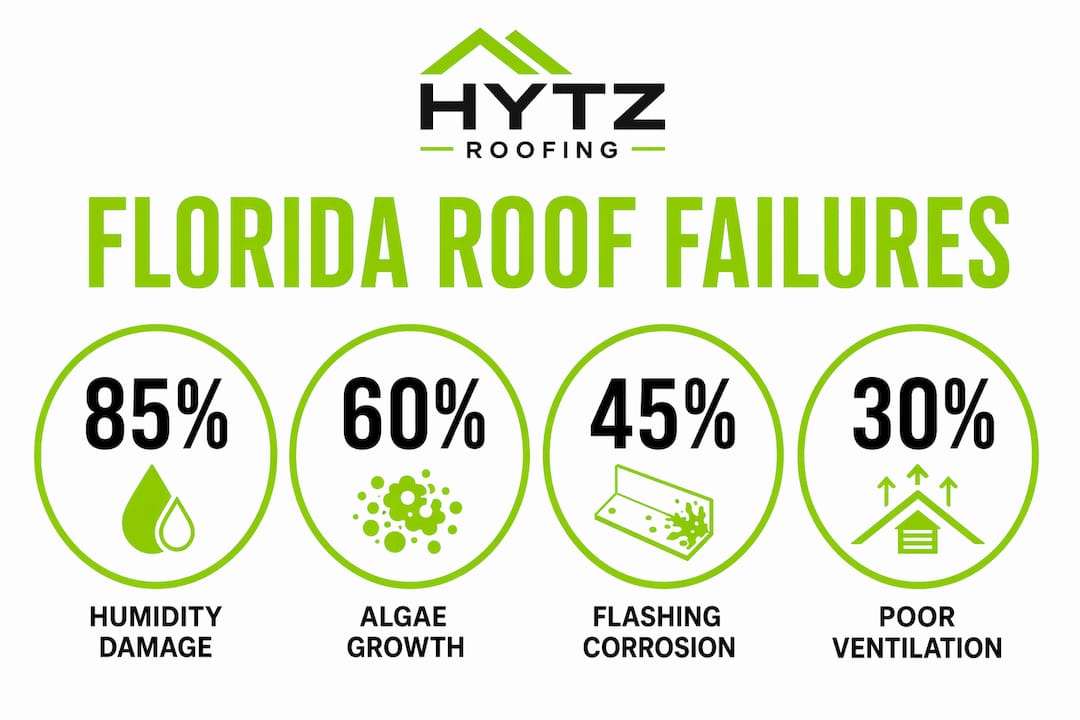
Florida Roof Failures are often driven by prolonged moisture exposure, poor ventilation, and material wear in the state's humid climate.
Last updated: August 8, 2026
Roof failure in Florida is defined by a specific set of conditions: high humidity, intense UV radiation, and daily thermal cycling that together destroy roofing materials far faster than in any temperate state. Roofs that last 20–30 years in cooler climates often fail in 10–15 years here. That gap is not bad luck. It is the direct result of Florida’s climate attacking your roof from multiple angles at once. Understanding why roofs fail in Florida’s humidity is the first step toward protecting your home and your investment.
Why roofs fail in Florida’s humidity: the core mechanisms
Florida’s humidity does not damage roofs in one dramatic event. It works slowly, through a combination of moisture absorption, biological growth, and material fatigue that compounds every single year. Thermal expansion and contraction combined with trapped moisture create stress and fatigue that break down materials from the inside out.
The specific ways humidity attacks your roof include:
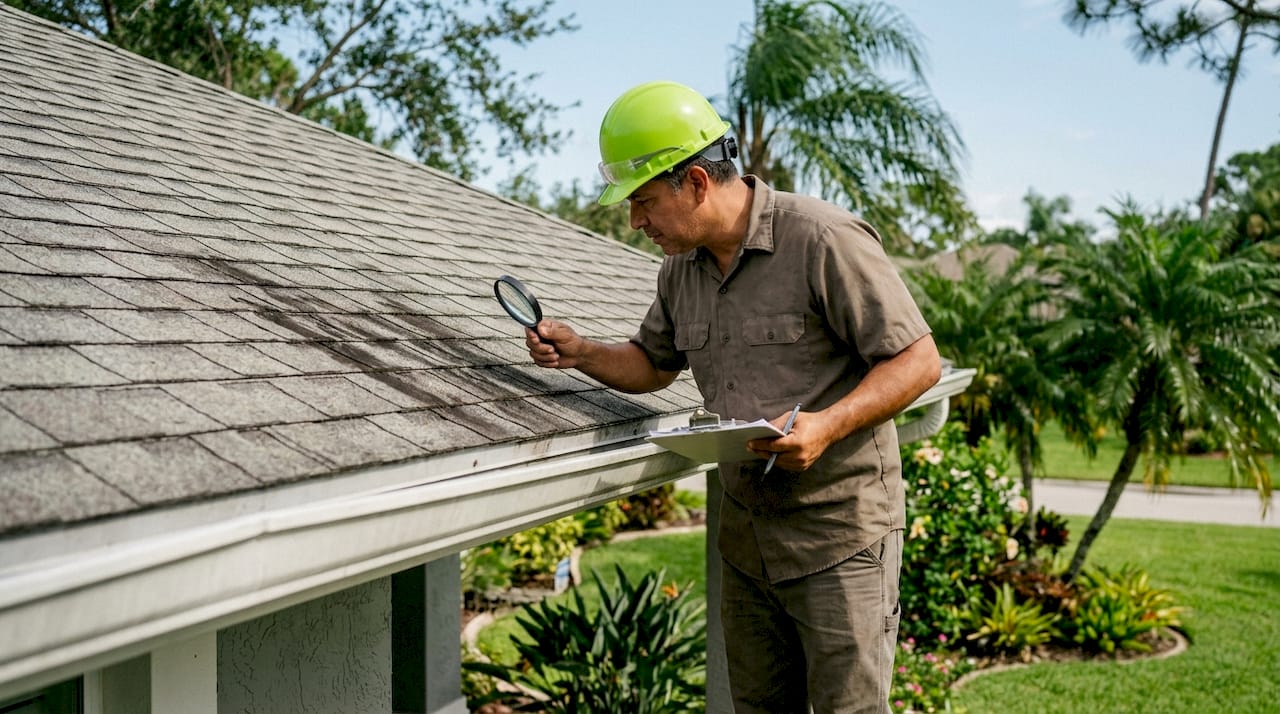
- Algae and mold growth. Moisture on shingles feeds algae colonies that retain even more water against the surface. This accelerates shingle granule loss and softens the material beneath.
- Oxidation and embrittlement. UV radiation breaks down the molecular structure of roofing membranes and asphalt shingles, causing them to crack and curl.
- Metal corrosion. Salt in coastal Florida air accelerates rust on metal flashings and fasteners. Once a flashing fails, water finds a direct path into your decking.
- Underlayment degradation. Moisture that penetrates past the surface layer soaks into the underlayment, reducing its ability to act as a secondary water barrier.
- Sealant breakdown. Caulk and sealants around vents, chimneys, and skylights dry out and crack faster in Florida’s heat and UV exposure.
Each of these problems feeds the others. Algae retains moisture, which accelerates oxidation, which opens cracks, which lets more moisture in. The cycle is self-reinforcing.
Pro Tip: Walk your roof line from the ground with binoculars after the rainy season ends in october. Dark streaks are algae. Curling edges on shingles signal UV and moisture damage. Catching either one early saves thousands in repairs.
How does poor attic ventilation make humidity damage worse?
Attic ventilation is the most underestimated factor in Florida roof longevity. Most homeowners focus on the visible roof surface and ignore what is happening in the space directly beneath it.
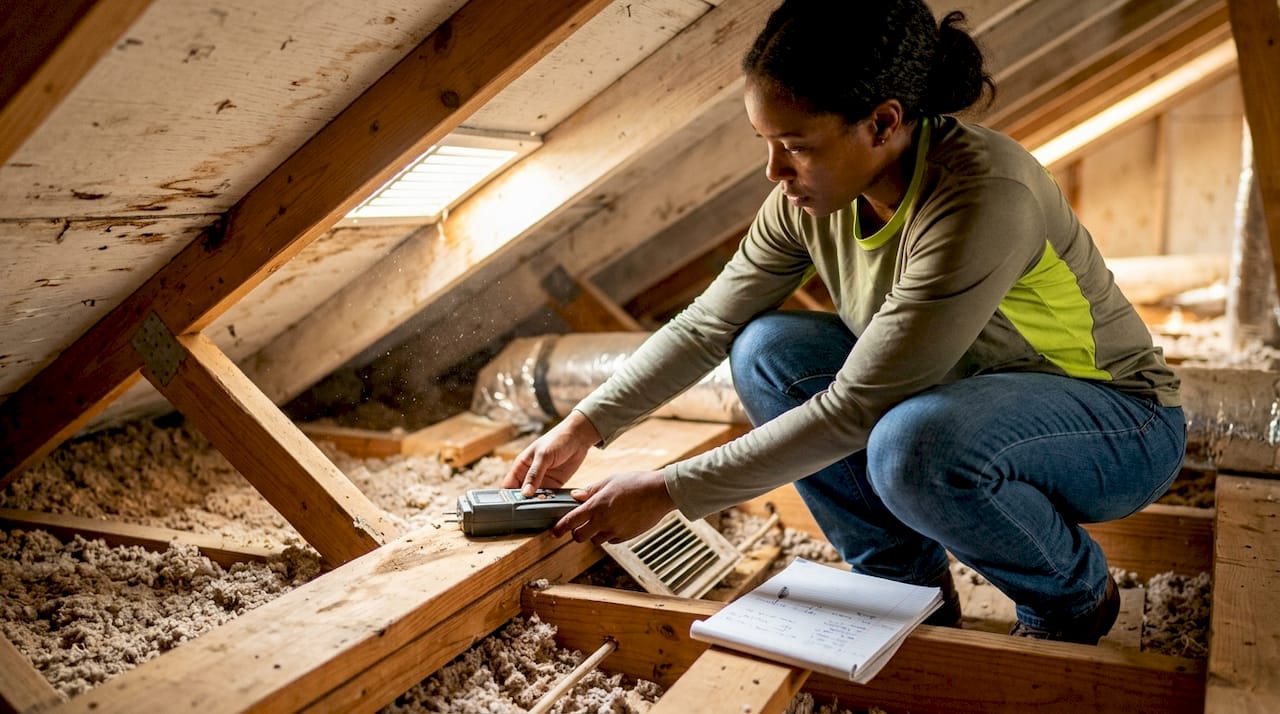
Inadequate ventilation traps heat and moisture, creating an environment that literally bakes your roofing materials from below while humidity attacks them from above. Attic temperatures in Florida can reach extreme levels on summer afternoons. That heat radiates upward into the decking and shingles, accelerating the breakdown that UV radiation started on the surface.
The consequences of poor attic ventilation are specific and serious:
- Wood rot in the decking. Trapped moisture condenses on the underside of the roof deck. Over time, this causes the wood to soften, warp, and rot. By the time you notice a spongy spot underfoot, the damage is already structural.
- Underlayment failure. Heat and moisture together degrade synthetic and felt underlayments faster than either factor alone. A failed underlayment means your decking has no secondary protection against rain.
- Accelerated shingle aging. Heat from below and UV from above create a pincer effect on asphalt shingles. Granules loosen, the mat becomes brittle, and the shingle loses its waterproofing ability years ahead of schedule.
- Mold in the attic. Mold colonies in the attic spread to wood framing and insulation. Remediation costs often exceed the cost of a new roof.
Proper ventilation balances intake at the soffits with exhaust at the ridge. This keeps air moving through the attic, regulating both temperature and moisture levels. A proactive approach to construction risk applies directly here: ventilation is a design decision that determines long-term performance.
Pro Tip: On a hot afternoon, open your attic hatch and hold your hand near the opening. If the air feels hot and still, your ventilation is failing. A qualified roofer can assess your soffit-to-ridge ratio and tell you exactly what needs to change.
What are the most common Florida roof problems caused by humidity?
Knowing what to look for gives you a real advantage. Most humidity-related roof damage shows visible signs well before it becomes a structural problem. Catching these signs early is the difference between a repair bill and a full replacement.
| Symptom | Likely Cause | Consequence if Ignored |
|---|---|---|
| Dark streaks on shingles | Algae growth from humidity | Granule loss, shingle softening, early failure |
| Rust stains around flashings | Salt air and moisture corrosion | Water intrusion at seams and penetrations |
| Soft or spongy decking | Wood rot from trapped moisture | Structural failure, full deck replacement |
| Pooling water on flat roofs | Poor drainage and ponding after rain | Mold growth, fascia rot, interior leaks |
| Cracked or missing sealant | UV and heat degradation | Immediate water entry at vents and skylights |
Algae stains are the most common first sign Florida homeowners notice. They look cosmetic, but they are not. Algae holds moisture against the shingle surface around the clock, even after the sun dries everything else. That constant moisture contact speeds up granule loss and shingle softening.
Flashing corrosion is the second most common issue and the most dangerous. Flashings seal the joints where your roof meets walls, chimneys, and vents. Once they corrode and separate, water enters the structure directly. Repairs are straightforward when caught early. Left alone, the water damage to framing and insulation multiplies the cost significantly.
Flat roofs carry an additional risk. Standing water after rain accelerates mold and mildew growth and puts constant pressure on the membrane. Florida’s frequent afternoon storms mean flat roofs face this stress repeatedly every week during rainy season.
What roofing materials and maintenance practices work best in Florida?
Material choice is your first line of defense against humidity-related roof failure. Not all roofing products perform equally in Florida’s climate, and the wrong choice shortens your roof’s life before the first storm season ends.
Materials with strong humidity and UV resistance:
- Metal roofing. Standing seam metal roofs shed water immediately, resist algae, and handle thermal cycling well. They cost more upfront but outlast asphalt significantly in Florida conditions. You can read more about alternatives to asphalt shingles if you are weighing your options.
- Concrete and clay tile. Both resist moisture absorption and UV degradation. They are heavy, which requires adequate structural support, but they are proven performers in Florida’s climate.
- Synthetic roofing products. High-quality synthetic tiles, like those made by Brava, combine moisture resistance with lighter weight. Hytzroofing earned the 2024 Brava Roof Tile Excellence Award for outstanding installation quality with these products.
- Algae-resistant asphalt shingles. If asphalt is your choice, select shingles with copper-infused granules. These inhibit algae growth and extend surface life in humid conditions.
Maintenance practices that extend roof life in Florida:
Regular inspections and cleaning are the most effective tools you have against premature roof failure. Schedule a professional inspection every year, ideally before hurricane season starts in june. After any major storm, get a visual check done within two weeks.
Clean algae and debris from your roof surface at least once a year. Use a low-pressure wash with a roof-safe cleaning solution. High-pressure washing strips granules and does more harm than good. Keep gutters clear so water drains away from the fascia and does not back up under the edge of the roof.
Sealants around penetrations need checking every two years. UV and heat degrade them faster in Florida than anywhere else. Replacing a $20 tube of sealant beats replacing a water-damaged ceiling. For a full picture of what Florida roofs typically need, the types of roof repairs Florida homeowners face most often covers the full range.
Pro Tip: Schedule your annual roof inspection for september or october, after the rainy season but before winter. You will catch any damage the summer storms caused while repairs are still straightforward and contractors are easier to book.
Key Takeaways
Florida roofs fail faster than roofs in any other U.S. climate because humidity, UV radiation, thermal cycling, and poor ventilation attack materials simultaneously and continuously.
| Point | Details |
|---|---|
| Lifespan is cut in half | Florida roofs often last 10–15 years versus 20–30 years in temperate climates without proper protection. |
| Ventilation is critical | Poor attic ventilation traps heat and moisture, accelerating rot, mold, and shingle breakdown from below. |
| Algae is a structural threat | Algae retains moisture against shingles continuously, speeding up granule loss and material failure. |
| Material choice matters | Metal, tile, and algae-resistant shingles outperform standard asphalt in Florida’s humid conditions. |
| Annual inspections save money | Catching early signs of humidity damage prevents small repairs from becoming full replacements. |
What I have learned after years of Florida roofing
After working on roofs across Florida for years, the pattern I see most often is this: homeowners wait. They notice a stain, a soft spot, or a missing shingle and assume it is cosmetic. By the time they call, the damage has moved from the surface into the decking or framing.
The honest truth about Florida roofing is that the climate does not give you the same margin for delay that homeowners in Ohio or Colorado have. A small flashing gap in Michigan might go two winters without causing a leak. In Florida, the same gap gets hit by rain 60 or more days a year, often with wind-driven force. The math is different here.
One thing I want homeowners to understand is that not every premature failure is the installer’s fault. Manufacturing defects sometimes play a role. A documented case in Southwest Florida showed that a specific batch of roofing material caused widespread discoloration on homes replaced after Hurricane Ian. The climate did not cause the defect, but it made the problem visible faster. When your roof fails ahead of schedule, get a full investigation before assuming who is responsible.
The shift from reactive to reactive maintenance is the single biggest change you can make. Waiting for a leak costs three to five times more than catching the problem in its early stage. A professional inspection once a year, combined with a post-storm check, is the most cost-effective thing you can do for a Florida roof. I have seen homeowners extend roof life by years with nothing more than consistent cleaning and timely sealant replacement.
— Anthony
Hytzroofing’s approach to Florida’s humidity challenge
Florida’s climate demands more from your roof and more from your contractor. Hytzroofing holds the GAF Master Elite® Contractor designation, earned by fewer than 2% of roofing contractors in North America. That credential reflects the training and installation standards needed to get roofs right in conditions like Florida’s.
Whether you need a full inspection before hurricane season, a repair after storm damage, or guidance on upgrading to materials that handle humidity better, Hytzroofing has the credentials and local experience to help. As a Plant City roofing contractor serving Florida homeowners, Hytzroofing brings manufacturer-backed warranties and proven installation quality to every project. Contact Hytzroofing today for a consultation or repair estimate and get a clear picture of where your roof stands.
FAQ
Why does Florida humidity shorten roof lifespan so much?
Florida’s humidity keeps roofing materials wet for extended periods, feeding algae growth and accelerating oxidation. Combined with intense UV radiation and daily thermal cycling, this reduces roof lifespan by up to 50% compared to temperate climates.
What are the first signs of humidity damage on a Florida roof?
Dark streaks from algae, rust stains near flashings, and curling or cracking shingles are the earliest visible signs. Catching these before they reach the decking keeps repair costs manageable.
How does attic ventilation affect roof life in Florida?
Poor attic ventilation traps heat and moisture beneath the roof deck, accelerating wood rot, underlayment failure, and shingle breakdown. Balanced soffit-to-ridge ventilation significantly extends roof life in humid climates.
What roofing material lasts longest in Florida’s humidity?
Metal roofing and concrete or clay tile perform best in Florida’s humid conditions because they resist moisture absorption, algae growth, and UV degradation better than standard asphalt shingles.
How often should Florida homeowners inspect their roofs?
A professional inspection once a year, plus a visual check after any major storm, is the standard recommendation for roof maintenance in humid climates. Annual inspections catch early damage before it becomes structural.
Recommended
- The Ultimate Cost of Ignoring a Leaky Roof What Homeowners Need to Know
- Weathering the Storm Expert Tips for Roof Leak Repair in Tampa Fl
- Types of Roof Repairs Florida Homeowners Need Most
- Introducing Enviroshake to Your Hoa
Related Hytz Roofing Services