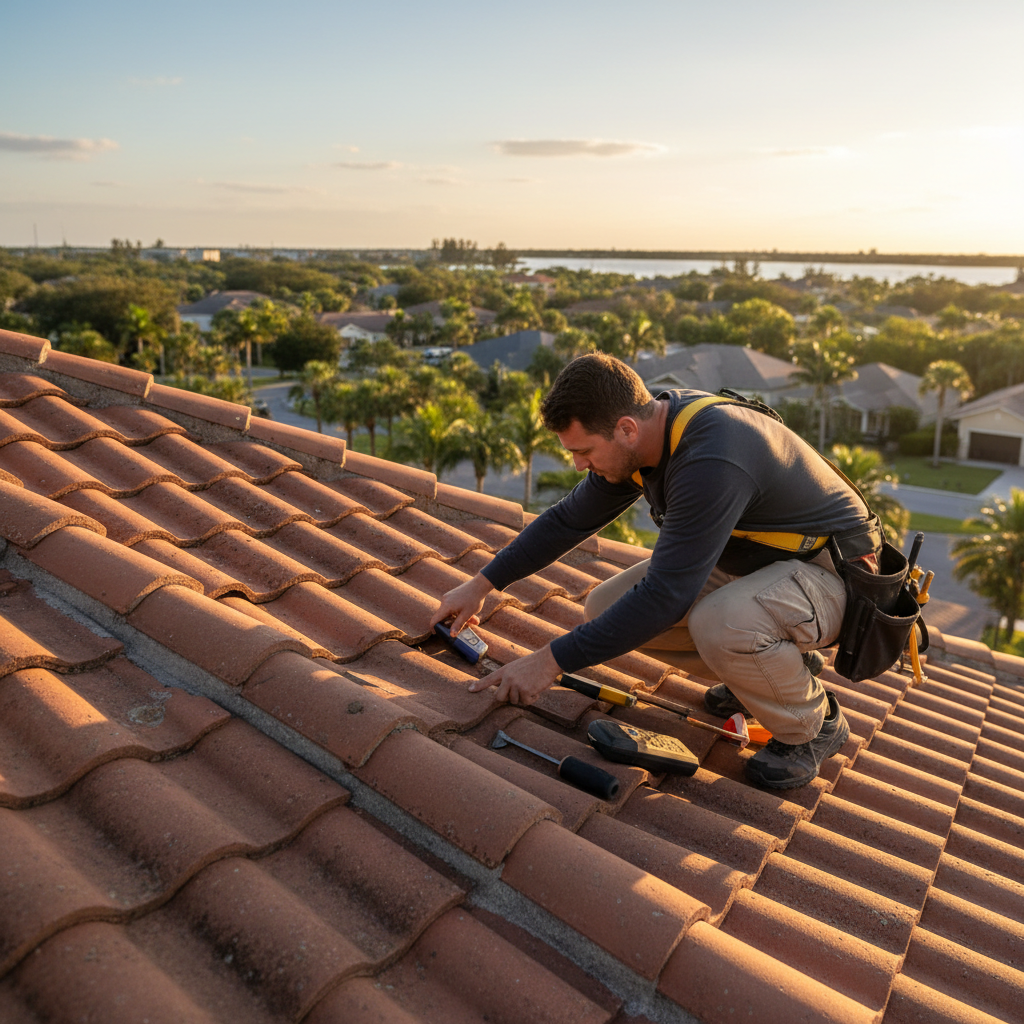
Roofers charge several hundred dollars for a "small" leak because most of the bill pays for costs that stay the same no matter how small the hole is: getting a truck and a trained crew to your house, finding where the water actually gets in (usually not directly above the ceiling stain), setting up the fall protection federal rules require, and carrying insurance for one of the most dangerous jobs in the country. The parts for a typical pipe boot or flashing fix often cost less than the drive to your house. National cost guides put most roof leak repairs between about $350 and $1,500, and Fixr's January 2026 data puts the national average at $800.
Key Takeaways
- A small roof leak repair is mostly fixed cost. Travel, setup, leak tracing, safety gear, insurance, and cleanup cost about the same for a one-shingle fix as for a much larger repair.
- Typical 2026 national pricing: $350 to $1,500 for a roof leak repair, with pipe boot and flashing fixes often in the $100 to $600 range (Fixr).
- The leak you see is rarely where the roof failed. Water can enter several feet uphill from the stain, so diagnosis is part of what you pay for.
- Roofers had a fatal injury rate of 48.7 per 100,000 full-time workers in 2024, about 15 times the all-worker rate of 3.3 (U.S. Bureau of Labor Statistics). That risk shows up in insurance and safety costs.
- Florida's new $7,500 permit exemption for some non-structural residential work may cover a small roof repair, but it is not automatic. Check with your city or county first.
How much does a small roof leak repair usually cost?
A small roof leak repair usually costs a few hundred dollars, and very few professional leak repairs come in under $150. Fixr's national cost guide (updated January 27, 2026) puts most roof leak repairs at $350 to $1,500, with an $800 average, and estimates that labor makes up around 60% of the total. Angi reports that typical roofing repairs run $380 to $1,800, with most homeowners spending about $1,100. HomeAdvisor lists small jobs such as minor leaks or missing shingles at $150 to $300 and leak repairs overall at $150 to $2,000.
The price depends heavily on where the leak starts. Fixr's 2026 breakdown by leak type:
| Leak source | Typical repair cost (Fixr, 2026) |
|---|---|
| Vent or pipe boot | $100 to $600 |
| Missing or damaged shingles | $150 to $450 |
| Flashing | $200 to $600 |
| Nail pops | $200 to $500 |
| Skylight | $300 to $800 |
| Valley | $300 to $1,500 |
| Chimney | $200 to $3,500 |
These are national figures. Tampa Bay prices move with storm season demand, roof type (tile and steep roofs take longer to work on safely), and how hard the leak is to trace.
Why does a small leak repair cost almost as much as a bigger one?
A small leak repair costs almost as much as a bigger one because most of a roofer's cost comes before the first shingle is lifted. A roofing company has to send a vehicle, a ladder, safety equipment, materials for several possible causes, and at least one trained roofer to your house, whether the fix takes 20 minutes or four hours. Those fixed costs get divided over the size of the job. On a $15,000 roof replacement they barely register. On a single pipe boot they are most of the invoice.
| Cost component | Does it shrink with a smaller leak? | What it pays for |
|---|---|---|
| Travel and vehicle | No | Drive time, fuel, truck, and the crew's paid time getting to and from your house |
| Leak diagnosis | No, and sometimes it grows | Attic inspection, tracing water paths, moisture readings, and sometimes a controlled water test |
| Safety setup | No | Ladder setup and fall protection required for work 6 feet or more above a lower level |
| Insurance and overhead | No | Workers' compensation, liability coverage, licensing, office staff, scheduling, and warranty callbacks |
| Repair labor | Somewhat | The hands-on fix itself, which is often the shortest part of the visit |
| Materials | Yes | Pipe boot, flashing, shingles, sealant, fasteners; often the smallest line on the bill |
| Cleanup and verification | No | Clearing debris and confirming the repair holds |
This is also why many roofing companies charge a minimum service fee. The practice is not new: a 2004 Journal of Light Construction report described a roofer who charged a $150 minimum per service call and kept a crew dedicated to repairs, and a replacement-focused company that avoided small repairs entirely because its jobs needed to reach about $4,500 to be profitable. The numbers have changed since then, but the economics behind them have not.
Why can't a roofer just patch the spot above the ceiling stain?
A roofer usually can't just patch the spot above a ceiling stain because the stain shows where water came out, not where it got in. The National Roof Certification and Inspection Association (NRCIA) puts it plainly in a February 2026 guide: "The stain marks the exit." Water often enters several feet away, runs along the underside of the roof deck, and follows a rafter before it drips onto the ceiling.
Finding the true entry point takes time. NRCIA describes tracing attic staining to its highest point, checking roof penetrations from below, and running a controlled water test: one person runs a gentle hose flow over isolated sections of roof, working upward, while another watches from inside. That process can take longer than the repair. Skipping it is how a homeowner ends up paying for a patch in the wrong place and a second visit later.
On Tampa homes, the most common leak points are the details, not the open field of the roof. The Hytz Roofing roof repair service in Tampa lists failed flashing, cracked vent boots, and damaged valleys as common sources, and notes that a leak from a localized detail does not automatically mean the roof needs replacing.
How much of a roofer's hourly rate goes to the roofer?
Less than many homeowners assume. The U.S. Bureau of Labor Statistics (BLS) reports a median wage for roofers of $26.65 per hour ($55,440 a year) as of May 2025. HomeAdvisor and Bob Vila both cite billed roofing labor in the range of $45 to $75 per hour. The gap between what a roofer earns and what a company bills covers payroll taxes, workers' compensation, general liability insurance, vehicles, equipment, licensing, office staff, warranty work, and profit.
Insurance is a big part of that gap because roofing is dangerous. BLS data shows roofers had a fatal work injury rate of 48.7 per 100,000 full-time equivalent workers in 2024, compared with 3.3 for all workers. Insurers price that risk into workers' compensation premiums for roofing payroll. Florida rates are moving in the right direction: the Florida Roofing and Sheet Metal Contractors Association (FRSA) reported that the Florida Office of Insurance Regulation approved a 6.9% overall workers' compensation cut for 2026, with roofing class code 5551 dropping 11.04%. Roofing still sits among the costlier trades to insure.
Safety rules add time to every visit, including short ones. Under the Occupational Safety and Health Administration (OSHA) standard 29 CFR 1926.501(b)(13), workers in residential construction 6 feet or more above a lower level must be protected by guardrails, safety nets, or personal fall arrest systems, or by an approved alternative. A roofer setting an anchor and harness for a 20-minute fix spends nearly the same setup time as for a full day on the roof.
Do Tampa homeowners need a permit for a small roof leak repair?
Possibly not, but Tampa-area homeowners should confirm before work starts. Florida House Bill 803 amended Section 553.79 of the Florida Statutes to let certain non-structural residential projects valued under $7,500 skip a building permit. Hillsborough County lists non-structural roof repair or replacement among the possible exemptions, and says work valued at $7,500 or more, or work that includes structural, electrical, plumbing, mechanical, or gas work, does not qualify.
The exemption is not automatic. Pinellas County, for example, requires a written request and approval from its Building Official before exempt work begins, excludes properties in flood zones, prohibits splitting a larger project into smaller ones, and still holds the work to code. Rules can differ between unincorporated Hillsborough County, the City of Tampa, and neighboring jurisdictions, so ask your roofer how the job will be handled in your specific location. Where a permit is still required, its fee and the inspection visit become part of a small repair's fixed cost.
When is a "small" roof leak actually a bigger repair?
A small roof leak becomes a bigger repair when water has been getting in long enough to damage what sits under the shingles. Signs that the job will grow include:
- The leak has come back in the same area after an earlier patch.
- The roof deck feels soft underfoot or looks dark and stained from the attic.
- Attic insulation is wet or compressed near the stain.
- Nails on the underside of the deck are rusted, which NRCIA lists as an attic clue.
- Several penetrations, such as plumbing vents of the same age, are failing at once.
In those cases the visible leak is a symptom, and a quote limited to sealing one spot may not solve the problem. A trustworthy roofer explains what was found, shows photos, and separates what must be fixed now from what can wait.
How can Tampa homeowners keep a small roof leak repair bill down?
Tampa homeowners can keep a small roof leak repair bill down by making each visit count and by calling early. Practical steps:
- Ask what the service fee includes. Find out before the visit whether the diagnostic or trip charge is credited toward the repair if you approve it.
- Bundle repairs. If one plumbing vent boot has cracked, others installed at the same time may be close behind. Fixing them in one visit spreads the fixed costs.
- Call before the rainy season peaks. A leak caught early is often a flashing or boot fix. A leak left through a Tampa summer of afternoon storms can turn into decking work.
- Get a written, itemized scope. It should name the leak source, the repair method, the price, and any warranty on the repair.
- Ask for before and after photos. They show you what failed and confirm the fix was done where the water entered.
- Verify the license. Every Florida roofing contractor's license can be checked through the Florida Department of Business and Professional Regulation (DBPR) online license search.
Hytz Roofing, a Tampa roofing contractor (Florida license CCC1332551) with more than 30 years of experience and GAF Master Elite and GAF President's Club recognition, handles leak repairs across Tampa Bay. For a wider look at Florida repair pricing, see the Hytz guide to roof repair costs in Florida.
What else do homeowners ask about small roof leak repairs?
Is a roofer's diagnostic fee refundable if I approve the repair?
A roofer's diagnostic or service-call fee is refundable only if that contractor's policy says so, and policies vary. Some companies credit the fee toward an approved repair, and others treat it as a separate charge for the inspection and tracing time. Ask before the visit and get the answer in writing, along with what the fee covers, such as an attic check, photos, or a water test.
Can I stop a small roof leak myself with roofing sealant?
Roofing sealant can slow a leak temporarily, but sealing the wrong spot can hide the real entry point while water keeps reaching the deck. Because water often enters several feet uphill from where it shows inside, a surface patch above the stain may miss the failure entirely. Climbing onto a roof also carries real fall risk; roofing's 2024 fatality rate was about 15 times the all-worker rate. A temporary tarp or interior bucket is a safer stopgap until a roofer can trace the source.
Why won't some roofing companies take small repair jobs at all?
Some roofing companies turn down small repairs because their crews, scheduling, and sales process are built around full replacements, where travel and setup costs are spread over a much larger job. The 2004 Journal of Light Construction report quoted one such company saying smaller jobs were not practical or profitable. Contractors that take repair work often keep separate repair crews and charge a service minimum so those visits cover their costs.
Will homeowners insurance pay for a small roof leak?
Homeowners insurance generally covers sudden, accidental damage, such as a storm tearing off shingles, rather than leaks from normal wear like an aging vent boot. Even when a leak is covered, a small repair often costs less than a Florida policy's deductible, so the claim may not pay anything. Check your policy's deductible and coverage terms before filing, and ask your roofer to document the cause with photos either way.
What sources does this guide use?
- Fixr: How Much Does It Cost to Repair a Roof Leak? (updated January 27, 2026)
- Angi: Roof Leak Repair
- HomeAdvisor: How Much Does It Cost to Repair a Roof?
- Bob Vila: Roof Repair Cost
- U.S. Bureau of Labor Statistics: Occupational Outlook Handbook, Roofers
- U.S. Bureau of Labor Statistics: Rate and number of fatal work injuries in selected occupations
- OSHA: Fall Protection in Residential Construction FAQ
- FRSA: Lower Workers' Comp Rates for 2026
- NRCIA: Roof Leak Cause Determination (February 5, 2026)
- Journal of Light Construction: Roof Repair In Demand (August 13, 2004)
- Hillsborough County: Work Exempt from Permits
- Pinellas County: Permit Exemptions for Work Under $7,500
- Hytz Roofing: Roof Repair in Tampa