
What Is a Roofing Estimate? A Florida Homeowner’s Guide
Florida Roofing Estimate explains common line items, what a written bid should include, and key points homeowners should check when comparing contractor offers.
A roofing estimate is a detailed, written breakdown of all expected costs and project scope for a roof repair or replacement. It covers materials, labor, permits, tear-off, and warranty terms before a single shingle is touched. For Florida homeowners weighing repair versus full replacement, understanding what goes into this document is the difference between a smooth project and a string of surprise charges. This guide covers every line item, typical cost ranges for Florida homes, and the practical steps to get bids you can actually compare.
What is a roofing estimate and what does it include?
A roofing estimate is the industry’s standard pre-project document, sometimes called a scope of work or bid sheet, that itemizes every cost a contractor expects to charge. Think of it as a project roadmap. A detailed, multi-page estimate is the industry standard, and anything arriving as a single lump sum is a red flag worth taking seriously.
Here is what every solid roofing estimate should spell out:
- Materials: Shingle brand (such as GAF Timberline HDZ), style, color, and quantity measured in squares. One roofing square equals exactly 100 square feet of roof surface, not your home’s floor area. That distinction matters for every calculation that follows.
- Underlayment: Type (synthetic or felt) and coverage area.
- Ice and water shield: Location and square footage, especially around valleys and eaves.
- Tear-off and disposal: Labor to remove the old roof plus dumpster rental fees.
- Flashing: Step flashing, valley flashing, chimney flashing, and drip edge trim should each appear as separate line items.
- Ventilation: Ridge vents, soffit vents, and any power ventilators being installed or replaced.
- Labor costs: Broken out per square or per hour, not buried inside a single total.
- Permit fees: Who pulls the permit and what the estimated fee is.
- Cleanup and debris removal: Magnetic nail sweep and haul-away.
- Warranty terms: Both the manufacturer’s product warranty and the contractor’s workmanship warranty.
- Payment schedule: Deposit amount, progress payments, and final payment trigger.
Pro Tip: Ask your contractor to identify the decking allowance line item specifically. Decking condition cannot be assessed until the old roof is removed, so a responsible estimate will include a contingency cost per sheet of plywood to prevent surprise charges mid-project.
How to understand roofing estimate pricing
Pricing is where most Florida homeowners feel lost. Let’s break it down clearly.
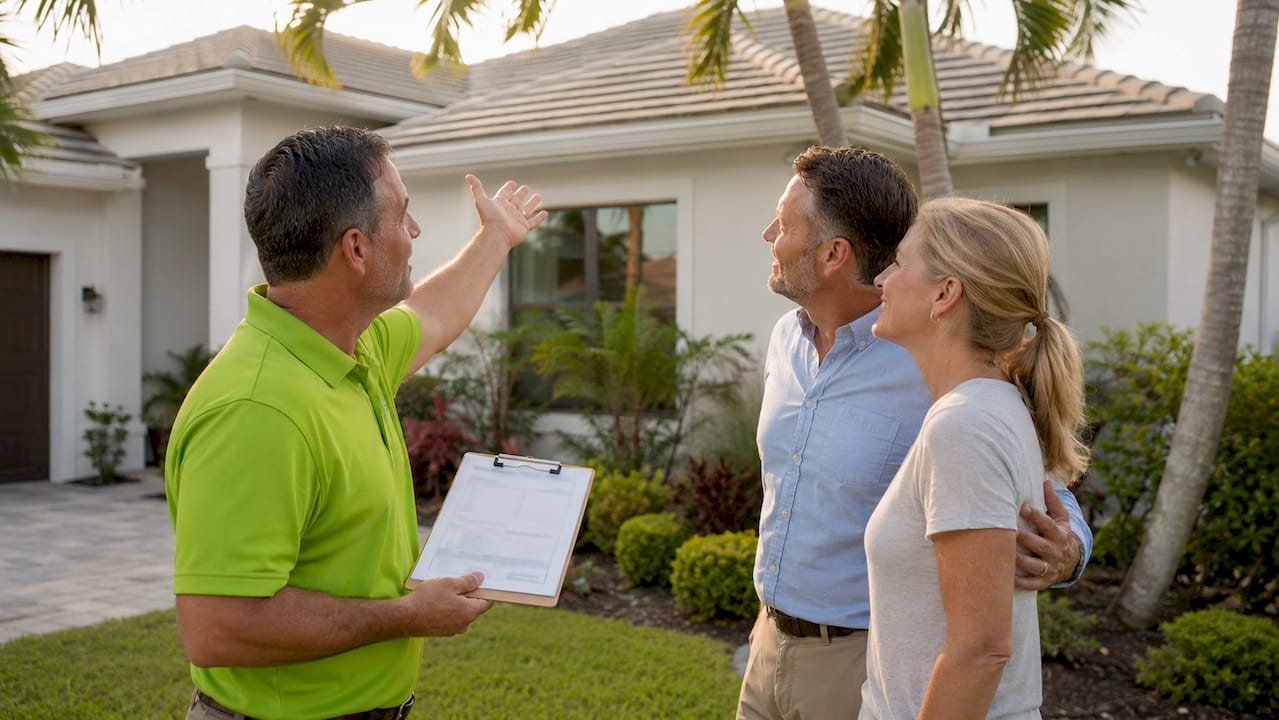
A full architectural shingle replacement typically costs between $8,000 and $22,000 for an average 2,200 square foot home in 2026. That wide range reflects differences in material grade, roof complexity, and local labor rates across Florida counties.
| Cost Component | Typical Range | What It Covers |
|---|---|---|
| Total project (2,200 sq ft home) | $8,000–$22,000 | Full tear-off and architectural shingle replacement |
| Labor share of total cost | 35%–45% | Installation crew, tear-off, cleanup |
| Permit fees | $100–$500 | Municipal building permit, varies by city |
| Material waste factor | 10%–15% extra | Cuts, overlaps, starter strips |
Labor represents 35%–45% of total project cost. That means on a $15,000 job, you are paying $5,250–$6,750 just for installation. Permit fees in Florida municipalities generally range from $100 to $500, and they are not optional. Any contractor who suggests skipping the permit is creating a liability problem for you as the homeowner.
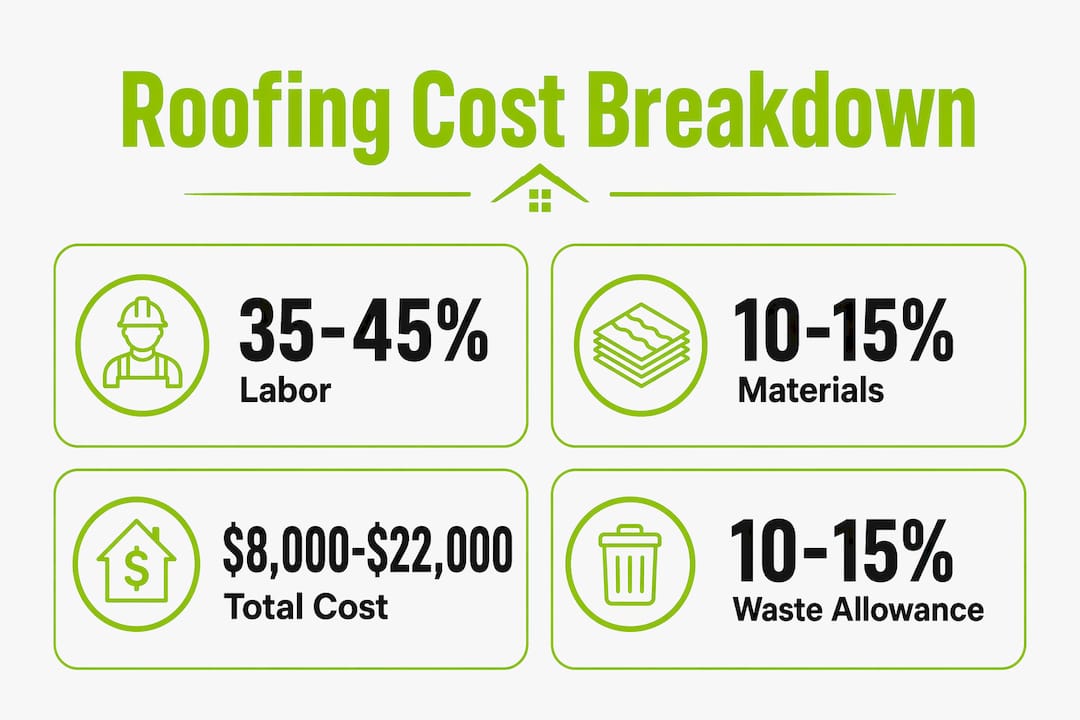
Contractors also order 10%–15% more materials than the measured roof area to account for waste from cuts, overlaps, and starter strips. This is a legitimate, standard cost. It should appear transparently in the estimate, not hidden inside a rounded-up square count.
Three factors push Florida projects toward the higher end of the cost range: steep roof pitch (which slows installation and raises labor costs), multiple existing layers requiring extra tear-off, and complex roof shapes with many valleys, dormers, or hips that increase both material waste and labor time.
Pro Tip: When comparing bids, look for low bids that exclude permit fees, flashing replacements, or decking repairs. Those omissions are not savings. They are costs that will appear as change orders once work begins.
Estimate vs. quote vs. proposal: what is the difference?
These three terms are used interchangeably in the field, but they mean different things. Knowing the distinction protects you when it is time to sign a contract.
- Estimate: A preliminary, best-guess price range based on a visual inspection. An estimate provides a preliminary cost range, not a locked price. The final number can shift if hidden damage is found during tear-off.
- Quote: A firm, legally binding price for a defined scope of work. A quote is issued after a thorough inspection and commits the contractor to the stated price.
- Proposal: A formal document that combines the scope of work, pricing, timeline, and contract terms. Most reputable contractors issue a proposal that functions as both a quote and a contract.
The practical takeaway is this: get an estimate first to compare contractors, then request a written proposal before signing anything. If a contractor skips straight to a contract without a detailed scope, ask for the line items in writing before you commit. Clear communication about which document you are looking at prevents misunderstandings about what is and is not included in the final price.
How florida homeowners should get reliable roofing estimates
Getting a trustworthy estimate takes a little preparation. Follow these steps to protect yourself and get bids you can actually compare.
-
Schedule on-site inspections. Estimate appointments typically last 30–60 minutes and should include inspection of the roof surface, flashing, gutters, vents, and attic moisture. Any contractor who quotes you over the phone without seeing the roof is guessing.
-
Get at least 3 to 4 estimates. Quotes can vary by 50%–100% for the exact same project. Collecting multiple bids gives you a price baseline and helps you spot outliers on both ends.
-
Demand line-item detail. Reject any single-number lump sum. A professional estimate lists materials, labor, tear-off, permits, flashing, ventilation, and cleanup as separate line items. Refer to the roofing cost guide for a sense of what each component should cost in your area.
-
Verify contractor credentials. Florida requires roofing contractors to hold a state license. Ask for the license number and verify it with the Florida Department of Business and Professional Regulation. Confirm the contractor carries both general liability insurance and workers’ compensation coverage.
-
Ask about permit responsibility. Confirm who pulls the permit and who pays for it. In Florida, the contractor is typically responsible for obtaining the permit. If a contractor asks you to pull your own permit, that is a warning sign.
-
Check the decking allowance. Ask every contractor how they handle unexpected decking damage. A responsible estimate includes a per-sheet allowance for plywood replacement so you are not blindsided after tear-off begins.
-
Clarify warranty terms in writing. GAF Master Elite® contractors, for example, can offer the Golden Pledge® warranty, which covers both materials and workmanship for up to 25 years. Standard contractors cannot offer this level of coverage.
Pro Tip: Compare estimates side by side using a simple spreadsheet. List each line item across columns for each contractor. Missing line items become obvious immediately, and you can ask the contractor to explain or add them before you decide.
| What to Check | Green Flag | Red Flag |
|---|---|---|
| Estimate format | Multi-page, itemized by line | Single lump sum total |
| Permit handling | Contractor pulls and pays | Homeowner asked to pull permit |
| Decking allowance | Included as contingency line | Not mentioned at all |
| Warranty terms | Manufacturer + workmanship listed | Verbal promise only |
| Contractor credentials | Licensed, insured, verifiable | No license number provided |
Key takeaways
A roofing estimate is a multi-page, line-item document that defines project scope, materials, labor, permits, and warranty terms before work begins.
| Point | Details |
|---|---|
| Estimate vs. quote distinction | An estimate is a preliminary range; a quote is a firm, binding price after full inspection. |
| Florida replacement cost range | Full replacement for a 2,200 sq ft home typically runs $8,000–$22,000 in 2026. |
| Labor cost share | Labor accounts for 35%–45% of total project cost on most Florida roofing jobs. |
| Red flag: lump sum bids | Single-number estimates hide missing scope and lead to costly change orders. |
| Get 3 to 4 bids | Multiple estimates establish a fair market baseline and expose outliers. |
What i’ve learned after years of roofing estimates in florida
The most expensive mistake Florida homeowners make is choosing the lowest bid without reading what it actually covers. I have seen estimates that look $3,000 cheaper on paper but are missing permit fees, flashing replacement, and a decking allowance. By the time those change orders hit, the “cheaper” contractor costs more than the detailed bid would have.
A thorough estimate is not just a price. It is your legal protection if something goes wrong. If a line item is not in writing, it is not part of the contract. That means if your contractor discovers rotted decking after tear-off and there is no allowance in the estimate, you have no agreed price for that repair. You are negotiating from a weak position mid-project.
Florida adds a layer of complexity that homeowners in other states do not face. Hurricane season, high humidity, and strict building codes mean your estimate should specifically address wind-rated underlayment, proper flashing at all penetrations, and permit compliance. If your estimate does not mention any of these, ask why.
My honest advice: treat the estimate review like a job interview for the contractor. Ask them to walk you through every line item. A contractor who cannot explain their own estimate clearly is not someone you want managing a $15,000 project on your home. The best contractors welcome the questions. They know a well-informed homeowner leads to a smoother project for everyone.
— Anthony
Get a transparent roofing estimate from Hytzroofing
Understanding what goes into a roofing estimate is the first step. Getting one from a contractor you can trust is the next.
Hytzroofing holds the GAF Master Elite® Contractor designation, earned by fewer than 2% of roofing contractors in North America. That status means every estimate we provide is detailed, permit-compliant, and backed by manufacturer-level warranty options that most Florida contractors simply cannot offer. We also carry a BBB A+ rating, Florida Contractor License #CCC1332551, and full liability and workers’ compensation coverage. Whether you are dealing with storm damage or planning a full replacement, our team will walk you through every line item so there are no surprises. Request your free estimate from Hytzroofing today and see the difference a detailed, honest bid makes.
FAQ
What is a roofing estimate in simple terms?
A roofing estimate is a written document from a contractor that lists all expected costs for a roof repair or replacement, including materials, labor, permits, and tear-off fees. It gives you a price range before work begins.
How long does a roofing estimate appointment take?
Estimate appointments typically last 30–60 minutes and include inspection of the roof, flashing, gutters, vents, and attic. Avoid any contractor who quotes you without an in-person visit.
How many roofing estimates should i get in florida?
Get at least 3 to 4 estimates. Quotes can vary by 50%–100% for the same project, so multiple bids help you identify a fair market price and spot contractors who are missing key scope items.
What is the difference between a roofing estimate and a quote?
An estimate is a preliminary price range, while a quote is a firm, legally binding offer tied to a defined scope of work. Always get a written proposal before signing a contract.
Why do some roofing estimates come in much lower than others?
Low bids often exclude necessary line items like permit fees, flashing replacements, or decking repairs. Those missing costs typically reappear as change orders once the project is underway.
Recommended
- Weathering the Storm Expert Tips for Roof Leak Repair in Tampa Fl
- GAF Master Elite Roofer in Tampa, FL | Hytz Roofing
- Introducing Enviroshake to Your Hoa
- Types of Roof Repairs Florida Homeowners Need Most
Related Hytz Roofing Services