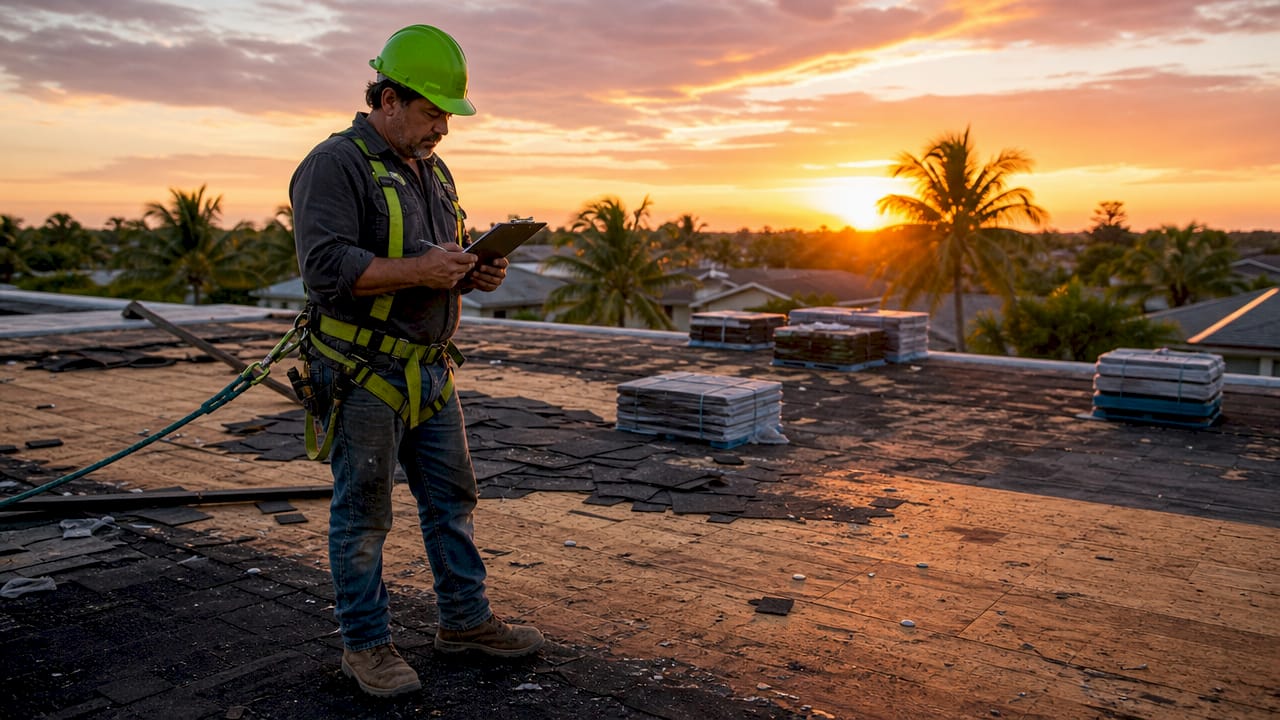
What Does Roof Replacement Involve for Florida Homeowners?
Florida Roof Replacement begins with an inspection and typically includes material selection, permitting, removal and installation, plus a final inspection.
Roof replacement is defined as the complete removal of an existing roof system down to the deck, followed by installation of a new, fully layered roofing system designed to protect your home from weather and structural damage. Understanding what does roof replacement involve saves you from budget surprises, contractor confusion, and costly mistakes. For Florida homeowners, the stakes are especially high. Hurricane season, intense UV exposure, and strict local building codes make a properly executed roof replacement one of the most important home projects you will ever manage. The roof replacement process covers far more than just new shingles.
What does roof replacement involve, step by step?
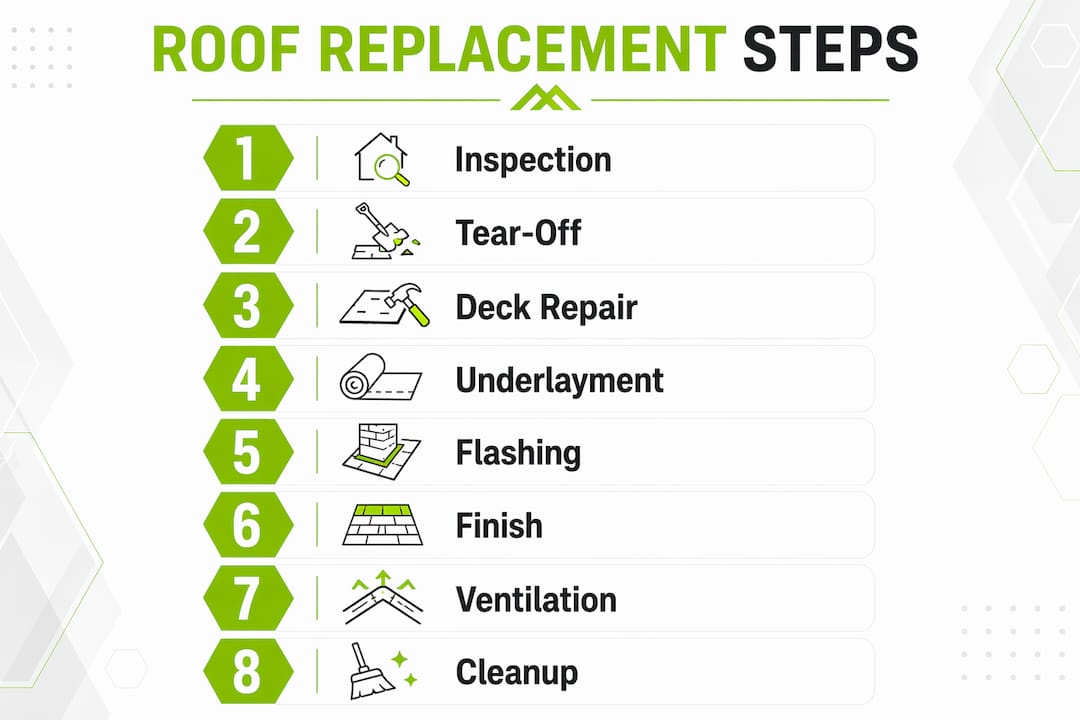
The full replacement sequence follows a specific order: tear-off, deck inspection and repair, underlayment, flashing, finish materials, ventilation, and final cleanup and inspection. Skipping or rushing any step creates vulnerabilities that Florida weather will find quickly. Here is what each stage actually looks like on your property.
1. Initial inspection and permit acquisition
A qualified contractor inspects your existing roof and identifies structural concerns before any work begins. In Florida, a building permit is required for most full replacements. Permit approval typically takes 5–10 days, and the full project timeline including scheduling can span several weeks.
2. Tear-off of existing materials
The crew removes all existing shingles, underlayment, and flashing down to the bare deck. Tear-off exposes hidden damage like rotted decking or soft spots that are invisible from the surface. This phase is noisy and disruptive, but it is the most critical quality control step in the entire process.
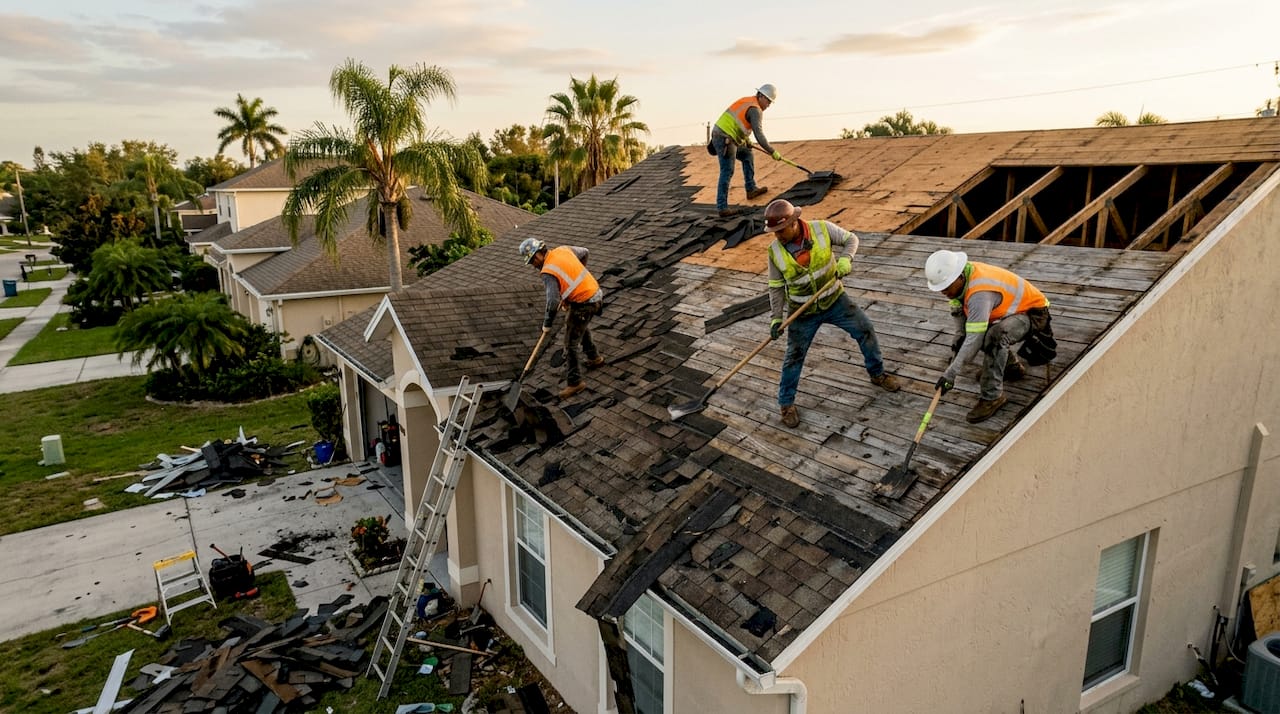
3. Deck inspection and repair
Once the deck is exposed, the contractor checks every board for rot, water damage, and structural weakness. Base contracts typically include replacement of only 1–3 sheets of plywood. Larger damaged areas are billed separately per sheet, so ask for this breakdown in writing before work starts.
4. Underlayment and ice and water shield installation
Underlayment is a water-resistant barrier installed directly over the deck before any finish material goes on. In Florida, ice and water shield is applied at eaves, valleys, and around penetrations as an added layer of protection against wind-driven rain. Drip edges are installed along the roof perimeter to direct water away from the fascia.
5. Flashing installation
Metal flashing seals every joint where the roof meets a wall, chimney, skylight, or vent pipe. Improperly installed flashing is one of the leading causes of roof leaks. A professional contractor uses step flashing, counter flashing, and valley flashing as required by local code.
6. Finish material application
Shingles, metal panels, or tile are installed over the underlayment in overlapping rows from the eave to the ridge. Each material type has specific nailing patterns and overlap requirements defined by the manufacturer and Florida Building Code.
7. Ventilation setup and ridge cap installation
Proper attic ventilation extends roof life by reducing heat and moisture buildup. Ridge vents, soffit vents, and exhaust vents are installed or verified as part of a complete replacement. The ridge cap seals the peak of the roof and is the final finish layer.
8. Cleanup, nail sweep, and final inspection
The crew removes all debris, runs a magnetic nail sweep across the yard and driveway, and prepares the site for the municipal final inspection. Final payment should only be released after the building inspector signs off, confirming the work meets local code.
Pro Tip: Ask your contractor for the permit number before work begins. You can track the inspection status yourself through your county’s building department portal.
How does roof replacement cost break down in Florida?
The national average for a full replacement ranges from $7,000 to $35,000, with a 2,000-square-foot home typically falling between $10,500 and $25,300 depending on materials and labor. Florida pricing sits at the higher end of regional averages due to hurricane code requirements, disposal costs, and permit fees. Knowing what drives the total helps you evaluate bids accurately.
Labor accounts for 60–70% of the total project cost. That surprises most homeowners who assume materials are the biggest line item. Labor covers tear-off, deck work, installation, safety equipment, and cleanup.
Here is how material costs compare across common roofing types:
| Material | Cost per sq ft | Notes |
|---|---|---|
| Architectural asphalt shingles | $4.50–$8.00 | Most common in Florida; wind-rated options available |
| Metal roofing | $10.00–$20.00+ | Long lifespan; excellent hurricane resistance |
| Concrete or clay tile | $15.00–$40.00+ | Popular in South Florida; heavy; requires structural check |
| Synthetic tile (e.g., Brava) | $12.00–$25.00+ | Lightweight; impact-resistant; growing in popularity |
Beyond materials and labor, what does roof replacement cost include?
- Permit fees (vary by county, typically $150–$500+)
- Tear-off and disposal fees for old materials
- Deck repair charges beyond the base contract allowance
- Flashing replacement if existing flashing is corroded or improperly installed
- Ventilation upgrades required by code
Set aside 10–20% contingency above your base contract price. Rotted decking, damaged fascia, and corroded flashing are common discoveries after tear-off that add real cost.
Pro Tip: Get at least three itemized bids. A bid that lists only a total price gives you no way to compare labor rates, material grades, or what is included in deck repair allowances.
Check the roofing cost guide for a detailed breakdown of Florida-specific pricing factors before you request your first estimate.
What should you watch out for during and after replacement?
The installation phase is where quality separates good contractors from bad ones. Knowing what to monitor protects your investment and your warranty.
During the project, watch for:
- Shingles installed without the correct nail count or pattern (Florida Building Code specifies minimums for wind uplift resistance)
- Flashing that is caulked rather than properly lapped and fastened
- Ridge vents that are cut too short or blocked by insulation below
- Debris left in gutters, valleys, or around the foundation
After the project, verify these four things immediately:
- The municipal final inspection has passed and is recorded
- Warranty registration is completed within 30 days of installation. Manufacturers require this to activate material coverage. Some contractors handle registration, but confirm it in writing.
- You have received a copy of the permit, inspection record, and warranty documents
- All debris has been removed and a nail sweep has been completed
Pro Tip: Walk the perimeter of your home with a magnet on a string after the crew leaves. Roofing nails in your lawn or driveway are a sign the nail sweep was incomplete.
Recognizing hidden issues early also matters. Rotted decking discovered after tear-off is the most common unexpected cost. Ask your contractor how they price additional deck boards before signing the contract. Transparent contractors give you a per-sheet rate in writing.
What materials and systems are part of a roof replacement?
A complete roof replacement installs multiple layers, each with a specific function. Understanding these layers helps you ask better questions and evaluate material upgrades.
Asphalt shingles remain the most common finish material in Florida. Architectural shingles offer better wind resistance and a longer warranty than three-tab shingles. For Florida homeowners, look for shingles rated for 130 mph or higher wind uplift. You can explore alternatives to asphalt shingles if you want a longer lifespan or stronger storm performance.
Metal roofing has grown significantly in Florida because it handles wind, UV, and impact better than most alternatives. Standing seam metal systems are the strongest option. Tile, both concrete and clay, is common in South Florida and carries a long lifespan, but the added weight requires a structural assessment before installation.
Underlayment is the layer between the deck and the finish material. Synthetic underlayment outperforms traditional felt in moisture resistance and durability. In Florida, high-temperature synthetic underlayment is the standard choice because attic temperatures regularly exceed 150°F.
Flashing materials include galvanized steel, aluminum, and lead-free options. Aluminum is the most common in Florida because it resists corrosion in humid coastal conditions. Ventilation components include ridge vents, soffit vents, and power exhaust fans. A balanced ventilation system extends shingle life and reduces cooling costs by limiting attic heat buildup.
Key Takeaways
A complete roof replacement involves removing all existing materials to the deck, repairing the structure, and installing underlayment, flashing, ventilation, and finish materials in a code-compliant sequence that protects your home long term.
| Point | Details |
|---|---|
| Full system replacement | Roof replacement covers every layer from deck to ridge, not just shingles. |
| Labor drives cost | Labor accounts for 60–70% of total cost; material grade is secondary. |
| Budget for surprises | Set aside 10–20% contingency for hidden deck damage found after tear-off. |
| Warranty registration | Register manufacturer warranty within 30 days or risk losing material coverage. |
| Final inspection first | Release final payment only after the municipal building inspection passes. |
What Florida homeowners often miss about roof replacement
I have seen hundreds of roof replacement projects in Florida, and the same mistakes come up repeatedly. Homeowners focus almost entirely on shingle color and total price. They rarely ask about underlayment grade, ventilation design, or how the contractor handles unexpected deck damage. Those three factors determine whether a roof lasts 15 years or 30.
The biggest misconception I encounter is that a roof replacement is just a material swap. It is not. You are rebuilding a system. Every layer depends on the one below it. A premium shingle installed over a compromised deck or inadequate underlayment will fail early regardless of its warranty rating.
My honest advice: verify credentials before you sign anything. In Florida, your contractor must hold a valid state license. Hytzroofing carries Florida Contractor License #CCC1332551, full general liability insurance, and workers’ compensation coverage. The GAF Master Elite® designation, held by fewer than 2% of contractors in North America, is the clearest third-party signal that a contractor meets rigorous installation and training standards. Hytzroofing holds that designation, plus the GAF President’s Club Award for consistently top-tier performance.
Post-installation documentation matters as much as the installation itself. Get your permit records, warranty registration confirmation, and inspection sign-off in writing before you make final payment. A contractor who resists providing those documents is a contractor worth walking away from.
— Anthony
Hytzroofing: Florida’s trusted roof replacement team
Replacing your roof is one of the largest investments your home will see. You deserve a contractor who follows every step correctly, pulls the right permits, and backs the work with real credentials. Hytzroofing is a GAF Master Elite® Contractor serving homeowners across the Tampa Bay area and Plant City, FL. As a GAF President’s Club Award recipient and 2025 Angi Super Service Award winner, Hytzroofing brings verified expertise to every project. Contact the Plant City roofing team for a free estimate and get straight answers about your roof, your timeline, and your total cost.
FAQ
What does a full roof replacement include?
A full roof replacement includes tear-off of all existing materials, deck inspection and repair, installation of underlayment, flashing, drip edges, ventilation, and finish roofing materials, followed by cleanup and a final building inspection.
How long does a roof replacement take in Florida?
Installation typically takes 1–3 days for a standard crew. The full timeline, including permit approval and scheduling, commonly spans several weeks from contract signing to final inspection.
What is the average cost of roof replacement in Florida?
A 2,000-square-foot home typically costs between $10,500 and $25,300 depending on materials and labor. Florida pricing trends higher than the national average due to hurricane code requirements and permit fees.
When is roof replacement necessary?
Roof replacement is necessary when repairs can no longer address widespread damage, when the roof has reached the end of its rated lifespan, or when a home inspection or insurance assessment identifies structural or code compliance issues.
How do I protect my roof warranty after replacement?
Register your manufacturer warranty within 30 days of installation and confirm in writing that your contractor has completed or submitted the registration on your behalf.
Recommended
- Weathering the Storm Expert Tips for Roof Leak Repair in Tampa Fl
- GAF Master Elite Roofer in Tampa, FL | Hytz Roofing
- Introducing Enviroshake to Your Hoa
- Types of Roof Repairs Florida Homeowners Need Most
Related Hytz Roofing Services