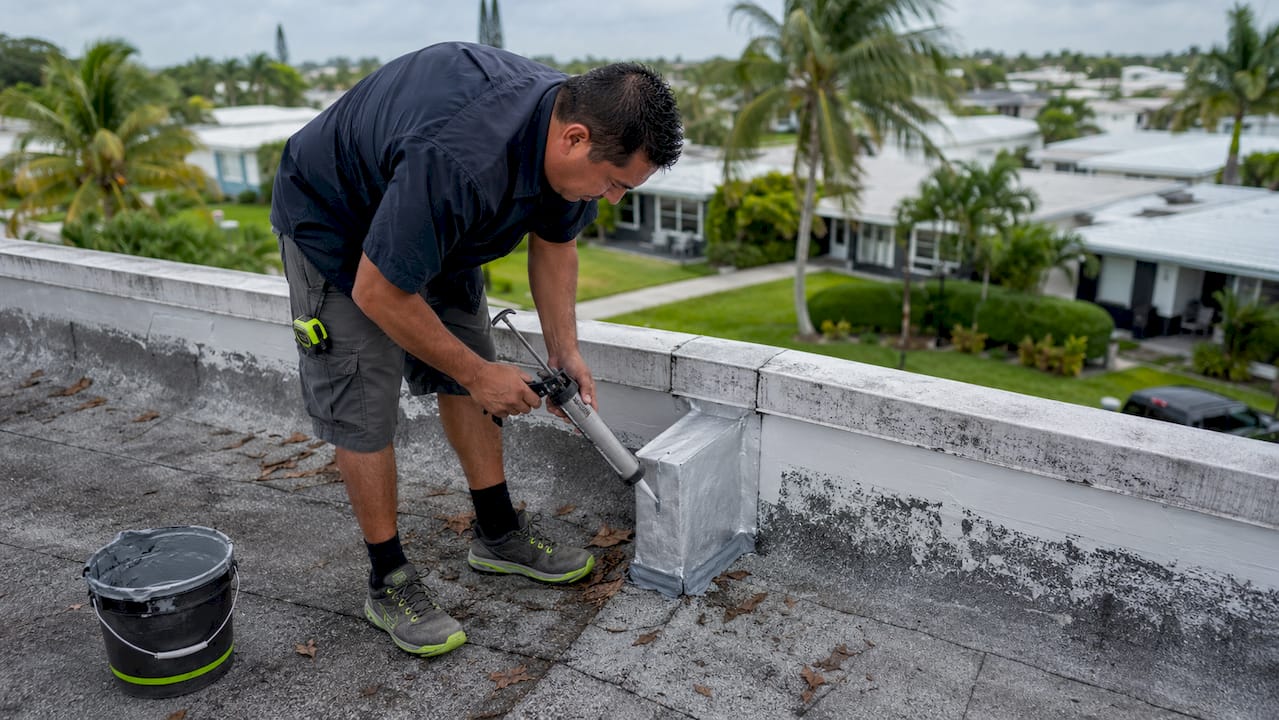
The Role of Roof Sealant Repairs for Florida Homes
Roof sealant repairs seal small gaps and flashing to reduce leaks and protect Florida homes from moisture-related damage.
Last updated: August 8, 2026
Roof sealant repairs are defined as targeted applications of flexible waterproofing compounds to seal joints, cracks, and penetrations in a roofing system, forming a secondary barrier against water intrusion. In Florida, where heavy rain, intense UV exposure, and hurricane-force winds test every roof year-round, the role of roof sealant repairs goes well beyond a quick fix. Products like silicone, polyurethane, and acrylic sealants protect vulnerable areas such as flashing edges, vent boots, and skylight surrounds. Used correctly, they extend roof lifespan and prevent the kind of moisture damage that turns a small drip into a five-figure repair bill.
How roof sealants work and what they protect against
Roof sealants function by filling the small gaps, seams, and cracks that water exploits during Florida’s intense rain events. They are not a replacement for properly installed shingles or metal flashing. Instead, sealants act as a secondary defense, backing up the primary waterproofing layer at its most vulnerable points. Think of them as the caulk around a bathtub: they do not hold the tub in place, but they stop water from sneaking behind it.
The areas where sealants deliver the most value include:
- Pipe boots and vent collars where rubber deteriorates under Florida’s UV load
- Skylight perimeters where the frame meets the roof deck
- Chimney and wall flashing edges where metal meets roofing material
- Ridge cap seams on metal roofs exposed to thermal movement
- HVAC curb surrounds on flat commercial roofs
Florida’s thermal cycling is a real threat to sealant integrity. Daytime temperatures can push roofing surfaces past 160°F, then drop sharply at night. Sealants must handle thermal movement through elasticity and flexibility, or they crack and fail within a season. A sealant that works in Minnesota may turn brittle and peel in Tampa by the following summer.
Beyond leak prevention, sealants contribute to energy efficiency. A sealed roof deck reduces conditioned air loss through gaps, which matters in a state where air conditioning runs nine months of the year. Moisture that enters through unsealed joints also feeds mold growth inside attic spaces, a problem that spreads fast in Florida’s humidity.
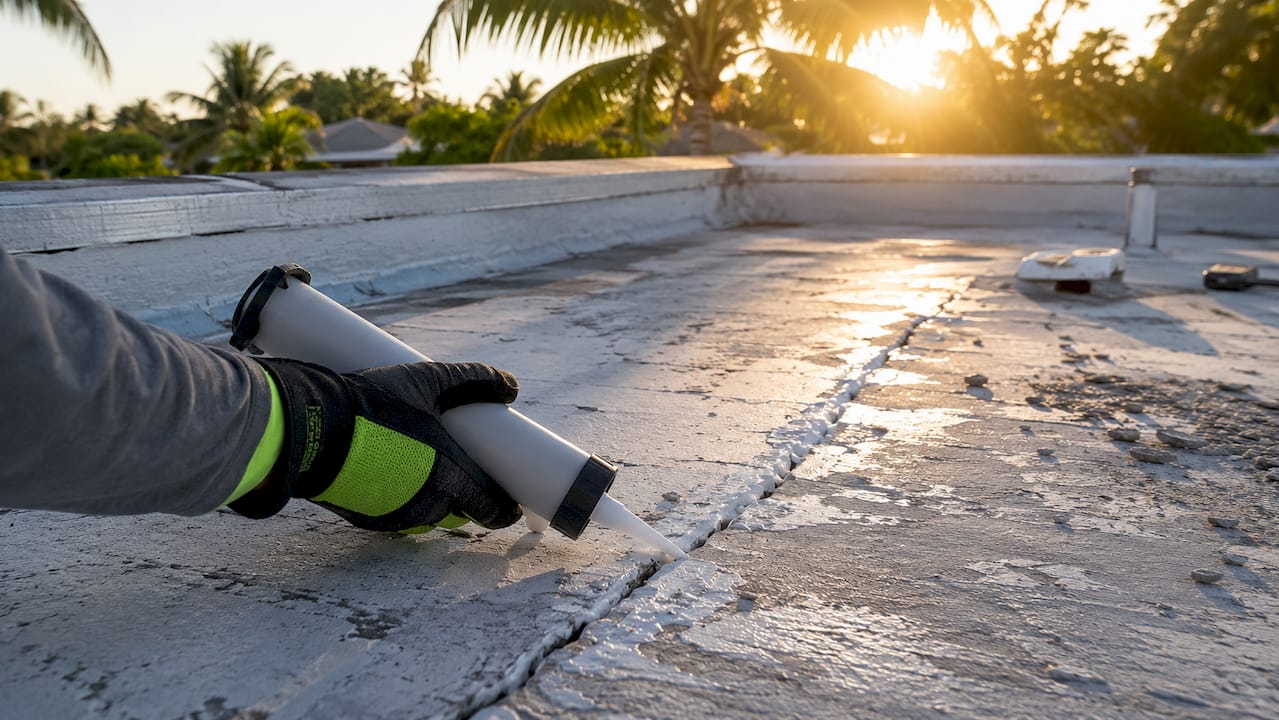
Pro Tip: After any named storm passes through your area, walk your property and look for lifted flashing edges or cracked sealant beads around vents and skylights. Catching these early costs almost nothing to fix. Ignoring them can mean mold remediation and structural repairs within months.
What types of roof sealants work best in Florida?
Choosing the wrong sealant for your roof type is one of the most common and costly mistakes Florida homeowners make. Incompatible sealants can dissolve membranes or fail to bond at all, leaving the repair worse than the original gap. The four main types each have a specific role.
| Sealant type | Key strengths | Best use in Florida | Limitations |
|---|---|---|---|
| Silicone | UV stable, highly flexible, long lifespan | Skylights, metal roofs, flashing edges | Cannot be painted over; difficult to recoat |
| Polyurethane | Strong adhesion, paintable, durable | Concrete tile roofs, parapet walls | Degrades faster under direct UV without coating |
| Acrylic | Easy to apply, paintable, low cost | Low-slope roofs, minor surface cracks | Less flexible; not ideal for high-movement joints |
| Butyl tape | Excellent moisture seal, no mixing | Lap seams on metal roofs | Limited to flat seam applications |
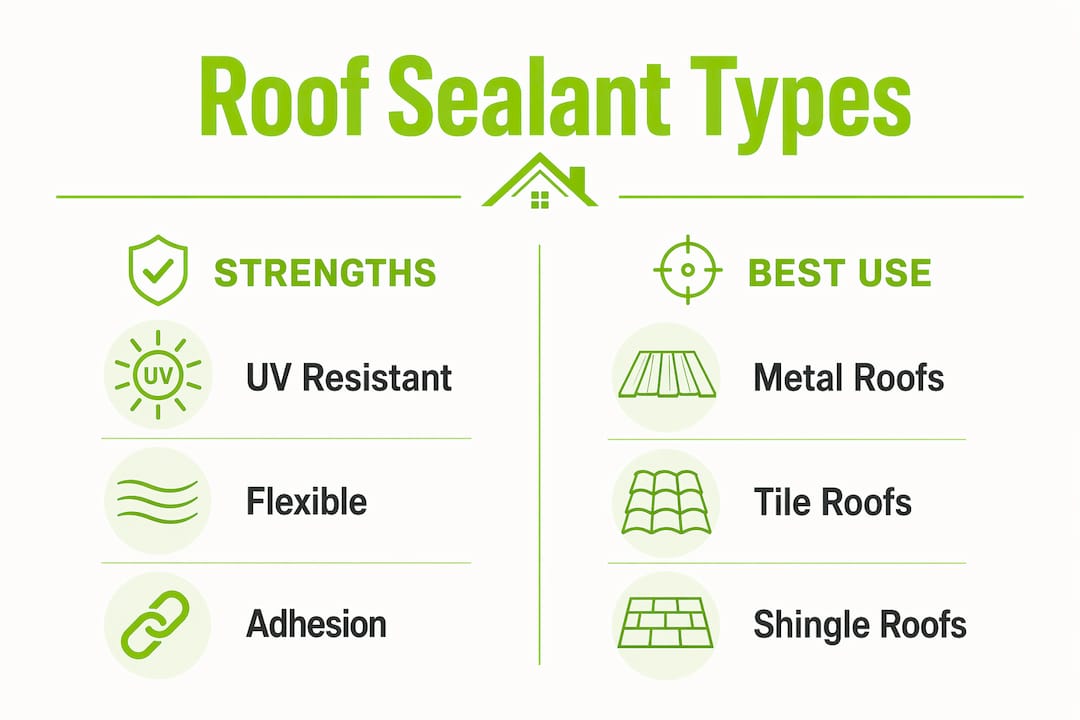
Premium silicone-based sealants offer superior UV resistance and longevity compared to other materials, making them the go-to choice for most Florida residential applications. Silicone stays flexible across the full temperature range Florida roofs experience, and it does not chalk or crack under prolonged sun exposure the way acrylic products do.
Polyurethane sealants are the right call for concrete tile roofs, where adhesion to porous surfaces matters more than UV exposure. They bond aggressively to masonry and can be painted to match tile color. The tradeoff is that they need a UV-protective coating or they degrade within two to three years in direct Florida sun.
Butyl tape deserves more attention from Florida homeowners with metal roofs. It compresses into a watertight seal at lap joints without any mixing or tooling, and it tolerates the kind of movement in metal roofing that causes liquid sealants to crack. For standing seam and corrugated metal roofs, butyl tape at the seams is often more reliable than any liquid product.
Pro Tip: Always check the sealant manufacturer’s compatibility chart before applying any product to a modified bitumen or TPO membrane. Some silicone formulations contain solvents that attack synthetic membranes on contact.
When are sealant repairs enough, and when do you need a pro?
Sealant repairs are the right tool for a specific, narrow set of problems. They work for small cracks in existing sealant beads, minor gaps around pipe boots, and hairline separations at flashing edges where the metal itself is still sound. They do not work for anything structural.
Here is where homeowners most often go wrong:
- Applying sealant over bent, rusted, or separated flashing instead of replacing it
- Using sealant to cover missing or cracked shingles rather than replacing them
- Patching large membrane tears on flat roofs with sealant alone
- Sealing over active mold or wet substrate, which traps moisture and accelerates rot
Applying caulk over separated flashing instead of replacing it leads to failure within one or two wet seasons due to thermal movement. The sealant stretches, tears, and allows more water in than the original gap did. This is the single most common failed repair Hytzroofing sees on homes that have had previous “patch jobs.”
Diagnosing the actual source of a leak is the step most homeowners skip. Water travels. A stain on your ceiling in the living room may trace back to a failed flashing joint six feet away on the roof. Sealants only effectively address surface joint leaks, not membrane surface damage or structural failures. If you cannot identify the exact entry point, a professional inspection is the only reliable path forward.
When to call a professional: If you see daylight through the roof deck, find soft or spongy areas when walking the roof, notice multiple leak points after a single storm, or discover rust-stained or buckled flashing, sealant is not the answer. These signs point to structural damage that requires component replacement, not patching.
Best practices for applying roof sealant repairs in Florida
Getting sealant repairs right in Florida requires attention to surface prep, timing, and technique. A product that costs $15 a tube can last a decade or fail in three months depending on how it is applied.
- Clean the surface thoroughly. Remove all dirt, old sealant, moss, and debris with a wire brush or pressure washer. Any contamination between the sealant and the substrate breaks the bond. Let the surface dry completely, which in Florida’s humidity may take 24 to 48 hours after rain.
- Check the temperature. Most sealants require surface temperatures between 40°F and 100°F for proper adhesion. Florida summers push roof surfaces well above 100°F by mid-morning. Apply sealant in the early morning or on overcast days to stay within the application window.
- Apply a continuous bead. Failures often result from insufficient bead size or poor tooling after application. A bead that is too thin bridges the gap without filling it. Run a consistent bead, then tool it immediately with a wet finger or caulk tool to press it into the joint.
- Respect cure times. Sealants typically take 24 to 48 hours for an initial skin and 3 to 7 days for a full cure. Do not expose fresh sealant to rain within the first 24 hours. Check the forecast before you start.
- Inspect after every storm season. Florida’s hurricane season runs June through November. Walk the roof or hire a professional to inspect sealant points after any significant weather event. Early detection and reapplication before major damage occurs is the most cost-effective maintenance strategy available.
- Trim overhanging branches. Debris from trees scrapes and punctures sealant beads around vents and skylights. Keeping branches at least six feet from the roofline reduces wear on sealant points between inspections.
Pro Tip: When resealing custom trim and flashing joints on a metal roof, prime the metal surface with a compatible metal primer before applying sealant. Adhesion to bare metal is significantly weaker than adhesion to primed metal, especially in Florida’s salt-air coastal environments.
Key takeaways
Roof sealant repairs extend roof life and prevent leaks when applied to the right problems, with the right products, and with proper surface preparation.
| Point | Details |
|---|---|
| Sealants are secondary defense | They seal joints and minor gaps but cannot replace damaged flashing or missing shingles. |
| Silicone leads in Florida | Silicone sealants outperform acrylic and polyurethane in UV resistance and flexibility for Florida’s climate. |
| Surface prep determines success | Cleaning, drying, and priming before application determines whether a repair lasts one season or ten years. |
| Know the limits | Sealant over bent or rusted flashing fails within one to two wet seasons. Structural damage needs replacement. |
| Inspect after every storm season | Post-storm inspections catch sealant failures early, preventing water damage that costs $1,240 to $5,340 to repair. |
What I’ve learned about sealants after years on Florida roofs
I have seen homeowners spend $400 on premium silicone sealant and a full Saturday applying it, only to have the same leak return in three months. Every time, the cause is the same: the sealant was applied to the wrong problem. The flashing was bent. The shingle was cracked. The membrane was torn. The sealant looked good from the ground, but it was covering a structural failure, not a surface gap.
The honest truth about sealant repairs is that they are a maintenance tool, not a repair strategy. They belong in your annual roof care routine, not as a response to an active leak. When water is already coming in, the right move is a professional diagnosis first, then sealant as part of a complete repair.
I also see the opposite mistake: homeowners who avoid sealant entirely because they think it is a “band-aid.” A properly applied silicone bead around a vent boot costs almost nothing and can add years to that penetration’s service life. Skipping it because it feels like a temporary fix is just leaving money on the table.
The cost difference between a $0.65 per square foot sealant repair and a $1,240 to $5,340 water damage restoration is not a small number. Use sealants where they belong, use the right product for your roof type, and get a professional involved the moment you are not sure what you are looking at.
— Anthony
Get expert roof sealant repairs and inspections in Tampa, FL
Hytzroofing is a GAF Master Elite® Contractor, an honor held by fewer than 2% of roofing contractors in North America. That means when you call Hytzroofing for a roof inspection or sealant repair, you get a team trained to GAF’s highest standards for installation quality and workmanship. Whether you need a residential sealant inspection after storm season or a full commercial roofing assessment, Hytzroofing brings the credentials and hands-on Florida experience to diagnose the real problem and fix it right the first time. Schedule your inspection today and protect your home before the next storm season hits.
FAQ
What is the role of roof sealant repairs?
Roof sealant repairs seal minor cracks, gaps, and joints in a roofing system to block water intrusion at vulnerable points. They serve as a secondary waterproofing layer and work alongside properly installed flashing and shingles, not as a replacement for them.
How long does roof sealant last in Florida?
Silicone sealants typically last 10 to 20 years in Florida conditions due to their UV stability and flexibility. Acrylic and polyurethane products degrade faster under direct sun and may need reapplication every 3 to 5 years without a UV-protective coating.
Can roof sealant stop an active leak?
Sealant can stop a leak at a surface joint or minor gap, but only if the leak source is correctly identified first. If the leak originates from damaged flashing, a cracked shingle, or a torn membrane, sealant alone will not provide a lasting fix.
How much does a roof sealant repair cost?
Sealant repairs cost approximately $0.65 to $5 per square foot, making them one of the most cost-effective roof maintenance options available. By comparison, water damage repairs average $1,240 to $5,340, which makes early sealant maintenance a smart investment.
When should I call a professional for roof sealant repairs?
Call a professional when you cannot identify the exact leak source, when flashing is bent or rusted, or when you notice soft spots or multiple leak points after a single storm. These signs indicate structural damage that sealant cannot address.
Recommended
- Weathering the Storm Expert Tips for Roof Leak Repair in Tampa Fl
- GAF Master Elite Roofer in Tampa, FL | Hytz Roofing
- Introducing Enviroshake to Your Hoa
- Types of Roof Repairs Florida Homeowners Need Most
Related Hytz Roofing Services