60 Minutes to Stop a Roof Leak in Rain: 6 Emergency Steps
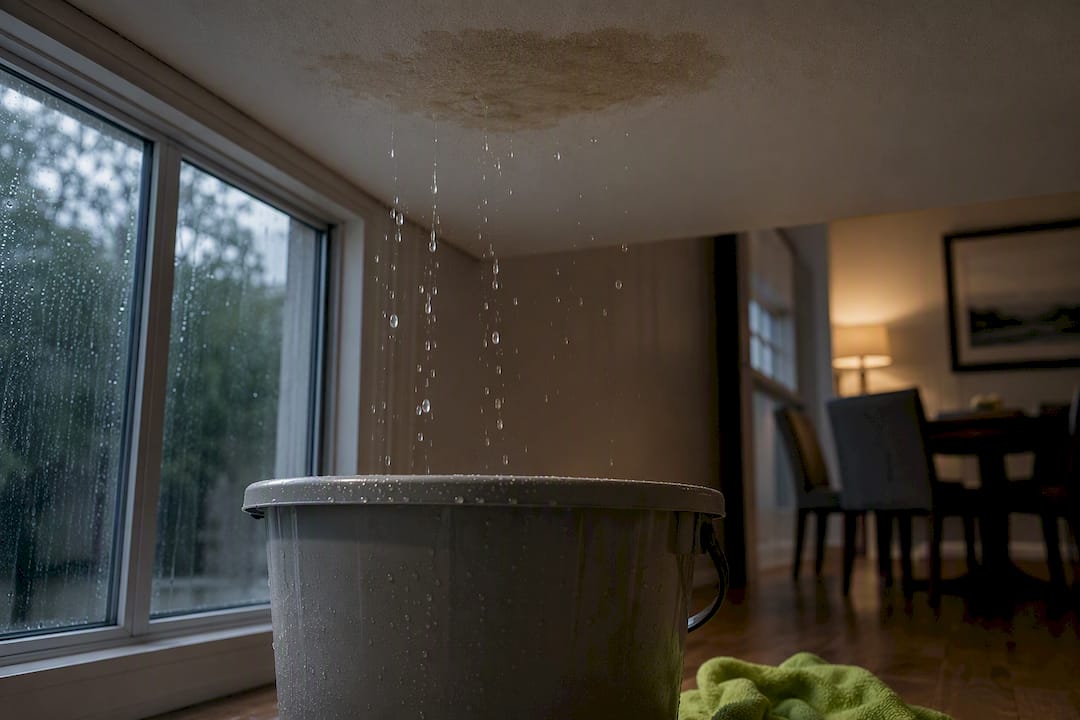
If your roof is leaking in rain right now, protect people before property: kill the breaker to any circuit near dripping water, then set out buckets, move valuables, and shoot photos and video before you touch anything. Don’t climb a wet roof to look for the source. Once the storm passes, call a licensed roofer for emergency tarping, and keep every photo and note for your insurance file.
TL;DR:
- Wind-driven rain can force water under shingles and through flashing gaps, causing leaks even if the roof appears dry during light rain.
- Catching leaks early during a storm involves sealing drips, removing valuables, and documenting damage before attempting repairs or calling professionals.
- Professionals locate the actual leak source by tracing water uphill in the attic during active rain or using hose tests, rather than relying solely on visible stains.
- Emergency tarping can protect the roof for up to 45 days, but permanent repairs require dry conditions and should only be performed after trustworthy inspection.
- Regular maintenance, such as gutter cleaning and flashing inspection, can significantly prevent storm-related leaks and should be scheduled proactively.
Table of Contents
- Common Causes Behind a Roof Leaking in Rain
- How Do You Know Your Roof Is Actually Leaking?
- What to Do in the First 60 Minutes
- How Do Roofers Actually Find the Leak?
- When Do You Need a Licensed Roofer Right Now?
- Maintenance That Actually Prevents Rain Leaks
- Why Trust This Guidance on Leaking Roofs
- What Most Homeowners Get Backward
- How Hytz Roofing Handles an Active Roof Leak
- Where to Learn More
- Sources
- FAQ
Common Causes Behind a Roof Leaking in Rain
A roof that stays dry in a drizzle can leak badly once wind and volume enter the picture. Wind-driven rain forces water sideways, up under shingle edges and through flashing gaps that never get tested by a gentle shower. Tampa Bay’s summer storms, with gusts that swing direction fast, expose these weak points constantly.
The usual suspects:
- Damaged or missing shingles. Wind uplift, hail bruising, or age brittleness creates gaps that light rain never reaches but a downpour finds instantly.
- Failed flashing and sealant. Chimneys, skylights, and vent boots rely on a thin metal or rubber seal that shrinks and cracks under Florida sun, then leaks the moment wind-driven rain forces water under those gaps.
- Clogged gutters and downspouts. Backed-up water climbs under the drip edge and wicks into the fascia and roof deck instead of draining away.
- Overloaded valleys. Two roof planes funnel a huge volume of water into one channel, and any gap there floods fast in a heavy storm.
- Ponding on low-slope sections. Flat or nearly flat roof areas trap standing water that eventually finds a seam.
Here’s the part that trips up most homeowners: the stain on your ceiling is rarely directly under the actual hole. Water travels along rafters and roof decking before dripping down, sometimes appearing several feet from where it entered.
How Do You Know Your Roof Is Actually Leaking?
Catching a leak early, while it’s still raining, gives you the best shot at limiting damage. Watch for these signs both inside your home and in the attic.
- New ceiling stains or bulges. A discolored patch that wasn’t there last week, or a soft, sagging spot, means water is pooling above the drywall.
- Musty odors. A damp, earthy smell often shows up before any visible stain does.
- Visible dripping. Obvious, but check window frames and light fixtures too, not just ceilings.
- Wet rafters or insulation in the attic. If you can safely check your attic during rain, look for glistening wood, dark streaks, or compressed, waterlogged insulation.
- Daylight through the roof deck. A pinhole of light during daytime attic inspection marks an actual breach.
- Water near electrical fixtures or wiring. Turn off the breaker for that area immediately and keep people out of the room until it’s confirmed safe.
Never go up on a wet roof to inspect it yourself. Slippery shingles and reduced visibility during a storm make that one of the fastest ways to turn a leak into an injury.
What to Do in the First 60 Minutes
The first hour after you spot a roof leaking in rain sets the tone for how much damage you end up repairing. Work through these steps in order.
- Contain the water. Place buckets or bins under every drip, and lay towels or plastic sheeting to catch splash-back and protect flooring.
- Move valuables and electronics. Clear the drip zone of furniture, rugs, and anything electrical before water spreads further.
- Drain a bulging ceiling carefully. If drywall is bowing with trapped water, poke a small pilot hole in the center of the bulge with a screwdriver and catch the release in a bucket. This relieves pressure and lowers the risk of a full ceiling collapse.
- Cut power to affected circuits. If water is dripping anywhere near outlets, fixtures, or wiring, shut off that breaker before doing anything else.
- Document everything. Photograph and video the stains, drips, and any standing water before you move items or start cleanup. Note the date, time, and storm conditions.
- Evacuate if structural risk appears. A ceiling that’s sagging heavily, cracking, or dropping debris means the room isn’t safe. Get everyone out and call emergency services if collapse looks imminent.
Pro Tip: Keep a $20 bucket-and-tarp kit in a hall closet year-round. During hurricane season, the five minutes you save grabbing supplies can be the difference between a wet spot and a ruined ceiling.
How Do Roofers Actually Find the Leak?
The drip you see indoors almost never marks the real entry point. Professionals trace water uphill along rafters during active rain, following wet wood and dark streaks in the attic back toward the actual breach in the decking or flashing. This attic tracing method is far more reliable than staring at the roof from a ladder.
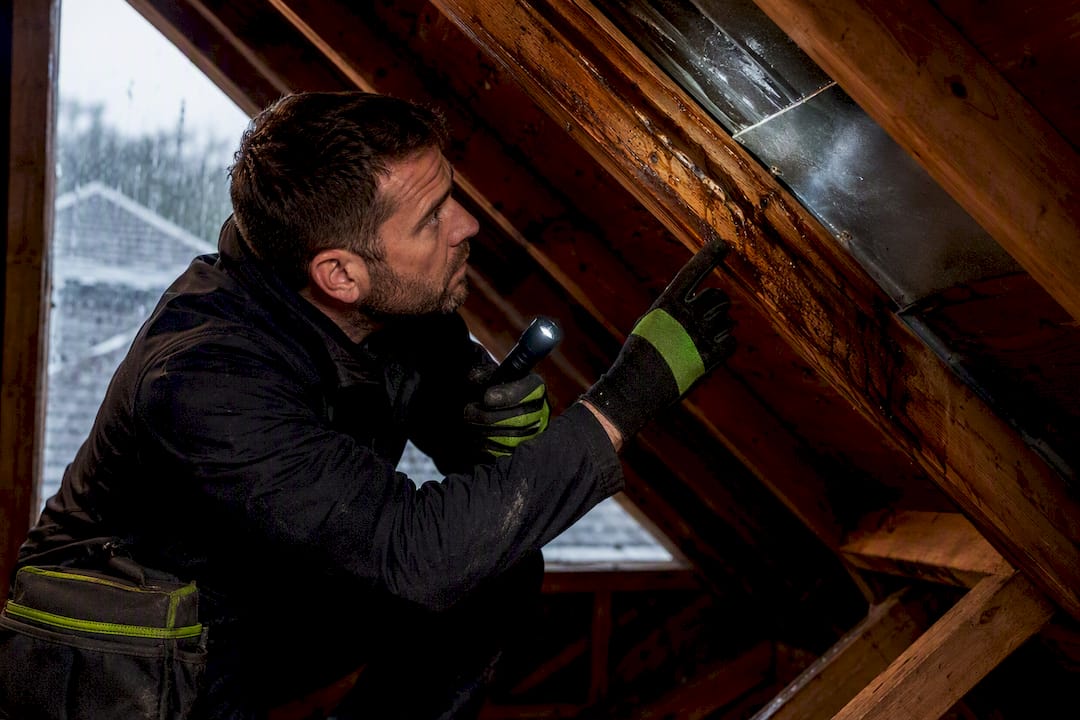
When rain isn’t falling, roofers use a hose test instead, running water section by section starting at the lowest point of the roof and working up, while someone watches the attic for the first sign of drip. It’s slow, but it isolates the exact failure point without guesswork.
Once the source is found, a temporary tarp buys time:
- Wrap the upslope edge of the tarp around a 2x4 furring strip and tuck it under the shingle course above the damaged area, never just laid flat on top.
- Leave enough margin, at least two feet past the damaged area on all sides, before securing the downslope edge.
- Avoid driving nails through the tarp itself without sealing them; unsealed nail holes create new leak points.
Correctly installed, a tarp can protect a roof for 30 to 45 days before UV exposure breaks down the material. Permanent repairs, shingle replacement, flashing rework, sealant application, all require dry, stable conditions and should never be attempted mid-storm.
When Do You Need a Licensed Roofer Right Now?
Some leaks can wait for a scheduled appointment. Others can’t. Call for same-day emergency response if you see any of these:
- A steady stream rather than an occasional drip
- Water pooling near outlets, switches, or light fixtures
- A ceiling that’s visibly sagging or cracking
- Exposed roof decking or daylight visible through the attic
- Water intrusion after a named storm or confirmed hail event
Emergency tarping is a stabilization measure, not a repair. It buys time to schedule permanent work without more water getting in.
For insurance, document the storm date, take wide and close-up photos of every affected area, and save any receipts from temporary mitigation like tarping or wet-vac rental. Insurers typically distinguish between sudden storm damage, which is often covered, and gradual wear or deferred maintenance, which usually isn’t. A clear timeline connecting the leak to a specific storm strengthens your claim considerably. Before the contractor arrives, jot down when you first noticed the leak and any recent roof maintenance you’ve had done.
Maintenance That Actually Prevents Rain Leaks
Most roof leaks trace back to something a homeowner could have caught months earlier. Build these habits into your calendar:
- Clean gutters and downspouts twice a year, once before hurricane season and once after, since routine gutter cleaning and flashing inspection is one of the most effective defenses against storm leaks.
- Inspect flashing around chimneys, skylights, and vent boots for cracked sealant or rusted metal.
- Trim overhanging branches that scrape shingles or dump extra debris into valleys and gutters.
- Check attic ventilation and insulation to prevent condensation buildup, which mimics a leak but comes from trapped moisture instead of an outside breach.
- Watch for ponding on flat or low-slope sections after rain; standing water that doesn’t drain within 48 hours signals a drainage problem.
Gutter cleaning and visual flashing checks are reasonable DIY tasks for most homeowners. Anything involving shingle replacement, flashing rework, or attic access above the second story is worth handing to a professional. If your roof is past the 10 year mark, or you’ve just weathered a named storm, schedule a full inspection rather than waiting for a stain to show up on your ceiling.
Why Trust This Guidance on Leaking Roofs
A licensed and insured roofing company with relevant credentials can handle emergency tarping, storm damage repairs, certified inspections, and insurance-claims assistance during hurricane season.
What Most Homeowners Get Backward
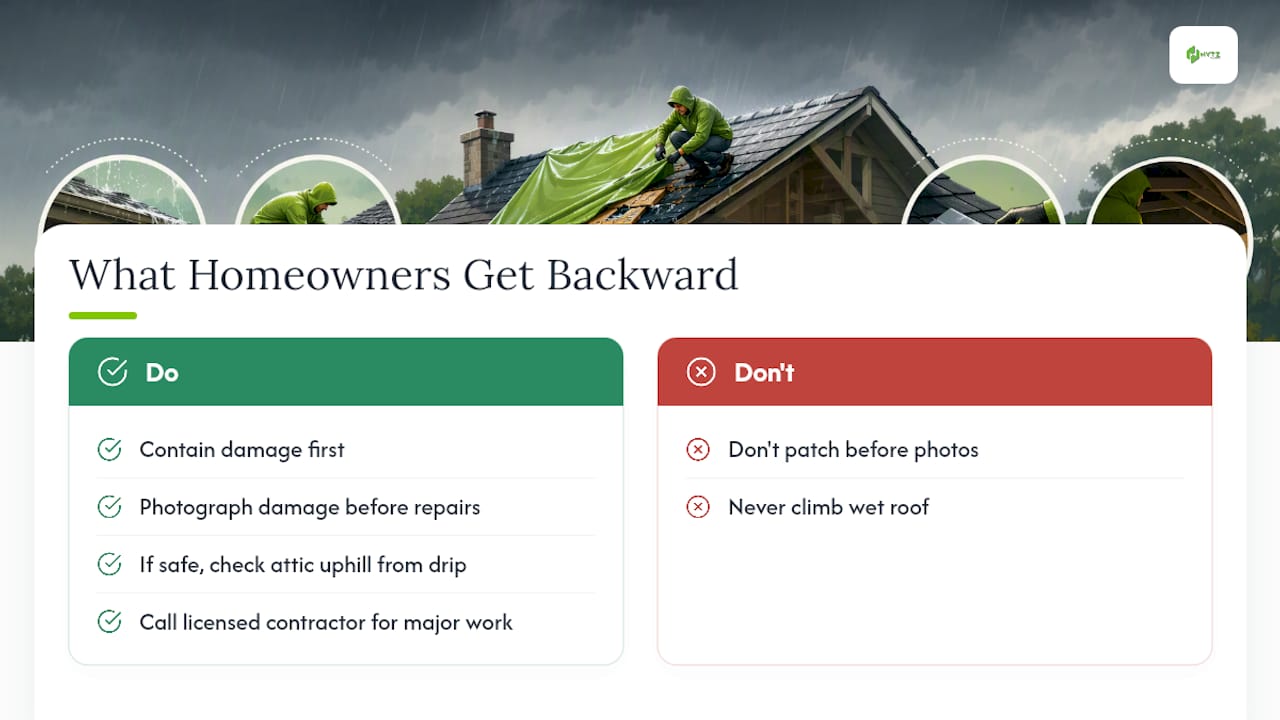
Most people want the leak fixed immediately. I understand the instinct, but containment and documentation come first, repair second. A hasty patch job before you’ve photographed the damage can cost you an insurance claim.
Never climb a wet roof. If you can safely check the attic, look uphill from the drip, not straight above it. For anything beyond a bucket and a flashlight, call a licensed contractor.
— Anthony
How Hytz Roofing Handles an Active Roof Leak
Once you’ve contained the water and killed the breaker, the next call should be to someone who can stop the leak at the source. Some local roofing contractors offer emergency tarping, quick inspections, and insurance-claims assistance to help you manage the process without juggling multiple parties in the same afternoon.

When you call, expect us to ask for the photos and video you already took, then walk you through marking the attic access point if you found one. From there, we handle temporary stabilization and give you a written scope of work before any permanent repair starts, so nothing about the process is a surprise.
If your roof is leaking right now or you just want it checked before the next storm rolls in, reach out for emergency tarping and storm damage repair or request a free inspection today.
Where to Learn More
- EPA mold guidance for water-damage cleanup and health risks
- Roof tarping and board-up basics from a national restoration provider
- State Farm’s leak-spotting checklist for homeowners
Sources
- How to Fix a Roof Leak: 2026 Step-by-Step | The Roofing Brief
- Roof Leak in Heavy Rain: Emergency Triage Guide for NJ Storms | R&E Roofing
- Leaking Roof: Here’s What to Do - State Farm
- Roof maintenance tips | Openly
- EPA mold guidance (chapter) | EPA
FAQ
Can You Fix a Leaking Roof While It’s Raining?
You can only apply temporary containment, buckets, plastic sheeting, and a controlled ceiling drain, while it’s actively raining. Permanent repairs and proper tarping require dry, stable conditions and should wait until the storm passes.
Is It Normal for a Roof to Leak Only in Heavy Rain?
Yes. Wind-driven rain and high water volume expose small gaps in flashing, valleys, and shingle seals that light rain never reaches, which is why a leak can appear suddenly during a major storm with no prior warning signs.
Does Homeowners Insurance Cover Roof Leaks From Rain?
It depends on the cause. Insurers typically cover sudden storm damage but exclude leaks caused by gradual wear or deferred maintenance, so documenting the storm date and photos matters for your claim.
How Expensive Is It to Fix a Leaky Roof?
Cost depends on the cause and extent of damage, from a simple flashing reseal to full section replacement after wood rot sets in. A licensed roofer can give you an accurate scope only after inspecting the attic and roof deck, and some contractors offer same-day inspections for active leaks.