Roof Financing Approval Process: What Florida Homeowners Need to Know
Roof Financing Approval Florida outlines common eligibility criteria, required documents, lender steps, and timing to help Florida homeowners understand roof financing options.
The roof financing approval process is the series of steps lenders use to determine your eligibility and terms for funding roof repairs or replacement. For Florida homeowners, where hurricane season and intense heat accelerate roof wear, understanding this process is not optional. It is the difference between getting your roof fixed quickly and waiting weeks with a damaged home. The process covers prequalification, credit evaluation, document verification, and final funding. Knowing each phase puts you in control before you ever talk to a lender.
What is the roof financing approval process, step by step?
The roof financing approval process follows a clear sequence. Each step builds on the last, and skipping one causes delays.
Step 1: Prequalification

Prequalification is the first and most important step. Prequalification uses a soft credit inquiry that does not impact your credit score. That means you can check your estimated rate and loan amount without any risk to your credit. You should prequalify with multiple lenders before committing to one.
Step 2: Formal application
Once you choose a lender, you submit a full application. This includes your personal details, employment information, income figures, and the scope of your roofing project. Most lenders also ask for a written estimate from your contractor at this stage.
Step 3: Credit check and debt-to-income evaluation
The lender runs a hard credit pull and reviews your debt-to-income ratio. This is the percentage of your monthly income that goes toward existing debt payments. Most lenders want this ratio below 43–45%.
Step 4: Document verification
The lender verifies everything you submitted. They confirm your identity, income, and the contractor’s estimate. Missing documents are the single most common reason for approval delays.
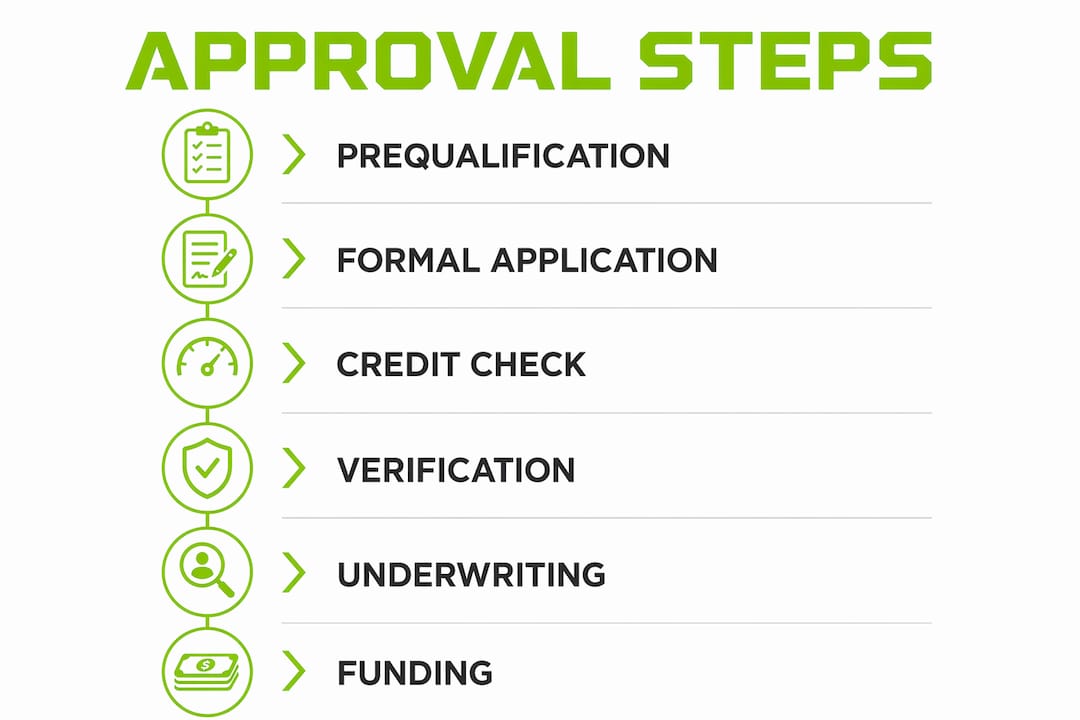
Step 5: Underwriting and final approval
An underwriter reviews your full file and issues a decision. This step takes the longest with traditional bank loans. Contractor-linked financing often skips or compresses this step significantly.
Step 6: Funding disbursement
After signing your loan agreement, funding occurs within 1–5 business days. That timeline is consistent across most lenders once paperwork is complete.
Pro Tip: Get your contractor’s itemized written estimate before you start any loan application. Lenders require it, and having it ready from day one cuts days off your approval timeline.
What credit and financial requirements should homeowners expect?
Lenders set specific credit and income thresholds before approving any roof loan. Knowing these numbers before you apply prevents surprises.
Credit score requirements
Most lenders require a minimum credit score of 580–640 for roof financing approval. Scores of 720 or above unlock the best interest rates and terms. Scores below 580 typically require a co-signer or a specialized contractor financing program designed for lower-credit borrowers.
Debt-to-income ratio
Lenders generally cap your debt-to-income ratio at 43–45%. If your monthly debt payments already consume a large share of your income, your approval odds drop. Paying down a credit card balance before applying can shift this ratio in your favor.
Income documentation
- Recent pay stubs covering the last 2–3 months
- W-2 forms from the past one to two years
- Federal tax returns if requested
- Bank statements showing consistent deposits
Self-employed homeowners
Self-employed applicants face stricter documentation requirements. Self-employed borrowers must provide up to 2 years of tax returns to verify stable income. Lenders treat variable income more cautiously, so having clean, organized records matters more for this group.
Co-signers and special programs
If your credit score falls below the standard threshold, a co-signer with stronger credit can rescue an application. Some contractor-linked programs also offer financing specifically structured for homeowners with limited credit history. These programs typically carry higher interest rates, so compare total loan cost carefully.
Pro Tip: Check your credit report at AnnualCreditReport.com before applying. Dispute any errors you find. A single corrected error can move your score enough to qualify for a better rate.
How does the approval timeline vary by financing option?
The type of financing you choose directly controls how fast you get approved and funded. The gap between options is significant.
| Financing type | Prequalification | Approval decision | Funding after signing |
|---|---|---|---|
| Contractor-linked financing | Minutes | 24–48 hours | 1–5 business days |
| Personal loan (bank or credit union) | Same day | 1–7 days | 1–5 business days |
| Home equity loan | 1–3 days | 1–4 weeks | 3–7 business days |
| Home equity line of credit | 1–3 days | 2–4 weeks | 3–7 business days |
Contractor-linked financing offers prequalification within minutes and a full approval decision in 24–48 hours. That speed comes from lenders who specialize in home improvement and have streamlined underwriting for roofing projects specifically.
Traditional bank home equity loans take 1–4 weeks. They require a home appraisal, title search, and more extensive underwriting. The trade-off is that home equity products often carry lower interest rates than contractor-linked options.
What about emergency situations?
Florida homeowners dealing with storm damage cannot always wait weeks for financing. Emergency temporary repairs by roofing contractors can protect your home while your financing application processes. Tarping and board-ups stop water intrusion and prevent further structural damage during the approval wait. Ask your contractor about this option on day one.
The factor that slows every financing type equally is incomplete documentation. A missing pay stub or an unsigned contractor estimate can add 5–10 business days to any approval, regardless of lender type.
What documents do homeowners need for faster approval?
Gathering your documents before you apply is the single fastest way to speed up approval. Lenders cannot move forward without a complete file.
- Government-issued photo ID. A driver’s license or passport confirms your identity. Some lenders also require your Social Security number for the credit check.
- Proof of income. Bring your two most recent pay stubs. W-2 forms from the past year are standard. Some lenders also ask for federal tax returns.
- Bank statements. Two to three months of statements show consistent income deposits and financial stability.
- Contractor’s itemized written estimate. Homeowners should prepare an itemized contractor estimate to speed approval. The estimate must break down materials, labor, and total project cost. A vague quote is not enough.
- Two years of tax returns (self-employed only). Variable income requires more documentation. Have both years organized and ready before you apply.
- Homeowner’s insurance declarations page. Some lenders want to confirm your property is insured before approving a home improvement loan.
Having every document ready before you submit your application removes the most common source of delays. Lenders process complete files faster because they do not need to pause and request additional items.
What are common pitfalls and how can you improve your approval chances?
The roof financing approval process has several traps that cost homeowners money or time. Knowing them in advance keeps you ahead.
Watch for hidden dealer fees
Contractors offering 0% interest programs may pay dealer fees up to 10% that can raise your overall project cost. The contractor pays this fee to the lender, and many pass it along by raising the project price. Always ask your contractor directly whether a dealer fee applies to your loan.
Get a lien release after payment
Obtaining a lien release after paying your contractor is critical to clear any claims from your property title. Without it, a subcontractor or supplier your contractor failed to pay can place a lien on your home. That lien blocks future refinancing or sale. Request the lien release in writing before you make your final payment.
Ask about hardship provisions
Some lenders offer grace periods for financial hardship during the loan term. These terms vary widely. Ask specifically about payment deferral options before you sign. A lender that offers a 90-day hardship deferral gives you a meaningful safety net if your income changes.
Compare contractor financing against bank loans
Contractor financing is convenient but sometimes carries higher interest than personal or home equity loans. Convenience has a price. Run the numbers on total interest paid over the loan term, not just the monthly payment. A lower monthly payment on a longer term can cost you significantly more overall.
Pro Tip: Prequalify with at least two lenders before choosing one. The process takes minutes, does not affect your credit score, and gives you real rate comparisons to negotiate with.
Key takeaways
The roof financing approval process moves fastest when you arrive prepared with strong credit, complete documents, and a clear contractor estimate.
| Point | Details |
|---|---|
| Prequalify first | Use soft credit checks to compare rates without affecting your credit score. |
| Know your credit score | Most lenders require 580–640 minimum; 720+ gets you the best rates. |
| Prepare documents early | ID, pay stubs, W-2s, and a contractor estimate are required by every lender. |
| Match financing to your timeline | Contractor-linked loans approve in 24–48 hours; bank home equity loans take 1–4 weeks. |
| Avoid hidden costs | Ask about dealer fees and always get a lien release after final payment. |
What I’ve learned from watching homeowners navigate roof financing
Most homeowners walk into the roof financing process thinking the hard part is finding a contractor. It is not. The hard part is the paperwork gap between wanting a loan and actually getting funded.
I have seen homeowners with solid credit get delayed by two weeks because they submitted a vague contractor quote instead of an itemized estimate. I have also seen homeowners with lower credit scores get approved quickly because they had every document organized and ready on day one. Preparation beats credit score more often than people expect.
The other thing that surprises homeowners is the true cost of 0% interest offers. That zero percent sounds like a win. But when you realize the contractor may have built a dealer fee into your project price, the math changes. Always ask. A good contractor will answer that question directly.
My honest recommendation: prequalify with your contractor’s lending partner and one independent lender before you decide. The comparison takes less than an hour and can save you hundreds of dollars in interest. You can also review Florida roofing cost breakdowns to understand what your project should actually cost before any financing conversation starts. That context makes you a much sharper negotiator.
Working with a contractor who actively supports the financing process also matters. When your roofer helps you prepare the estimate correctly and connects you with lenders who know roofing projects, the whole process moves faster. That is not a small thing when your roof is leaking.
— Anthony
Hytzroofing makes roof financing straightforward for Florida homeowners
Getting approved for roof financing is much easier when your contractor knows the process as well as you do. Hytzroofing works with integrated financing partners who specialize in roofing projects, offering fast prequalification and approvals designed for Florida homeowners.
Hytzroofing holds the GAF Master Elite® Contractor designation, earned by fewer than 2% of roofing contractors in North America, and carries a BBB A+ rating with Florida Contractor License #CCC1332551. That credibility matters to lenders. When you work with Hytzroofing, your contractor’s estimate carries weight. Contact Hytzroofing for a detailed written estimate and a full financing walkthrough in Plant City and across the Tampa Bay area.
FAQ
What is roof financing prequalification?
Prequalification uses a soft credit inquiry that does not affect your credit score and gives you estimated loan terms. It is the recommended first step before submitting a full application.
What credit score do I need for roof financing?
Most lenders require a minimum score of 580–640 for approval. A score of 720 or above qualifies you for the best available interest rates.
How long does roof loan approval take?
Contractor-linked financing approves in 24–48 hours. Traditional bank home equity loans take 1–4 weeks depending on documentation and appraisal requirements.
What documents are required for roof financing?
Lenders require a government-issued ID, recent pay stubs or W-2s, and an itemized contractor estimate. Self-employed homeowners also need two years of tax returns.
Can I get temporary repairs while waiting for financing approval?
Yes. Temporary tarping or repairs by your roofing contractor protect your home from further damage while your loan application processes. Ask your contractor about this option immediately after storm damage.
Recommended
- How to Find the Best Roofing Contractor in Tampa
- GAF Master Elite Roofer in Tampa, FL | Hytz Roofing
- Introducing Enviroshake to Your Hoa
- Types of Roof Repairs Florida Homeowners Need Most
Related Hytz Roofing Services