Cut Florida Cooling 18–26% With the Right Roof Color
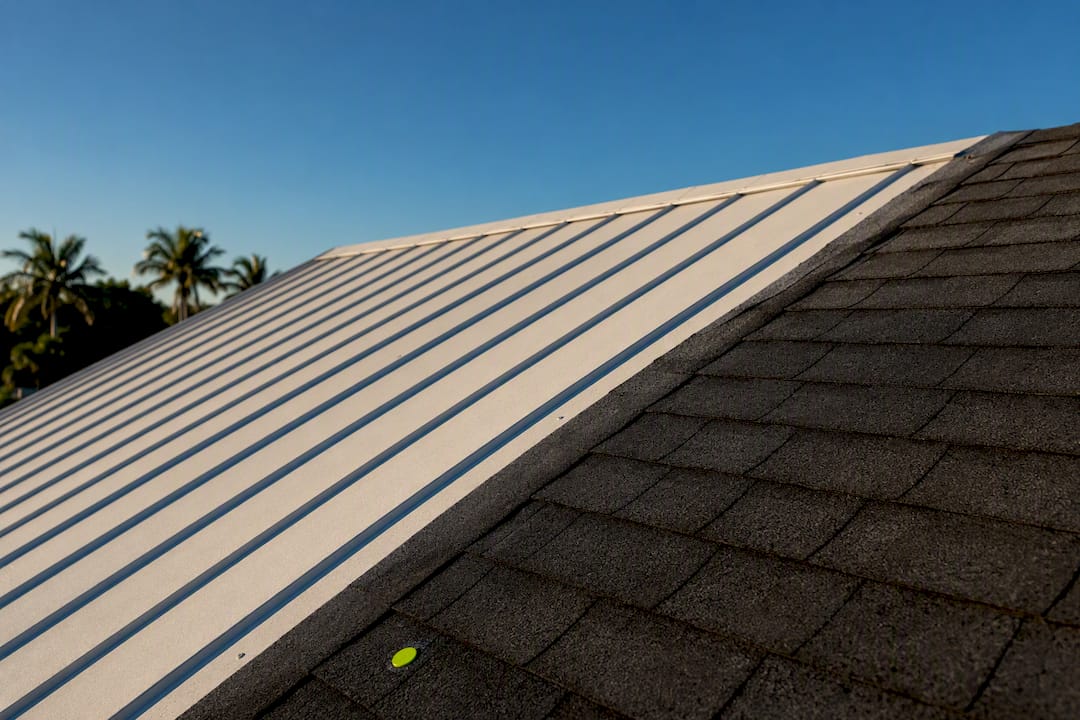
Light and reflective roof colors do lower roof surface temperatures in Florida, and in most homes that translates into real cooling savings. The mechanism is solar reflectance and thermal emittance working together to bounce sunlight away and shed absorbed heat instead of trapping it. But color is only one lever. Attic insulation, sealing, and ventilation shape how much of that surface-level heat reduction actually reaches your electric bill.
TL;DR:
- Reflective roofs in Florida can reduce cooling energy use by up to 26%, with peak demand reductions of 28% to 35%, especially during summer afternoons.
- Metal roofs with light or white finishes provide the most immediate temperature drops, with indoor cooling effects up to 1.7°C lower than unpainted metal.
- Attic insulation, sealing, and ventilation significantly influence actual savings, making a comprehensive assessment more effective than just changing roof color.
- Humidity in Florida prolongs heat retention and impacts radiant heat loss, making high thermal emittance an important factor in roof performance relief.
- The cost payback for cool roofing options varies from years for reflective coatings and shingles to decades for full metal or tile replacements, depending on upfront costs and local energy rates.
Table of Contents
- Roof Color and Heat in Florida: The Science Behind Reflectance and Emittance
- Florida Field Findings: What FSEC and UCF Actually Measured
- Which Roof Color and Material Combination Works Best in Florida
- Algae, Aesthetics, and Maintenance: The Real Tradeoffs in Florida’s Climate
- A Florida Homeowner’s Step-by-Step Decision Checklist
- How Florida’s Humidity Changes the Heat Equation
- Florida Building Codes and What They Mean for Your Roof Color Choice
- Seasonal Swings: How Roof Heat and Energy Costs Shift Across a Florida Year
- Cost Comparison and Payback Period for Cool Roof Options in Florida
- A Local Perspective: What Anthony Recommends for Tampa Bay Roofs
- Get a Local Roof Inspection Built Around Florida’s Heat
- Sources
- FAQ
Roof Color and Heat in Florida: The Science Behind Reflectance and Emittance
Two properties determine how hot a roof gets: solar reflectance and thermal emittance. Solar reflectance measures how much sunlight a surface bounces away instead of absorbing, expressed as a percentage or a number between 0 and 1. Thermal emittance measures how efficiently a surface releases the heat it does absorb, rather than holding onto it like a cast-iron skillet left on a stove.
Roofing engineers combine both into a single number called the Solar Reflectance Index (SRI). A high SRI means a cooler roof surface under the same Florida sun.
The gap this creates is not subtle. ENERGY STAR reports that a clean white roof reflecting about 80% of sunlight can stay roughly 50°F cooler than a grey roof reflecting only 20%, on the same afternoon, in the same weather. That difference does not stop at the shingles.
Statistic Callout: Roof and attic heat gain can account for a significant portion of a home’s air conditioning load in Florida, which is why the choice at the top of the house matters more here than in almost any other US market.
Here’s the chain reaction that plays out on a July afternoon in Tampa:
- Sunlight hits the roof surface and either reflects away or gets absorbed as heat.
- Absorbed heat raises roof deck and attic air temperature, sometimes past 150°F on a dark shingle roof.
- Heat radiates down through the ceiling into living space, a process called heat flux.
- Your AC compressor works harder and longer to offset that added heat load.
A cooler roof surface interrupts that chain at step one, which is why the color decision carries more weight than most homeowners assume.
Florida Field Findings: What FSEC and UCF Actually Measured
National guidance is useful, but Florida has its own data, and it comes from instrumented houses, not lab models. The Florida Solar Energy Center, part of the University of Central Florida, ran side-by-side comparisons of roofing systems on real test homes near Fort Myers.
Statistic Callout: White reflective roofing systems in FSEC’s Florida field tests cut cooling electrical use by roughly 18% to 26%, with peak demand reductions running between 28% and 35% in some configurations.
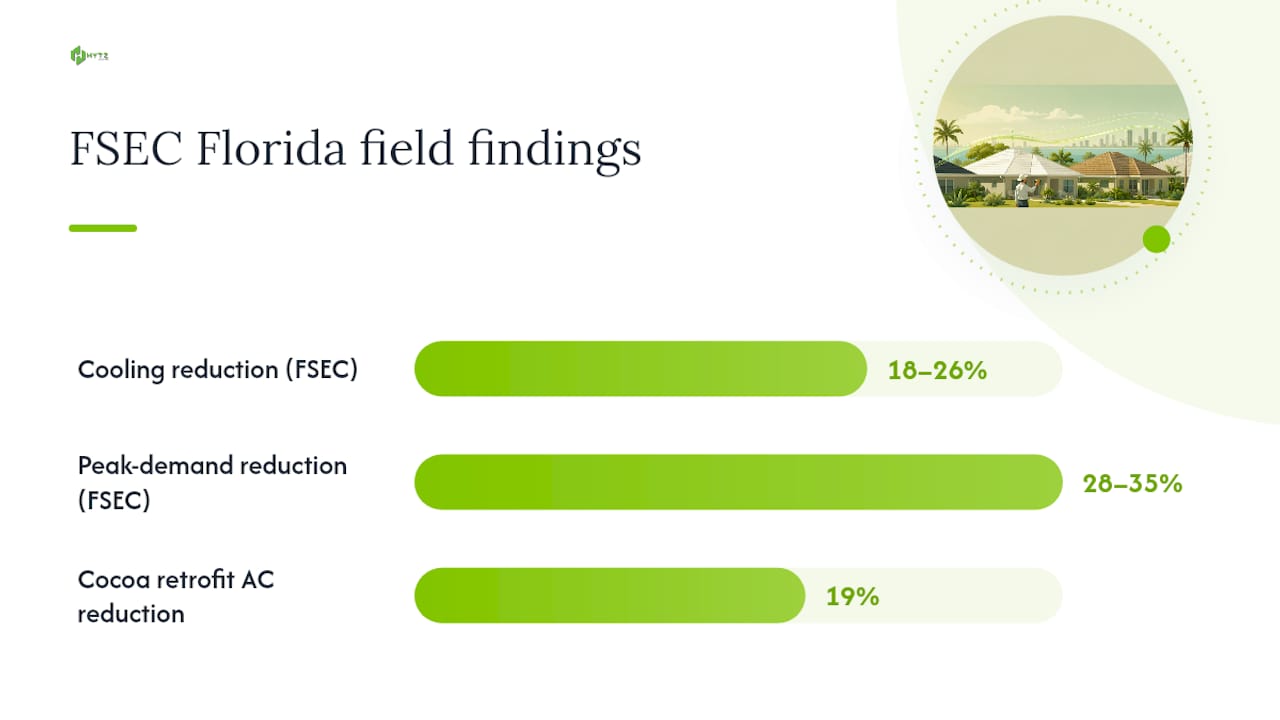
Peak demand matters as much as total energy use in Florida, since that’s the window between 2 p.m. and 6 p.m. when your utility rates and your AC’s workload both spike together.
FSEC also documented a real-world retrofit in Cocoa, Florida: a white metal roof installed over aging shingles produced a measured 19% reduction in air conditioner energy use, based on FSEC’s roof finish research. That’s not a lab estimate. That’s one house, one utility meter, before and after.
What does an 18-26% cooling reduction mean on an actual bill? For a Tampa Bay homeowner with typical summer cooling costs, savings in the lower range of that percentage can translate into noticeable monthly reductions during peak season.
Your real number depends on a few factors: how much of your ductwork sits in an unconditioned attic, your insulation depth, and how shaded your roof already is by trees or neighboring structures.
Which Roof Color and Material Combination Works Best in Florida
The right choice depends on what’s already on your roof, and Florida homeowners have more flexible options than most people realize. Color and material aren’t separate decisions. They work together.
Asphalt shingles. Standard dark shingles absorb the most heat of any common roofing material. Cool-rated shingle products use reflective granules that raise SRI without forcing you into a stark white roof, and some “cool dark” shingles use specially engineered pigments that hold color while improving reflectance beyond what standard dark shingles achieve. If your HOA has strict color requirements, ask your contractor about cool-pigment options before assuming you’re stuck with a hot roof.
Metal roofing. This is where color changes deliver the fastest, most measurable payoff. White or light-colored painted metal roofs showed strong surface-temperature drops in Florida field data, and a peer-reviewed study on metal roof color found white-gloss metal roofs ran 1.6°C to 1.7°C cooler indoors during key periods compared to bare, unpainted metal, at low material cost.
Tile roofing. Light-glazed or coated concrete and clay tile can produce significant peak-temperature reductions, though tile’s natural thermal mass already buffers some heat swings better than shingles do. Emittance matters here as much as color. A light tile with poor emittance will still hold heat longer than expected.
Reflective coatings. For homeowners not ready for a full replacement, elastomeric or acrylic cool coatings applied over existing metal or flat roofing raise reflectance without new material. Expect a coating lifespan in the 7 to 15 year range depending on the product, with recoating needed to maintain performance as the surface weathers.
Algae, Aesthetics, and Maintenance: The Real Tradeoffs in Florida’s Climate
Light roofs come with one honest downside in Florida: humidity feeds algae and mildew, and dark streaking shows up faster on white or light-colored surfaces than it would on a dark roof that hides the same growth.
That’s a cosmetic issue, not a performance failure, and it’s manageable. Algae-resistant shingle products with copper or zinc granules limit growth. Periodic soft-washing (never pressure washing, which can strip granules) keeps reflectance intact. Metal and coated roofs can get a biocide treatment during routine maintenance.
- Inspect annually for streaking, granule loss, or coating wear.
- Soft-wash light-colored roofs every 2 to 3 years in humid coastal zones.
- Plan recoat intervals for elastomeric coatings around the manufacturer’s aged-SRI rating, not the original spec.
- Check attic insulation depth whenever you’re already on the roof for inspection.
The often-cited “winter heating penalty” of cool roofs, where a lighter roof supposedly costs you more in heating season, is close to irrelevant in Florida. Our heating season is short and mild enough that the tradeoff barely registers next to months of aggressive cooling demand.
Pro Tip: Ask your contractor for the product’s aged SRI value, not just its rating out of the box. Reflectance drops as a roof weathers, and the aged number is what actually predicts your five-year performance.
A Florida Homeowner’s Step-by-Step Decision Checklist
Color decisions work best when they’re made alongside a broader look at your roof assembly, not instead of one.
- Measure your attic first. Check insulation depth, ventilation intake and exhaust, and whether ductwork runs through unconditioned attic space, since that changes your savings potential significantly.
- Pull SRI numbers for every product you’re considering, not just the marketing color name. Ask for aged SRI, not just initial ratings.
- Match material and color to your home’s style and your budget, balancing HOA rules or historic-district requirements against reflectance goals.
- Consider attic sealing and added insulation alongside the roof decision. FSEC testing found sealed, insulated attic decks can cut heat gain meaningfully on their own, sometimes rivaling what color alone delivers.
- Get itemized, competitive estimates that separate material cost, labor, and any coating or underlayment upgrades, along with manufacturer warranty documentation for the SRI rating.
For a rough payback estimate, multiply your average summer electric bill by a 15 to 25% savings range and then compare that monthly figure against your replacement or coating cost. A licensed inspection with attic temperature readings gives you a far more accurate number than guessing from a brochure.
How Florida’s Humidity Changes the Heat Equation
Humidity doesn’t just affect mold risk. It changes how effectively any roof, light or dark, sheds the heat it absorbs.
In dry climates, a hot roof surface radiates heat back into the night sky fairly efficiently once the sun goes down. Florida’s humidity traps that radiant heat closer to the ground and the roof surface, slowing nighttime cooling. That means a Tampa Bay attic that hits 140°F at 3 p.m. may still be uncomfortably warm at 9 p.m., long after a similar roof in Arizona has released most of its stored heat.
This is exactly why thermal emittance matters as much as solar reflectance in Florida. A roof that reflects sunlight well but releases absorbed heat poorly still runs hotter, longer, in humid conditions than the same reflectance number would suggest in a drier state. High-emittance coatings and materials matter more here than in the roofing guides written for the Southwest.
Humidity also affects your AC’s actual workload in a way pure temperature numbers don’t capture. Florida’s cooling load includes a heavy latent heat component, the energy your system spends removing moisture from the air, on top of the sensible heat from a hot roof and attic. A cooler roof reduces the sensible heat side of that equation, but it won’t touch the latent load driven by outdoor humidity. That’s part of why Florida savings estimates from cool roofs tend to land in a range rather than a single clean number: your specific humidity exposure, shading, and duct location all move the outcome.
Coastal Tampa Bay homes near the water often deal with higher ambient humidity than inland Central Florida properties, which is one more reason a local inspection beats a generic national estimate.
Florida Building Codes and What They Mean for Your Roof Color Choice
Florida’s roofing rules focus overwhelmingly on wind resistance and moisture protection, not on mandating specific colors. The Florida Building Code governs wind uplift ratings, underlayment requirements, and fastening patterns, all of which apply regardless of the color or reflectance you choose.
That said, color and material choices sometimes intersect with local rules in less obvious ways. Some municipalities, including ordinances referenced by the EPA’s cool roofs guidance, have adopted cool-roof requirements or incentives for certain building types, and coastal Florida cities occasionally layer on historic-district or HOA aesthetic rules that limit color options independent of state code.
Wind mitigation inspections, required for many Florida insurance discounts, evaluate roof shape, deck attachment, and opening protection. They don’t grade your roof on color or reflectance, but the inspection process is a natural moment to also evaluate whether your current roof would benefit from a reflective upgrade at your next replacement. If you’re already scheduling one, it costs you nothing extra to ask about SRI ratings for the products under consideration.
Tile roofing in particular sometimes runs into local aesthetic ordinances in planned communities across Tampa Bay, where lighter glazes may be restricted for uniformity reasons even though they’d outperform darker tile on reflectance. Check your HOA documents before you fall in love with a specific light-glazed product.
Seasonal Swings: How Roof Heat and Energy Costs Shift Across a Florida Year
Florida doesn’t have a true winter cooling break the way northern states do, but roof heat gain still moves through the year in a pattern worth planning around.
June through September brings the highest sun angles and longest daylight hours, which is when roof surface temperatures peak and the reflectance gap between light and dark roofs matters most. This is also when Tampa Bay utility rates often carry the heaviest demand charges, so a reflective roof’s peak-demand reduction (the 28-35% range that FSEC measured) delivers its biggest dollar impact during exactly these months.
Spring and fall bring milder days but Florida’s humidity rarely drops enough to eliminate AC use entirely, so a cool roof keeps contributing savings across nearly the entire calendar, not just in a three-month summer window.
Winter is the one stretch where a lighter roof theoretically costs you a small amount in reduced passive solar heat gain. In practice, Florida winters are short and mild enough that most homes barely run heat at all, and any minor winter penalty gets swamped by six-plus months of aggressive cooling savings. Homeowners moving from colder climates sometimes worry about this tradeoff out of habit. It’s not a meaningful factor here.
The bigger seasonal variable is actually storm season. Hurricane season overlaps with peak cooling months, and homeowners who need emergency repairs after wind or hail damage during July through November should factor reflectance into whatever replacement material they choose, rather than defaulting to whatever’s fastest to source.
Cost Comparison and Payback Period for Cool Roof Options in Florida
Reflective upgrades range widely in upfront cost, and payback timelines depend heavily on which path you take.
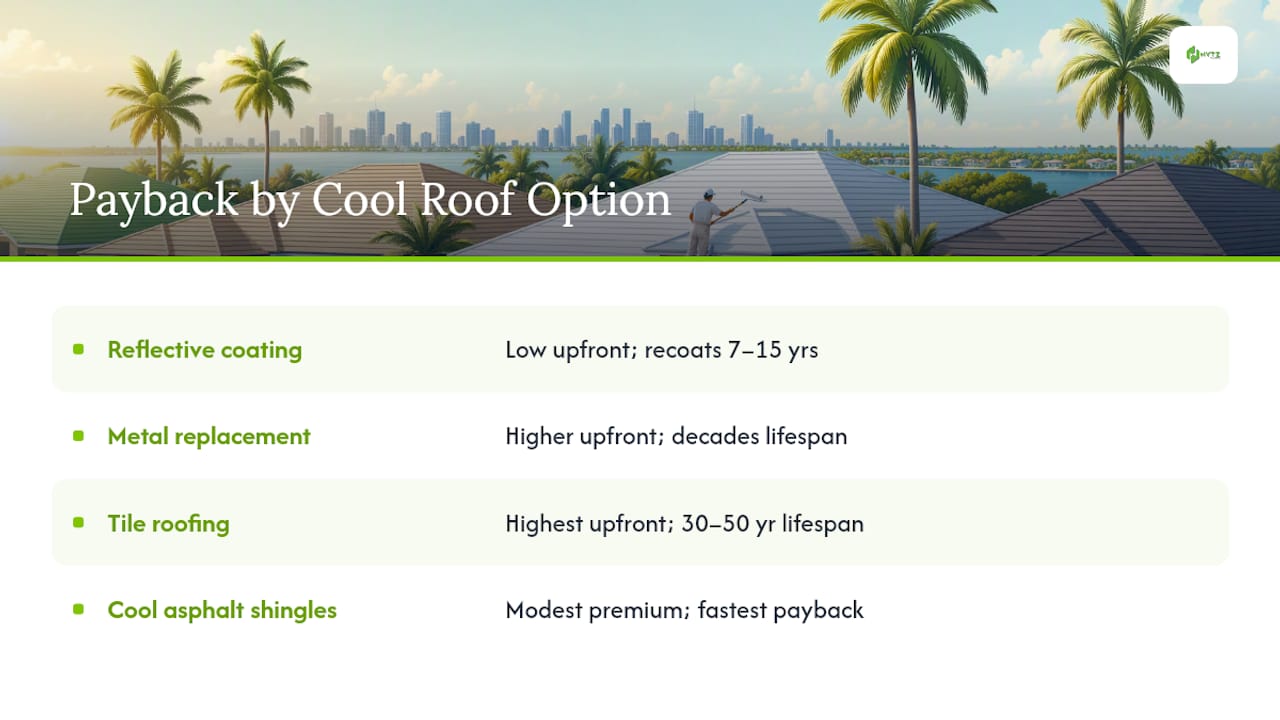
A reflective coating applied to an existing metal or flat roof sits at the low end of the investment scale and can show up in your electric bill within the first full cooling season, since you’re improving reflectance without replacing anything structural. The tradeoff is a shorter lifespan before recoating, typically 7 to 15 years.
A full metal roofing replacement in a light or cool-pigment finish runs a higher upfront cost but delivers decades of reflective performance along with wind resistance benefits that matter during Florida’s hurricane season. Given the 18-26% cooling savings that FSEC measured in Florida field tests, a household spending $3,000 a year on cooling could see $540 to $780 in annual savings, though your actual number depends on your specific home.
Tile roofing in light glazes costs more upfront than most alternatives but combines thermal mass with reflectance, often outlasting shingle and coating options by decades, which changes the payback math when you calculate it over a 30 to 50 year tile lifespan instead of a 15 to 20 year shingle cycle.
Standard asphalt shingle replacement in a cool-rated product adds a modest premium over standard shingles, often just a few dollars per square, making it the easiest upgrade to justify on payback alone. For a detailed breakdown by material, Florida roof replacement cost guides can help you compare your specific situation against typical 2026 pricing.
The honest payback answer: coatings and cool shingles pay back fastest in years, full material upgrades pay back over the life of the roof through combined energy and durability gains, and your local electric rate is the variable that moves every estimate up or down.
A Local Perspective: What Anthony Recommends for Tampa Bay Roofs
Every roof I evaluate in Tampa Bay tells a different story, and color is never the only variable worth discussing. As a GAF Master Elite contractor working across Central Florida, I see the same pattern repeatedly: homeowners assume color alone will fix a hot attic, when the roof assembly underneath usually deserves equal attention.
For single-story bungalows with straightforward roof lines, I often steer clients toward white or light cool-pigment metal. It’s a fast win with minimal complexity. Two-story homes with more attic volume and longer duct runs usually need a different conversation: cool shingles paired with attic sealing tend to outperform color changes alone, because the extra attic space traps more heat before it ever reaches the ceiling. When a roof also shows wind or age damage, I’ll usually recommend a full assembly evaluation rather than a color-only fix, since patching color onto a failing deck wastes money twice.
— Anthony
Get a Local Roof Inspection Built Around Florida’s Heat
You’ve seen the science and the Florida field data. The next step is finding out what your specific roof and attic are actually doing, and that’s where a generic online calculator falls short.
Whether you’re weighing a cool-coating retrofit, a full metal or tile replacement, or you’re not sure your current roof needs anything beyond better attic sealing, a professional roof inspection gives you real numbers instead of national averages. Hytz Roofing also handles insurance claim assistance if storm damage is part of your decision, backed by GAF-certified installation, full licensing, and manufacturer warranties up to 50 years on materials. Request an inspection and get an itemized roof replacement estimate built around your actual Tampa Bay home, not a spreadsheet assumption.
Sources
The claims in this article draw from ENERGY STAR’s cool roofs program, the EPA’s cool roofs and heat island guidance, and field research from the Florida Solar Energy Center at UCF, including FSEC’s roof finish studies. A peer-reviewed study on metal roof color and indoor temperature supports the metal-roofing findings. Attic heat’s effect on AC systems is covered further by LC Heating & Air’s HVAC analysis.
- Cool Roofs | ENERGY STAR
- Comparative Evaluation of the Impact of Roofing Systems on Residential Cooling Energy Demand in Florida
- Using cool roofs to reduce heat islands | US EPA
- Roof Finish - FSEC®
FAQ
Does roof color really affect my AC bill in Florida?
Yes.
What’s the difference between solar reflectance and thermal emittance?
Solar reflectance measures how much sunlight a roof bounces away, while thermal emittance measures how well it releases the heat it does absorb. Both need to be high for a roof to perform well in Florida’s humidity.
Will a light roof make my home too cold in winter?
No. Florida’s winter heating season is short and mild enough that any minor heating penalty from a lighter roof is negligible compared to months of cooling savings.
Are dark roofs ever an acceptable choice in Florida?
Dark roofs work better when paired with strong attic insulation, sealing, and ventilation, and “cool dark” products with reflective pigments can narrow the performance gap versus standard dark shingles.
How do I know if my roof needs a color change or an attic upgrade?
A professional inspection measuring attic temperature, insulation depth, and ventilation gives you a clearer answer than color alone; Hytzroofing’s residential roofing and inspection service evaluates the full assembly, not just the surface.
Does Hytz Roofing install cool roof materials in Tampa Bay?
Yes. Hytz Roofing installs metal roofing, tile roofing, and asphalt shingle systems across Tampa Bay and Central Florida, including light and reflective color options.