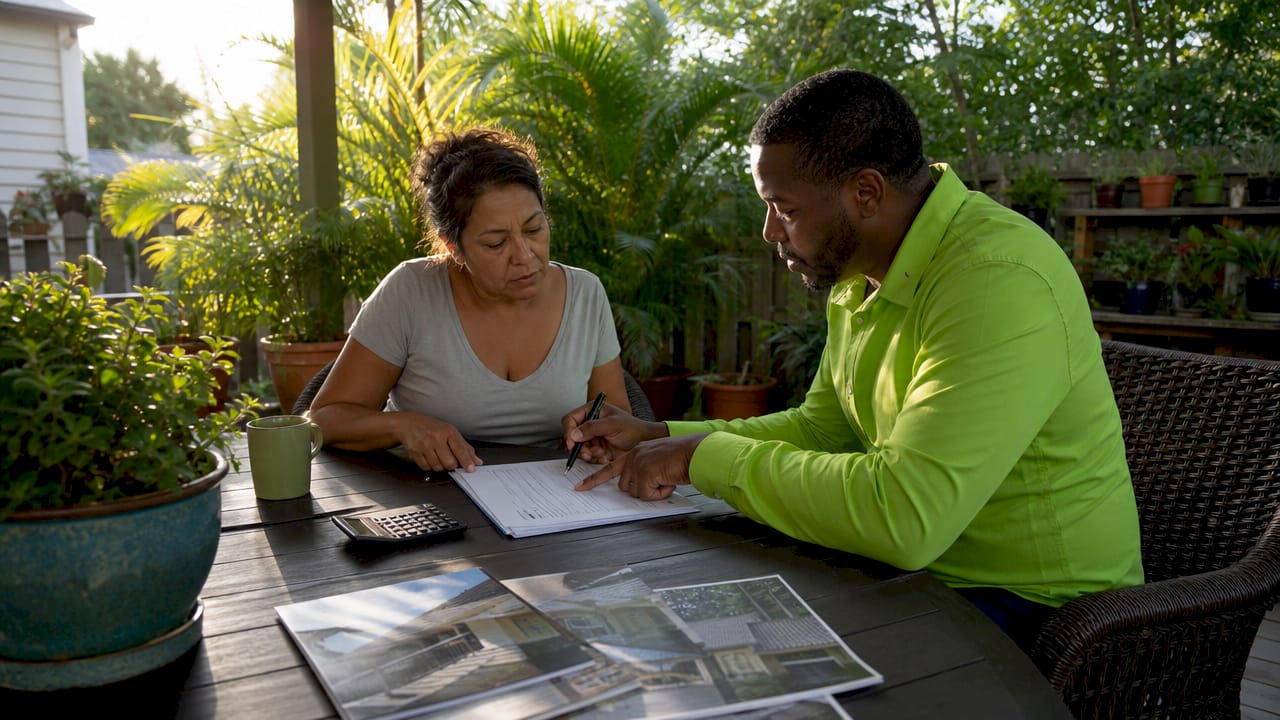
Questions to Ask a Roofing Contractor in Florida
Roofing Contractor Questions can guide Florida homeowners on which credentials, insurance, estimates, timelines, materials, and warranty details to review before hiring.
Last updated: August 8, 2026
Asking the right questions before hiring a roofing contractor is the single most effective way to protect your home and your wallet. Florida homeowners face unique challenges: hurricane season, intense UV exposure, and a market crowded with out-of-state crews chasing storm work. Knowing which questions to ask a roofing contractor before hiring separates trustworthy professionals from risky operators. Verified licensing, written warranties, and clear payment terms are not optional extras. They are the baseline for any legitimate roofing job.
What are the essential licensing and insurance questions to ask a roofing contractor?
Verifying a contractor’s credentials before any work begins is the fastest way to filter out bad actors. License verification alone can eliminate approximately 30% of high-risk or unprofessional operators in local markets. That single step costs you nothing but a few minutes online.
Ask every contractor for their full legal business name and Florida contractor license number. Then verify that number independently through the Florida Department of Business and Professional Regulation (DBPR) website. Do not take a contractor’s word for it.
Insurance is equally non-negotiable. Require two separate certificates: one for general liability and one for workers’ compensation. The critical detail most homeowners miss: certificates of insurance should be emailed directly from the insurer, not handed to you by the contractor. A contractor can easily show you an expired or altered document. A direct email from the insurance company confirms the coverage is current.
Here are the specific questions to ask on licensing and insurance:
- “What is your Florida contractor license number, and can I verify it online?”
- “Will you have your insurer email me the certificates of general liability and workers’ comp directly?”
- “Are your subcontractors also covered under your insurance policy?”
- “Who will pull the building permits for this job?”
That last question matters more than most homeowners realize. A licensed contractor should always pull permits themselves. If a contractor asks you to pull the permit, that is a serious warning sign. It often means they lack the proper license or are trying to avoid accountability.
Pro Tip: Search the contractor’s license number on the DBPR website before your first meeting. If the license is expired, inactive, or belongs to a different business name, walk away immediately.
How to assess materials, warranties, and workmanship guarantees?
The quality of materials and the strength of the warranty determine how long your roof protects your home. Most homeowners ask about price. The better question is what you get for that price.
Ask the contractor to name the specific shingle brand, product line, and underlayment they plan to use. A contractor who cannot answer that question specifically has not thought through your project. A contractor who recommends GAF Timberline HDZ shingles with a synthetic underlayment, for example, is giving you a concrete answer you can research and compare.
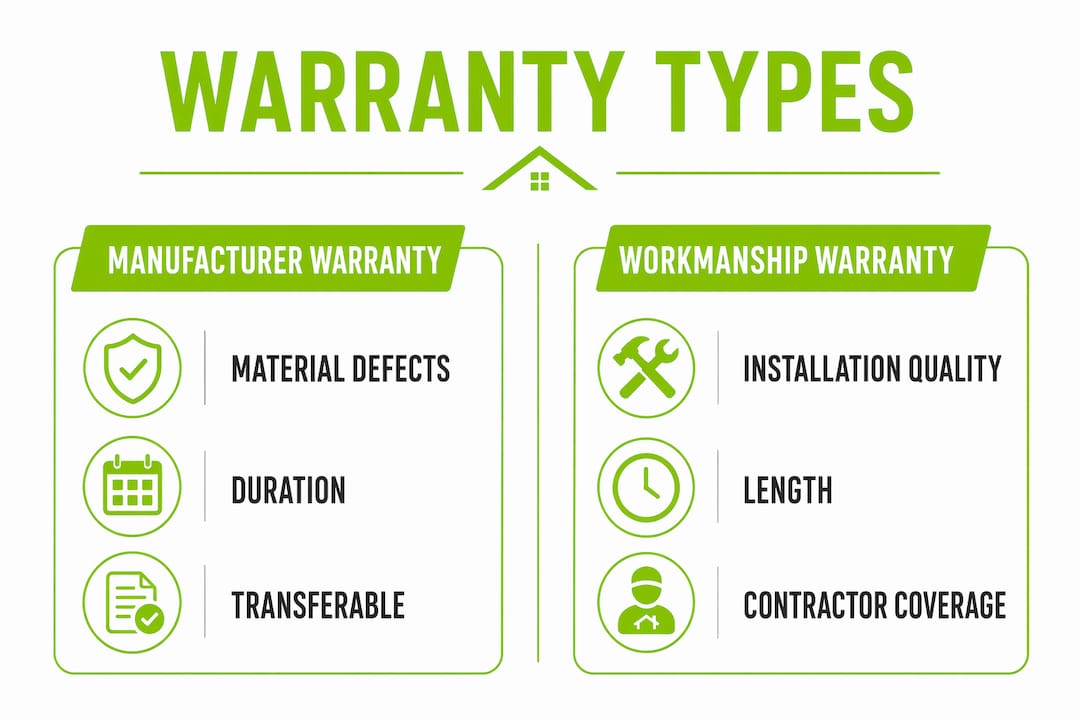
Warranties come in two forms, and you need both. The manufacturer warranty covers the materials themselves. The workmanship warranty covers the installation. Workmanship warranties shorter than 5 years are a red flag. Warranties in the 10–25 year range signal that a contractor stands behind their work with real confidence.
| Warranty type | What it covers | What to look for |
|---|---|---|
| Manufacturer warranty | Defects in roofing materials | 25–50 year coverage on premium products |
| Workmanship warranty | Installation errors by the crew | Minimum 5 years; 10+ years preferred |
| Transferable warranty | Coverage for future homeowners | Ask if it transfers at sale |
Ask specifically whether the warranty is transferable to a future buyer. A transferable warranty adds real value to your home at resale. Also confirm who handles warranty registration with the manufacturer. Some contractors leave that step undone, which voids the coverage entirely.
Pro Tip: GAF Master Elite® contractors like Hytzroofing can offer enhanced warranty options not available through standard contractors. Ask any contractor whether their certification level unlocks better manufacturer coverage.
What project scope, timeline, and payment questions prevent surprises?
Clear written estimates and a defined payment schedule protect you from the two most common roofing disputes: unexpected costs and delayed completion. These are the questions that separate a professional operation from a disorganized one.
-
“Can I get a written, line-item estimate?” Written line-item estimates prevent unexpected cost escalations and clarify exactly what is included. An estimate that says “roof replacement: $12,000” tells you almost nothing. An estimate that breaks out materials, labor, disposal, and permits tells you everything.
-
“How do you handle unforeseen issues like rotted decking?” This is where many homeowners get blindsided. Rotted decking should be priced per sheet in the contract before work begins. Ask for a specific per-sheet price so there are no surprises when the old shingles come off.
-
“What is the payment schedule?” Never pay the full amount upfront. A standard schedule ties payments to project milestones: a deposit at signing, a payment at material delivery, and the final balance at completion. A contractor who demands full payment before starting is a red flag.
-
“Who handles daily cleanup and debris removal?” Roofing generates a significant amount of waste. Confirm that the crew will use a magnetic roller to collect nails from your yard and that all debris leaves your property at the end of each workday.
-
“What is the projected timeline, and how do you handle weather delays?” Florida weather is unpredictable. Ask whether the contractor builds weather contingencies into the schedule and whether you will receive a written completion date. A contractor who cannot give you a timeline has not planned the job properly.
You can also review general contractor questioning techniques that apply across construction projects to sharpen your approach before any estimate meeting.
How to evaluate a contractor’s team, communication, and local reputation?
The crew doing the physical work matters as much as the company name on the truck. A polished sales pitch means nothing if an untrained crew installs your roof.
Ask these questions directly:
- “Is the crew that will work on my home your own employees, or subcontractors?” In-house crews generally deliver more consistent quality and communication than rotating subcontractors. When a company owns its crew, it controls training, safety standards, and accountability.
- “How long has your company operated under this exact business name in Florida?” Contractors who frequently rename their business often do so to escape bad reviews or legal liability. A company with 10+ years under the same name in the same market has a track record you can actually verify.
- “Can you provide references from jobs completed in my area within the last 12 months?” Recent local references matter more than a long list of testimonials. Call at least two. Ask specifically about communication during the job and how the contractor handled any problems.
- “Do you have a physical office address I can visit?” Fly-by-night operators work out of trucks and disappear after payment. A local office signals stability and accountability.
- “Who is my point of contact during the project, and how quickly do you respond to questions?” Communication breakdowns cause most roofing disputes. Get a direct name and phone number before the job starts.
What should Florida homeowners ask about storm damage and local roofing challenges?
Florida’s storm season creates a specific set of roofing questions that homeowners in other states rarely need to ask. After a hurricane or major storm, the market fills with unlicensed crews from out of state. Knowing what to ask protects you from both bad work and insurance fraud.
- “How do you coordinate with my insurance company after storm damage?” Storm damage repair requires close coordination between the contractor and your insurer. Ask whether the contractor will provide a detailed damage report and photos that meet your insurer’s documentation requirements.
- “What roofing materials do you recommend for wind resistance in Florida?” Florida Building Code sets minimum wind resistance standards, but premium products exceed those minimums. Ask whether the contractor recommends products rated for 130 mph or higher wind uplift.
- “Are you familiar with local permit requirements for storm repairs in my county?” Permit requirements vary by county in Florida. A contractor who does not know your local requirements will cause delays and potential code violations.
- “What maintenance do you recommend to prevent common Florida roofing problems?” A contractor who gives you a specific maintenance plan, such as annual inspections and moss treatment, is thinking about your long-term outcome. One who says “just call us if something breaks” is not.
Reviewing common Florida roof repairs before your contractor meeting helps you ask more specific questions about what your roof actually needs.
Key Takeaways
Asking the right questions before hiring a roofing contractor eliminates the majority of risk, from licensing fraud to warranty gaps and unexpected costs.
| Point | Details |
|---|---|
| Verify license and insurance first | Confirm the license number on DBPR and require insurance certificates sent directly from the insurer. |
| Demand written, line-item estimates | Itemized estimates prevent cost surprises and clarify exactly what the job includes. |
| Check workmanship warranty length | Warranties under 5 years are a red flag; 10+ years signals real confidence in the installation. |
| Ask about in-house crews | Contractors who own their crew deliver more consistent quality than those who rely on subcontractors. |
| Ask Florida-specific storm questions | Confirm the contractor coordinates with insurers, knows local permit rules, and recommends wind-rated materials. |
What I’ve learned from watching Florida homeowners hire the wrong contractor
The most expensive roofing mistake I see is not picking the cheapest bid. It is skipping the insurance verification step. Homeowners assume that if a contractor has a business card and a website, they are covered. They are not always. One uninsured worker injured on your roof can expose you to a lawsuit that costs far more than the roof itself.
The second mistake is trusting a contractor who is new to the area. After every major Florida storm, crews arrive from Georgia, the Carolinas, and beyond. Some do good work. Many do not. A contractor who has operated under the same name in Tampa or Central Florida for a decade has something to lose if they do a bad job. A crew that arrived last week does not.
The permit question is the one I wish every homeowner would memorize. If a contractor asks you to pull your own building permit, stop the conversation. That request is almost always a sign that the contractor cannot pull it themselves because they lack the proper license. An unlicensed job can force you to tear out and redo the work at your own expense when you sell the home.
Finally, ask to speak with the crew leader before work begins. Not the salesperson. Not the office manager. The person who will actually be on your roof. That conversation tells you more about the quality of the job than any estimate or review ever will.
— Anthony
Hytzroofing: a trusted partner for Florida homeowners
Hytzroofing holds the GAF Master Elite® Contractor designation, earned by fewer than 2% of roofing contractors across North America. That credential is not self-reported. GAF awards it only to contractors who meet strict standards for licensing, insurance, ongoing training, and community reputation. Hytzroofing has also earned the GAF President’s Club Award, the Angi Super Service Award 2025, and the 2024 Brava Roof Tile Excellence Award.
Whether you need a post-storm inspection, a full roof replacement, or a repair estimate, Hytzroofing brings verified credentials and local Florida experience to every job. Visit the Hytzroofing services page to schedule a consultation and get a written, line-item estimate from a contractor you can verify.
FAQ
What is the most important question to ask a roofing contractor?
Ask the contractor to have their insurer email you the certificates of general liability and workers’ compensation directly. This single step confirms that coverage is current and valid.
How do I verify a Florida roofing contractor’s license?
Search the contractor’s license number on the Florida Department of Business and Professional Regulation (DBPR) website. The search is free and shows whether the license is active, expired, or flagged.
What is a fair payment schedule for a roofing job?
A standard schedule includes a deposit at contract signing, a payment when materials are delivered, and the final balance at project completion. Never pay the full amount before work begins.
How long should a roofing workmanship warranty last?
A workmanship warranty should cover at least 5 years, with 10–25 years being the standard for contractors who are confident in their installation quality.
Why do Florida homeowners need storm-specific roofing questions?
Florida’s hurricane season brings unlicensed out-of-state crews after major storms. Asking about insurance coordination, wind-rated materials, and local permit knowledge helps you identify contractors who are qualified to handle Florida storm damage correctly.
Recommended
- Weathering the Storm Expert Tips for Roof Leak Repair in Tampa Fl
- GAF Master Elite Roofer in Tampa, FL | Hytz Roofing
- Introducing Enviroshake to Your Hoa
- Types of Roof Repairs Florida Homeowners Need Most
Related Hytz Roofing Services