Tampa Bay Homeowners: Metal Roof Noise in Rain Is an Assembly Problem
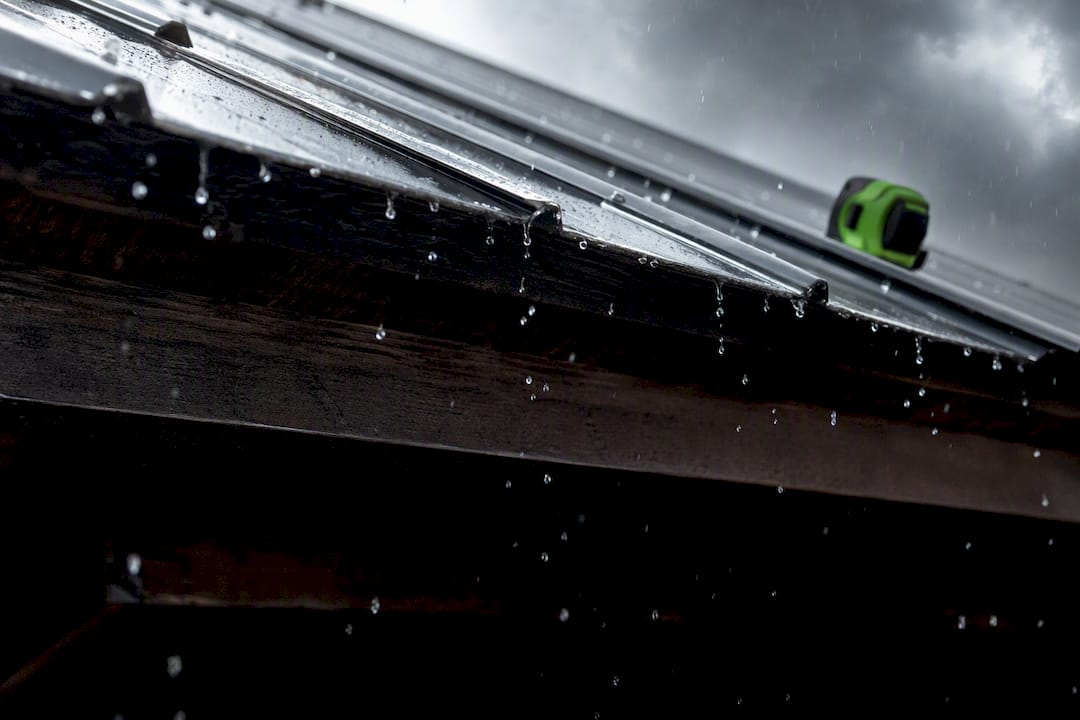
Modern metal roof noise in rain is not the racket most people expect. A correctly built residential assembly, meaning solid decking, underlayment, and attic insulation, measures around 52 dBA in a rainstorm, barely louder than the roughly 46 dBA typical of asphalt shingles. The “tin roof in a thunderstorm” reputation comes from open-frame barns and sheds, which can hit 61 dBA or more. If you’re worried about the roof on your Tampa Bay house, the fix is an inspection of the assembly, not a switch away from metal.
TL;DR:
- Properly built metal roofs with decking and insulation produce only slightly more noise during rain than asphalt shingles, typically around 52 dBA.
- The main cause of loud metal roof noise is missing or inadequate underlayment and decking, not the metal panels themselves.
- Upgrading insulation, adding damping layers, or installing acoustic mats can reduce rainfall noise by 10 to 20 dB at relatively low cost.
- Open-frame metal structures without decking can reach noise levels similar to city traffic, around 55 to 61 dBA, and are significantly louder.
- Most noise issues stem from missing or degraded assembly components; inspections can identify fixes before considering full roof replacements.
Table of Contents
- What Does Metal Roof Noise in Rain Actually Sound Like?
- What Roof Assembly Details Actually Control the Noise?
- What Are the Best Ways to Reduce Roof Noise on a Metal Roof?
- Is That Noise Rain or Just Thermal Movement?
- What Does Fixing Roof Noise Typically Cost?
- What Hytz Roofing Sees on Tampa Bay Roofs
- Quiet Roof or Rain Sound? It’s a Personal Call
- Get a Roof That’s Built Quiet From the Start
- Sources
- FAQ
What Does Metal Roof Noise in Rain Actually Sound Like?
Rain hitting a properly built metal roof measures about 52 dBA compared with 46 dBA for asphalt shingles. That six-decibel gap is small. Most people can’t reliably detect a difference until it crosses roughly 8 dB, close to the jump from a quiet home office to a running dishwasher one room over.
Open-frame metal roofs, the kind you’d see on a pole barn with no decking or insulation, tell a different story. Those structures can climb to around 61 dBA, loud enough to interrupt a phone call.
Quick reference for common rain sounds:
- Light rain on shingles: roughly 40 to 46 dBA, similar to a quiet conversation
- Light-to-moderate rain on a decked metal roof: roughly 46 to 52 dBA
- Heavy rain or hail on either material: noticeably louder, though metal doesn’t jump disproportionately when insulation and decking are present
- Open-frame metal structure in any rain: 55 to 61+ dBA, closer to city traffic noise
Pro Tip: If you want a rough gut check, stand in your attic during a moderate rain. If you can hold a normal conversation without raising your voice, your assembly is doing its job.
The reported numbers vary by rainfall intensity, roof pitch, and what’s between the panel and your ceiling. Two houses with identical metal panels can sound completely different depending on what’s underneath.
What Roof Assembly Details Actually Control the Noise?
Metal roofing sound issues almost always trace back to what’s missing between the panel and the living space, not the metal itself. Here’s the hierarchy of what matters most:
- Solid decking versus open framing. A continuous wood deck under the panels absorbs and disperses vibration before it becomes airborne sound. Skip the deck, as many agricultural buildings do, and the panel acts like a drumhead.
- Underlayment as a damping layer. Synthetic or self-adhered underlayment sits between the deck and the panel, breaking direct contact and cutting transmitted vibration. It’s one of the cheapest, most effective layers in the whole system.
- Attic insulation. Batt or blown insulation adds mass and absorbs sound energy before it reaches your ceiling. Denser insulation types generally outperform thin foam boards for this specific job.
- Panel gauge and metal type. Heavier gauge steel or aluminum vibrates less than thin panels. Standing seam systems with concealed clips also tend to run quieter than exposed-fastener panels.
- Roof pitch and attachment method. Steeper pitches shed rain faster, reducing dwell time and impact noise. Attachment method affects how much vibration transfers into the structure.
Sheds, carports, and barns with thin, unlined metal over open rafters are the loudest structures you’ll find, and they’re also the source of most of the horror stories homeowners repeat to each other.
What Are the Best Ways to Reduce Roof Noise on a Metal Roof?
Noise reduction metal roofs start with the cheapest fixes and work up to specialty products only when needed. Attic insulation upgrades and air-seal work usually deliver the best value per dollar, since they address both energy loss and sound transmission with one project.
From there, homeowners have real options, each with different cost and effort trade-offs:
- Add or upgrade underlayment and coverboard. Increasing assembly mass and adding a damping layer reduces vibration before it reaches the interior, and acoustic assembly testing shows heavier insulation and coverboards can meaningfully lower measured rainfall noise.
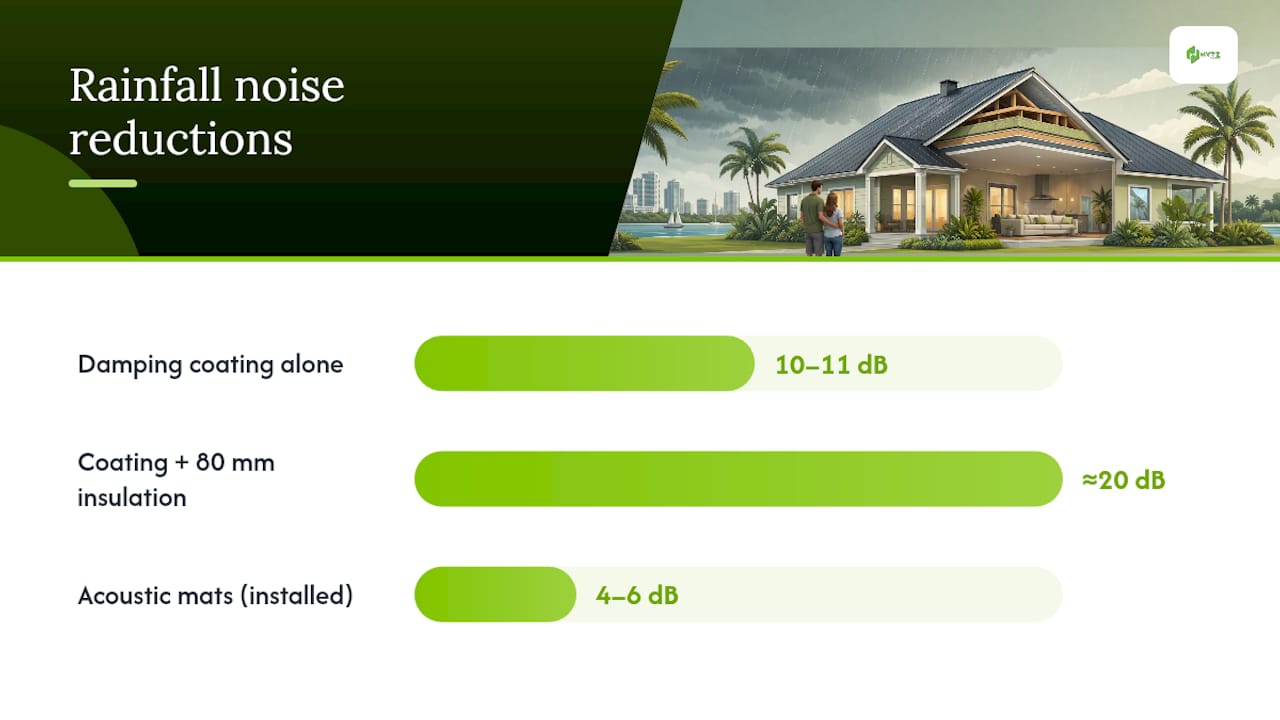
- Apply a damping compound. Lab testing found that a 1 mm dry film of a product like Decidamp SP80 cut rainfall sound intensity by about 10 to 11 dB, and pairing that coating with 80 mm of foil-faced insulation pushed the improvement close to 20 dB in that test program.
- Install acoustic mats. Purpose-built mats have documented improvements of roughly 4 to 6 dB in installed systems, a modest but real gain for less invasive retrofits.
- Consider mass-loaded vinyl. This adds weight and damping between deck and panel, useful when you can’t add a full coverboard layer.
- Choose heavier panel gauges and standing seam with clips. Concealed clip systems reduce the thermal creak and pop that many homeowners mistake for rain noise, and heavier gauges resist vibration better than thin exposed-fastener panels.
If your existing roof still has usable shingles and decking, a metal recover installed over the top can add mass and damping in one step. A full tear-off makes more sense when the deck itself needs repair or when you’re upgrading to a heavier gauge system that requires fresh attachment points. Either way, a licensed contractor can tell you which route actually solves your noise complaint versus which one just costs more.
Is That Noise Rain or Just Thermal Movement?
Not every sound coming from a metal roof is rain. Popping and ticking noises usually come from thermal expansion and contraction as panels heat and cool, which is a different issue entirely from impact noise during a storm. Florida’s daily swing between a hot afternoon and a cooling evening rain makes this especially common here.
Clip systems that allow panels to move independently of fasteners cut down on this noise dramatically, while fixed screws driven straight through the panel tend to bind and pop as metal expands.
Before signing a contract, ask your contractor about:
- Whether the deck is solid wood or open framing
- What underlayment they’re specifying and why
- Clip system versus exposed fastener attachment
- Current attic insulation depth and type
- How warranty terms address noise-related callbacks
A bid that skips underlayment specifics or can’t explain its attachment method is a red flag. Cheap quotes often cut corners exactly where noise control lives.
What Does Fixing Roof Noise Typically Cost?
Costs scale with how much of the assembly you’re touching. An attic insulation retrofit and air-sealing pass is usually the fastest and least expensive option, often completed in a single day. Adding a coverboard layer or acoustic mat during a reroof adds material and labor cost but stays contained within a normal reroofing timeline of a few days.
Upgrading panel gauge or moving to a standing seam clip system is a bigger jump, closer to a full roof replacement in scope and typically running several days depending on square footage. If a storm damaged your existing roof and noise complaints started after that event, your homeowner’s insurance may cover part of the repair, so it’s worth getting an inspection before committing to a full retrofit budget.
What Hytz Roofing Sees on Tampa Bay Roofs
Hytz Roofing is a GAF Master Elite Contractor, a distinction held by fewer than 2% of roofing contractors in North America, and our crews spend a lot of time in Tampa Bay attics during humid, rain-heavy months. The most common root cause we find behind noise complaints isn’t the metal panel. It’s missing or thin underlayment paired with older, compressed attic insulation that’s lost its damping ability.
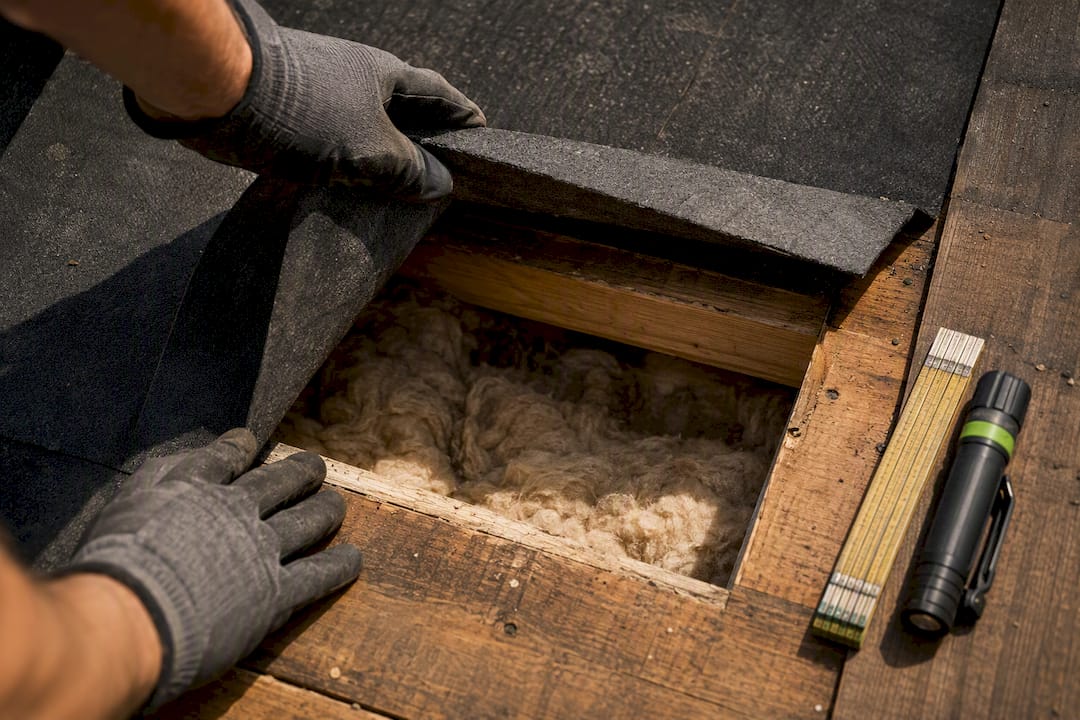
A standard inspection checks deck condition, underlayment type, clip or fastener style, and insulation depth in about an hour. For most homes, that visual and hands-on inspection tells us everything we need. Professional acoustic measurement only comes into play for commercial buildings or unusual complaint patterns that a standard inspection can’t explain.
Quiet Roof or Rain Sound? It’s a Personal Call
Some homeowners love the sound of rain on a metal roof. Others need near silence for a sleeping baby or a home office on a video call. Neither preference is wrong, and small fixes like added insulation often solve moderate complaints without touching the roof deck at all. If a walk through your attic during a storm sounds louder than it should, schedule an inspection before assuming you need a bigger project than you actually do.
— Anthony
Get a Roof That’s Built Quiet From the Start
Experienced roofing professionals can inspect your existing deck, underlayment, and insulation, then tell you what might be driving the sound and what it takes to fix it.
We back every project with industry-leading warranty coverage to provide lasting protection for your roofing investment. Whether you need a full metal roofing installation with a properly damped assembly or a residential roofing inspection to diagnose what’s already on your house, our team handles the whole process, including insurance claim assistance if storm damage is part of the picture. Request a free inspection and estimate, and get a straight answer about your roof before rainy season builds another round of complaints.
Sources
Rainfall noise claims in this guide draw on acoustic testing frameworks including ISO 10140 and ISO 140-18 laboratory sound insulation protocols, along with ASTM test references used across the ROCKWOOL acoustic assembly catalog.
- Are Metal Roofs Loud in the Rain? | DECRA
- ROCKWOOL roofing-rated acoustic assembly catalog (technical guide)
- Damping compound testing for rainfall noise (conference paper)
FAQ
How Do You Stop Rain Noise on a Metal Roof?
Add or upgrade attic insulation, seal air gaps, and confirm you have solid decking with proper underlayment underneath the panels. For existing noisy roofs, a damping compound or acoustic mat retrofit can cut measured rainfall sound intensity by roughly 10 to 11 dB.
What Is the Biggest Problem With Metal Roofs?
The most common complaint isn’t noise, it’s thermal expansion causing popping or ticking sounds when fasteners bind against moving panels. Standing seam systems with clip attachments largely solve this by letting panels move independently.
How Can I Reduce Noise From My Metal Roof?
Start with attic insulation and air sealing since that typically delivers the best value for the cost. If that’s not enough, adding a coverboard, acoustic mat, or damping compound during a reroof provides measurable additional reduction.
Is It Okay to Install a Metal Roof During Rain?
Contractors generally pause installation during active rain for safety and to keep underlayment and decking dry before panels go on. A brief, properly timed installation schedule protects the assembly’s long-term acoustic and structural performance, which matters more than rushing through wet weather.
Are Metal Roofs Louder Than Shingle Roofs in Rain?
Not meaningfully, when both are installed with decking, underlayment, and insulation. Testing shows about 52 dBA for metal versus 46 dBA for shingles, a gap most people won’t notice day to day.