How to Spot Fake Roofing Contractors in Florida
Fake Roofing Contractors Florida may use high-pressure tactics, lack proper licensing, or provide vague contracts; learn the warning signs and simple verification steps to protect your home.
Fake roofing contractors are unlicensed or fraudulent operators who target homeowners after storms, collect payment, and deliver little to no real work. Florida’s storm-prone climate makes it one of the highest-risk states for roofing fraud in the country. Scammers use door-to-door tactics, pressure sales, and forged documents to exploit homeowners who need fast repairs. Knowing how to spot fake roofing contractors before you sign anything protects your home, your insurance claim, and your wallet.
What are the biggest red flags of a fake roofing contractor?
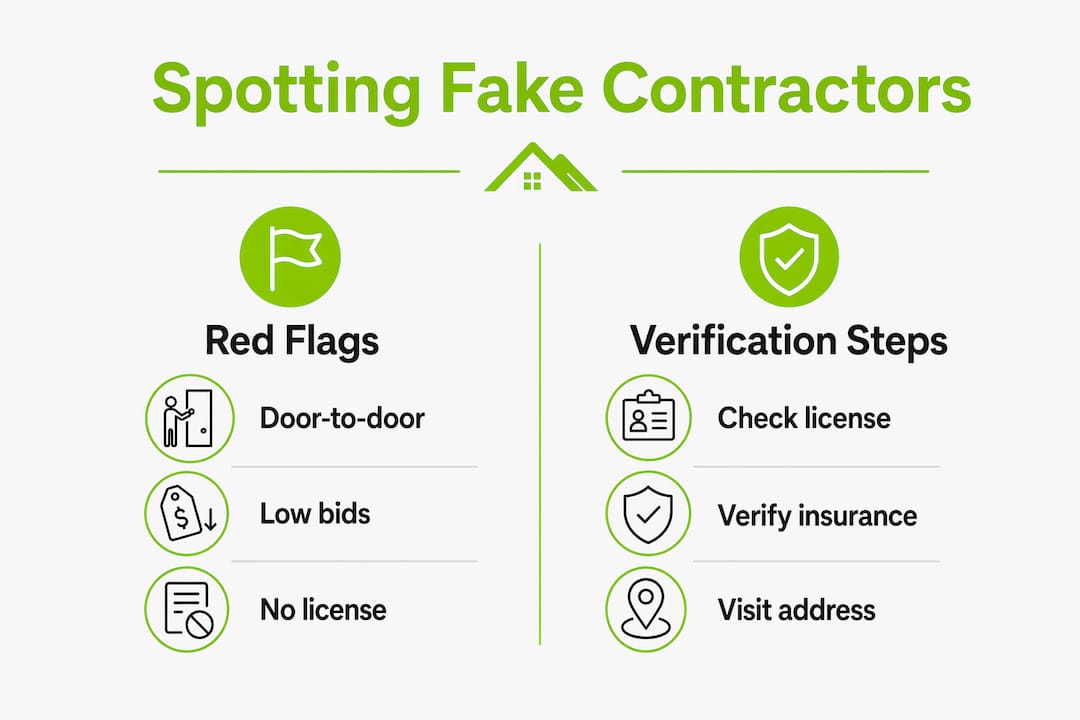
The single most reliable warning sign is unsolicited door-to-door contact. 94.8% of roofing quotes are initiated digitally by homeowners. That means a contractor who shows up at your door uninvited, especially after a storm, is operating outside the norm for legitimate businesses.
Suspicious payment demands are the second major signal. Acceptable roofing deposits fall between 10% and 30% of the total project cost. Any contractor demanding 50% or more upfront, or asking for full payment before work begins, is a high-risk situation. Cash-only payment demands are equally dangerous because they eliminate your paper trail and any ability to dispute the charge later.
Watch for these additional red flags before hiring anyone:
- Bids with no itemized breakdown. Vague estimates are not contracts. Non-itemized estimates open the door to mid-project cost inflation.
- Pressure to sign immediately. Scammers create artificial urgency. Legitimate contractors give you time to review.
- “Leftover materials” offers. This is a classic pressure tactic used by storm chasers to rush homeowners into bad decisions.
- No written contract or warranty. Any contractor who refuses to put terms in writing is not a contractor you want on your roof.
- No local office or physical address. Transient operators often have no verifiable location in your area.
Pro Tip: Search the contractor’s business name on Google Maps and switch to satellite view. A legitimate local company has a real office. A vacant lot or residential address is a serious warning sign.
How can you verify roofing contractor credentials safely?
Verifying credentials is the most direct way to find honest roofing contractors and avoid fraud. Florida requires roofing contractors to hold a state license. You can confirm any contractor’s license number through the Florida Department of Business and Professional Regulation (DBPR) website at myfloridalicense.com. This search takes under two minutes and tells you whether the license is active, expired, or has disciplinary history.
Insurance verification requires one extra step most homeowners skip. Contractors often show forged or expired certificates, so simply seeing a certificate is not enough. Call the insurer listed on the certificate directly and ask them to confirm the policy is active and covers roofing work in Florida. That phone call takes five minutes and eliminates one of the most common fraud methods.
Physical presence matters too. A verified physical address separates local contractors from storm chasers who set up temporary operations after a hurricane and disappear before warranty issues arise. Use Google Maps satellite view to confirm the address is a real commercial location.
| Verification step | Tool to use | What to look for |
|---|---|---|
| License check | Florida DBPR (myfloridalicense.com) | Active status, no disciplinary actions |
| Insurance confirmation | Call the listed insurer directly | Active general liability and workers’ comp |
| Physical address | Google Maps satellite view | Real commercial office, not a home or vacant lot |
| Online reviews | Google, Angi, BBB | Consistent ratings over time, verified responses |
| References | Call past customers directly | Recent projects, similar scope, satisfied outcomes |
Online reviews deserve critical reading, not just a star count. Look for patterns in complaints, check whether the business responds professionally, and verify the BBB rating at bbb.org. A BBB Accredited contractor with an A+ rating has passed third-party scrutiny that most scammers cannot fake.
Pro Tip: Ask for references from projects completed in the last 12 months. Older references tell you less about current quality and crew. Call at least two and ask specifically whether the final cost matched the written estimate.
What questions should you ask roofing contractors before hiring?
Targeted questions expose dishonest contractors faster than any checklist. Start with the license number. Ask the contractor to give it to you verbally, then verify it yourself on the DBPR site. A legitimate contractor answers without hesitation. Evasion or vague responses are immediate disqualifiers.
Ask these questions in order during your first conversation:
- What is your Florida contractor license number? Verify it independently at myfloridalicense.com.
- Who pulls the permits for this job? Legitimate contractors pull their own permits. If a contractor asks you to pull the permit, they may be unlicensed.
- Can I see your certificate of insurance? Then call the insurer to confirm it is active.
- Will you provide a written, itemized contract? The contract should name specific materials, brands, quantities, and installation methods. Itemized contracts prevent material substitution scams where cheaper products replace what you paid for.
- What is the payment schedule? Deposits above 30% are a red flag. Final payment should come after the job passes inspection.
- What warranty do you offer on labor? Manufacturer warranties cover materials. A separate labor warranty shows the contractor stands behind their work.
- Does this contract include an Assignment of Benefits clause? If yes, do not sign it. AOB clauses transfer your insurance claim rights to the contractor, removing your control over the process and opening the door to inflated claims.
Pro Tip: Write your questions down before the contractor arrives. Scammers rely on fast talk and social pressure. A written list keeps you focused and signals to the contractor that you are an informed homeowner.
Understanding the difference between an estimate and a contract protects you at every stage. An estimate is not a contract. Contractors who provide only estimates, not signed line-item contracts, can introduce surprise costs mid-project with no recourse for you.
How do you protect yourself from roofing scams during Florida’s storm season?
Storm season is peak fraud season in Florida. 85.19% of repair requests in major storm zones happen within 7 days of a storm. Scammers know this and flood neighborhoods during that exact window, targeting homeowners who are stressed, uninsured for delays, and eager to act fast.
The most protective step you can take is to wait for your insurance adjuster before signing any contract. Your adjuster’s report establishes the scope and cost of covered damage. Signing a contractor agreement before that report exists puts you at a serious disadvantage, especially if the contractor’s scope differs from what your insurer approves.
Here is how to stay safe in the days after a major storm:
- ✅ Document damage yourself with photos and video before any contractor touches your roof.
- ✅ Contact your insurer first. File your claim and get an adjuster scheduled before meeting with contractors.
- ✅ Get at least three written bids from licensed contractors before choosing one.
- ❌ Do not sign anything at the door. Storm chasers count on urgency and emotional pressure.
- ❌ Do not let any contractor start work before a written contract is signed and your insurer has approved the scope.
Knowing the common types of roof repairs Florida homeowners need most helps you evaluate whether a contractor’s proposed scope matches your actual damage. Scammers often inflate repair lists to increase the insurance payout they control.
| Behavior | Legitimate contractor | Scam contractor |
|---|---|---|
| First contact | You initiate via phone or website | Knocks on your door after a storm |
| Contract | Detailed, itemized, signed before work | Vague estimate or verbal agreement |
| Payment | 10%–30% deposit, balance after inspection | 50%+ upfront or cash only |
| Permits | Contractor pulls all permits | Asks you to pull permits |
| Insurance | Verified active policy | Certificate only, no insurer contact |
| Warranty | Written labor and material warranty | Verbal promise or none |
Reviewing urgent roof issues to address before the next Florida storm before hurricane season starts reduces your vulnerability. Homeowners with pre-existing repair plans and trusted contractors on file are far less likely to panic-hire a scammer after a storm hits.
Key Takeaways
Spotting fake roofing contractors requires verifying licenses, confirming insurance directly with the insurer, demanding itemized contracts, and refusing to sign anything under pressure.
| Point | Details |
|---|---|
| Door-to-door contact is a red flag | Legitimate contractors do not solicit work at your door, especially after storms. |
| Verify insurance by phone | Call the insurer directly to confirm active coverage. Certificates can be forged. |
| Demand an itemized contract | A signed, line-item contract is your only protection against mid-project cost changes. |
| Avoid AOB clauses | Assignment of Benefits strips you of insurance claim control and enables contractor fraud. |
| Wait for your adjuster | Never sign a repair contract before your insurance adjuster confirms the damage scope. |
What I’ve learned watching Florida’s roofing fraud problem up close
Florida’s roofing fraud problem is worse than most homeowners realize. The scammers who show up after a hurricane are not amateurs. They have professional-looking trucks, printed contracts, and rehearsed answers. The fraud is organized, and it targets the exact moment when you are least equipped to think clearly.
The verification steps in this article work. But they only work if you use them before you feel pressure to act. The homeowners who get burned are almost always the ones who skipped one step because the contractor seemed trustworthy or the deal seemed urgent. Seeming trustworthy is the job of a scammer.
The shift toward digital quotes and detailed contracts since 2025 has made it easier to spot operators who resist documentation. If a contractor pushes back on a written contract, a license check, or an insurance call, that resistance tells you everything. Legitimate professionals welcome scrutiny because it confirms their credibility.
My honest advice: build your short list of verified contractors before storm season. Check the cost guide at Hytzroofing to understand realistic pricing in your area. Informed homeowners are the hardest targets for fraud.
— Anthony
Hytzroofing: a verified Florida contractor worth knowing
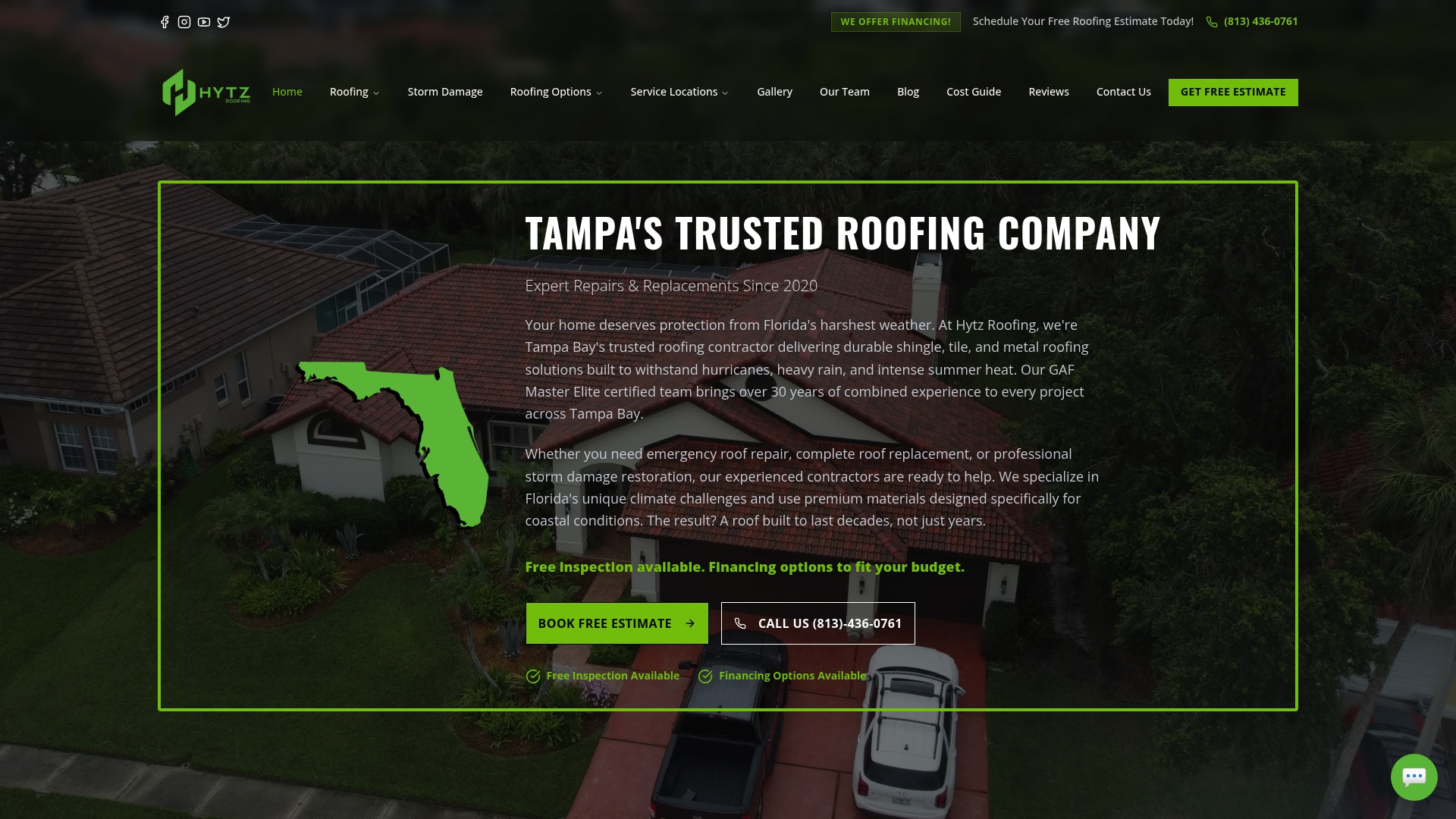
Hytzroofing holds the GAF Master Elite® Contractor designation, earned by fewer than 2% of roofing contractors across North America. That credential requires active licensing, verified insurance, ongoing training, and a documented track record. Hytzroofing also earned the GAF President’s Club Award, the Angi Super Service Award 2025, and the 2024 Brava Roof Tile Excellence Award. Every project comes with a written contract, itemized materials list, and full warranty backing. Florida Contractor License #CCC1332551 is publicly verifiable. If you are in the Tampa or Plant City area, you can request a free digital quote from the Plant City roofing contractor page and get a response from a licensed professional, not a door-to-door salesperson.
FAQ
What makes a roofing contractor fake or fraudulent?
A fake roofing contractor operates without a valid state license, carries no real insurance, and typically solicits work door-to-door after storms. The defining characteristic is collecting payment without delivering quality work or any work at all.
How do I verify a Florida roofing contractor’s license?
Search the contractor’s license number on the Florida DBPR website at myfloridalicense.com. The search shows whether the license is active, what work it covers, and whether any disciplinary actions have been filed.
What is an Assignment of Benefits clause and why is it dangerous?
An AOB clause transfers your insurance claim rights to the contractor. Once signed, the contractor controls your claim, can inflate costs, and you lose the ability to negotiate directly with your insurer.
Is a low roofing bid always a scam?
Not always, but a bid significantly below other estimates warrants close scrutiny. Scammers use low bids to win the job, then inflate costs mid-project or use inferior materials. Always compare itemized bids, not just total prices.
Should I let a contractor start work before my insurance adjuster visits?
No. Wait for your adjuster to document and approve the damage scope before any contractor begins work. Starting repairs before adjuster confirmation can void parts of your claim and give a dishonest contractor leverage over your payout.
Recommended
- Weathering the Storm Expert Tips for Roof Leak Repair in Tampa Fl
- GAF Master Elite Roofer in Tampa, FL | Hytz Roofing
- Introducing Enviroshake to Your Hoa
- Types of Roof Repairs Florida Homeowners Need Most
Related Hytz Roofing Services