Florida Roof Lifespan Explained: 2026 Homeowner Guide
Florida Roof Lifespan depends on roofing material and climate, and this guide summarizes expected service lives and key maintenance steps.
Florida roof lifespan explained is the estimate of how long a roofing material holds up under the state’s specific conditions: intense UV radiation, high humidity, heavy rainfall, and hurricane-force winds. Florida roofs age faster than roofs in most other states. The right material choice, proper installation, and consistent maintenance determine whether your roof lasts 15 years or 100. This guide covers the life expectancy of Florida roofs by material type, how climate accelerates wear, and what insurance rules mean for your replacement timeline.
What is the average roof lifespan in Florida by material?
Florida roofing materials lifespan varies widely depending on what sits on your home. The four most common options are asphalt shingles, architectural shingles, metal, and tile. Each ages differently under Florida conditions.
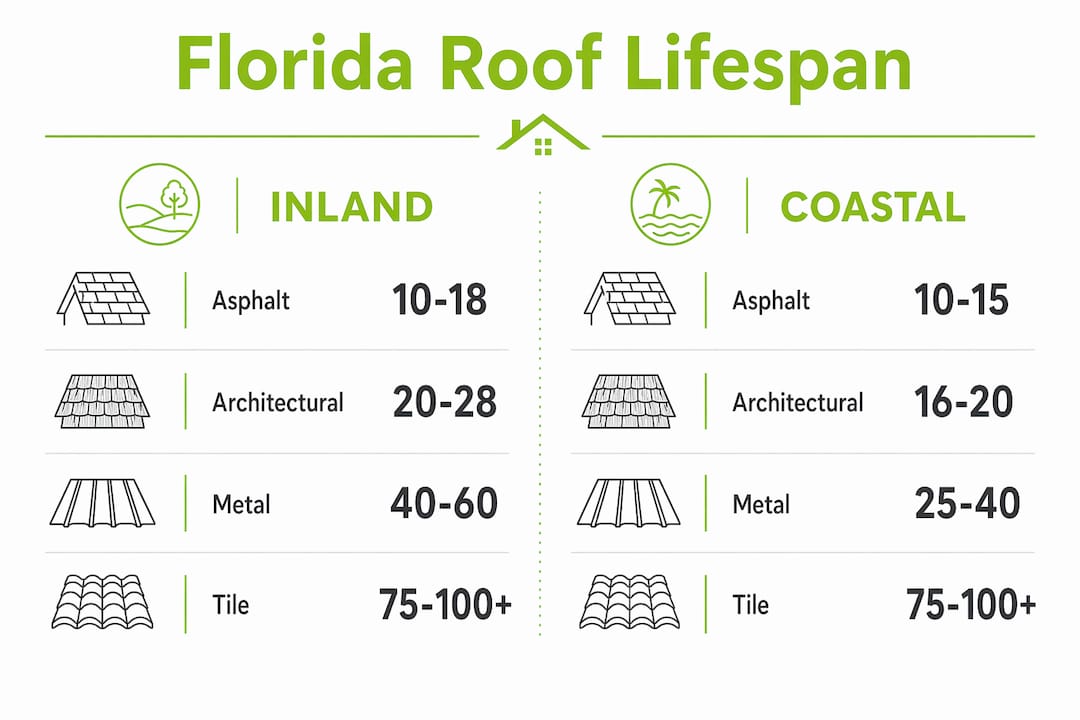
Standard asphalt (3-tab) shingles are the most affordable option and the shortest lived. They typically last 10–18 years in Florida, with coastal homes on the lower end due to salt air exposure.
Architectural shingles perform better. Inland homes see 20–28 years of service life, while coastal locations reduce that to roughly 17–23 years. That is a meaningful gap, and it matters when you are budgeting for your next replacement.
Metal roofs are a strong long-term investment. Standing seam metal lasts 40–60 years inland. Near the coast, salt air cuts that figure to 30–50 years unless the roof carries a Kynar 500 finish, which resists corrosion far better than standard coatings. If you want to explore alternatives to asphalt shingles, metal is consistently the top performer for longevity.
Clay and concrete tiles carry the longest lifespan of any common Florida roofing material. Clay tiles last 75–100+ years, and concrete tiles exceed 50 years. The catch is the underlayment beneath them. That layer typically fails after 25–30 years, requiring a costly “lift and relay” process where tiles are removed, the underlayment is replaced, and tiles are reset. The tiles survive. The system underneath them does not.
| Material | Inland lifespan | Coastal lifespan |
|---|---|---|
| 3-tab asphalt shingles | 10–18 years | 10–15 years |
| Architectural shingles | 20–28 years | 17–23 years |
| Standing seam metal | 40–60 years | 30–50 years |
| Concrete tile | 50+ years | 40–50 years |
| Clay tile | 75–100+ years | 60–80 years |
How does Florida’s climate shorten roof life?
Florida’s climate shortens roof lifespans by roughly 30–40% compared to temperate zones. That is not a minor adjustment. A roof rated for 30 years in Ohio may realistically deliver 18–21 years in Tampa or Miami.
Four climate factors drive that reduction. First, UV radiation in Florida is among the most intense in North America. It accelerates granule loss on asphalt shingles and softens the asphalt mat beneath, making the roof brittle and prone to cracking years ahead of schedule. Second, Florida receives up to 60 inches of annual rainfall. That volume stresses drainage systems, promotes moisture retention under shingles, and creates conditions where mold and algae thrive.
Third, humidity compounds the moisture problem. High ambient humidity keeps roofing materials damp longer after rain, which accelerates mold growth and weakens adhesive bonds between layers. Fourth, hurricane-force winds stress the entire roofing system. Even a storm that does not cause visible damage can lift shingle edges, break seals, and allow water infiltration that degrades the roof from the inside out.
Coastal homes face an additional threat: salt air. Salt accelerates corrosion on metal components and reduces the effective life of untreated metal roofs by a significant margin. Applying a high-performance coating like Kynar 500 is the most effective defense against salt-driven corrosion.
Pro Tip: Choose impact-rated shingles with a Class 4 hail rating and a high wind resistance designation when replacing a Florida roof. These products are tested to stricter standards and hold up better under the storm conditions Florida homeowners face regularly.
How do insurance rules affect your roof replacement timeline?
Insurance policy rules in Florida often determine when you replace your roof more than the roof’s physical condition does. Insurers treat architectural shingle roofs aged 15–18 years as “end of useful life,” requiring replacement to maintain coverage. That threshold can arrive years before the roof shows any visible signs of failure.
This creates a real financial pressure point for homeowners. Your roof may look fine at 16 years old, but your insurer may refuse to renew your policy or require a full inspection with a replacement recommendation before they will continue coverage.
A few key points every Florida homeowner should know:
- Manufacturer warranties do not reflect Florida reality. Warranties are tested under ASTM lab conditions that do not account for Florida’s UV intensity, hurricane stress, or humidity. A 30-year warranty does not mean 30 years of Florida service life.
- Florida’s 15-Year Roof Rule requires an inspection for roofs 15 years or older before insurers must renew coverage. It does not automatically require replacement, but inspection results often trigger that outcome.
- Insurance-driven timelines override physical condition. Replacement schedules often reflect insurer thresholds rather than actual material failure. Plan your budget around the 15-year mark, not the warranty date.
- Tile roofs get more flexibility. Insurers generally allow longer coverage periods for tile roofs because of their documented durability, though underlayment condition still matters during inspections.
Pro Tip: Schedule a professional roof inspection at year 12 or 13 for asphalt shingle roofs. Getting ahead of the insurance timeline gives you time to plan financially and choose a contractor without pressure.
How to extend your Florida roof’s lifespan with maintenance
A well-maintained roof in Florida consistently outlasts a neglected one of the same material. Proper installation with high wind resistance fasteners, waterproofing, and ventilation is the foundation. Maintenance keeps that foundation intact over time.
Homeowners should treat their roof as a system, not just a surface. Roofing systems that integrate underlayment, fastening, and ventilation consistently outperform roofs where only the top layer receives attention. Here is a practical maintenance sequence:
- Inspect twice a year. Schedule inspections in spring before hurricane season and in fall after it ends. Focus on underlayment condition for tile roofs, shingle edge sealing for asphalt, and fastener integrity for metal panels.
- Repair storm damage immediately. Even minor wind damage creates entry points for water. Delayed roof leak repairs allow moisture to penetrate the deck and accelerate structural deterioration far beyond the original damage.
- Clean the roof surface regularly. Algae, mold, and salt buildup are not cosmetic problems. They trap moisture, degrade granules, and corrode metal components. A professional soft-wash cleaning once a year removes these threats without damaging shingles.
- Check and clear drainage systems. Gutters and downspouts clogged with debris force water to back up under shingle edges. That standing water is one of the fastest ways to shorten a Florida roof’s service life.
- Verify ventilation is working. Poor attic ventilation traps heat and moisture, raising deck temperatures above 90°F and accelerating asphalt degradation from below. Proper ridge and soffit ventilation keeps deck temps manageable.
Pro Tip: Work with a Florida-licensed roofing contractor who knows local building codes and wind load requirements. A contractor familiar with common Florida roof repairs will catch problems that out-of-state crews routinely miss.
Key takeaways
Florida roofs last 15–100+ years depending on material type, but Florida’s climate reduces every material’s lifespan by 30–40% compared to national averages, making material choice, installation quality, and maintenance the three factors that matter most.
| Point | Details |
|---|---|
| Material determines baseline lifespan | Asphalt shingles last 10–28 years; metal lasts 40–60 years; tile lasts 50–100+ years in Florida. |
| Climate cuts lifespan by 30–40% | UV, humidity, rainfall, and hurricanes accelerate wear faster than most manufacturer warranties reflect. |
| Underlayment is the tile roof bottleneck | Clay and concrete tiles outlast their underlayment; expect a costly lift and relay at 25–30 years. |
| Insurance rules drive replacement timing | Insurers treat shingle roofs as end of life at 15–18 years, regardless of visible condition. |
| Maintenance extends service life | Biannual inspections, prompt repairs, and proper ventilation consistently add years to any Florida roof. |
What I’ve learned after years of Florida roofing
The biggest misconception I see from Florida homeowners is treating the roof as a single product with a single lifespan. It is not. A tile roof is really three systems: the tiles, the underlayment, and the fastening. Each ages at a different rate. When homeowners focus only on the tiles, they are blindsided by a $15,000 lift and relay bill at year 27 because nobody told them the underlayment was the weak link.
The second thing I see constantly is homeowners anchoring to manufacturer warranty dates. A 30-year architectural shingle warranty sounds reassuring. What it does not tell you is that the warranty was tested in a lab under conditions that do not exist in Florida. The real service life in a coastal Florida zip code is closer to 17–20 years. Plan for that number, not the one printed on the packaging.
Insurance timelines are the third factor that catches people off guard. I have spoken with homeowners who were shocked to learn their insurer would not renew coverage on a roof that looked perfectly fine. The roof was 16 years old. That is the reality of the Florida insurance market right now. Getting ahead of that timeline with a proactive inspection at year 12 or 13 is the single best financial move a Florida homeowner can make.
Quality installation is not optional in this state. A roof installed with the right fastening pattern, proper underlayment, and adequate ventilation will outperform a cheaper installation of the same material by years. That gap is where Hytzroofing earns its reputation.
— Anthony
Hytzroofing: Florida roofing expertise you can count on
Florida homeowners need a roofing partner who understands the state’s climate, codes, and insurance requirements. Hytzroofing holds the GAF Master Elite® Contractor designation, earned by fewer than 2% of roofing contractors in North America. That credential reflects rigorous standards for licensing, installation quality, and ongoing training.
Whether you need an asphalt shingle replacement, a standing seam metal upgrade, or a tile roof inspection before your insurer requires one, Hytzroofing brings the credentials and local knowledge to do it right. Hytzroofing also holds GAF Certified™ Commercial Contractor status for property managers and commercial clients. Contact Hytzroofing today for a professional roof inspection and a clear plan for your home’s next chapter.
FAQ
How long does a roof last in Florida on average?
The average roof lifespan in Florida ranges from 15–28 years for asphalt shingles, 40–60 years for metal, and 50–100+ years for tile. Florida’s climate reduces all material lifespans by roughly 30–40% compared to national averages.
What roofing material lasts longest in Florida?
Clay tile lasts the longest, with a lifespan of 75–100+ years on the tiles themselves. The underlayment beneath tile roofs requires replacement after 25–30 years, so total system maintenance costs are higher than the tile lifespan alone suggests.
When do Florida insurance companies require roof replacement?
Most Florida insurers treat architectural shingle roofs as end of life at 15–18 years and may require replacement to maintain coverage. This threshold is based on insurer policy, not necessarily visible roof damage or structural failure.
Does coastal salt air really shorten a metal roof’s life?
Yes. Salt air accelerates corrosion on untreated metal roofs and can reduce service life by years compared to inland installations. Applying a Kynar 500 finish is the most effective way to protect a coastal metal roof from salt-driven deterioration.
How often should Florida homeowners inspect their roofs?
Florida homeowners should schedule professional inspections twice a year: once in spring before hurricane season and once in fall after it ends. Regular maintenance catches early damage before it becomes a full replacement.
Recommended
- The Ultimate Cost of Ignoring a Leaky Roof What Homeowners Need to Know
- GAF Master Elite Roofer in Tampa, FL | Hytz Roofing
- Its Not Just a Roof
- Hurricane Resistance
Ready to Work With a Trusted Tampa Roofer?
Hytz Roofing is a GAF Master Elite certified contractor serving Tampa Bay. Explore our services: