Commercial Roofing Maintenance Checklist for Property Managers
Commercial Roofing Maintenance ensures routine inspections and preventive tasks catch small problems before they become major issues.
Last updated: August 8, 2026
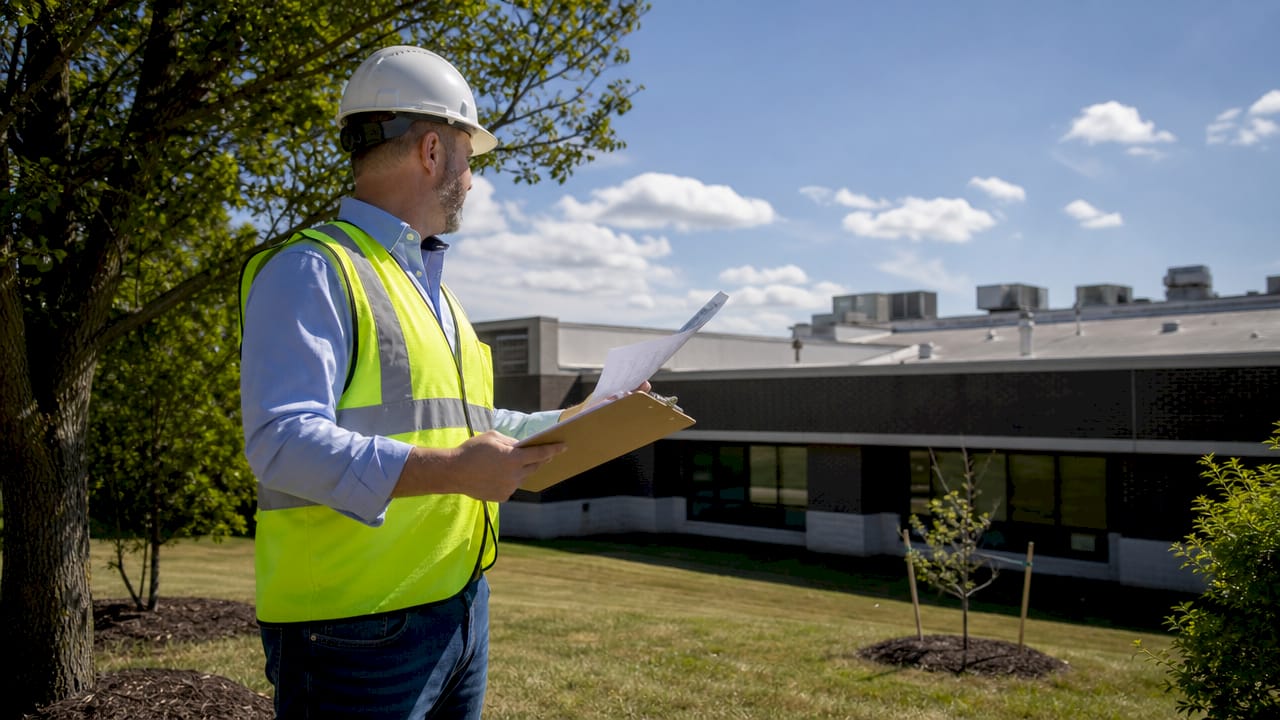
A commercial roofing maintenance checklist is a structured, zone-based inspection program that ensures every critical roof component is assessed, documented, and maintained on a regular schedule to prevent costly failures. 81% of roof failures at insured commercial properties occur on roofs with no documented inspection history in the previous 24 months. That single statistic explains why property managers and business owners who skip formal maintenance programs face the steepest repair bills. Commercial roofing claims average between $22,000 and $68,000 before factoring in business interruption or interior damage costs. A consistent checklist is not optional. It is the foundation of responsible property management.
Property managers who need help turning this checklist into a documented program can explore Hytz Roofing's commercial roofing maintenance support for Tampa Bay properties.
1. What does a commercial roofing maintenance checklist cover?
A complete commercial roof inspection checklist addresses six core zones: the membrane surface, flashings and edges, drainage systems, penetrations and curbs, rooftop equipment, and perimeter structures such as parapet walls and coping. Each zone has specific failure points that require a trained eye and a systematic approach.
The membrane surface is the first place to look. Check for blisters, cracks, splits, and areas where the membrane has lifted or separated. On flat and low-slope systems, ponding water that remains more than 48 hours after rain signals a drainage or structural problem that needs immediate attention.
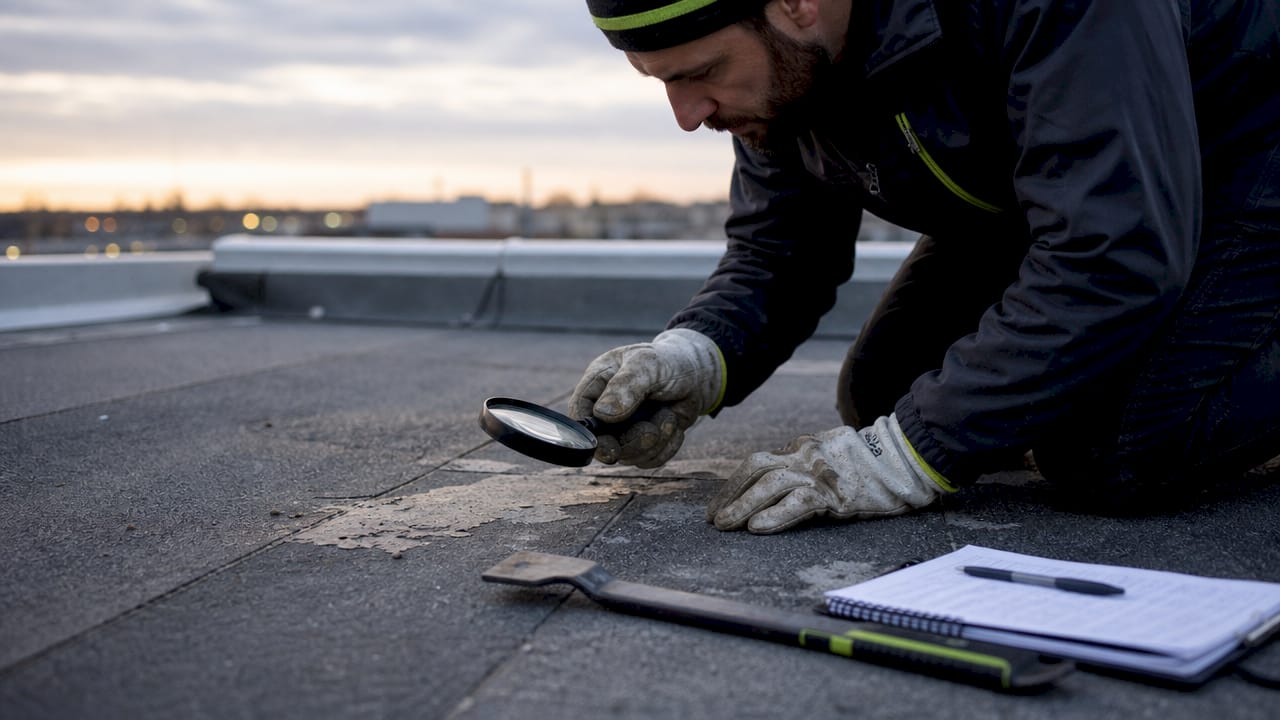
Flashings and edges are the second most common failure point. Inspect metal flashings at every transition, including where the roof meets walls, curbs, and equipment bases. Look for corrosion, loose fasteners, and failed sealant. A flashing failure that goes unaddressed for one season can allow water to travel several feet before it shows up as an interior leak.
Pro Tip: Use a condition rating system with three categories: Good, Monitor, and Action Required. Assign a rating to each zone during every inspection. This creates a clear, defensible record and makes it easy to prioritize repairs at the next budget cycle.
Drainage systems deserve their own checklist line. Clear all drains, scuppers, and gutters of debris before each inspection. Standing water is the leading cause of premature membrane failure on flat roofs. Penetrations and curbs, including HVAC units, pipes, and skylights, need sealant checks at every visit. Rooftop equipment should be checked for vibration damage to the surrounding membrane. Parapet walls and coping caps should be inspected for cracks, open joints, and displaced sections.
| Zone | Common Defects | Rating Trigger |
|---|---|---|
| Membrane surface | Blisters, cracks, ponding water | Ponding over 48 hours = Action Required |
| Flashings and edges | Corrosion, loose fasteners, failed sealant | Any open joint = Action Required |
| Drainage systems | Debris blockage, slow drainage | Blocked drain = Action Required |
| Penetrations and curbs | Cracked sealant, open gaps | Any gap = Action Required |
| Rooftop equipment | Vibration damage, displaced pads | Membrane tears = Action Required |
| Parapet walls and coping | Cracks, open joints, displaced caps | Open joint = Monitor or Action Required |
Photograph every defect with a scale reference, such as a ruler or coin, placed next to the damage. Photos without scale references are frequently rejected during warranty and insurance claim reviews.
2. How often should you inspect a commercial roof?
Industry best practice requires at least two formal inspections per year, typically in spring and fall. Spring inspections catch damage from winter freeze-thaw cycles and heavy rain. Fall inspections prepare the roof for cold weather and identify any summer heat damage.
Quarterly inspections are the standard for roofs older than 15 years, roofs carrying heavy rooftop equipment loads, or buildings in high-wind or coastal exposure zones. Florida properties, in particular, face year-round UV degradation and a hurricane season that runs from june through november, making quarterly checks a practical minimum for many commercial buildings.
Post-storm inspections are mandatory after any event involving high winds, hail, or heavy snow load. Do not wait for visible interior leaks to schedule a post-storm check. Membrane punctures and flashing displacement from storm events often allow water infiltration for weeks before a leak appears inside.
- Spring inspection: Check for winter damage, clear drains, renew sealant where needed.
- Fall inspection: Assess summer UV wear, clear debris, inspect flashings before cold weather.
- Quarterly inspection: Required for older roofs, heavy equipment loads, or high-risk exposures.
- Post-storm inspection: Mandatory after high winds, hail, or heavy snow. Complete within 24–48 hours.
- Ongoing maintenance tasks: Monthly drain clearing, sealant spot checks, and debris removal between formal inspections.
Pro Tip: Schedule your spring inspection for late march or early april, before Florida’s rainy season begins. Catching drainage issues before heavy summer rains prevents the most common flat roof failures.
A maintenance program is an ongoing effort with scheduled inspections, drain clearing, sealant renewal, and documentation. An inspection alone is a snapshot. A maintenance program extends roof life. Missing scheduled inspections can also result in insurance claim denials, since many commercial policies require documented maintenance history to validate storm damage claims.
3. Repair vs. replace: how to decide using checklist criteria
The repair versus replacement decision is one of the most consequential calls a property manager makes. The clearest industry threshold is the 25% cost rule: if repair costs exceed 25% of the full replacement cost, or the roof is past 75% of its expected service life, replacement is the more cost-effective choice.
Repair costs typically range from $350 to $8,000. Full replacements range from $12,000 to $35,000 or more depending on the system type and building size. A property manager facing a $9,000 repair estimate on a 20-year-old roof with a 25-year expected lifespan should run the 25% calculation before approving the repair. The cost guide at Hytzroofing provides current estimates for both repair and replacement scenarios in Florida.
Use these criteria when building your roof replacement vs. repair checklist:
- Roof age: Is the roof past 75% of its manufacturer-rated service life?
- Damage extent: Does damage cover more than 25% of the total roof area?
- Repair history: Has the same area been repaired more than twice in three years?
- Repair cost ratio: Does the repair estimate exceed 25% of replacement cost?
- Warranty status: Will the proposed repair void the existing manufacturer warranty?
Repeated repairs to the same area signal that the underlying system has failed, not just the surface. Approving a third repair on the same flashing section is rarely the right financial decision. Repairs that exceed the 25% threshold can also void GAF and other manufacturer warranty coverage, leaving the property fully exposed on future claims.
Pro Tip: Get a written scope of work from your contractor before approving any repair over $2,000. A written scope protects you if the repair fails and creates documentation for your maintenance file.
4. How to document commercial roof inspections for insurance and warranty compliance
Most property managers overlook maintaining a thorough documentation trail until warranty claims are denied. Every inspection log must include the inspector’s name, date, weather conditions at the time of inspection, and a condition rating for each roof zone. Photos with scale references are required, not optional, to satisfy most warranty conditions.
A defensible documentation record includes:
- Inspector name and credentials
- Inspection date and weather conditions
- Condition rating for each of the six roof zones
- Photographs with scale references for every defect
- Description of any maintenance tasks completed during the visit
- List of recommended repairs with priority ratings
Digital tools such as property management software with photo upload capability make it easier to maintain a consistent record. Some contractors provide inspection reports in PDF format with embedded photos, which are easier to submit to insurers and warranty administrators than handwritten logs.
“A comprehensive inspection logging system including weather, photos, inspector identity, and measurement data builds a defensible record for warranty and insurance needs.” — Commercial Roof Inspection Checklist: Maintenance & PM Guide
Property managers have a legal duty to mitigate further damage after storms, including emergency measures such as professional tarping within 24 hours. Failing to act promptly after a storm event can invalidate an insurance claim entirely. Your storm roof damage documentation checklist should include timestamped photos taken immediately after the storm, a written description of visible damage, and a record of any emergency repairs or tarping completed. For Florida-specific guidance on post-storm response, the roof leak repair guide from Hytzroofing covers the legal and contractual obligations property managers face after storm events.
Pro Tip: If you notice a water bulge forming in a ceiling after a storm, controlled drainage through careful piercing is safer than waiting for an uncontrolled collapse. Document the action with photos and timestamps before and after.
5. Using infrared scans and advanced tools in your inspection program
Infrared scans are the industry standard for detecting subsurface wet insulation that is invisible during routine visual walk-throughs. A membrane can appear intact on the surface while harboring significant moisture damage in the insulation layer below. That hidden moisture accelerates membrane degradation and creates mold risk inside the building.
Infrared thermal scanning works by detecting temperature differences between wet and dry insulation. Wet insulation retains heat longer after sunset, creating a visible thermal signature on the scan. The technology is critical for pre-purchase assessments, refinancing evaluations, and any situation where the full condition of the roof system needs to be verified.
Schedule an infrared scan every three to five years as part of your flat roof maintenance schedule for commercial properties. Also schedule one immediately after any significant storm event or if interior leaks appear without an obvious surface cause. The scan results should be added to your documentation file alongside your standard inspection logs.
Commercial roof failures are the second most expensive building envelope failure category behind HVAC systems. That ranking reflects how quickly undetected moisture damage can escalate. An infrared scan that costs a few hundred dollars can prevent a six-figure replacement triggered by insulation failure that a visual inspection would never catch.
Key takeaways
A documented, zone-based commercial roofing maintenance program performed at least twice yearly is the single most effective way to prevent costly roof failures and protect warranty and insurance coverage.
| Point | Details |
|---|---|
| Inspect twice yearly at minimum | Schedule formal inspections each spring and fall, with quarterly checks for older or high-risk roofs. |
| Cover all six roof zones | Inspect membrane, flashings, drainage, penetrations, equipment, and parapet walls at every visit. |
| Document every inspection | Log inspector name, date, weather, condition ratings, and photos with scale references to protect warranty and insurance claims. |
| Apply the 25% cost rule | If repair costs exceed 25% of replacement cost, replacement is the more cost-effective choice. |
| Add infrared scans periodically | Schedule thermal scans every three to five years to detect hidden moisture damage that visual inspections miss. |
What I’ve learned about commercial roof maintenance that most checklists miss
The biggest gap I see in commercial roof maintenance programs is not the checklist itself. It is the failure to treat the checklist as a living document tied to a real maintenance budget. Property managers often complete a thorough inspection, assign condition ratings, and then file the report without scheduling the follow-up repairs. The checklist becomes a liability document rather than a maintenance tool.
Post-storm inspections are the second most common failure point. I have seen properties where a storm caused flashing displacement that was not caught for three months because no one scheduled a post-storm walk. By the time the interior leak appeared, the insulation was saturated and the repair cost had tripled.
Infrared scanning is underused in routine maintenance programs. Most property managers only request a scan when they are buying or selling a building. Scheduling a scan every few years as part of your regular flat roof maintenance schedule catches moisture damage years earlier, when remediation is still a repair rather than a replacement.
The most practical advice I can offer is to integrate your checklist into your facility maintenance calendar the same way you schedule HVAC service. Set recurring calendar reminders for spring, fall, and post-storm inspections. Assign a specific person to own each inspection cycle. Checklists that live in a filing cabinet do not protect your roof. Checklists that drive scheduled action do. Review your urgent roof issues list before each storm season to make sure nothing critical has been deferred too long.
— Anthony
Hytzroofing’s commercial inspection and maintenance services
Hytzroofing is a GAF Certified™ Commercial Contractor and GAF Master Elite® Contractor, an honor held by fewer than 2% of roofing contractors in North America. That certification means every commercial inspection, repair, and re-roof project meets GAF’s strict standards for installation quality and documentation.
Property managers and business owners in Florida can schedule a professional roof condition assessment, get a written inspection report with condition ratings and photo documentation, and receive a clear repair versus replacement recommendation backed by manufacturer credentials. Whether you need a routine maintenance inspection, emergency storm response, or a full commercial re-roof project plan, Hytzroofing delivers the expertise and paperwork to protect your property and your warranty. Contact Hytzroofing to schedule your commercial roof assessment today.
FAQ
What is a commercial roofing maintenance checklist?
A commercial roofing maintenance checklist is a structured inspection guide covering all critical roof zones, including membranes, flashings, drains, penetrations, and rooftop equipment, performed on a scheduled basis to prevent failures and maintain warranty coverage.
How often should a commercial roof be inspected?
Industry best practice requires at least two formal inspections per year, in spring and fall, with quarterly inspections for roofs older than 15 years or carrying heavy rooftop equipment loads.
When does a commercial roof need replacement instead of repair?
If repair costs exceed 25% of the full replacement cost, or the roof is past 75% of its expected service life, replacement is the more cost-effective option. Repair costs typically range from $350 to $8,000, while full replacements range from $12,000 to $35,000 or more.
What should storm roof damage documentation include?
Storm roof damage documentation must include timestamped photos of all visible damage, a written description of conditions, the inspector’s name and date, and a record of any emergency measures such as tarping completed within 24 hours of the event.
What is an infrared roof scan and when is it needed?
An infrared scan detects subsurface wet insulation invisible to the naked eye by measuring temperature differences across the roof surface. Schedule one every three to five years as part of your routine maintenance program, or immediately after any significant storm or unexplained interior leak.
Recommended
- How to Find the Best Roofing Contractor in Tampa
- GAF Master Elite Roofer in Tampa, FL | Hytz Roofing
- Introducing Enviroshake to Your Hoa
- Types of Roof Repairs Florida Homeowners Need Most
Related Hytz Roofing Services