Commercial Flat Roofing for Property Owners: 2026 Guide
Commercial Flat Roofing provides a durable, low-slope covering that protects commercial buildings and simplifies maintenance, inspections, and replacement planning.
Commercial flat roofing is defined as a low-slope roofing system engineered with subtle pitches and continuous waterproof membranes to protect commercial buildings from water intrusion. The term “flat” is a misnomer. These roofs are never truly flat. They carry a deliberate slope of ¼ to ½ inch per foot to channel water toward drains and scuppers. Warehouses, retail centers, and office buildings rely on this design because it maximizes usable interior space and supports HVAC equipment on the roof deck. Understanding what commercial flat roofing is, and how to choose the right system, directly affects your building’s long-term maintenance costs and protection.
For a building-specific recommendation across membrane, metal, and restoration systems, see Hytz Roofing's guide to commercial flat-roofing options in Tampa Bay.
What is commercial flat roofing and how does it work?
Commercial flat roofing is a low-slope membrane roofing system used on commercial buildings where a traditional pitched roof would be impractical or cost-prohibitive. The industry term is “low-slope roofing,” and it covers any roof with a pitch below 3:12. The waterproofing layer, called a membrane, is the core of the system. It sits over insulation boards and a structural deck, creating a continuous barrier against rain, UV radiation, and temperature swings.
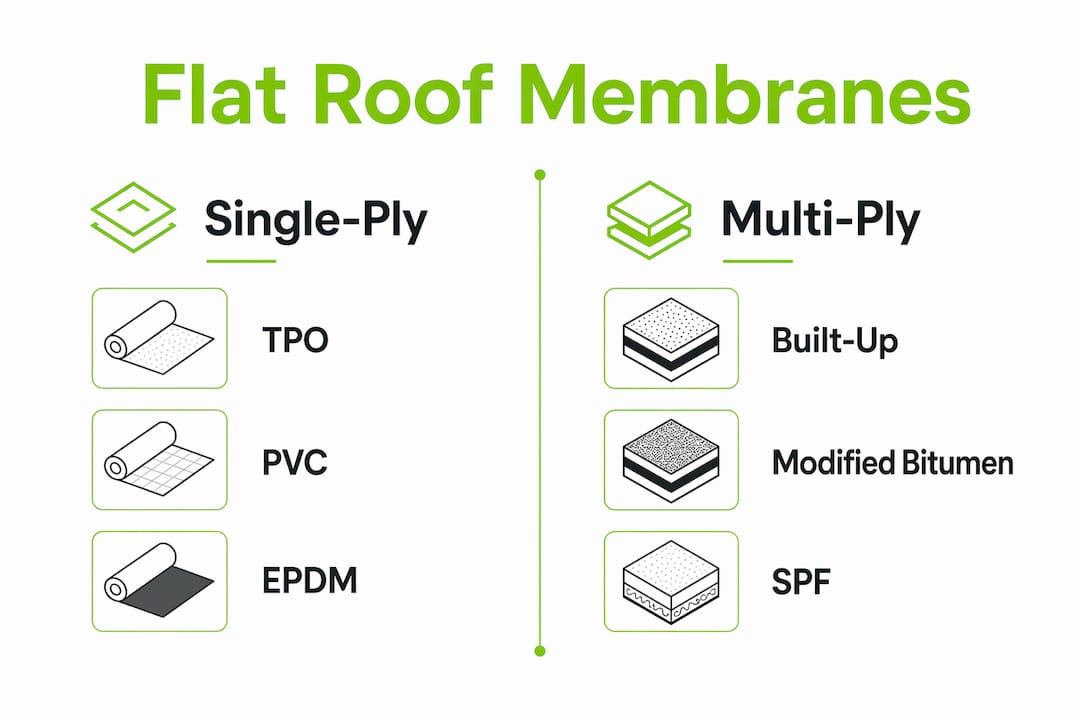
The membrane is what separates a functional flat roof from a failing one. Systems like TPO, PVC, EPDM, and Built-Up Roofing (BUR) each use different materials and installation methods to achieve that waterproof barrier. Choosing the wrong membrane for your building type is the single most common cause of premature roof failure. A restaurant that installs TPO instead of PVC, for example, risks membrane degradation from grease-laden exhaust fumes within a few years.
What are the main types of commercial flat roofing systems?
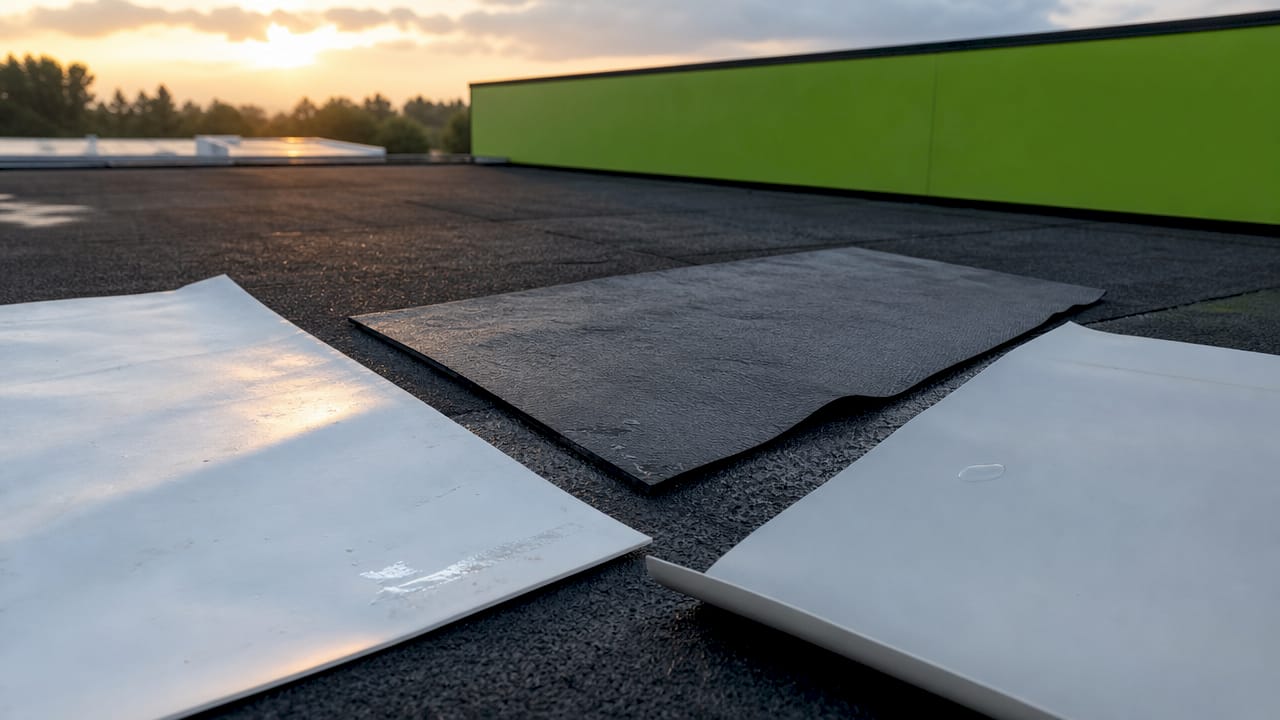
Commercial flat roofing costs typically range from $5 to $18 per square foot depending on the system, with lifespans ranging from 15 years for modified bitumen up to 50+ years for standing seam metal. That wide range reflects real differences in material quality, installation complexity, and long-term performance. Here is how each major system compares.
TPO (Thermoplastic Polyolefin)
TPO is the market share leader for commercial flat roofs. Its white reflective surface reduces cooling loads, and its heat-welded seams outperform adhesive-based connections in long-term leak resistance. TPO costs 20–30% less than PVC, making it the default choice for standard commercial buildings without chemical exposure.
PVC (Polyvinyl Chloride)
PVC roofing is essential for buildings exposed to grease or chemicals. Restaurants, food processing plants, and manufacturing facilities require PVC because its chemical resistance is superior to both TPO and EPDM. The higher upfront cost is justified when the alternative is membrane failure within a few years.
EPDM (Ethylene Propylene Diene Monomer)
EPDM is a synthetic rubber membrane popular in colder climates. It carries the lowest first cost among single-ply options and performs well in freeze-thaw cycles. The tradeoff is its dark surface, which absorbs heat and raises cooling costs in warm climates like Florida.
Built-Up Roofing (BUR) and modified bitumen
BUR systems use alternating layers of felt and hot asphalt to create a thick, monolithic membrane. BUR tolerates ponding water better than any other flat roofing system because those multiple layers act as a self-healing barrier. Modified bitumen is a modernized version of BUR, applied in sheets with torch or cold-adhesive methods, and typically lasts 15–20 years.
Spray Polyurethane Foam (SPF) and metal roofing
Spray polyurethane foam creates a seamless waterproof and insulating layer in a single application, making it ideal for complex roof geometries with multiple penetrations. Standing seam metal roofing sits at the top of the lifespan range at 50+ years, though its higher installation cost suits long-term ownership scenarios best.
| System | Cost per sq ft | Lifespan | Best for |
|---|---|---|---|
| TPO | $5–$9 | 20–30 years | Standard commercial, energy efficiency |
| PVC | $7–$12 | 20–30 years | Restaurants, chemical exposure |
| EPDM | $5–$8 | 20–25 years | Cold climates, budget-focused |
| BUR | $6–$10 | 20–30 years | Ponding-prone roofs, heavy traffic |
| Modified bitumen | $5–$8 | 15–20 years | Smaller buildings, re-roofing |
| SPF | $4–$7 | 20–25 years | Complex geometries, insulation needs |
| Standing seam metal | $10–$18 | 50+ years | Long-term ownership, high durability |
Pro Tip: Heat-welded seams on TPO and PVC membranes outlast adhesive-based seams by a wide margin. Always ask your contractor whether seams are welded or glued before signing a proposal.
How does a flat roof manage water drainage?
Water management is the central engineering challenge of low-slope roofing. A properly designed flat roof uses a subtle pitch of ¼ to ½ inch per foot to direct water toward collection points. That slope is invisible to the eye but critical to performance.
Drainage components work together as a system. Internal drains sit in low points of the roof deck and connect to interior downspouts. Scuppers are openings cut through parapet walls that allow water to exit at the roof edge. Gutters and edge flashings catch overflow and direct it away from the building’s foundation. When any one of these components fails or clogs, water pools on the membrane surface.
Ponding water is the leading cause of premature flat roof failure. Water that sits for more than 48 hours after rain adds structural load, accelerates membrane degradation, and forces its way through any seam or penetration it finds. Clogged drains, poor installation, and settling of the roof deck are the three most common causes of ponding.
- Clear all roof drains and scuppers at least twice per year, in spring and fall.
- Inspect flashing around HVAC units, pipes, and curbs after every major storm.
- Check the roof surface for low spots or depressions that indicate deck settling.
- Document water marks or staining on interior ceilings, which signal active ponding above.
- Hire a licensed contractor to re-slope problem areas using tapered insulation boards.
Pro Tip: During any roof inspection, bring a level and check the slope near drains. A flat reading near a drain means water has nowhere to go. Tapered insulation is a cost-effective fix that avoids a full re-roof.
What factors should guide your system choice?
The right flat roofing system depends on four variables: building use, budget, climate, and ownership timeline. Getting this decision wrong costs far more than the price difference between systems.
Building use is the most critical factor. Material choice depends heavily on building usage, and chemical exposure dictates the necessity of PVC despite its higher cost compared to TPO and EPDM. A warehouse storing dry goods can use TPO without concern. A restaurant with rooftop exhaust equipment cannot.
- Budget vs. lifespan: A $5 per square foot modified bitumen roof on a 20,000-square-foot building costs $100,000 upfront but may need replacement in 15 years. A $10 per square foot metal roof costs $200,000 but lasts 50+ years. The math favors metal for owners who plan to hold the property long-term.
- Climate exposure: Florida’s heat, UV intensity, and hurricane-force winds favor TPO or PVC with heat-welded seams. Cold-climate buildings in the Midwest benefit from EPDM’s flexibility in freeze-thaw cycles.
- Energy efficiency: TPO’s white reflective surface reduces cooling costs in hot climates. SPF adds R-value insulation in a single application, cutting energy bills year-round.
- Future building plans: If you plan to add rooftop solar, HVAC units, or additional stories, choose a system with the structural capacity and membrane durability to support those changes.
Understanding why residential roofing software fails on commercial jobs also highlights why commercial flat roofing decisions require specialized expertise. The variables are simply different from residential pitched roofing.
What are best practices for flat roof maintenance?
Commercial flat roofs typically last 20–30 years depending on materials and maintenance. That range is not fixed. A well-maintained TPO roof can exceed 30 years. A neglected one can fail in 10.
Regular maintenance including drain clearing, membrane inspection, and prompt repairs prevents the most common causes of water damage and extends roof life. The cost of a twice-yearly inspection is a fraction of the cost of water damage remediation inside the building.
- Debris removal: Leaves, dirt, and standing water accelerate membrane wear. Clear the roof surface after every storm.
- Membrane inspection: Look for blistering, cracking, or separation at seams and flashings. These are early signs of failure.
- Seam and flashing repairs: Address small separations immediately. A two-inch seam gap costs $50 to fix. Left alone, it costs thousands in water damage. You can read more about the cost of ignoring roof damage to understand what delayed repairs actually add up to.
- HVAC and penetration checks: Equipment vibration loosens flashings over time. Inspect all curbs and pipe boots annually.
- Professional inspection schedule: Schedule a licensed contractor inspection every 1–2 years, not just when you notice a problem.
Pro Tip: Proactive maintenance costs roughly $0.05–$0.15 per square foot per year. Emergency repairs after a leak event average 10 to 20 times that amount. The math strongly favors a scheduled maintenance program.
A commercial roofing service call checklist can help you understand what a thorough inspection should cover before you hire a contractor.
Key takeaways
Commercial flat roofing requires matching the right membrane system to your building’s use, climate, and ownership timeline to get the best return on your roofing investment.
| Point | Details |
|---|---|
| Flat roofs are not truly flat | A slope of ¼ to ½ inch per foot is required for proper drainage and leak prevention. |
| System choice drives long-term cost | TPO suits most buildings; PVC is mandatory where grease or chemicals are present. |
| Ponding water is the top threat | Clear drains twice yearly and re-slope problem areas with tapered insulation boards. |
| Lifespan varies widely by system | Modified bitumen lasts 15 years; standing seam metal can exceed 50 years with proper care. |
| Maintenance beats emergency repairs | A scheduled inspection program costs a fraction of what reactive repairs cost after a leak. |
What I’ve learned after years of commercial flat roofing work
The biggest mistake I see commercial property owners make is treating a flat roof like a set-and-forget investment. They install a system, ignore it for a decade, and then call us when ceiling tiles are falling in. By that point, the membrane damage is extensive, the insulation is saturated, and what could have been a $2,000 repair turns into a $60,000 re-roof.
The second mistake is choosing a system based on upfront cost alone. I understand the budget pressure. But a property manager who saves $30,000 by choosing modified bitumen over TPO on a 15,000-square-foot building will spend that savings and more on repairs and a replacement roof within 15 years. The total cost of ownership calculation almost always favors a better membrane.
The misconception I push back on hardest is that flat roofs leak by nature. They do not. A properly installed, properly maintained flat roof with heat-welded seams and correct drainage design performs reliably for decades. The leaks I see come from poor installation, wrong system selection, or deferred maintenance. None of those are inherent to the roof type.
My honest advice: invest in a quality membrane, hire a contractor with verifiable commercial certifications, and schedule inspections before problems appear. The roof is the one building component you cannot afford to ignore.
— Anthony
Hytzroofing’s commercial flat roofing services
Choosing the right flat roofing system is a significant decision. Hytzroofing makes it straightforward for commercial property owners across Florida.
Hytzroofing holds GAF Certified™ Commercial Contractor status, meeting GAF’s rigorous installation standards for flat and low-slope roofing systems. As one of fewer than 2% of contractors in North America to hold the GAF Master Elite® designation, Hytzroofing brings manufacturer-backed expertise to every commercial project. Whether you need a full system replacement, a drainage correction, or a scheduled maintenance inspection, the team is ready to evaluate your building and give you a clear, honest recommendation. Reach out today for a commercial roof evaluation.
FAQ
What is the most common commercial flat roofing material?
TPO is the most widely installed material for commercial flat roofs due to its cost efficiency, heat-welded seam reliability, and energy-saving reflective surface.
How long does a commercial flat roof last?
Commercial flat roofs typically last 20–30 years depending on the system and maintenance regimen. Standing seam metal roofs can exceed 50 years with proper upkeep.
Why do commercial buildings use flat roofs instead of pitched roofs?
Flat roofs maximize interior space, reduce construction costs on large footprints, and provide a stable platform for HVAC equipment, solar panels, and other rooftop systems.
How do you prevent ponding water on a flat roof?
Clear drains and scuppers at least twice per year, inspect flashings after storms, and use tapered insulation boards to re-slope areas where water collects.
Is PVC or TPO better for a commercial roof?
TPO is the better choice for most standard commercial buildings. PVC is the required choice for restaurants, food processing facilities, and any building with significant grease or chemical exposure.
Recommended
- The Ultimate Cost of Ignoring a Leaky Roof What Homeowners Need to Know
- Types of Roof Repairs Florida Homeowners Need Most
- How to Find the Best Roofing Contractor in Tampa
- Introducing Enviroshake to Your Hoa
Related Hytz Roofing Services