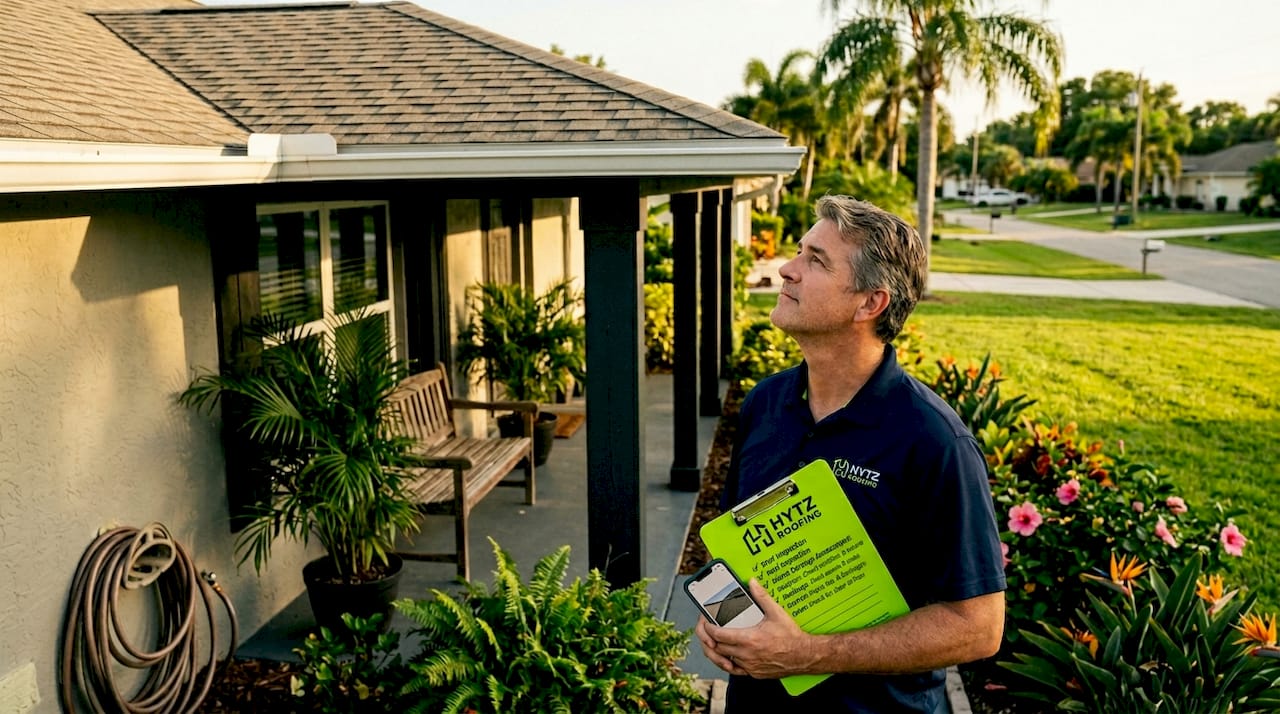
Why Florida Homeowners File Roof Claims: 2026 Guide
Florida Roof Claims refer to insurance claims for roof damage; this guide summarizes common causes, required documentation and insurer interactions homeowners should expect in 2026.
Florida homeowners file roof claims more often than homeowners anywhere else in the country. Yet the system that’s supposed to protect them is harder to navigate than most people expect. Understanding why florida homeowners file roof claims goes well beyond knowing that hurricanes exist. The state’s denial rate sits near 47%, meaning nearly half of all roof claims are denied or closed without payment. If you’ve recently filed a claim or are thinking about it, knowing the real reasons, the real obstacles, and the real steps you should take can make a significant difference in your outcome.
Table of Contents
- Key takeaways
- Why Florida homeowners file roof claims
- How deductibles and policy type affect your payout
- Common claim challenges: denials and documentation
- Understanding Florida’s roof claim deadlines
- Practical steps to protect your claim
- My honest take on Florida roof claims
- Get the right team behind your claim
- FAQ
Key takeaways
| Point | Details |
|---|---|
| Storm damage drives most claims | Hurricanes, hail, and high winds are the leading reasons Florida homeowners file roof damage claims. |
| Deductibles can eliminate payouts | Hurricane deductibles of 2% to 10% of dwelling value often exceed actual damage costs. |
| Denials are common | Nearly half of Florida roof claims are denied, often citing wear and tear or pre-existing damage. |
| Deadlines are strict | Florida law requires claims filed within 1 year of loss and supplemental claims within 18 months. |
| Documentation wins claims | Professional inspections, photos, and expert reports are your strongest tools against denial. |
Why Florida homeowners file roof claims
Florida’s climate is the primary driver. No other state combines hurricane-force winds, intense hailstorms, and year-round severe weather the way Florida does. That combination creates more roof damage, more frequently, than almost anywhere in North America.
Here are the most common reasons for roof claims in Florida:
- Hurricane and tropical storm damage. High-velocity winds tear off shingles, puncture membranes, and bend metal flashing. Even a Category 1 storm can remove enough material to allow water intrusion.
- Hail impact. Hail bruises and cracks asphalt shingles, reducing their ability to shed water. This damage often isn’t visible from the ground but shortens roof life dramatically.
- Wind-driven debris. Tree branches, lawn furniture, and unsecured objects become projectiles. Punctures and cracks from debris are among the most common post-storm findings.
- Falling trees and limbs. A direct hit from a large branch can create structural damage that goes well beyond a surface repair.
- Sudden water intrusion. Flash flooding and driving rain find any existing weak points in a roof system. Water damage that appears inside a home is often the first sign of roof failure.
- Lightning strikes. Less common but destructive. A strike can split sheathing and ignite fires within the attic.
The key phrase in any policy is “sudden and accidental.” Insurance covers damage from unexpected events, not damage that builds up over years. Insurers frequently cite wear and tear to deny claims, so proving your damage happened during a specific storm is your responsibility as a policyholder.
Pro Tip: After any named storm passes your area, take date-stamped photos of your entire roof from every accessible angle. This documents the pre-repair condition and makes it much harder for an insurer to claim the damage was pre-existing.
Learning how to protect your roof before a storm can reduce the severity of damage and strengthen your claim. Hytzroofing has a detailed resource on hurricane season roof protection worth reviewing before the season hits.
How deductibles and policy type affect your payout
This is where most Florida homeowners get blindsided. You file a claim assuming your insurer will cover most of the repair. Then you find out your deductible is larger than the repair itself.
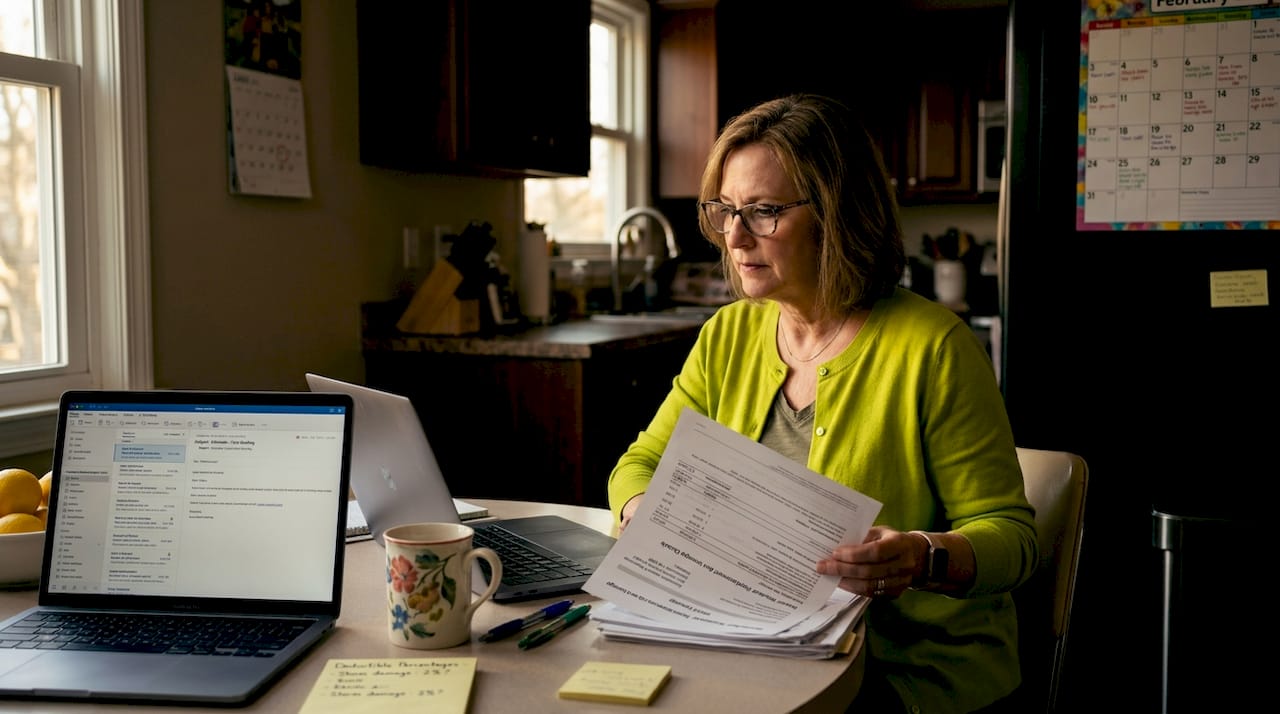
Hurricane deductibles explained
Florida policies separate hurricane damage from other perils. Hurricane deductibles range from 2% to 10% of your insured dwelling value. On a $400,000 home, that’s $8,000 to $40,000 out of pocket before insurance pays a single dollar.
| Policy feature | What it means for you |
|---|---|
| Hurricane deductible (2%–10%) | You pay thousands before insurance kicks in, even for significant roof damage |
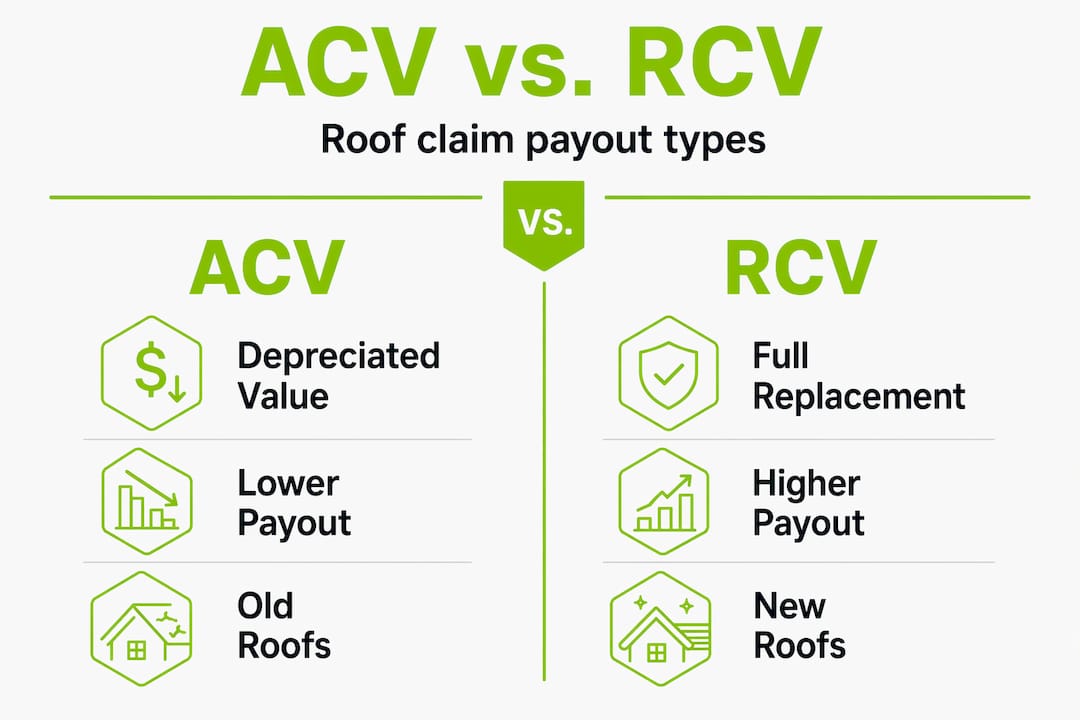
| ACV (Actual Cash Value) | Insurer pays only what your roof is worth today, accounting for depreciation |
| RCV (Replacement Cost Value) | Insurer pays what it costs to replace the roof at current prices |
| Cosmetic damage exclusion | Damage that doesn’t affect function may be excluded, even after a hailstorm |
ACV vs. RCV: why it matters more than you think
If your roof is 15 years old and gets damaged in a storm, an ACV policy pays the depreciated value of a 15-year-old roof. That number can be shockingly low. An RCV policy pays what it actually costs to replace the roof today with comparable materials. The difference can be $10,000 or more on a standard Florida home.
Pro Tip: Review your declarations page right now, before you file a claim. Look for “ACV” or “RCV” under the dwelling coverage section. If you’re on an ACV policy, start getting repair estimates so you know your real exposure before negotiations begin.
The burden of proof always sits with you. Homeowners must prove damage was caused by a sudden, covered event rather than gradual wear. That requires documentation, not just a phone call to your insurer.
Common claim challenges: denials and documentation
A near 47% statewide denial rate is not an accident. Insurers have systems in place to minimize payouts. Knowing their most common tactics helps you prepare.
Here’s how most denials happen and what to do about each one:
- Wear and tear citation. The insurer says your roof was already deteriorating before the storm. Counter this by maintaining a documented pre-loss inspection history. A documented pre-loss baseline is one of the most effective defenses against this denial type.
- Cosmetic damage exclusion. Insurers sometimes use this exclusion to deny hail claims even when the damage affects water resistance. Cosmetic damage exclusions are frequently misapplied to avoid paying for functional repairs. Challenge these with an independent inspection report.
- Pre-existing damage. If your insurer sends an adjuster who spends less than 15 minutes on your roof, be concerned. Insurers often conduct inspections lasting under 15 minutes, which falls short of Florida’s “reasonable investigation” legal standard. Request a re-inspection or hire your own licensed inspector.
- Late filing. Filing after the deadline automatically ends your claim, regardless of damage severity. Acting quickly after a storm protects you legally.
- Insufficient documentation. Vague descriptions and a few blurry photos won’t carry a claim. You need photos, a written inspection report, a repair estimate, and ideally a forensic evaluation if damage is disputed.
Getting a professional storm damage assessment done promptly is the single most effective thing you can do before filing. Hytzroofing offers Tampa storm damage assessments that provide the detailed documentation insurers require.
Understanding Florida’s roof claim deadlines
Florida law is specific about timelines. Missing a deadline isn’t just a technicality. It can permanently bar your claim.
Here’s what the law requires:
- Initial claim filing: Must be filed within 1 year of the date of loss. This is your hard deadline.
- Supplemental claims: If damage is discovered later or additional costs arise, you have 18 months from the date of loss to file a supplemental claim.
- Insurer acknowledgment: Florida Statutes require insurers to acknowledge your claim within 14 days and begin investigation within 10 days of that acknowledgment.
- Insurer decision: Insurers must accept or deny the claim within 90 days of receiving your notice, under most circumstances.
- Hidden damage exception: If damage is not discoverable at the time of loss (such as a slow leak from a storm puncture), document when you discovered it and why it wasn’t visible earlier.
The statutes that govern these timelines are Florida Statutes 627.70131 and 627.70132. If your insurer misses their own deadlines, that is something a public adjuster or attorney can use on your behalf.
Missing these windows means starting over with zero coverage. Acting immediately after a storm, even if you’re not sure you’ll file, protects your rights while you decide.
Practical steps to protect your claim
Taking the right steps before, during, and after a storm separates homeowners who get paid from those who don’t.
- Schedule biannual professional inspections. Roof inspections twice yearly and after major storms are the foundation of a strong claim history. Spring and fall inspections catch deterioration before storms complicate the picture.
- Document everything in writing. Inspection reports, invoices for past repairs, and written communication with your insurer all become evidence if your claim is disputed.
- Report damage to your insurer immediately. Don’t wait weeks to file. Contact your insurer within days of a storm, even if your initial assessment seems minor. Hidden damage shows up later.
- Keep all communications in writing. Follow up phone calls with an email summary of what was discussed. Written records are harder to dispute.
- Hire a public adjuster if your claim is denied or undervalued. Expert support significantly improves the chance of overturning denials. Public adjusters work for you, not the insurance company, and they know how to build a claim that holds up.
- Understand the 25% rule. Florida Building Code mandates that if 25% or more of a roof is damaged within 12 months, the entire roof must be replaced to current code. Full documentation of damage extent can trigger this requirement and shift costs significantly in your favor.
Pro Tip: Create a digital folder for your roof right now. Add your last inspection report, photos of your current roof condition, your insurance policy declarations page, and any repair receipts. When a storm hits, you’ll have everything in one place and ready to go.
Regular maintenance also reduces your claim exposure over time. Hytzroofing’s guide on routine roof maintenance walks through exactly what Florida homeowners should be doing each year.
My honest take on Florida roof claims
What I’ve seen working in Florida roofing is that most homeowners who struggle with claims made the same avoidable mistake. They waited. They assumed their insurer would find and document the damage for them. They didn’t realize that the insurance company and the policyholder have opposite goals in a claim.
In my experience, the homeowners who come out ahead are the ones who treat documentation like a job. They have photos before and after every storm. They have a professional inspection report on file. They know what their policy says before damage ever happens.
I’ve also watched insurers lean hard on wear-and-tear denials for roofs that were clearly storm-damaged. The counter to that isn’t arguing. It’s having a licensed inspector’s forensic report that says otherwise. Expert forensic evaluations are highly valuable in exactly these situations, because they shift the conversation from “your word vs. theirs” to documented evidence.
One thing most homeowners overlook is that Florida’s rising premiums are driven more by claim litigation than by actual hurricane frequency. That tells you how contested the system already is. You don’t go into a contested process unprepared.
Know your policy. Know your deadlines. Get professional help early. Those three things have made the difference every time I’ve seen a claim go the right way.
— Anthony
Get the right team behind your claim
When a storm damages your roof, who you call first makes a real difference. Hytzroofing is a GAF Master Elite® Contractor serving Tampa and surrounding areas, with the credentials, licensing, and hands-on experience to document storm damage in the exact way insurers and building code officials require. Our detailed inspection reports and code-compliant repair estimates give your claim the professional backing it needs from the start.
Whether you’re filing your first claim or pushing back on a denial, we’re here to help you move forward with confidence. Visit our Tampa roofing services page to request an inspection or get a damage estimate today.
FAQ
What is the most common reason Florida homeowners file roof claims?
Storm damage, including hurricanes, high winds, hail, and falling debris, is the most common trigger for Florida roof damage claims. Florida’s year-round severe weather season means roofs face more stress than in almost any other state.
Why do so many Florida roof claims get denied?
The statewide denial rate is nearly 47%, with insurers most often citing wear and tear, pre-existing damage, or cosmetic damage exclusions. Having professional inspection reports and detailed documentation significantly reduces the chance of denial.
How long do you have to file a roof claim in Florida?
Florida law generally requires you to file an initial claim within 1 year of the date of loss and supplemental claims within 18 months. Missing these deadlines can result in permanent loss of coverage for that damage.
What is the difference between ACV and RCV in a roof claim?
ACV (Actual Cash Value) pays the depreciated value of your old roof, while RCV (Replacement Cost Value) pays the full cost to replace it at current prices. On an older roof, the difference can be thousands of dollars.
Should I hire a public adjuster for my Florida roof claim?
If your claim has been denied or you believe the payout is too low, a public adjuster works on your behalf to negotiate with the insurer. Professional support has been shown to improve claim success rates, especially when documentation and forensic reports are included.
Recommended
- Weathering the Storm Expert Tips for Roof Leak Repair in Tampa Fl
- Introducing Enviroshake to Your Hoa
- GAF Master Elite Roofer in Tampa, FL | Hytz Roofing
- 15 Urgent Roof Issues to Fix Before the Next Florida Storm
Related Hytz Roofing Services