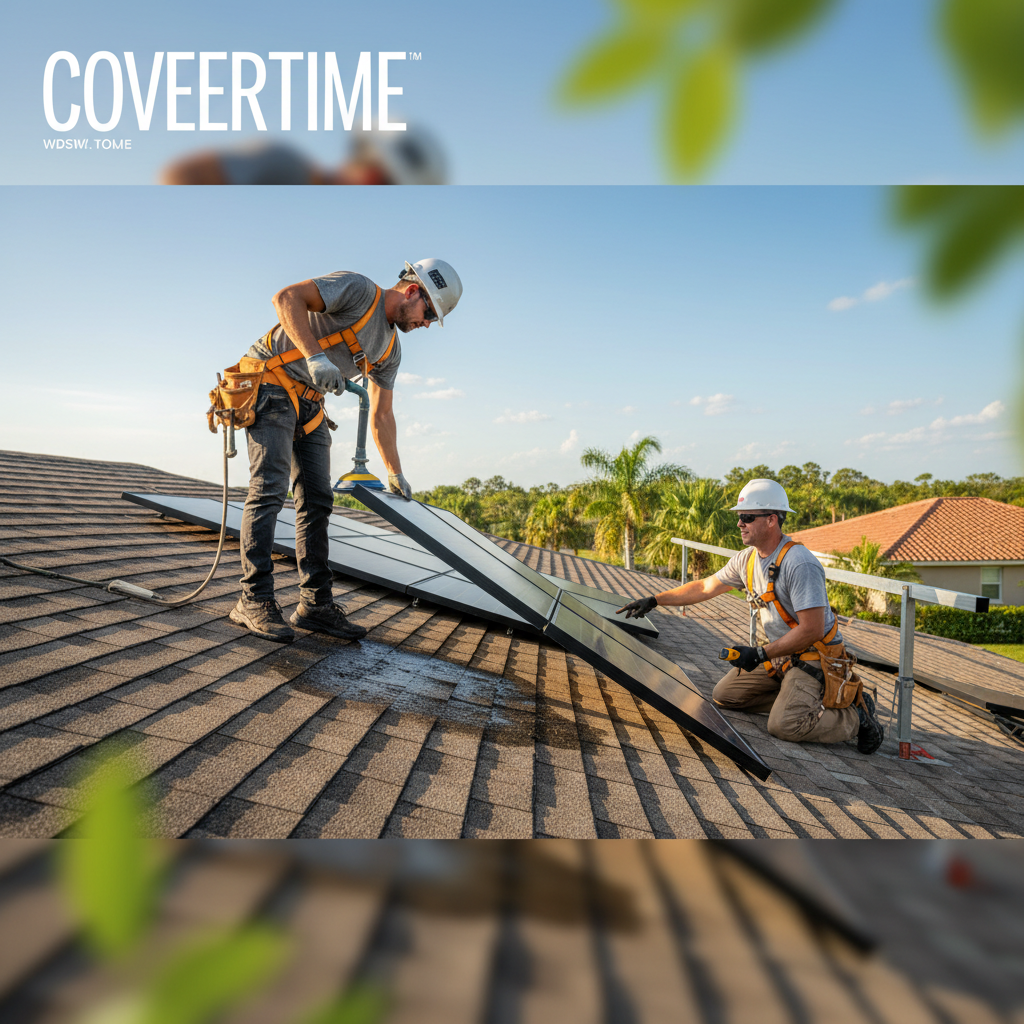
If your 5-year-old roof leaks under solar panels, who pays to remove and reinstall the panels depends on what caused the leak. When water is getting in at a solar mount or roof penetration, the solar installer's workmanship or roof-penetration warranty usually covers both the repair and the panel work, as long as that warranty is still active. When the leak comes from a roofing defect or a shingle problem, the homeowner usually pays for removal and reinstallation, even if a roofing warranty covers the roof repair itself. Sudden storm damage can go through homeowners insurance, minus your deductible.
The panel work is usually the larger bill. EnergySage puts removal and reinstallation at $1,500 to $6,000 for most homes, and more than $7,000 for large systems. So before anyone unbolts a rail, it pays to establish where the water is actually coming in.
Key Takeaways
- The cause of the leak decides who pays. Mount and penetration leaks point to the solar installer. Shingle or flashing defects away from the mounts point to the roofer or the shingle manufacturer.
- Even when GAF (the shingle manufacturer) covers a shingle defect, its Technical Advisory Bulletin TAB-R-131 makes panel removal "the owner's responsibility" and at "the owner's sole expense."
- If you lease the system or buy power under a power purchase agreement (PPA), the solar company owns the panels, and your contract controls who removes them and who pays.
- At year five, most solar installer roof warranties are still running. EnergySage says they typically last about 10 years. Check yours before you pay anyone.
- Many Florida homeowners policies now exclude roof damage from wear, defects or bad workmanship unless a hurricane or named storm caused it, and Florida law gives you one year from the date of loss to report a claim.
Who pays to remove and reinstall solar panels for each type of roof leak?
The table below shows the usual answer for each cause of a leak under a solar array, along with the document that settles it. Your contracts can override the usual answer, so read them before you agree to anything.
| Cause of the leak | Who usually pays for the leak repair | Who usually pays to remove and reinstall the panels | Document that decides it |
|---|---|---|---|
| Water entering at a solar mount, lag bolt, rail attachment or conduit penetration | Solar installer, under its workmanship or roof-penetration warranty | Solar installer, if the warranty is active and the leak is traced to their work | Solar purchase contract or installation warranty |
| Shingles cracked or flashing disturbed by the solar crew during installation | Solar installer | Solar installer | Solar contract, plus photos or inspection notes from before and after the install |
| Roofing installation error unrelated to the solar work (for example, a valley, wall or vent flashing) | Original roofer, under its workmanship warranty, or GAF if a Silver Pledge or Golden Pledge warranty covers workmanship | Usually the homeowner, unless the roofing contract says otherwise | Roofing contract and registered manufacturer warranty |
| Manufacturing defect in the shingles | Shingle manufacturer, under its limited warranty | Homeowner (GAF TAB-R-131 puts removal at the owner's sole expense) | Manufacturer warranty and technical bulletins |
| Sudden storm damage (wind, hurricane, named storm) | Homeowners insurance, minus your deductible | Possibly insurance, as part of the cost to repair; depends on your policy wording | Homeowners policy and any roof endorsement |
| Wear, deferred maintenance or debris buildup under the array | Homeowner | Homeowner | None; most warranties and policies exclude these causes |
Leased and PPA systems add one more layer. Because the solar company owns the equipment, you cannot simply hire anyone to take it down, and the removal terms in your customer agreement apply. EnergySage advises leased and PPA customers to check the contract for exactly who pays.
Why does a 5-year-old roof change the answer?
A roof that is only five years old should not be leaking from age. Architectural asphalt shingles are built to last far longer than that, so a leak at year five usually points to an installation problem, a penetration, storm damage or a debris issue rather than normal wear. That matters because the first three causes have someone else on the hook, and the fourth does not.
Five years also tends to fall inside several protection windows at once:
- Solar installer roof warranty: EnergySage reports installer roof warranties typically last about 10 years, though terms vary by company.
- Roofer workmanship warranty: Coverage length depends on the contractor and on which GAF warranty was registered. GAF's System Plus warranty does not cover workmanship. Silver Pledge covers workmanship for 10 or 15 years depending on the shingle line, and Golden Pledge covers it for 25 or 30 years, non-prorated.
- Florida construction-defect deadlines: Florida Statutes section 95.11(3) gives four years from when a latent defect is discovered (or should have been) to sue, and a seven-year statute of repose that cuts off claims regardless of discovery. Florida shortened the repose period from 10 to 7 years in 2023. If the solar system went in after the roof, its own clock started later.
A leak at year five means you are probably still inside those windows, but not by a wide margin. Acting quickly protects your options. Hytz Roofing is not a law firm; for a contested claim, talk to a Florida construction attorney about which deadline applies to you.
How do you tell whether the solar mounts or the roof caused the leak?
Finding the entry point is the single most important step, because it decides which warranty applies. A roofer can usually narrow it down before any panels come off:
- Attic inspection: Stains, wet decking or rusty fasteners directly under a rail attachment point suggest a mount or lag-bolt leak. A wet area that lines up with a valley, wall, chimney or vent away from the array suggests a roofing issue.
- Exterior inspection around the array: Look at flashing at penetrations that can be reached without lifting panels, conduit entry points, and the shingles at the array edges, where solar crews kneel and walk.
- Timing: A leak that began within a season or two of the solar installation, on a roof that was dry before, is strong evidence for the installer's side of the table.
- Debris: Leaves, pine needles and nests trapped under panels hold water against the shingles. That is usually a maintenance issue, not a warranty one.
Ask for the findings in writing, with photos and the location of each stain mapped to the roof above. That report is what you send to the solar company, the roofer or your insurer.
What do the shingle manufacturer and the solar company actually promise?
The manufacturer and installer documents are more specific than most homeowners expect.
GAF: TAB-R-131, GAF's bulletin on installing solar panels over GAF shingle roofs, says solar panels "will not impact coverage under the GAF's limited warranties." The same bulletin says that if there is ever an issue with the shingles, "no matter the cause," it is "the owner's responsibility to have the solar panels removed at the owner's sole expense" so GAF can inspect, repair or replace the affected shingles.
GAF Golden Pledge solar mount addendum: GAF publishes a Golden Pledge Limited Warranty addendum for solar mount systems (form RESWT206). When it applies, it extends Golden Pledge coverage to the installation of a specified mount brand and model, and covers misapplication of the mount system and its flashing for as long as the warranty's covered-flashing coverage lasts. It still excludes the panels, electrical connectors and every solar component other than the mount system. Few homeowners know this addendum exists, so if your roof has a Golden Pledge warranty, check whether your mounts were added to it.
Tesla (one large installer, as an example): Tesla charges for removal and reinstallation as two separate jobs, each with its own Service Work Agreement and invoice, and refers customers to their energy contract for pricing. Tesla warns that hiring a third-party contractor "may" void the system warranty, and that Tesla is not responsible for a third party's workmanship. After a reroof, Tesla requires the new roof to sit for 30 days before reinstallation, and says permitting can take up to two months on average. Lease and PPA payments continue during the process.
Other installers write their own terms, so the same questions apply to any contract: Is there a roof-penetration or watertight warranty, and for how long? Does it include removal and reinstallation when the installer's work caused the leak? Who is allowed to touch the system?
Does Florida homeowners insurance pay for solar panel removal after a leak?
Florida homeowners insurance may pay when a covered peril, such as a hurricane or windstorm, damaged the roof. In that case, removing and reinstalling the panels can be part of the cost to repair the covered damage. Whether your insurer accepts that depends on your policy wording, so ask the adjuster directly and get the answer in writing.
Insurance is much less likely to help with a leak caused by age, defects or workmanship. Several Florida insurers have adopted roof endorsements approved by the Florida Office of Insurance Regulation that exclude damage to "roof surfacing" from wear and tear, deterioration and "faulty, inadequate, or defective design, specifications, workmanship" unless a hurricane or named storm caused the loss. Insurance Journal reported in 2023 that these endorsements define roof surfacing broadly, including shingles, underlayment, decking, vents and flashing.
Timing matters too. Under Florida Statutes section 627.70132, notice of an initial or reopened property claim must be given within one year after the date of loss, and a supplemental claim within 18 months.
What should you do next if your roof leaks under solar panels?
- Contain the water and document it. Photograph interior stains, the attic and the roof, with dates.
- Pull four documents: the roofing contract and warranty registration, the solar contract and installation warranty, your lease or PPA if you have one, and your homeowners policy with any roof endorsement.
- Get a written leak diagnosis from a licensed roofing contractor that maps the stains to the roof above and states the likely entry point.
- Notify the solar company in writing before anyone touches the panels, especially if the evidence points to a mount. Unauthorized removal can give an installer a reason to deny coverage.
- Report storm damage to your insurer promptly, and well within Florida's one-year notice deadline.
- Agree in writing on who pays for removal and reinstallation before the work is scheduled, including storage of the panels and any permit fees.
Hytz Roofing, a GAF Master Elite contractor in Tampa (Florida license #CCC1332551), can inspect the roof around and below an array, trace the entry point and put the findings in a written scope. If the cause turns out to be a roofing problem, our Tampa roof leak repair service covers flashing, penetrations and shingle repairs, and we can coordinate timing with your solar company.
Frequently Asked Questions
Can my roofer take the solar panels off instead of the solar company?
Sometimes, but check your solar contract first. Some installers, Tesla among them, warn that third-party removal may void the system warranty. Under Florida Statutes section 489.113(3)(f), solar contractors may perform minor roofing work that relates only to installing residential solar equipment, but a roofing contractor taking down an energized system raises separate electrical and warranty questions. Using the original installer or a contractor it approves is usually the safest route.
What happens if the solar company that installed my panels went out of business?
The installer's workmanship or roof-penetration warranty usually goes with the company, so you will most likely pay a working solar contractor for removal and reinstallation. The panel manufacturer's product warranty is separate and may still apply to the panels themselves. If the leak came from a roofing defect, your roofer's workmanship warranty and any registered manufacturer warranty are unaffected.
Does a leak under solar panels mean I need a new roof?
Not on a 5-year-old roof. Leaks at this age are usually localized at a penetration, flashing detail or damaged area, and a targeted repair is often enough. Replacement makes sense only if the inspection finds widespread damage. If you are replacing anyway, EnergySage notes that removal and reinstallation comes on top of the cost of the new roof.
How long are the panels off the roof during a repair?
It depends on the installer and the scope. Tesla, for example, handles removal and reinstallation as separate service appointments, requires 30 days between a reroof and reinstallation, and says permitting can take up to two months on average. A small repair may move faster, but ask your installer for its schedule in writing.
Sources
- EnergySage, "Do you need a roof replacement with solar panels?" (updated November 12, 2026)
- HomeAdvisor, "How Much Does Solar Panel Removal Cost?"
- GAF, TAB-R-131: Installation of Solar PV Panels Over a GAF Shingle Roof
- GAF, Golden Pledge Limited Warranty Addendum for Solar Mount Systems (RESWT206)
- Tesla Support, Solar Panel Removal and Reinstallation
- Florida Statutes section 627.70132 (property insurance claim notice deadlines)
- Florida Statutes section 489.113, Qualifications for practice; restrictions
- Cozen O'Connor, "Florida Shortens Time to File Construction Claims" (2023)
- Insurance Journal, "Florida Regulators Approve Roof Endorsements That Bar Non-Storm Claims" (July 2023)
- Hytz Roofing, Pricing and Warranty Details