What Voids a Roof Warranty? 9 Mistakes to Avoid in Florida
Hi, I’m glad you’re here! 💬 Most roof warranties are not lost in one big moment. They are lost through small, ordinary things: a rushed install, a pressure washer, a solar rack, a leak nobody fixed for a season. The good news is that nearly all of it is avoidable. A certified installer who documents the job, registers the warranty and does any later work to the manufacturer’s rules keeps your coverage intact. That is how we work at Hytz Roofing, and this guide shows you exactly what to watch for in Tampa Bay and Central Florida.
TL;DR
- 📋 A roof usually has two warranties: a manufacturer warranty on the materials and a contractor warranty on the labor. Each can be voided in different ways.
- 🔧 The biggest voiders are improper installation, poor attic ventilation, add-ons like solar panels or antennas, pressure washing, and unauthorized repairs.
- 🌪️ Storms, hail and wind above the listed speed are usually excluded from standard material warranties, so they are an insurance matter, not a warranty claim.
- 🗂️ Registration, maintenance records and prompt repairs after storms protect your claim.
- ✅ Hire a certified installer before the work starts, not after a problem appears.
Table of Contents
- Two warranties, two ways to lose coverage
- 1. Improper installation
- 2. Poor attic ventilation
- 3. Solar panels, antennas, skylights and other add-ons
- 4. Pressure washing and harsh cleaning
- 5. Using the wrong parts or unapproved repairs
- 6. Skipping maintenance and delaying repairs
- 7. Missing registration and paperwork
- 8. Selling the house and transfers
- 9. Storms, hail and normal wear
- Does a violation cancel everything?
- Quick checklist: keep your roof warranty alive
- How often do shingles need replacing?
- Perspective
- Want us to check your roof and your warranty? 🚨
- FAQ
- Sources
Two warranties, two ways to lose coverage
Before you can protect a warranty, you need to know which one you hold. Most roofs carry more than one.
A manufacturer (product) warranty covers defects in the shingles or other materials for a stated period. According to CertainTeed’s homeowner guide, “lifetime” means as long as the original owner owns the home, not the life of the roof. “Prorated” means the payout shrinks over time until it reaches zero. The same guide gives an example: a claim in year 8 of a 10-year prorated policy pays about 20%.
A workmanship warranty comes from the contractor and covers installation errors. The same guide notes that these most often run one or two years, and that they do not cover abuse, changes made by others, poor maintenance or normal wear.
A system warranty bundles materials and installation, and it is generally available only when the roof components come from the same manufacturer.
Why does this matter? Because a material warranty that pays only for the shingles leaves you paying for labor. A professional roofing consultancy’s analysis points out that replacement projects involve labor, and that a no-dollar-limit guarantee covering the full roof for the full term is the most cost-efficient type. If you want to see how that works in practice, read our guide to what a no dollar limit roof warranty covers.
Our own warranty package is built around that idea: Hytz Roofing is a GAF Master Elite® Contractor, and we offer 50 years of material coverage and 25 years of workmanship coverage.
1. Improper installation
This is the number one cause. Manufacturer warranties are written around the assumption that the roof was installed to the printed instructions. Owens Corning’s warranty page states that on its standard product warranties anyone can install, provided the installation instructions and local building codes are followed. Notice the condition: instructions and codes, both.
Where it goes wrong:
- Nails driven too high, too low or at the wrong angle.
- Too few fasteners for the wind zone.
- Starter strips, underlayment or flashing skipped or substituted.
- A new layer laid over old shingles when the instructions call for a tear-off.
In Tampa Bay, fastening matters even more. Wind coverage on shingle warranties generally requires installation strictly according to the manufacturer’s instructions, and a roof that loses shingles in a 100 mph gust because of weak nailing is the classic denied claim.
If the installer is the problem, the workmanship warranty is your recourse. That is one reason we explain your options in what to do in a roofing contractor dispute over a bad install in Florida.
2. Poor attic ventilation
It surprises many homeowners, but inadequate ventilation is a standard exclusion. A hot, humid attic cooks shingles from below and drives moisture into the decking. Manufacturers do not want to pay for damage that comes from a building problem rather than a product defect.
Florida attics get extremely hot in summer, so intake and exhaust vents need to be balanced. If you are replacing your roof, ask for the ventilation plan in writing. Fixing it during the replacement is far cheaper than discovering it during a denied claim.
3. Solar panels, antennas, skylights and other add-ons
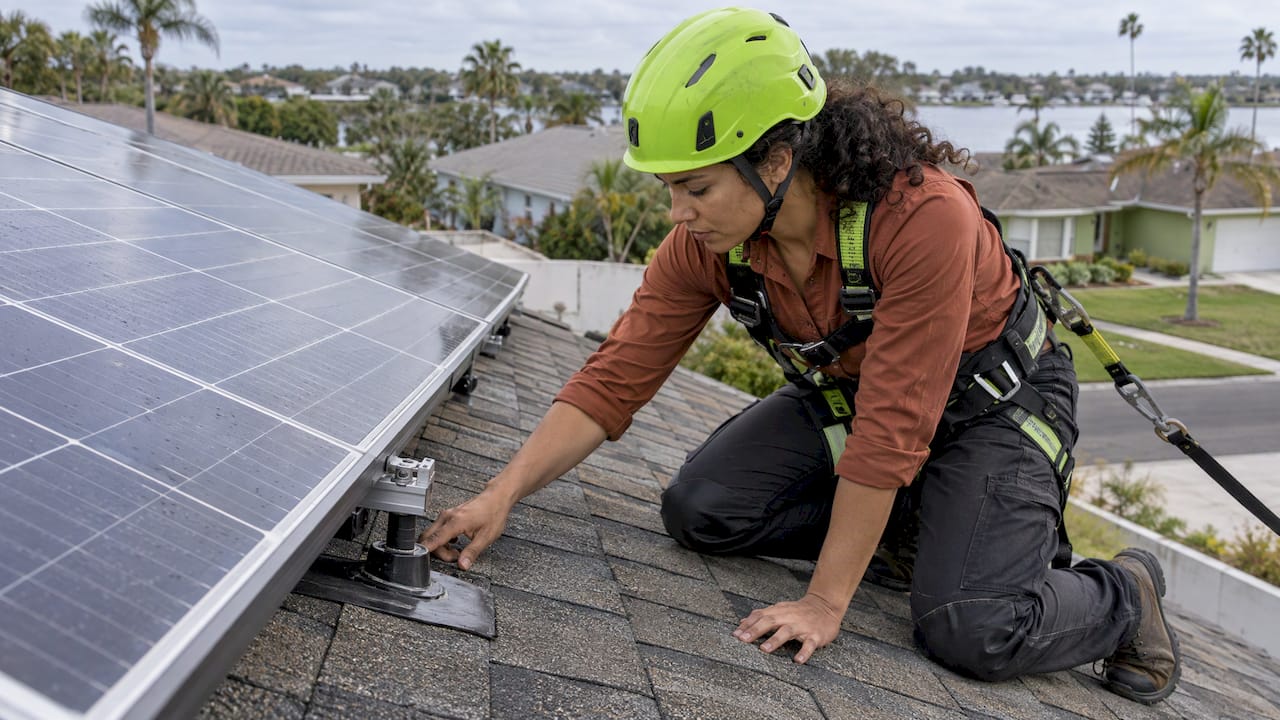
Anything attached to your roof after installation can put the warranty at risk if it is done without approval. IKO’s U.S. limited warranty excludes damage arising after the roof is altered, including equipment such as solar heaters, antennas, satellite dishes and skylights. A 2026 TPO membrane warranty certificate goes further: it excludes post-installation alterations such as photovoltaic arrays, decks and other structures, and says a modification made without the manufacturer’s approval or required paperwork makes the warranty null and void.
Solar is the question we hear most. Before you sign with a solar company, read our guide on whether solar panels void your roof warranty. The short version: get the roof’s condition and warranty terms in hand first, and have the penetrations flashed and documented properly.
If you manage a commercial building, rooftop HVAC units, cell equipment and signage raise the same issue. Our commercial roof warranty owner checklist walks through it.
4. Pressure washing and harsh cleaning
Green and black streaks are everywhere in Florida, and a pressure washer looks like a quick fix. It is not. High pressure strips the protective granules off shingles and can force water under them. One manufacturer’s material warranty specifically does not warrant against improper use of high-pressure washers, along with skylights, antennas and solar or hot-water roofing systems.
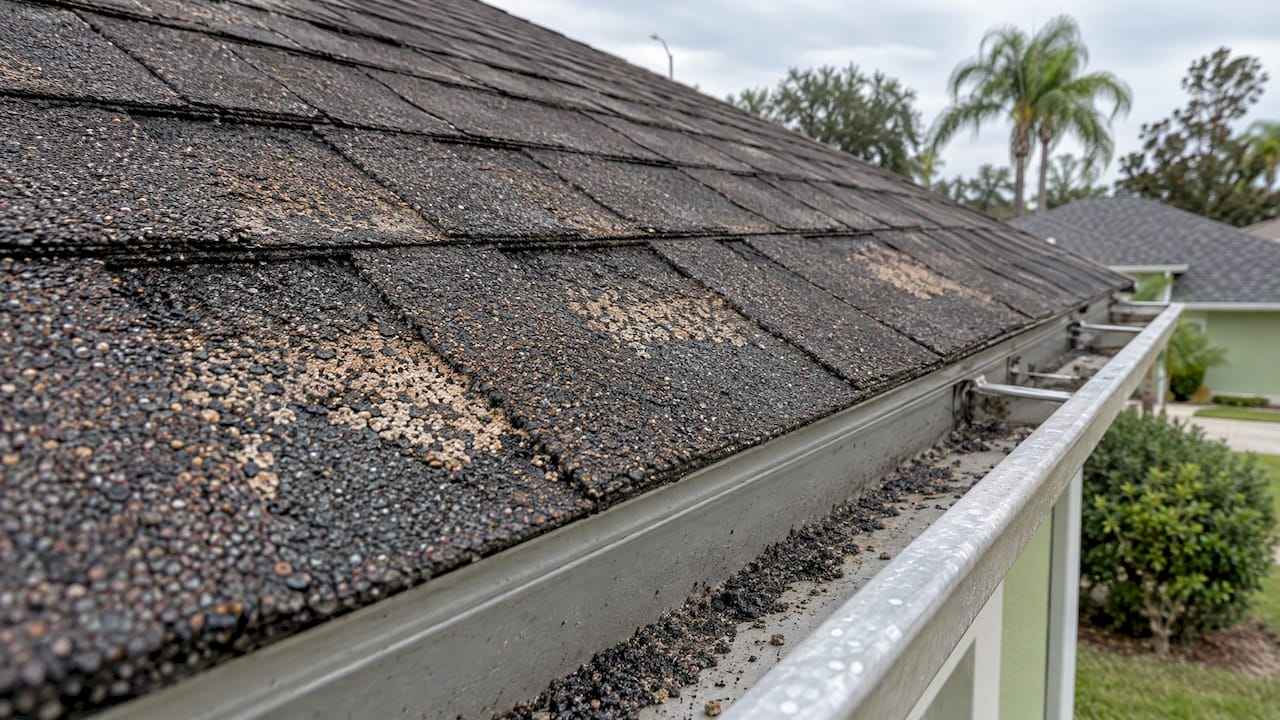
The safer approach is a low-pressure, manufacturer-approved cleaning method done by a professional. Ask before anyone touches the roof.
5. Using the wrong parts or unapproved repairs
A repair that swaps in non-approved components can complicate a claim later. IKO’s warranty excludes repair or replacement costs where materials were produced by someone other than IKO unless it authorized them in writing in advance. Owens Corning’s System Protection Limited Warranty likewise excludes non-Owens Corning components such as flashing, fasteners, pipe boots and wood decking from its coverage.
This is also where your workmanship warranty is most fragile. If a handyman, a cable installer or another roofer works on the roof, the original contractor can point to that work when a leak appears. The simple rule: before anyone else touches your roof, call whoever holds your warranty.
For small problems, we handle roof repair in Tampa so the paperwork and the fix stay in one place. Published ranges on that page include minor shingle repair at $150 to $400 and roof leak or flashing repair at $350 to $900.
6. Skipping maintenance and delaying repairs
A warranty is not a substitute for upkeep. The 2026 TPO warranty certificate above is a clear example: it requires registration within 90 days of installation completion, says the warranty becomes void if the owner fails to promptly complete appropriate maintenance or repairs, including after wind or hail damage, and requires the owner to keep records of inspections and maintenance.
Shingle warranties work the same way in spirit. If a small leak is left alone for a rainy season and rots the decking, the manufacturer can argue the damage came from neglect rather than a defect.
A simple habit protects you:
- Inspect the roof once a year and after every named storm.
- Fix flashing, loose shingles and sealant problems quickly.
- Keep every invoice, photo and inspection report in one folder.
- Keep gutters and valleys clear of debris.
Our roof inspection and residential roofing team can do the inspection and give you a written report for your records.
7. Missing registration and paperwork
Some warranties never fully activate unless they are registered. The TPO example requires registration within 90 days of completion. Enhanced shingle warranties usually require the installer to certify the job. If you cannot show the certificate, you may be arguing from memory in a claim.
Before final payment, ask your contractor for the registered warranty, the product list and the installation photos. We explain exactly which documents to collect in our guide to protecting your GAF Golden Pledge warranty in Tampa.
8. Selling the house and transfers
“Lifetime” generally means as long as the original owner owns the home, as the CertainTeed guide explains. When you sell, coverage may shrink, or require a transfer step and fee. If you plan to sell in the next several years, read the transfer terms before you pick a product. Our lifetime roof warranty guide explains what the word actually covers.
9. Storms, hail and normal wear
This one is not a voiding event, but it catches homeowners off guard. Standard warranties exclude acts of God. IKO’s document excludes lightning, gale or wind (except under its separate wind resistance warranty), hail, hurricane, tornado, flood and falling objects. Owens Corning’s system warranty lists hail, strong storms, and winds over the maximum listed wind speed as not covered, along with ice damming and water entering through exhaust vents.
In Florida, that means a hurricane claim usually belongs with your homeowners insurance, not the manufacturer. Wear and cosmetic changes that do not affect water-shedding are also generally not covered. If a storm hits, document the damage and call us. Our team helps with insurance claims, and our guide to the 25% rule and Florida’s roof matching law explains what insurers must pay in some situations.
Does a violation cancel everything?
Not always. Warranty language tends to tie the exclusion to the damage it caused. For example, bad fastening matters when the shingles blow off because of it. That is why the paper trail matters: it lets you show that a problem was a defect and not a lapse. Still, a single clause in your own certificate can say otherwise, so read it, and bring it to your installer if anything is unclear.
Quick checklist: keep your roof warranty alive
| Situation | What to do |
|---|---|
| Before installation | Choose a certified installer, ask for the ventilation plan and the warranty terms in writing |
| At completion | Get the registered warranty, product list and photos |
| Adding solar or equipment | Check the warranty first, use proper flashing, document it |
| Cleaning | Low pressure only, no pressure washer |
| After a storm | Photograph, inspect, repair promptly, file insurance if needed |
| Selling the home | Read transfer terms and hand over the records |
How often do shingles need replacing?
It depends on the material, the attic ventilation and the climate. Florida sun, humidity and storms are hard on asphalt shingles, so the warranty period and the real service life are not the same number. An annual inspection tells you where your roof stands long before a warranty question arises. If you are weighing options, see our metal roofing and tile roofing pages for longer-lived systems built for Florida.
Perspective
Here is how we see it. A warranty is only as strong as the install behind it and the records you keep afterward. Most denied claims we hear about trace back to something simple: a missing document, an unapproved add-on, a repair done by the wrong person.
That is why we put so much weight on certified installation. Hytz Roofing is a GAF Master Elite® Contractor, an honor earned by fewer than 2% of roofing contractors in North America, and our warranty offering includes 50 years on materials and 25 years on workmanship. We also give transparent, itemized estimates so you know what is in the job before it starts.
Our advice: treat the warranty like part of the roof. Ask for it before the work begins, store it with your insurance papers, and call us before anyone else works on your roof.
Anthony
Want us to check your roof and your warranty? 🚨
If you are not sure what your warranty covers, or you are planning a replacement, our team can inspect the roof, review your paperwork and explain what is protected. We serve Tampa Bay and Central Florida with a Florida contractor license (CCC1332551), full general liability and workers’ compensation coverage. Start with our roof replacement page or request an inspection.
For more on the shingles we install, see our Owens Corning and GAF Timberline HDZ pages.
FAQ
Do solar panels void a roof warranty?
They can if they are installed without approval or proper flashing. Some manufacturers exclude damage that arises after the roof is altered with solar equipment. Check your warranty before you sign with a solar company and get the roof work documented.
Does pressure washing void a roof warranty?
It can. Some material warranties specifically exclude damage from high-pressure washers. A low-pressure cleaning done by a professional is the safer route.
Does a hurricane void my roof warranty?
A hurricane does not void it, but most standard material warranties exclude storm and wind damage above the listed wind speed. Those losses normally go through your homeowners insurance, and we can help with the claim.
Who can repair my roof without hurting the warranty?
Start by calling the contractor or manufacturer who holds the warranty, and follow the manufacturer’s installation instructions and local codes. Our team handles repairs with the warranty in mind.
Sources
- Understanding Roof Warranties (CertainTeed)
- Roofing Shingle Warranties (Owens Corning)
- System Protection Limited Warranty (Owens Corning brochure)
- IKO Limited Warranty U.S.
- Guardian Lifetime Limited Material Warranty (Interlock)
- Residential TPO Warranty certificate, 2026 (IB Roof)
- Roof Warranties: Coverage, Terms & Limitations (RAND)