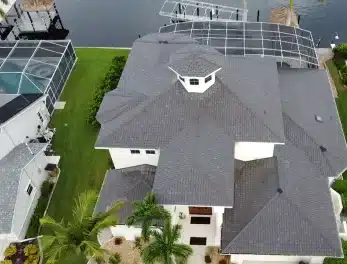
Roofing Issues for Homeowners include common problems such as leaks, missing shingles, flashing failures and algae growth. This guide covers the most common roofing problems, their causes, and the right fix for each.
Table of Contents
- Why Florida Roofs Face Unique Challenges
- 1. Roof Leaks and Water Intrusion
- 2. Missing or Displaced Shingles
- 3. Flashing Failures
- 4. Algae, Moss, and Mold Growth
- 5. UV Degradation and Granule Loss
- 6. Poor Attic Ventilation
- 7. Storm and Hurricane Damage
- 8. Gutter and Drainage Problems
- When to Repair vs. Replace
- How Hytz Roofing Can Help
Top Roofing Issues Homeowners Face and How to Resolve Them
Living in the Sunshine State means our roofs work overtime to protect us from intense UV rays, tropical weather, and hurricane-force winds NOAA. When roofing issues arise, they can quickly compromise your home's comfort and safety — and lead to expensive structural damage if ignored.
By recognizing the most common roofing challenges faced by Tampa Bay homeowners, you can take proactive steps to safeguard your property. This guide breaks down the most frequent roofing problems, their causes, the right fixes, and how to prevent them from returning.
| Common Roofing Issue | Impact | Prevention/Resolution |
|---|---|---|
| Roof Leaks | Water damage, mold | Annual inspections, proper flashing |
| Missing Shingles | Exposure to elements | Correct fastening, prompt replacement |
| Flashing Failures | Water intrusion | Corrosion-resistant materials, regular inspection |
| Algae/Moss Growth | Aesthetic, granule loss | Zinc/copper strips, algae-resistant shingles |
| UV Degradation | Brittle shingles, granule loss | UV-resistant shingles, adequate ventilation |
Table of Contents
- Why Florida Roofs Face Unique Challenges
- 1. Roof Leaks and Water Intrusion
- 2. Missing or Displaced Shingles
- 3. Flashing Failures
- 4. Algae, Moss, and Mold Growth
- 5. UV Degradation and Granule Loss
- 6. Poor Attic Ventilation
- 7. Storm and Hurricane Damage
- 8. Gutter and Drainage Problems
- When to Repair vs. Replace
- How Hytz Roofing Can Help
Why Florida Roofs Face Unique Challenges
Tampa Bay's climate creates a uniquely demanding environment for roofing systems. The combination of intense UV radiation, high humidity, frequent heavy rainfall, hurricane threats, and salt air from the Gulf creates conditions that accelerate the aging of virtually every roofing material. Understanding these environmental stressors, including wind uplift resistance and the importance of a robust underlayment, is the first step to managing your roof proactively.
What are the primary causes of roof leaks and water intrusion?
Answer: Roof leaks are primarily caused by wind-driven rain, failed flashings, and compromised penetrations, leading to significant water damage if not addressed promptly.
The Problem: Roof leaks are the most common and most urgent roofing issue homeowners face. In Florida, leaks most often occur during heavy rain events when wind drives water under shingles, through failed flashings, or around penetrations. A leak that appears as a small ceiling stain can represent significant water damage to insulation, decking, and structural framing.
Common Causes:
- Failed or improperly installed flashing at chimneys, vents, and skylights, a frequent cause of water intrusion.
- Missing or displaced shingles that expose the underlayment to direct weather, compromising the roof's integrity.
- Deteriorated underlayment that allows water to reach the deck, leading to potential structural damage.
- Clogged gutters that cause water to back up under the eaves, often resulting in fascia and soffit damage.
- Cracked or separated ridge cap shingles, which can create entry points for wind-driven rain.
- Improperly sealed roof penetrations, such as those around pipes or vents, which are common leak sources.
- Ice dam formation in colder months (though less common in Florida, still a risk during rare cold snaps), forcing water under shingles.
The Fix: Locate the source of the leak — which is often not directly above where water appears inside. A professional inspection is the most reliable way to identify the true entry point. Most leaks can be repaired by replacing failed flashings, resealing penetrations, or replacing damaged shingles. If the underlayment is compromised, a larger repair or partial replacement may be needed.
Prevention: Annual professional inspections, prompt repair of any visible damage, and keeping gutters clear are the most effective preventive measures.
2. Missing or Displaced Shingles
The Problem: Wind events — even those well below hurricane strength — can displace or remove shingles, particularly at the eaves and ridges where wind uplift is greatest. Missing shingles expose the underlayment to UV degradation and water intrusion.
Common Causes:
- Improper installation (wrong nail pattern, insufficient fasteners)
- Age-related adhesive failure on the shingle's self-sealing strip
- High wind events during storm season
- Inadequate starter strip installation at the eaves
The Fix: Missing shingles should be replaced promptly — even a single missing shingle can allow water to penetrate the underlayment during the next rain event. Matching the existing shingle color and profile exactly can be challenging on older roofs, as colors fade over time.
Prevention: Ensure your roof is installed with the correct fastening pattern for your wind zone. In Tampa Bay's high-wind environment, a 6-nail pattern is recommended for most shingle installations FRSA. Regular inspections after storm events allow you to catch and repair displacement before it leads to water damage.
3. Flashing Failures
The Problem: Flashing — the metal strips installed at roof penetrations, valleys, and wall intersections — is the most common point of roof failure. Properly installed flashing directs water away from vulnerable areas; failed flashing allows water to enter the structure.
Common Causes:
- Corrosion of metal flashing from Florida's salt air and humidity
- Improper installation that allows water to work behind the flashing
- Thermal expansion and contraction that loosens fasteners and sealants over time
- Reuse of old flashing during a roof replacement
The Fix: Failed flashings must be replaced — resealing over deteriorated flashing is a temporary fix at best. Replacement flashings should use corrosion-resistant materials appropriate for Florida's coastal environment, adhering to Florida Building Code (FBC) standards.
Prevention: Inspect flashings annually, particularly at chimneys, skylights, vent pipes, and wall intersections. When replacing a roof, always replace all flashings — reusing old flashings is a false economy that frequently leads to early failures.
4. Algae, Moss, and Mold Growth
The Problem: Florida's warm, humid climate is ideal for algae, moss, and mold growth on roofing surfaces. Blue-green algae causes the characteristic black streaking seen on many Tampa Bay roofs. Moss is more damaging — it retains moisture against the shingle surface and can accelerate granule loss and shingle degradation.
Common Causes:
- High humidity and warm temperatures that favor biological growth
- Shade from overhanging trees that keeps the roof surface moist
- Organic debris (leaves, pine needles) that retains moisture on the roof
The Fix: Algae streaking can be treated with a diluted bleach solution or commercial roof cleaning products. Moss requires more aggressive treatment and physical removal. Avoid pressure washing, which can damage shingles — use low-pressure chemical treatments instead.
Prevention: Zinc or copper strips installed at the ridge release ions that inhibit algae and moss growth. Many premium shingles, including GAF's Timberline series, incorporate algae-resistant coating granules. Keeping trees trimmed to reduce shade and debris accumulation also helps.
How does UV degradation and granule loss affect your roof?
Answer: Intense UV radiation breaks down asphalt shingles, causing them to become brittle and lose protective granules, which accelerates overall roof degradation.
The Problem: Florida's intense solar radiation is the primary driver of asphalt shingle aging. UV exposure breaks down the asphalt binder, causing shingles to become brittle and lose the protective granules embedded in their surface. Granule loss accelerates UV penetration, creating a feedback loop that rapidly degrades the shingle.
Common Causes:
- Normal UV exposure accelerated by Florida's high solar radiation levels
- Inadequate attic ventilation that raises roof surface temperatures
- Low-quality shingles with insufficient UV-resistant granules
The Signs: Granules accumulating in gutters or downspouts after rain. Shingles that appear bare, faded, or inconsistently colored. Shingles that feel brittle or crack when flexed.
The Fix: Widespread granule loss is a sign that the roof is approaching end of life. Spot replacement of severely degraded shingles can extend the roof's life, but if granule loss is widespread, replacement planning should begin.
Prevention: Choose shingles with high-quality UV-resistant granules, such as GAF's Timberline HDZ or Owens Corning's Duration series. Ensure adequate attic ventilation to reduce roof surface temperatures.
6. Poor Attic Ventilation
The Problem: Inadequate attic ventilation is one of the most common and most damaging roofing problems in Florida, yet it is often invisible until significant damage has occurred. Without proper airflow, attic temperatures can exceed 160°F in summer, dramatically accelerating shingle degradation from below. In winter (such as it is in Florida), inadequate ventilation allows moisture to accumulate in the attic, leading to deck rot and mold.
Common Causes:
- Insufficient intake vents at the soffits
- Blocked or inadequate exhaust vents at the ridge
- Insulation that covers soffit vents, blocking airflow
- Improper ventilation design during original construction
The Signs: Shingles that age prematurely or show heat damage. Attic temperatures that feel excessively hot. Moisture staining or mold in the attic. Ice dams in the rare Florida cold snaps.
The Fix: A roofing professional can assess your current ventilation and recommend improvements. Adding ridge vents, increasing soffit vent area, or installing powered attic ventilators can significantly improve airflow.
Prevention: Ensure ventilation is assessed during any roof replacement. The standard recommendation is 1 square foot of net free vent area per 150 square feet of attic floor space, split equally between intake and exhaust Florida Building Code.
7. Storm and Hurricane Damage
The Problem: Tampa Bay sits in Florida's hurricane zone, and even storms that do not make direct landfall can subject roofs to damaging wind speeds, flying debris, and intense rainfall. Storm damage ranges from a few displaced shingles to complete roof failure.
Common Causes:
- Wind uplift at eaves and ridges that exceeds the shingle's rated wind resistance
- Flying debris that punctures or displaces roofing material
- Wind-driven rain that penetrates through gaps created by displaced shingles
- Tree branches falling on the roof
The Fix: After any significant storm, have your roof professionally inspected — even if you do not see obvious damage from the ground. Many storm damage failures are not visible without getting on the roof. Document all damage with photographs for insurance purposes before any repairs are made.
Prevention: Ensure your roof is installed with the correct fastening pattern for Tampa Bay's wind zone. Consider upgrading to impact-rated materials — a Class 4 impact-rated roof is significantly more resistant to storm damage than standard materials IBHS.
8. Gutter and Drainage Problems
The Problem: Gutters and downspouts are an integral part of the roofing system — they direct water away from the foundation and prevent water from backing up under the eaves. Clogged or damaged gutters are a common cause of fascia rot, foundation problems, and roof damage.
Common Causes:
- Debris accumulation from Florida's year-round leaf fall
- Improper gutter slope that prevents adequate drainage
- Damaged or separated gutter sections
- Downspouts that discharge too close to the foundation
The Fix: Clean gutters at least twice per year — more frequently if you have overhanging trees. Inspect gutters for proper slope, secure attachment, and absence of leaks at seams and downspout connections.
Prevention: Gutter guards can reduce maintenance frequency but do not eliminate the need for periodic cleaning. Ensure downspouts extend at least 4–6 feet from the foundation and discharge to a location where water drains away from the home.
When to Repair vs. Replace
| Situation | Recommended Action |
|---|---|
| Isolated leak, roof under 15 years | Repair |
| Multiple leaks, roof under 15 years | Professional inspection; likely repair |
| Any damage, roof 15–20 years old | Inspection; repair if rest of roof is sound |
| Widespread damage or granule loss | Replacement evaluation |
| Storm damage affecting 25%+ of roof | Replacement typically more economical |
| Roof over 20 years old | Replacement evaluation recommended |
Frequently Asked Questions
Q: What is the most common roofing problem in Tampa Bay?
A: Wind-driven rain infiltration is the most common issue in Tampa Bay, followed closely by UV-accelerated shingle degradation and flashing failures. Florida's combination of intense UV radiation, hurricane-season wind events, and heavy afternoon thunderstorms creates a uniquely demanding environment for roofing materials. Regular annual inspections are the most effective way to catch these issues before they become costly repairs.
Q: How do I stop algae and moss from growing on my roof?
A: Algae (the dark streaking you see on roofs) and moss thrive in Florida's humidity. Zinc or copper strips installed at the ridge line release trace metals that inhibit growth. Algae-resistant shingles — such as GAF Timberline HDZ with StainGuard Plus — provide long-term protection. For existing growth, a low-pressure wash with a diluted bleach solution is the standard treatment. Avoid high-pressure washing, which strips granules.
Q: How do I know if my roof is leaking or if it's an HVAC condensation issue?
A: Roof leaks typically appear on ceilings directly below roof penetrations — chimneys, vents, skylights — or along exterior walls. HVAC condensation leaks tend to appear near air handler units, ductwork, or ceiling registers. If the stain appears during rain events, it is more likely a roof leak. If it appears regardless of weather, HVAC condensation or a plumbing leak is more likely. A professional inspection can identify the source definitively.
Q: How much does it cost to fix the most common roofing problems in Tampa?
A: Minor repairs — replacing a few shingles, sealing a pipe boot, or re-bedding loose flashing — typically cost $150 to $500. Moderate repairs involving valley flashing, ridge cap replacement, or a section of damaged decking run $500 to $2,500. Major repairs approaching full replacement territory can exceed $5,000. Hytz Roofing provides free inspections and written estimates for all repair work.
Q: Can I fix a roof leak myself?
A: Minor repairs like replacing a handful of shingles are within reach for a handy homeowner. However, most roof leaks in Florida involve flashing failures, underlayment issues, or penetration failures that require professional diagnosis and repair. Improper repairs can void manufacturer warranties and create new leak pathways. For anything beyond cosmetic shingle replacement, a licensed contractor is recommended.
How Hytz Roofing Can Help
Hytz Roofing is Tampa Bay's GAF Master Elite certified roofing contractor. Our team provides free inspections, honest assessments, and expert repairs for every type of roofing problem — from a single missing shingle to complete storm damage restoration.
We handle all permitting, work with your insurance company to document claims, and back every repair and replacement with both manufacturer warranties and our own labor warranty.
Schedule your free inspection today and get ahead of the next storm season.
Related Resources: Roof Repairs | Storm Damage Restoration | Roof Replacement | GAF Roofing Systems | Owens Corning Roofing Systems