Shingle Types for Roof Replacement: Florida Guide
Roof shingle types range from asphalt and architectural shingles to metal and specialty options, and this guide summarizes the benefits and considerations for Florida roof replacement.
If you live in Florida and your roof is due for replacement, choosing the right roofing shingles is one of the most consequential decisions you’ll make as a homeowner. The shingle types for roof replacement available today range widely in cost, lifespan, and performance. And in Florida, where UV radiation, hurricane-force winds, and relentless humidity are just part of life, not all shingles are created equal. This guide breaks down every major option so you can match your budget, style, and long-term goals to the right material.
Table of Contents
- Key takeaways
- 1. What to know before picking shingle types for roof replacement
- 2. Asphalt shingles: the three types most homeowners choose
- 3. Beyond asphalt: alternative roofing materials worth knowing
- 4. Head-to-head: which shingle types actually hold up in Florida
- 5. Practical tips for Florida homeowners ready to replace their roof
- My honest take after years of watching Florida roofs fail prematurely
- Ready to replace your roof? Hytzroofing can help
- FAQ
Key takeaways
| Point | Details |
|---|---|
| Florida shortens shingle life | UV, heat, and storms mean asphalt shingles last 10–20 years here, less than the national average. |
| Florida Product Approval is mandatory | Only shingles with an FL approval number qualify for permits and insurance compliance in Florida. |
| Architectural shingles offer the best value | For most Florida homeowners, architectural shingles balance cost, durability, and curb appeal well. |
| Metal and stone-coated steel last longest | These materials can exceed 40 years and withstand hurricane-force winds better than any asphalt option. |
| Installation quality matters as much as shingle type | Ventilation, flashing, and fastening patterns directly determine how long any shingle type will perform. |
1. What to know before picking shingle types for roof replacement
Before you compare price tags and colors, you need to understand what Florida’s climate actually does to a roof. This state is not average. It sits in one of the most demanding roofing environments in the country.
Here’s what you should evaluate before selecting any shingle material:
- UV and heat exposure. Florida’s sun degrades roofing materials faster than nearly anywhere else in the continental US. Look for shingles with high solar reflectance ratings.
- Wind resistance. South and Central Florida fall under high-wind zones. Your shingles must meet specific wind ratings, and your contractor must use the correct fastening pattern for your wind zone.
- Florida Product Approval. FL Product Approval is not optional. Every roofing material installed in Florida must carry an FL approval number. Without it, your permit application fails and your insurance claim could be denied.
- Storm impact resistance. Class 4 impact resistance ratings are worth the premium in Florida, especially in areas prone to hail or wind-driven debris.
- Ventilation and underlayment. Poor attic ventilation causes heat to build underneath your shingles and accelerates aging fast, no matter how good the shingle is. A secondary water barrier is also strongly recommended.
- Aesthetic compatibility. Your neighborhood’s architectural style and your HOA guidelines may limit material choices.
- Budget vs. return. A cheaper shingle that lasts 12 years costs more over time than a pricier one that lasts 30.
Pro Tip: Ask any contractor you’re considering to show you the FL Product Approval number for the shingle they plan to install. If they hesitate or can’t produce it, that’s a red flag.
Also talk to your Tampa roof repair expert about flashing replacement. Skipping it during a re-roof is one of the most common and costly mistakes homeowners make.
2. Asphalt shingles: the three types most homeowners choose
Asphalt shingles dominate the Florida residential market for good reason. They’re affordable, widely available, and come in a range of quality levels. The industry recognizes three distinct categories.
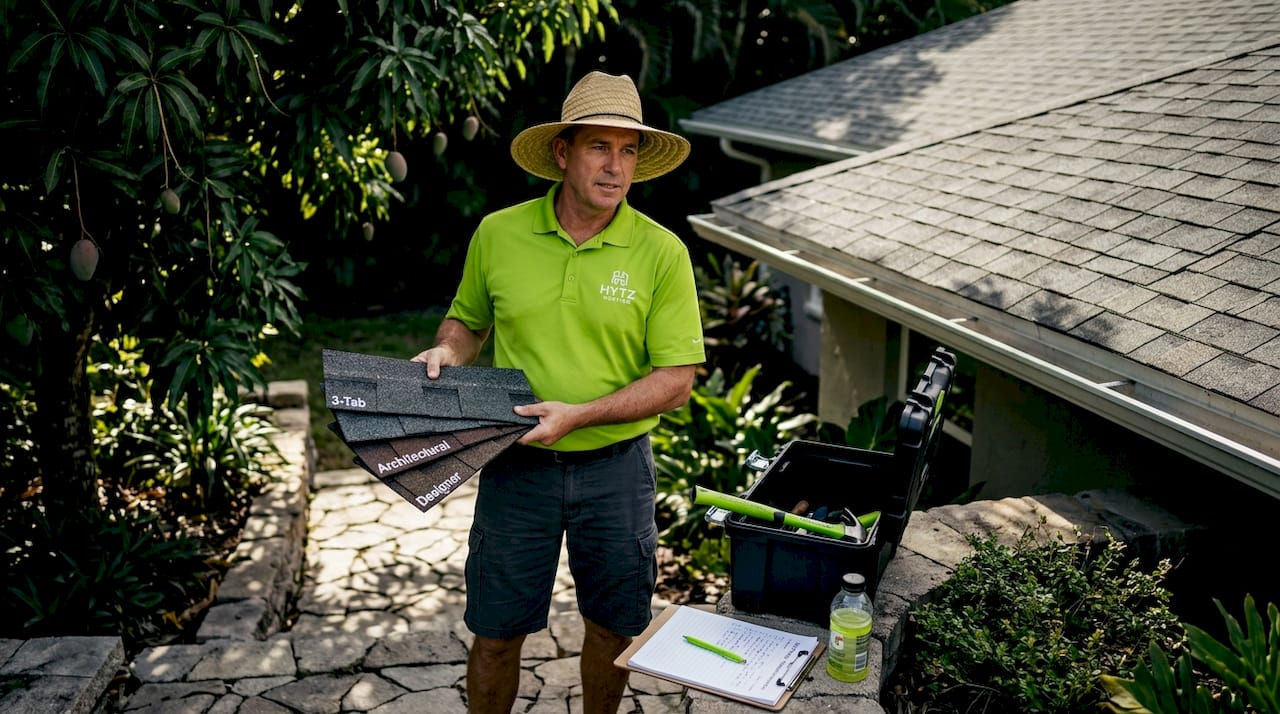
3-tab shingles
This is the most basic option. Three-tab shingles are flat, lightweight, and inexpensive. They’re manufactured with a single layer of material and have a uniform, flat appearance. In Florida, 3-tab shingles last 10–15 years, well below the national average of 20 years, because of the intense heat and UV exposure. Their wind resistance is also lower than the alternatives, typically rated to 60–70 mph.
Architectural (dimensional) shingles
Architectural shingles, also called dimensional or laminate shingles, are the most popular choice for Florida homeowners today. They’re made with multiple layers bonded together, which gives them a textured, three-dimensional look and significantly better performance. Architectural shingles offer longer warranties, better wind resistance, and more curb appeal than 3-tab at a moderate price increase. In Florida, expect a lifespan of 15–20 years under real conditions.
Designer (luxury) shingles
Designer shingles are the premium tier of asphalt. They’re thicker, heavier, and often engineered to mimic the look of slate or wood shake roofing. They carry the longest lifespans in the asphalt category and the highest price points.
Here’s a side-by-side breakdown:
| Shingle type | Typical cost (installed) | Lifespan in Florida | Wind resistance |
|---|---|---|---|
| 3-tab | $6,000–$12,000 | 10–15 years | Up to 60–70 mph |
| Architectural | $8,000–$18,000 | 15–20 years | Up to 110–130 mph |
| Designer/luxury | $12,000–$30,000+ | 20–30+ years | Up to 130 mph+ |
Cost figures reflect 2026 shingle replacement data for typical Florida home sizes.
Pro Tip: If you’re planning to stay in your home for 10+ years, architectural shingles almost always offer better cost-per-year value than 3-tab, even though they cost more upfront.
For most Florida homeowners, architectural shingles hit the sweet spot between affordability and durability. But if your budget allows and you want maximum longevity with premium aesthetics, designer shingles are worth the conversation.
3. Beyond asphalt: alternative roofing materials worth knowing
Asphalt is not your only option. If you want longer lifespan, stronger storm performance, or a specific look that asphalt can’t achieve, several alternatives to asphalt shingles are worth serious consideration in Florida.
Metal roof shingles and panels. Metal roofing is one of the best-performing materials you can install in Florida. It resists corrosion, reflects heat, and handles wind exceptionally well. Metal and stone-coated steel roofing can last 40–70 years with minimal maintenance, which changes the long-term cost math dramatically.
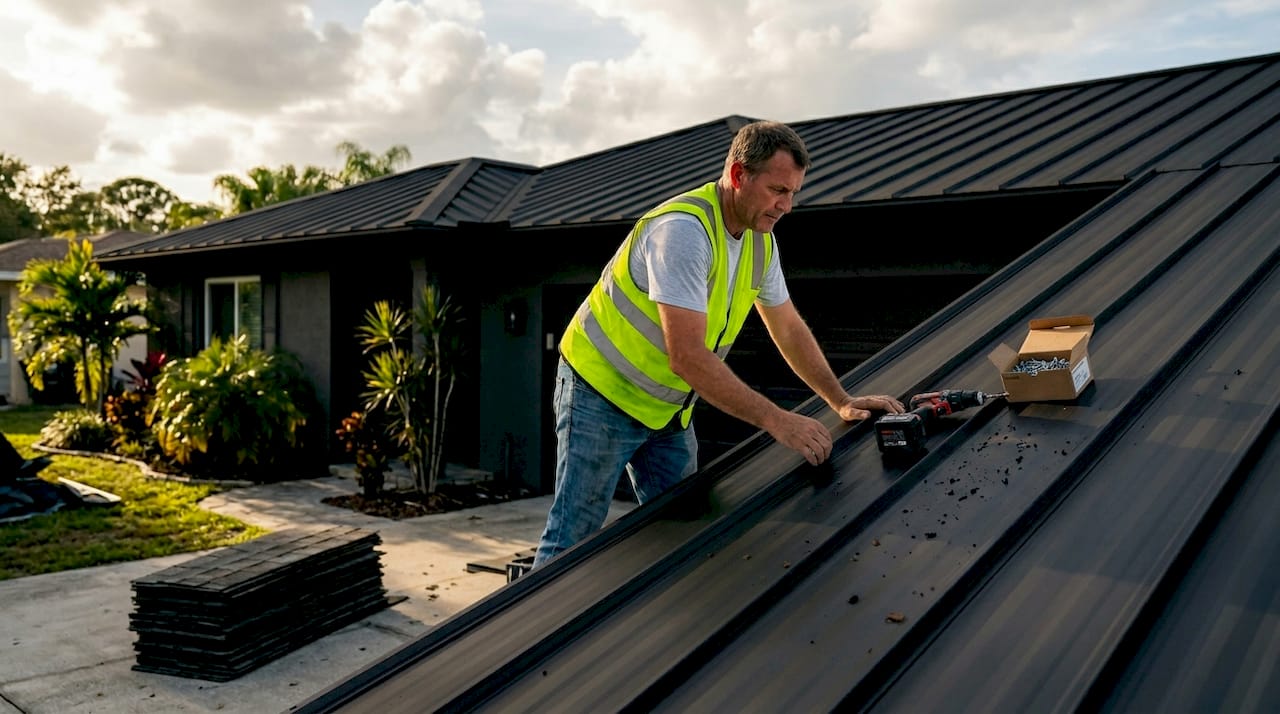
Stone-coated steel shingles. Stone-coated steel gives you the look of traditional shingles with the performance of metal. The stone coating adds impact resistance and aesthetic versatility. These resist hurricane-force winds and require Florida Product Approval like any other material.
Composite (synthetic) shingles. Synthetic shingles are engineered from polymers and recycled materials. They can mimic slate, wood, or tile and perform well in high-heat environments. They typically fall in the mid-to-high price range with lifespans of 30–50 years.
Wood shake roofing. Wood shakes offer a natural, rustic look that many homeowners love. But in Florida, wood requires significantly more maintenance to resist mold, rot, and insect damage. Installation costs are higher, and some Florida insurance carriers charge more to cover homes with wood roofs.
Solar shingles. Solar roofing shingles integrate photovoltaic cells directly into roofing material. The technology is genuinely impressive. The cost is significantly higher than any conventional option, and the installation is more complex. For homeowners committed to energy independence, it’s worth exploring with a specialist.
Here’s how these alternatives compare with asphalt:
| Material | Cost range (installed) | Lifespan | Best for |
|---|---|---|---|
| Architectural asphalt | $8,000–$18,000 | 15–20 years (FL) | Budget-conscious buyers |
| Stone-coated steel | $18,000–$35,000 | 40–50 years | Storm-prone areas |
| Metal shingles/panels | $20,000–$45,000 | 40–70 years | Long-term investment |
| Composite/synthetic | $15,000–$30,000 | 30–50 years | Style versatility |
| Wood shake | $20,000–$40,000 | 20–30 years | Aesthetic preference |
| Solar shingles | $35,000–$70,000+ | 25–30 years | Energy efficiency focus |
4. Head-to-head: which shingle types actually hold up in Florida
Let’s get direct. Florida is not the right market for low-end 3-tab shingles on any home you plan to keep for more than a decade. The UV degradation and storm exposure simply consume that material too fast.
Here’s how the top roof shingle options stack up specifically for Florida homeowners:
- Best for tight budgets: Architectural asphalt shingles. They outperform 3-tab significantly for a modest cost increase and still qualify under Florida Product Approval requirements when properly selected.
- Best for storm performance: Stone-coated steel or metal shingles. These are genuinely in a different class for wind and impact resistance.
- Best for long-term ROI: Metal roofing. If you’re planning to stay in your home 20+ years, the per-year cost of metal often beats asphalt when you factor in fewer replacements and lower maintenance.
- Best for aesthetics with durability: Designer asphalt or composite shingles. Both offer premium looks with meaningfully longer lifespans than standard asphalt.
- Best for energy savings: Metal roofing (reflective finishes) or solar shingles for the committed buyer.
Your expected ownership duration matters more than most homeowners realize. Selection should be driven by climate compliance, cost-benefit analysis, and how long you plan to stay. Selling in five years? Architectural asphalt is your answer. Staying for life? Metal or stone-coated steel deserves serious attention.
5. Practical tips for Florida homeowners ready to replace their roof
Once you’ve narrowed down your material preferences, here’s how to move through the replacement process wisely.
- Verify Florida Product Approval. Before signing any contract, confirm the exact shingle model carries an FL number. You can search the Florida Building Commission’s product approval database yourself at floridabuilding.org.
- Ask about wind zone fastening. Different parts of Florida require different fastening patterns. A contractor who doesn’t bring this up is missing a critical compliance step.
- Replace the flashing. Old or damaged flashing leads to leaks within 1–3 years after re-shingling, regardless of shingle quality. Insist on new flashing as part of the job scope.
- Confirm proper ventilation. Ask your contractor to inspect attic ventilation before installation. Ventilation and secondary water barriers are critical for extending shingle lifespan in Florida’s heat.
- Get a licensed, insured contractor. Florida requires roofing contractors to hold a state license. Verify your contractor’s license on the Florida DBPR website. Check for workers’ compensation and general liability insurance too.
- Plan your inspection schedule. For asphalt roofs, schedule professional inspections every 3–5 years and a full assessment after any major storm. Most asphalt shingle roofs in Florida need replacement at the 15-year mark. Check your roof replacement cost options early so you can budget ahead.
- Check your HOA guidelines. If you live in a community with an HOA, confirm approved materials and colors before purchasing anything.
Pro Tip: Get at least three quotes from licensed Florida contractors. The lowest bid often cuts corners on underlayment, ventilation, or flashing. The middle bid with a detailed scope of work is usually the safest choice.
My honest take after years of watching Florida roofs fail prematurely
I’ve spent years working with Florida homeowners navigating roof replacements, and the pattern I see repeat itself is almost always the same. Homeowners focus entirely on the shingle itself, then discover two years later that the contractor skipped new flashing or installed the shingles over inadequate ventilation.
The shingle type matters. It genuinely does. But a premium shingle installed on a poorly ventilated deck with 15-year-old flashing will fail before its time, every single time.
What I’ve found actually works is this: pick the best shingle your budget honestly supports, then spend equally hard on vetting the contractor’s installation practices. Ask specific questions about ventilation, fastening patterns, and flashing. If a contractor can’t answer those questions clearly, keep looking.
For most Tampa Bay area homeowners, architectural shingles installed correctly by a GAF Master Elite contractor will outperform a designer shingle installed carelessly. I’ve seen it more times than I can count. The essential tips for successful roof repair aren’t about picking the fanciest material. They’re about getting every component of the roof system right.
If your ownership horizon stretches 20+ years, I’d push you toward metal or stone-coated steel without hesitation. The upfront cost feels significant until you price out a second asphalt replacement.
— Anthony
Ready to replace your roof? Hytzroofing can help
Choosing the right shingle is half the job. The other half is working with a contractor who installs it correctly, uses Florida-approved materials, and backs the work with real credentials.
Hytzroofing is a GAF Master Elite contractor serving homeowners across Tampa, Plant City, and surrounding Florida communities. That designation is held by fewer than 2% of roofing contractors in North America, which means you get access to GAF’s strongest warranty coverage and proven installation standards. Hytzroofing is also a 2024 Brava Roof Tile Excellence Award recipient, a 2025 Angi Super Service Award winner, and carries an A+ BBB rating with full Florida licensing and insurance.
Whether you’re comparing architectural vs. designer shingles or ready to schedule your inspection, reach out today and get a straight answer from a team that knows Florida roofing inside and out.
FAQ
What shingle type lasts the longest in Florida?
Metal and stone-coated steel shingles last the longest in Florida, often exceeding 40 years. Among asphalt options, designer shingles offer the best lifespan at 20–30+ years under Florida conditions.
Are architectural shingles worth the extra cost over 3-tab?
Yes. Architectural shingles offer significantly better wind resistance, longer lifespan, and more curb appeal for a modest price increase, making them the better long-term value for most Florida homeowners.
What is Florida Product Approval and why does it matter?
Florida Product Approval is a state certification confirming a roofing material meets Florida’s building code requirements. Without it, your roof permit can be denied and your insurance claim may be rejected after storm damage.
How often should I replace asphalt shingles in Florida?
In Florida, asphalt shingles typically need replacement every 10–20 years depending on type and installation quality, which is shorter than the national average due to intense UV exposure and storm activity.
Does ventilation really affect how long my shingles last?
Yes. Poor attic ventilation traps heat beneath the shingles and accelerates material breakdown from the inside out, cutting years off the lifespan of even high-quality shingles.
Recommended
- Weathering the Storm Expert Tips for Roof Leak Repair in Tampa Fl
- Introducing Enviroshake to Your Hoa
- GAF Master Elite Roofer in Tampa, FL | Hytz Roofing
- 15 Urgent Roof Issues to Fix Before the Next Florida Storm
Related Hytz Roofing Services