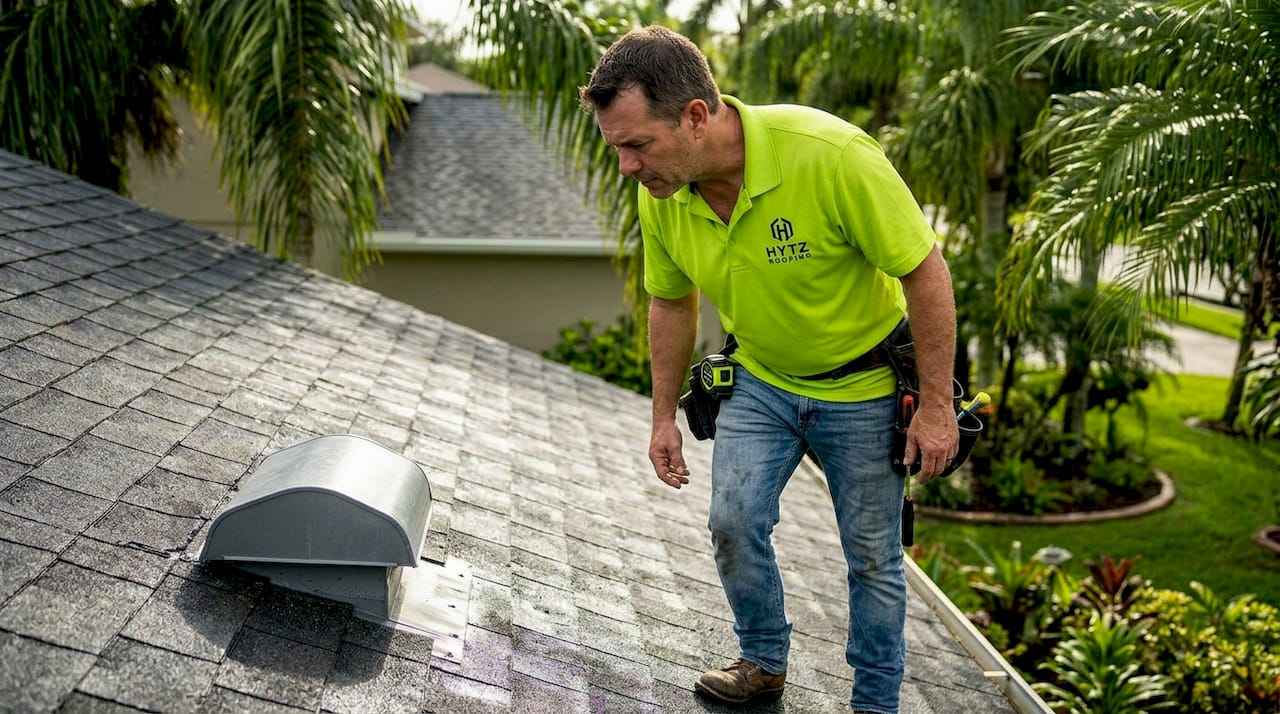
Roof Repair vs Replacement Explained for Florida Homeowners
Roof repair vs replacement is a common decision for Florida homeowners weighing localized fixes against full roof replacement; this article outlines common warning signs and key decision factors.
Last updated: August 8, 2026
Most Florida homeowners assume that keeping up with repairs means their roof is in good shape. That assumption gets expensive. Roof repair vs replacement explained properly means understanding that a series of patches can quietly cost you more than a full replacement. Florida’s heat, humidity, and hurricane seasons put roofs under stress that most other states simply do not see. This guide breaks down the real differences between repair and replacement, gives you actual cost numbers for Florida, and helps you make the call with confidence.
Table of Contents
- Key takeaways
- Roof repair vs replacement explained: the core differences
- Understanding the real costs: repair vs replacement
- When to repair and when to replace in Florida
- Common mistakes and how to avoid them
- My honest take after years of working Florida roofs
- Let Hytzroofing help you decide with confidence
- FAQ
Key takeaways
| Point | Details |
|---|---|
| The 50% cost rule matters | If repair costs exceed 50% of replacement cost, full replacement is the smarter financial move. |
| Florida climate accelerates wear | Heat, UV exposure, and hurricane seasons shorten roof lifespans faster than national averages. |
| Damage area decides direction | Repair if damage covers under 25% of the roof; replace if it covers more. |
| Insurance rewards newer roofs | New roofs can lower premiums by 5 to 20% and protect your policy renewal eligibility. |
| Warranties vary significantly | Certified contractor replacements unlock manufacturer-backed warranties that repairs rarely provide. |
Roof repair vs replacement explained: the core differences
These two options are not just different in price. They are different in scope, lifespan impact, and what they actually fix.
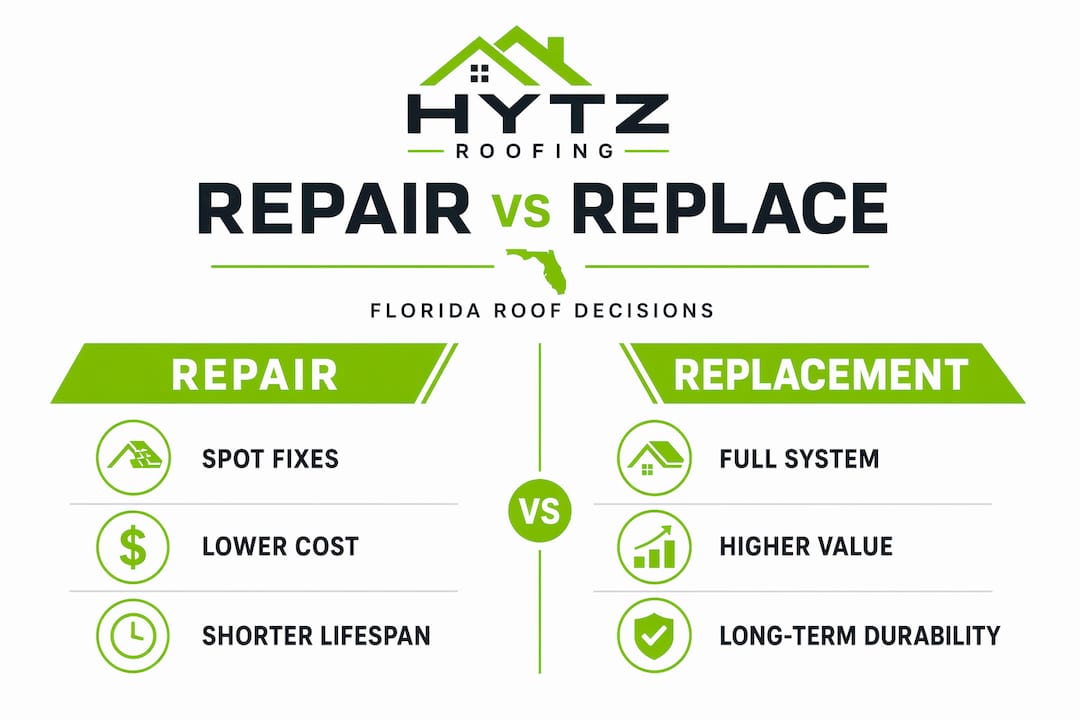
Roof repair addresses specific, localized damage. Think a handful of missing shingles after a storm, a small leak around a skylight flashing, or a patch of cracked tiles. A repair targets one problem area without disturbing the rest of the roof system. It adds a few years of life to a specific zone but does nothing for the broader condition of your deck, underlayment, or ventilation.
Roof replacement removes the entire existing roofing system down to the deck and installs new materials from scratch. This means new underlayment, new flashing, new shingles or tiles, and in some cases a new deck if rot or water damage has spread. A properly installed replacement on asphalt shingles adds 20 to 30 years of life to your home. Metal roofing can push that to 40 to 70 years depending on the product.
Here is what each option typically involves:
- Repair: Shingle or tile replacement on a limited area, flashing repairs, minor leak patching, resealing vents or pipe boots
- Replacement: Full tear-off of existing layers, deck inspection and repair, new underlayment installation, full material installation across the entire roof, new drip edges and flashing
- Lifespan added by repair: 2 to 5 years on the damaged area only
- Lifespan added by replacement: 20 to 50+ years depending on material choice
- Warranty coverage: Repairs carry little to no manufacturer warranty; certified replacement products like CertainTeed and Owens Corning shingles come with extended manufacturer warranties when installed by certified contractors
The material you choose for a replacement also matters more in Florida than elsewhere. Asphalt shingles rated for high wind and UV resistance, metal roofing, and tile all perform differently under Florida conditions. Your contractor should be guiding you toward products tested and rated for this climate.
Understanding the real costs: repair vs replacement
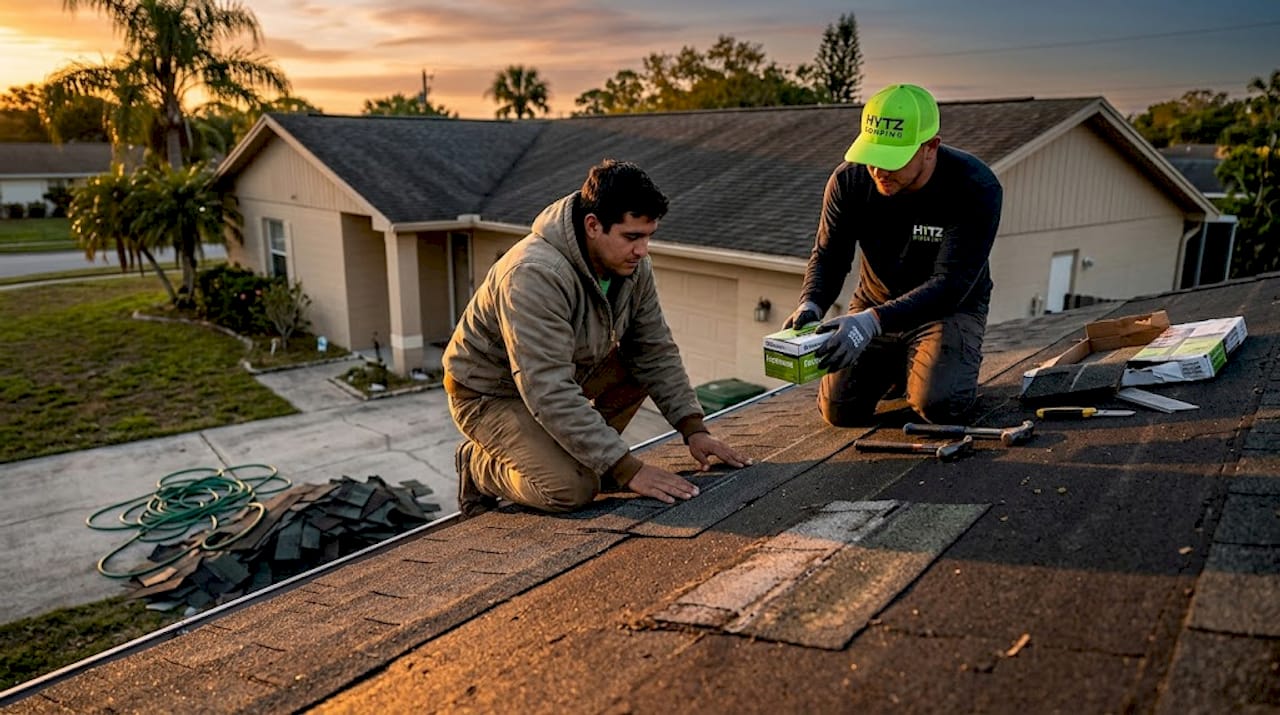
Here is where most homeowners get tripped up. They compare a single repair quote against a replacement quote and stop there. The full financial picture is more nuanced.
Cost ranges for Florida homeowners
| Category | Typical Cost Range |
|---|---|
| Minor repair (loose shingles, small leaks) | $300 to $1,500 |
| Moderate repair (flashing, multiple areas) | $1,500 to $4,000 |
| Major repair (decking, multiple leaks) | $5,000 or more |
| Full asphalt replacement | $8,000 to $15,000 |
| Full tile or metal replacement | $15,000 to $30,000+ |
Two rules help you frame the decision quickly. The 50% repair rule says that if your repair costs exceed 50% of what a full replacement would cost, the replacement is the better long-term investment. The 25% damage area rule says that if more than 25% of the roof is damaged or degraded, you are better off replacing the whole system rather than patching sections.
The hidden costs catch people off guard. A compromised roof causes energy efficiency drops of 10 to 25% as damaged underlayment and poor sealing drive up your air conditioning bills. Water intrusion from unaddressed leaks leads to mold, drywall replacement, and insulation damage that all compound over time. When you add those costs in, repeated repairs over five years often exceed what a replacement would have cost outright.
Pro Tip: Ask your contractor to itemize the full cost of repairs over the expected remaining lifespan of your current roof. That number, compared to a replacement quote, tells you more than any single repair estimate ever will.
From a property value standpoint, a new roof adds real resale value. Buyers in Florida know what a roof inspection will reveal, and a 15-year-old asphalt roof with visible wear is a negotiating chip for price reductions. A recent replacement removes that objection entirely.
When to repair and when to replace in Florida
Florida’s climate changes the math on roof lifespan. The combination of intense UV exposure, high humidity, heavy rain cycles, and hurricane-force winds degrades roofing materials faster than national averages suggest. That 25-year asphalt shingle might realistically perform for 18 to 20 years here.
Repair is the right call when:
- Damage is localized to less than 25% of the roof surface
- Your roof is under 10 years old and structurally sound
- The repair cost is well below 30% of full replacement cost
- The rest of the roof passes a professional inspection with no hidden deck damage
- The damage came from a single storm event and your insurance is covering the repair
Replacement is the right call when:
- Your roof is 15 to 20+ years old, regardless of how it looks from the ground
- You have had the same area repaired more than once in a 3-year period
- Multiple sections show granule loss, curling, or sagging
- A professional inspection reveals deck rot, widespread moisture, or failed underlayment
- Insurance renewal is at risk because many Florida insurers decline to renew or reduce coverage on roofs older than 20 years
Hurricane season deserves its own mention. Florida homeowners need to think about preparing for storm damage before it happens. A roof already weakened by age or prior repairs is far more vulnerable to catastrophic failure during a named storm. Reviewing your roof’s hurricane resistance before season starts is a practical step that can save you from an emergency replacement at the worst possible time.
Pro Tip: Get a full inspection done by a licensed Florida roofing contractor before hurricane season, not after. A proactive assessment costs you nothing compared to discovering hidden damage after a major storm.
Common mistakes and how to avoid them
Most homeowners making the wrong decision are not uninformed. They just have incomplete information. Here is where the process tends to break down.
-
Comparing a single repair quote to replacement cost without context. One repair quote does not show you the trajectory. Ask your contractor to assess the full roof and estimate likely repair needs over the next five years. That projection changes the conversation entirely.
-
Skipping a second opinion. Getting multiple detailed quotes is not about finding the cheapest price. It is about understanding whether contractors are recommending the same scope of work. A significant difference in recommendations should prompt more questions.
-
Ignoring what you cannot see. Deck damage, failing underlayment, and compromised flashing are invisible from a street-level view. A contractor who only assesses visible shingles is not giving you a complete picture. Ask specifically about the deck and underlayment condition during any inspection.
-
Choosing a contractor without certified credentials. Certified contractors provide access to manufacturer-backed warranties that unlicensed or uncertified work cannot match. For Florida’s climate demands, that warranty is not a bonus. It is a real protection.
-
Letting the repair cycle keep going. Many homeowners find themselves authorizing a third or fourth repair on the same section without stepping back to evaluate whether replacement would have been cheaper from the start. A pattern of repeated failures is a sign the system has reached end of life, not that the repairs are working.
For deeper guidance on handling specific repair scenarios in this region, the roof repairs in Tampa guide from Hytzroofing covers the most common issues Florida homeowners face and how certified contractors approach them.
My honest take after years of working Florida roofs
I have seen homeowners make this decision in both directions, and the ones who regret it most are almost always the ones who patched too long. Florida is not a forgiving climate for roofing materials. The UV exposure alone degrades shingles faster than most product specs suggest, and the humidity works on decks quietly in the background.
What I have found is that the repair-or-replace question is almost never a pure cost calculation. It is a risk calculation. Every time you repair a roof that is past its prime, you are betting that the next storm will not expose the weakness that the patch did not address. In Florida, that is a bet you will lose eventually.
My honest advice? If your roof is over 15 years old and you are having a contractor out for the second time in three years, get a full replacement estimate on that same visit. Not because replacement is always the answer, but because you deserve to make the decision with all the information in front of you. A contractor who does not offer you that comparison is not serving your best interest.
I also push people hard on the insurance angle. New roofs can lower your premiums by 5 to 20% and protect your policy from non-renewal. In Florida’s current insurance market, that is not a small consideration. It can change the payback period on a replacement dramatically.
— Anthony
Let Hytzroofing help you decide with confidence
You do not have to figure this out alone. Hytzroofing is a GAF Master Elite® Contractor, one of fewer than 2% of roofing contractors in North America to earn that designation, and holds the GAF President’s Club Award for consistently outstanding work across Florida. Whether you need a straightforward repair or a full certified roof replacement in Tampa, the team offers free, detailed inspections that look at the full picture, including your deck, underlayment, and flashing. Financing options are available for replacements. Every project is backed by a Florida Contractor License (#CCC1332551), full insurance, and manufacturer warranties you can rely on. Reach out today and get a clear, honest assessment of where your roof stands.
FAQ
What is the main difference between roof repair and replacement?
Roof repair fixes localized damage on a specific section of your roof, while replacement removes the entire roofing system and installs new materials. Repair adds a few years of life to one area; replacement adds 20 to 50 or more years to the whole structure.
How do I know when to replace my roof instead of repairing it?
If your roof is 15 to 20 years old, has damage covering more than 25% of the surface, or repair costs exceed 50% of replacement cost, full replacement is typically the better financial choice.
How much does roof replacement cost in Florida?
Full roof replacement in Florida ranges from $8,000 to $15,000 for asphalt shingles and $15,000 to over $30,000 for tile or metal roofing, depending on the home size and materials selected.
Can roof repairs affect my homeowner’s insurance in Florida?
Yes. Florida insurers may decline renewal or reduce coverage on roofs older than 20 years. A new roof can lower your premiums by 5 to 20% and strengthen your coverage position significantly.
How many repair calls are too many before I should replace my roof?
If you have had the same area repaired more than once in a three-year period, that is a clear signal the roof has reached end of life. Continuing to patch is likely costing more than a replacement would over time.
Recommended
- Weathering the Storm Expert Tips for Roof Leak Repair in Tampa Fl
- Introducing Enviroshake to Your Hoa
- GAF Master Elite Roofer in Tampa, FL | Hytz Roofing
- 15 Urgent Roof Issues to Fix Before the Next Florida Storm
Related Hytz Roofing Services