tl;dr
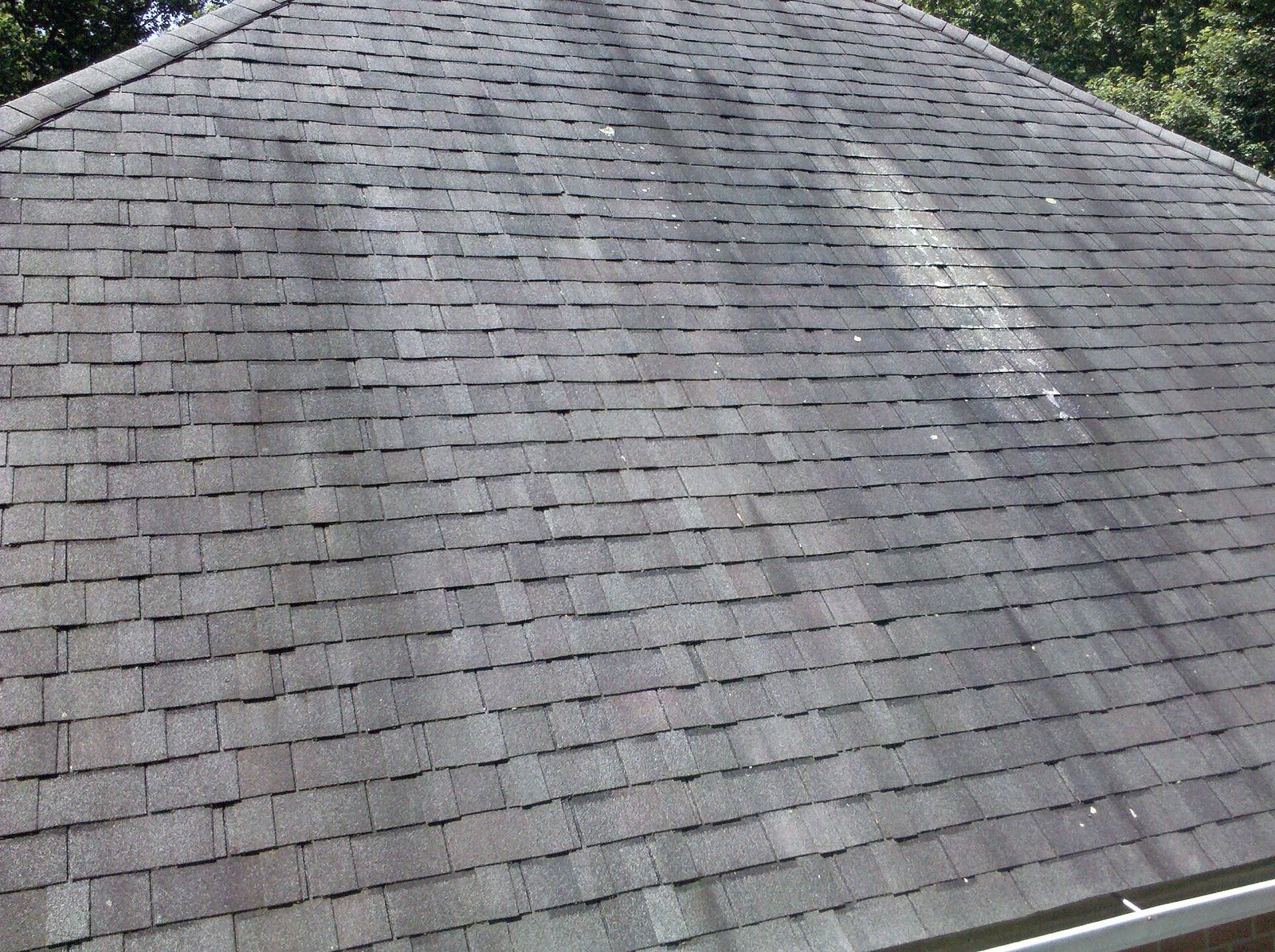
Black streaks on Florida roofs are almost always Gloeocapsa magma — a bacteria, not mold. It feeds on limestone in asphalt shingles, loosens protective granules, and creates conditions for moss and lichen. The fix is soft washing (never pressure washing). Prevention options include zinc/copper strips and algae-resistant shingles. Florida roofs typically need cleaning every 1–2 years.
Table of Contents
- It's Probably Not Mold — Here's What's Really Growing
- Is It Really a Problem, or Just Cosmetic?
- Why You Should Never Pressure Wash Your Roof
- How to Prevent It From Coming Back
- How Often Should Florida Roofs Be Cleaned?
- Frequently Asked Questions
It's Probably Not Mold — Here's What's Really Growing
Most of the black streaking you see on Florida roofs isn't mold at all. It's a bacteria called Gloeocapsa magma, sometimes called blue-green algae, and it thrives in exactly the conditions our climate provides: consistent humidity, heavy rainfall, and plenty of shade from mature trees.
It typically shows up first on north-facing slopes and shaded areas that stay damp longest, then spreads as spores travel roof to roof on wind and wildlife.
Knowing what you're dealing with matters, because the three most common types of roof growth need different treatment:
- Algae — flat, dark gray or black streaks running downward with gravity, smooth to the touch
- Moss — raised, spongy green clumps that lift shingle edges and hold water against the roof deck
- Mold/mildew — fuzzy or powdery patches, usually near eaves, often signaling a moisture or ventilation issue
If you're not sure which one you're looking at, that's exactly the kind of thing we check during a free roof inspection.
Is It Really a Problem, or Just Cosmetic?
Both, honestly — and we'd rather give you the full picture than oversell it. The algae itself doesn't eat through shingles. But it feeds on the limestone filler in asphalt shingles, and over time that process loosens the protective granules bonded to the surface.
Once those granules wash away, the shingle underneath ages faster and loses UV protection. The dark staining also lowers your roof's ability to reflect heat, which can nudge your cooling costs up. And the moisture algae holds against the surface creates ideal conditions for moss and lichen, which cause more direct physical damage by lifting shingles and trapping water.
Left alone long enough, in other words, a cosmetic problem becomes a maintenance problem. Catching it early is what keeps it in the "wash it off" category instead of the "replace the shingles" category.
Why You Should Never Pressure Wash Your Roof
This is the one we can't stress enough: never let anyone pressure wash your asphalt shingle or tile roof. High-pressure water strips the protective granules right off asphalt shingles and can crack tile or force water underneath it — and in most cases, it doesn't even solve the problem.
Pressure washing blasts away the visible surface layer, but the organism embedded between granules survives and regrows within months.
It's also a warranty issue. Manufacturer warranties, including GAF's, typically exclude damage caused by pressure washing, which means a well-intentioned cleaning could cost you coverage you're counting on.
The professional standard — and the method our GAF Master Elite certified team uses — is soft washing: a low-pressure application of a diluted, algae-killing solution that's allowed to dwell on the surface before a gentle rinse. It kills the organism at the source instead of just knocking off what's visible, and it does it without stripping granules or risking your warranty.
How to Prevent It From Coming Back
Once your roof is clean, keeping it that way is a lot easier than starting over. A few options worth discussing with your roofer:
- Zinc or copper strips installed near the roofline release trace metal ions with every rain, inhibiting new algae and moss growth downslope
- Algae-resistant shingles, available at replacement time, use built-in copper technology and typically carry a 25+ year algae warranty
- Trimming overhanging branches and keeping gutters clear reduces the shade and standing moisture that feed growth in the first place
If you're due for a roof replacement in the Tampa Bay area anyway, algae-resistant shingles are worth a look — it's a lot easier to prevent staining than to keep cleaning it off.
How Often Should Florida Roofs Be Cleaned?
Because our climate stays warm and humid nearly year-round, Florida roofs need attention more often than roofs in drier regions. As a general baseline:
- Every 1–2 years for asphalt shingle roofs, especially under heavy tree cover
- Every 2–3 years for tile roofs
- Annually for homes near the coast, under dense canopy, or with a history of fast regrowth
The best time to schedule a cleaning is during Florida's drier months, so treatment has a chance to work before the next round of heavy rain washes it away.
Frequently Asked Questions
Is roof algae dangerous to my health?
Gloeocapsa magma itself isn't a health hazard in the way mold spores from a fungal growth can be. It's primarily a roofing durability and curb-appeal issue rather than an indoor air quality concern — though heavy moss or fungal growth near eaves is worth having inspected.
Will roof cleaning damage my landscaping?
A professional soft wash accounts for this — plants near the work area are pre-wetted and rinsed, and downspouts are managed to control runoff, so your landscaping stays protected.
Can I just clean the streaked areas myself?
We'd recommend against DIY chemical treatments and pressure washing. Roofs are a fall hazard even before you add slippery, wet, chemically treated surfaces to the equation — this is a job best left to a licensed, insured professional.
Does algae staining mean I need a new roof?
Not usually. Staining alone is a cleaning issue. But if you're also seeing granule loss in your gutters, raised moss growth, or your roof is approaching the end of its expected lifespan, staining can be a sign it's time to evaluate replacement rather than just cleaning.
Will cleaning restore my roof's full lifespan?
Cleaning addresses the algae itself and stops further granule loss from that cause, but it doesn't reverse aging that's already occurred. Regular cleaning as part of ongoing maintenance is what protects the lifespan you have left.
Does Hytz Roofing offer roof cleaning services?
Our team can inspect your roof, identify exactly what's growing and how far it's progressed, and recommend the safest path forward — whether that's a soft wash, targeted moss removal, or a broader conversation about your roof's condition. Contact us for a free inspection.
Don't Let Streaks Turn Into a Bigger Problem
Roof algae is one of those issues that's easy to put off — until granule loss, moisture damage, or a lost warranty claim make it a much bigger conversation. Our team has spent 30+ years combined keeping Central Florida roofs protected the right way, and as a GAF Master Elite certified contractor (FL License #CCC1332551), we know how to treat algae, moss, and mold without putting the rest of your roof at risk.
Ready for a free inspection? Contact Hytz Roofing today, and we'll give you an honest, no-pressure assessment of what your roof actually needs.
"Professional, on time, cleaned everything. Excellent service." — Kettlie G.
"I just like to say I've used HYTZ Roofing Inc. several times. Every time their workmanship, on-time delivery, professionalism, and pricing has exceeded my expectations." — David Kingeter
Related reading:
- Common Roofing Problems and Solutions — see how algae staining compares to other issues Florida homeowners run into
- Predictive Roof Maintenance — build algae prevention into a broader maintenance plan
- Roofing Warranties Explained — understand what your manufacturer warranty does and doesn't cover