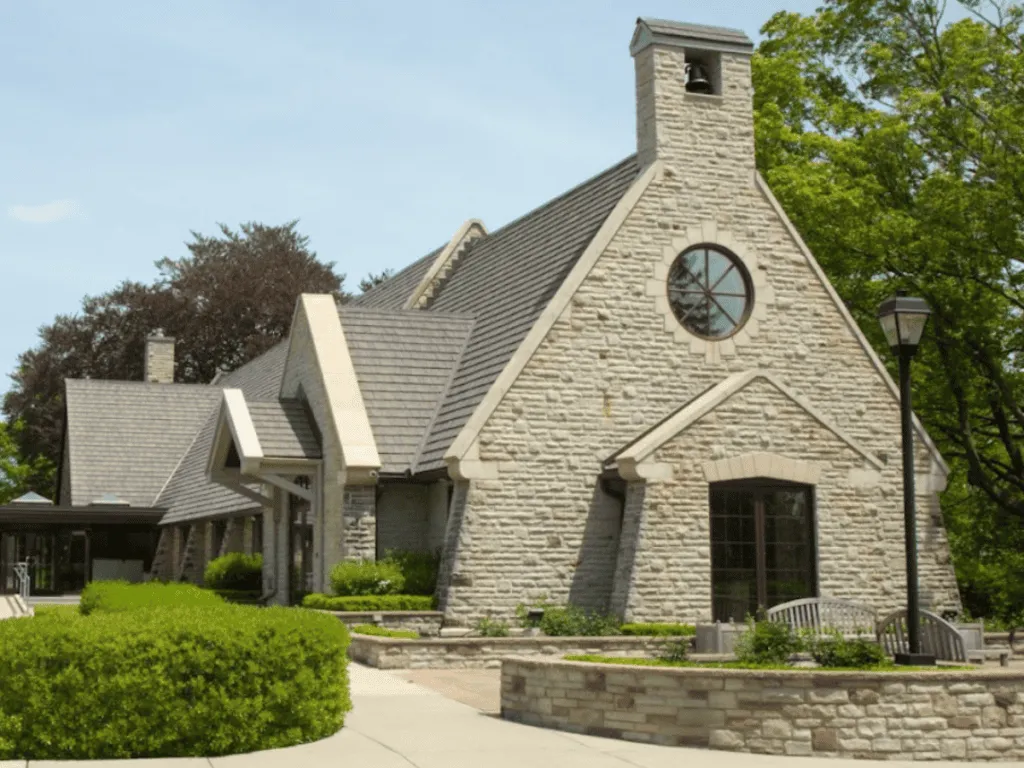
Enviroshake Church Roofing highlights cedar-like appearance and durable performance used in heritage church restorations. Enviroshake composite roofing replicates the look of natural cedar shake while delivering superior durability, Class A fire resistance, and a lifetime warranty — making it an ideal choice for heritage restoration projects.
Table of Contents
- What are the unique challenges of heritage roofing?
- Why is natural cedar shake often no longer viable for heritage projects?
- How does Enviroshake replicate heritage aesthetics?
- What performance standards protect heritage buildings?
- What Are the Sustainability Credentials for Green Building Standards?
- What Are Some Real-World Heritage Projects with Enviroshake?
- How Can You Start Working with Hytz Roofing on Heritage and Church Projects?
Restoring Heritage: Enviroshake's Church Projects
Historic churches, heritage homes, and landmark buildings occupy a special place in their communities. Their architecture tells a story — and the roofing material is often central to that story. Traditional cedar shake roofing has been used on ecclesiastical and heritage buildings for generations, prized for its natural beauty, texture, and the way it weathers to a distinguished silver-grey over time.
But restoring or replacing the roof on a historic building today means navigating a new set of requirements: modern fire codes, stricter building standards, insurance requirements Florida Building Code, and the practical reality that old-growth cedar is increasingly scarce and expensive. Enviroshake composite roofing has emerged as the leading solution for heritage restoration projects precisely because it solves all of these challenges simultaneously.
Key Takeaways
- Aesthetic Match: Enviroshake replicates the look of natural cedar shake perfectly.
- Fire Safety: It provides a Class A fire rating, crucial for historic buildings.
- Durability: Offers a lifetime warranty and withstands harsh weather conditions.
- Sustainability: Made from 95% recycled materials and is fully recyclable.
- Expert Installation: Hytz Roofing has the experience needed for heritage projects.
What are the unique challenges of heritage roofing?
Restoring the roof of a historic church or heritage building is fundamentally different from a standard residential replacement, involving aesthetic fidelity, modern code compliance, structural considerations, and long-term stewardship.
Restoring the roof of a historic church or heritage building is fundamentally different from a standard residential replacement. The challenges include:
- Aesthetic fidelity: Heritage buildings often have architectural review requirements or community expectations that the restored roof must closely match the original material's appearance. A generic asphalt shingle replacement is typically unacceptable — the texture, profile, and weathering characteristics of the original material must be replicated.
- Modern code compliance: Buildings that were constructed under older codes must meet current requirements when significant work is performed. This often means upgrading to fire-rated materials, meeting current wind resistance standards, and complying with updated energy codes — all while maintaining the historic character of the building.
- Structural considerations: Historic buildings were often designed around the weight of their original roofing material. Replacing cedar shake with a heavier material like concrete tile may require structural reinforcement. Composite materials like Enviroshake are engineered to be lightweight, reducing structural load concerns.
- Long-term stewardship: Churches and heritage organizations often have limited maintenance budgets. A roofing material that requires frequent treatment, is susceptible to moss and algae growth, or has a short service life creates ongoing financial pressure. A low-maintenance, long-lasting material is essential for responsible stewardship of these buildings.
Why is natural cedar shake often no longer viable for heritage projects?
Natural cedar shake faces challenges such as fire risk, high maintenance demands, and increasing scarcity and cost, making it less suitable for modern heritage restoration.
Natural cedar shake was the original roofing material of choice for churches and heritage buildings for good reason — it is beautiful, naturally insulating, and ages gracefully. But several factors have made it increasingly difficult to specify for restoration projects:
- Fire risk: Untreated cedar shake carries a Class C or Class B fire rating at best. Many jurisdictions — particularly in areas with wildfire risk or dense urban settings — now prohibit Class C materials or require Class A fire-rated roofing UL. Churches, which are often surrounded by mature trees and are sometimes located in historic urban neighborhoods, frequently fall into these restricted zones.
- Maintenance demands: Natural cedar requires regular treatment with preservatives and fungicides to prevent rot, moss, and insect damage. In Florida's humid climate, untreated cedar can begin to deteriorate within 5–10 years. The ongoing maintenance cost and the disruption to building operations make natural cedar a challenging choice for organizations with limited resources.
- Availability and cost: Old-growth cedar — the quality traditionally used for heritage roofing — is increasingly scarce. Prices have risen significantly, and the consistency of available material has declined. Matching the profile and texture of original cedar shake with new-growth material is difficult.
How does Enviroshake replicate heritage aesthetics?
Enviroshake replicates heritage aesthetics by using molds derived from actual cedar shake profiles to capture natural variations in texture and thickness.
Enviroshake was specifically engineered to replicate the appearance of natural cedar shake at a level of detail that satisfies even the most demanding aesthetic requirements. The manufacturing process uses molds derived from actual cedar shake profiles, capturing the natural variation in texture, thickness, and surface character that gives cedar its distinctive appearance.
The result is a product that, from street level and in photographs, is virtually indistinguishable from natural cedar. Enviroshake weathers naturally over time, developing the silver-grey patina that heritage building owners and architectural review boards expect. It is available in multiple color profiles to match different cedar species and weathering stages.
For heritage restoration projects, Enviroshake offers the ability to match the original roof's visual character while delivering performance that natural cedar cannot provide.
What performance standards protect heritage buildings?
Heritage buildings are protected by rigorous performance standards, including Class A fire ratings and Class 4 impact resistance.
Heritage buildings are irreplaceable. The roofing material chosen for a restoration project must provide the highest level of protection available. Enviroshake's performance certifications make it one of the most comprehensively tested roofing products on the market:
| Performance Standard | Enviroshake Rating |
|---|---|
| Fire Rating (ASTM E108) | Class A — highest available |
| Impact Rating (UL 2218) | Class 4 — highest available |
| Wind Resistance | 180 MPH |
| Rain Resistance | 225 mm/hour |
| HVHZ (Florida Hurricane Zone) | Approved Miami-Dade County |
| Warranty | Lifetime, fully transferable |
The Class A fire rating is particularly important for church and heritage projects Florida Building Code. It means Enviroshake will not contribute to the spread of fire and provides the highest level of fire protection available in a roofing material — critical for buildings that are often difficult to evacuate quickly and represent irreplaceable community assets.
What Are the Sustainability Credentials for Green Building Standards?
Enviroshake offers impressive sustainability credentials, including 95% post-industrial recycled content and 100% recyclability at the end of its life. This makes it an excellent choice for green building projects.
Many heritage restoration projects today are also pursuing green building certifications or sustainability goals. Enviroshake's environmental credentials align well with these objectives:
- 95% post-industrial recycled content — the tiles are manufactured from reclaimed materials that would otherwise enter the waste stream
- 100% recyclable at end of life — the material can be recycled rather than sent to landfill when the roof eventually needs replacement
- LEED contribution — Enviroshake has been independently assessed for LEED and NGBS certification, contributing 16.5 direct LEED points and 57 relevant points FRSA
- Non-toxic runoff — testing has confirmed that runoff water from Enviroshake roofs meets World Health Organization drinking water standards NOAA, an important consideration for buildings near water features or in sensitive environments.
What Are Some Real-World Heritage Projects with Enviroshake?
Enviroshake has been successfully used in numerous heritage and ecclesiastical projects across North America. These projects demonstrate its ability to honor cultural significance while meeting modern performance standards.
Enviroshake has been specified for heritage and ecclesiastical projects across North America. The Doig River Cultural Centre is one notable example — a project that required a roofing material that honored the building's cultural significance while meeting modern performance standards. Enviroshake's ability to replicate traditional aesthetics while delivering Class A fire protection and lifetime durability made it the specified choice.
Church projects across Florida and the Southeast have similarly turned to Enviroshake when replacing aging cedar shake roofs. The combination of authentic appearance, code compliance, and low maintenance makes it the practical and aesthetic choice for buildings that must endure for generations.
How Can You Start Working with Hytz Roofing on Heritage and Church Projects?
You can start working with Hytz Roofing by contacting our team for a consultation. We provide material samples, technical specifications, and references from completed heritage projects in the Tampa Bay region.
Hytz Roofing has experience working with churches, historic homes, and heritage buildings across the Tampa Bay region. We understand the unique requirements of these projects — from coordinating with architectural review boards to ensuring that installation meets Enviroshake's warranty requirements with Factory Trained Installers on site.
If you are managing a heritage building restoration project and want to discuss Enviroshake as a roofing solution, contact our team for a consultation. We can provide material samples, technical specifications, and references from completed heritage projects.
Related Resources: Enviroshake Roofing Options | What Is a Class 4 Impact Rating? | Residential Roofing | Get a Free Estimate