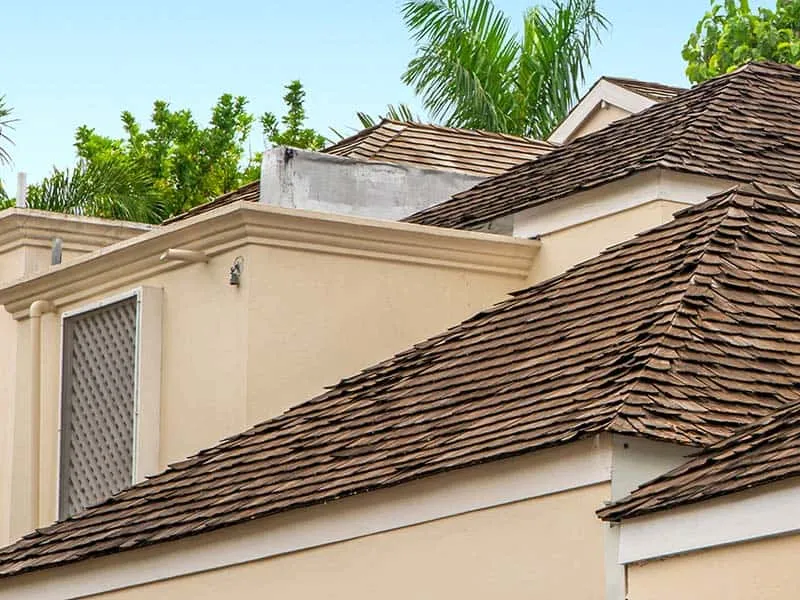
Cedar Roofing Issues often include rot, splitting, and moss growth, and recognizing them early helps guide maintenance and repair decisions.
Issues with Cedar Shakes and Shingles
Issues with Cedar Shakes and Shingles
| Factor | Details |
|---|---|
| Material | Cedar Wood |
| Durability | Moderate (prone to rot, insects) |
| Maintenance | High (regular cleaning, sealing) |
| Cost | High (initial and long-term) |
| Fire Rating | Low (can be treated) |
| Wind Resistance | Varies by installation and age |
What Are the Common Issues with Cedar Roofs in Florida?
Cedar roofing, while aesthetically pleasing, faces significant challenges in Florida's humid and storm-prone climate.
- Moisture Damage: High humidity leads to rot and decay.
- Algae and Moss: Frequent rain promotes biological growth.
- Wind Vulnerability: Older cedar shakes may lack sufficient wind uplift resistance [FEMA].
- Maintenance Intensive: Requires regular cleaning and treatment.
- Fire Risk: Untreated cedar poses a higher fire hazard compared to Class A rated materials UL
Why Choose Hytz Roofing?
Key Benefits for Florida Homes, including enhanced wind uplift resistance and algae-resistant coating options.
Related Resources: Hytz Roofing's Enviroshake Roofing Options | Residential Roofing Services | Get a Free Estimate