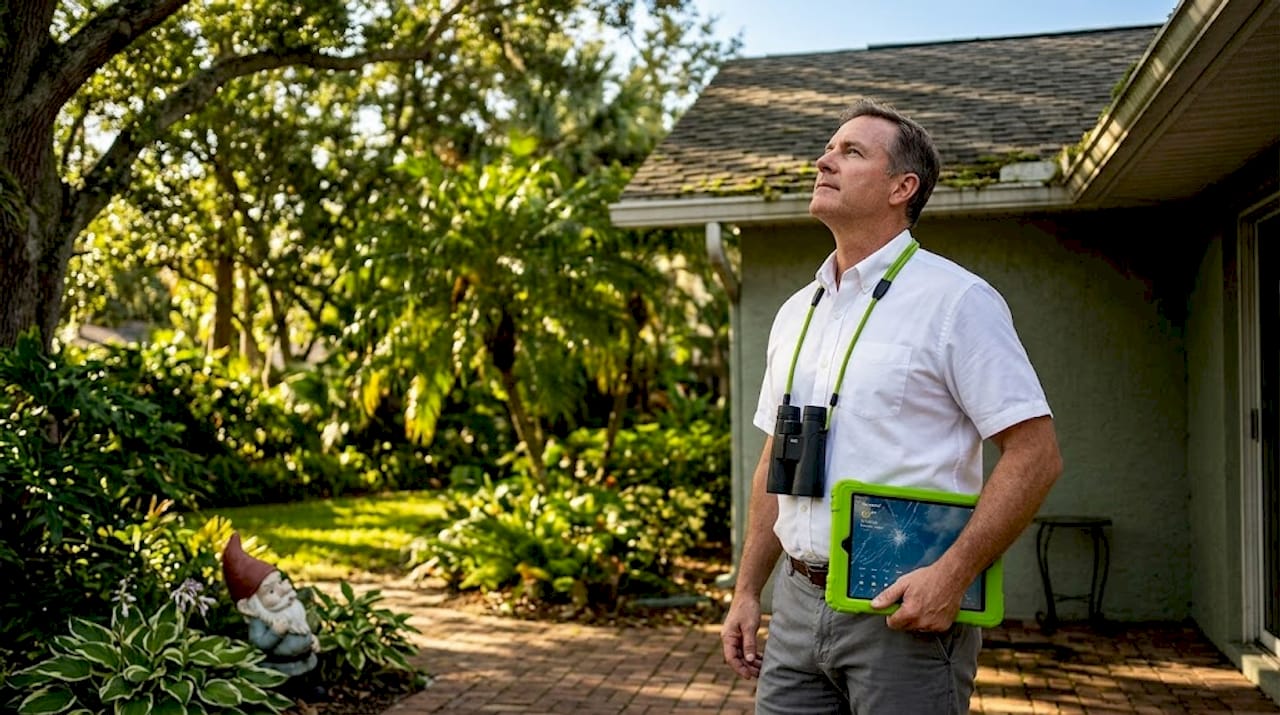
How to Identify Roof Damage Needing Repair in Florida
Roof Damage in Florida can appear as missing shingles, sagging areas, water stains, or granule loss, and this article explains how to recognize and assess those issues.
Your roof takes a beating in Florida. Between hurricane season, intense UV exposure, and near-daily summer storms, damage can build up quietly until a small problem becomes a very expensive one. Knowing how to identify roof damage needing repair early gives you real power. You can catch issues before they spread, protect your home’s structure, and build a solid case for your insurance claim. This guide walks you through exactly what to look for, how to document it, and when to call in a professional.
Table of Contents
- Key takeaways
- How to identify roof damage needing repair: before you start
- Spotting damage from the ground and attic
- Repair or replace: how to decide
- Documenting damage for insurance claims
- Common inspection mistakes to avoid
- My honest take on roof inspections
- Get a professional inspection you can trust
- FAQ
Key takeaways
| Point | Details |
|---|---|
| Start from the ground | Use binoculars and a camera to spot signs of roof damage without climbing up. |
| Check inside too | Water stains, musty odors, and damp insulation in your attic are early leak warnings. |
| Know the repair threshold | If repair costs exceed 50% of replacement cost, a full replacement usually makes more sense. |
| Document everything fast | Photo and video evidence with timestamps within 48 hours is critical for insurance claims. |
| Don’t skip pipe boots | Rubber pipe boots are the most common failure point and are easy to miss during a quick look. |
How to identify roof damage needing repair: before you start
Before you inspect anything, you need the right setup. A rushed or unprepared inspection misses more than it finds.
Here is what you should have ready:
- Binoculars for ground-level viewing of shingles, flashing, and ridge caps
- A smartphone or camera to photograph and timestamp everything you see
- A flashlight for attic inspection in low-light corners
- A stable ladder if you need to inspect gutters or eaves up close
- A notepad or inspection app to log findings as you go
Safety first. Do not walk on your roof unless you are trained to do so. Florida roofs get slick with algae and moisture. Most damage is visible from the ground or through your attic. Climbing up without proper equipment creates real injury risk.
Pro Tip: Schedule inspections twice a year. Once before hurricane season in June and once after the season ends in November. Also inspect within 24 hours after any major storm, since 30% of storm-damaged roofs have at least one missing shingle within a day of the event.
The table below shows the best timing for each type of inspection:
| Inspection type | Best timing | Primary goal |
|---|---|---|
| Pre-season check | May, before hurricane season | Identify existing weak spots |
| Post-storm check | Within 24 hours of major storm | Catch new acute damage fast |
| Routine biannual | November, after storm season | Confirm seasonal wear and aging |
| After unusual weather | After hail, high winds, or heavy rain | Spot impact damage or new leaks |
Spotting damage from the ground and attic
This is where most homeowners make their first mistake. They look up at the roof from the yard, see nothing obvious, and assume everything is fine. Good roof repair identification requires a more systematic approach.
What to look for outside
Start from the ground with your binoculars. Work your way around the entire house. Here is a numbered walkthrough:
- Scan the shingle surface. Look for missing shingles, curled edges, cracked surfaces, or shingles that look darker or discolored compared to surrounding ones.
- Check your gutters. After rain, look for dark granules collecting in gutters or downspouts. Granule loss in gutters signals shingle deterioration and can cost $150 to $300 per square foot to address.
- Look at the roofline. A sagging ridge line or dipping sections between rafters suggests structural stress, not just surface wear.
- Inspect flashing and vents. Metal flashing around chimneys, skylights, and vents should lie flat and show no rust, lifting, or gaps.
- Check pipe boots. The rubber collars around plumbing vents are the most common failure point causing leaks. UV exposure degrades them fast in Florida.
- Look at the ridge caps. These are the shingles running along the very peak of your roof. Missing or lifted ridge caps expose your roof deck directly to rain.
Pro Tip: Take photos in sequence around the house so you have a complete visual record. Number your photos by zone (front, left side, back, right side) to make it easy to reference specific areas later.
What to look for inside your attic
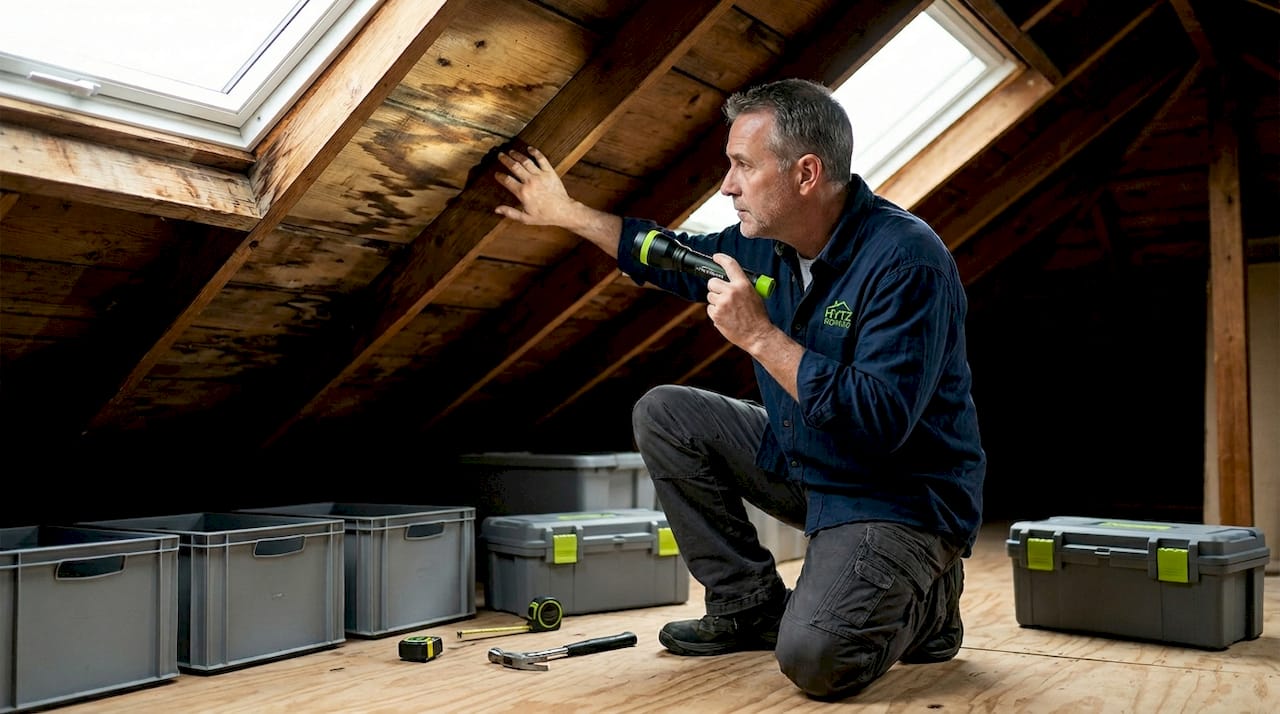
Your attic tells a story the exterior cannot always show. Grab your flashlight and look for:
- Water stains on the decking or rafters. Dry, ring-shaped stains indicate intermittent leaks during wind-driven rain, which is exactly the pattern Florida storms create. Wet stains mean an active leak right now.
- Daylight coming through the roof deck. Any visible light means there is a gap, crack, or hole that needs immediate attention.
- Musty odors or visible mold. These point to moisture that has been sitting long enough to grow. This is a serious sign.
- Damp or compressed insulation. Wet insulation loses its effectiveness and can harbor mold. It also means water has been getting in for a while.
Ignoring these interior signs is one of the most costly mistakes a homeowner can make. Moisture intrusion can require thousands to remediate once mold and drywall damage set in. Catching it early in the attic is the difference between a $500 repair and a $15,000 remediation project.
Repair or replace: how to decide
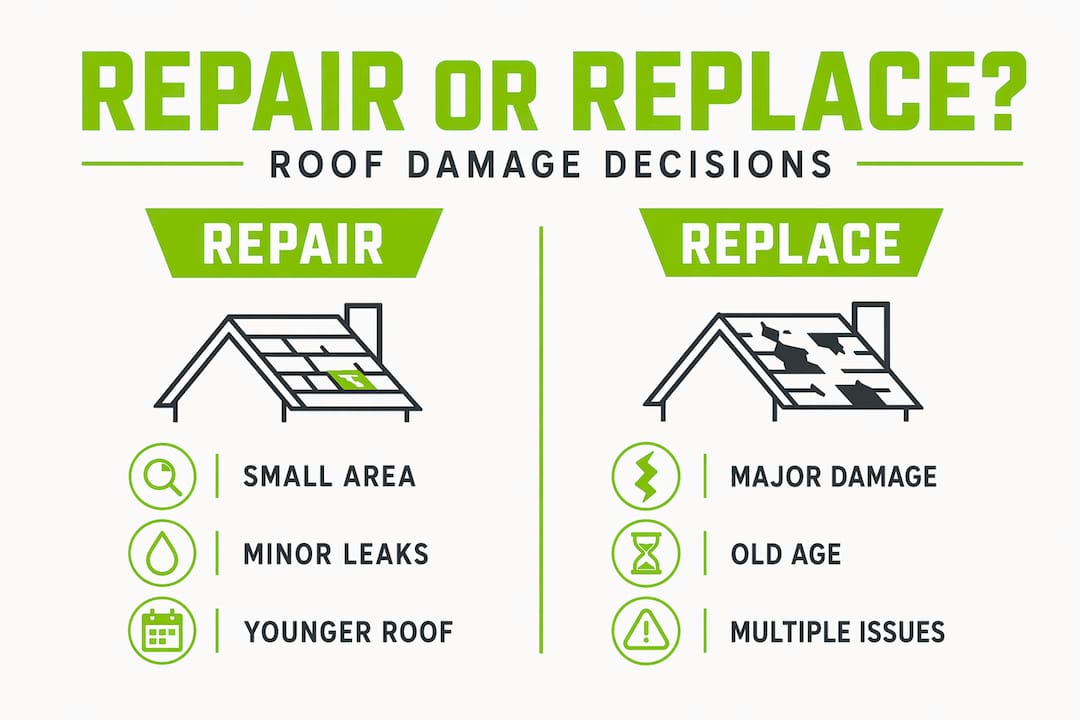
Once you have spotted the damage, you need to figure out how serious it is. This decision comes down to three factors: cost, age, and extent.
The cost threshold
If repair costs exceed 50% of what a full replacement would cost, most roofing professionals recommend replacing the roof. Here is a general breakdown of what repairs typically cost:
- Minor repairs (a few missing shingles, small flashing fix): $300 to $1,000
- Moderate repairs (larger shingle sections, pipe boot replacement, small leak repair): $1,000 to $4,000
- Major repairs (widespread shingle damage, significant flashing work, deck repair): $3,000 to $8,000
- Full replacement: starts at $8,000 and goes up based on roof size and material
The age rule
Roofing pros recommend replacement for any roof that has passed 80% of its expected lifespan and is facing significant repairs. A standard asphalt shingle roof lasts 20 to 25 years. If yours is 18 years old and needs $3,500 in repairs, putting that money toward a new roof is the smarter financial move. You can learn more about roof age and replacement decisions to help you weigh the numbers.
Signs you need replacement, not repair
Some damage goes beyond patching. Look for these red flags:
- Structural sagging anywhere on the roof deck
- Multiple leaks in different areas of the home
- Widespread shingle loss across more than one roof section
- Rotting or soft spots on the roof deck visible from the attic
- Roof has already been repaired multiple times in recent years
Pro Tip: Get at least two professional opinions before committing to a full replacement. A reputable contractor will tell you honestly if repairs will hold. One who pushes replacement on a roof with only minor damage is not looking out for your best interest.
Documenting damage for insurance claims
Florida homeowners file more roofing insurance claims than almost any other state. How you document damage directly affects whether your claim gets approved and how much you receive.
Timely photo documentation after storm damage is critical for insurance success. Here is what your documentation package should include:
- Date and time-stamped photos of all visible exterior damage
- Interior photos of any water stains, wet insulation, or visible gaps in the attic
- Video walkthrough of the roof perimeter from the ground
- Written notes describing when the storm occurred and what you observed
- Any previous inspection reports showing the roof was in good condition before the storm
Insurance typically covers sudden event damage but excludes aging and general wear. This distinction matters. If your shingles were already deteriorating before the storm, the insurer may argue the damage was pre-existing. A clean inspection record from before the storm is your best defense against that argument.
Do not tell your adjuster the roof “has always had a few leaks” or that you noticed problems “a while back.” Statements like these give insurers grounds to classify damage as maintenance neglect rather than storm damage. Stick to what you observed after the specific weather event and let your documentation speak.
Pro Tip: Report damage and begin your documentation within 48 hours of a storm. Many Florida insurance policies have strict reporting windows, and delays can weaken your claim significantly.
Common inspection mistakes to avoid
Even careful homeowners miss things. Here are the most frequent errors in self-inspections and how to avoid them.
- Skipping pipe boots entirely. Pipe boots degrade under UV, creating cracks that are only visible when you physically flex the rubber collar. From the ground, they can look fine. Up close, they are cracked through.
- Missing nail pops. Nails that have worked their way up through shingles create small entry points for water. They are easy to overlook because they do not look dramatic.
- Ignoring ridge caps. The most commonly missed inspection items are pipe boots, ridge caps, and nail pops far from the eaves. These areas are often the first to fail.
- Assuming no interior stains means no leak. Some leaks travel along rafters before dripping, leaving no obvious ceiling stain until significant damage has already occurred.
- Not re-inspecting after the next rain. If you are unsure about a suspicious area, check your attic during or right after the next heavy rain. Active leaks reveal themselves quickly.
When your attic inspection is inconclusive or you find signs that do not add up, a professional roof inspection costs $75 to $150 and can uncover hidden issues that no ground inspection will catch. That is a small price compared to what a missed leak can cost.
Pro Tip: Keep a simple roof log on your phone. After each inspection, note the date, what you checked, and what you found. This record becomes valuable when filing insurance claims or deciding on repairs.
My honest take on roof inspections
I have talked with hundreds of Florida homeowners over the years, and the pattern I see most often is this: people wait. They notice a small stain on the ceiling, tell themselves it is probably nothing, and check on it again in three months. By then, the mold has started and the drywall needs to come out.
Florida’s climate does not give you that kind of grace period. The combination of intense UV, hurricane-force winds, and near-daily summer rain means your roof ages faster here than in most of the country. What looks like a minor issue in October can be a major structural problem by March.
The thing I find most homeowners underestimate is the pipe boot problem. It is not glamorous, and it does not look alarming from the ground. But a cracked rubber boot around a plumbing vent is one of the most reliable ways water gets into your home quietly and consistently. I always tell people: flex those collars when you get close enough. If the rubber cracks when you bend it, it is already failing.
My practical advice is simple. Inspect twice a year, document everything, and do not wait for a ceiling stain to confirm what your attic is already telling you. The homeowners who stay ahead of their roof are the ones who avoid the $20,000 surprises. For storm-specific inspection tips tailored to Florida weather, it is worth reading up before hurricane season hits.
— Anthony
Get a professional inspection you can trust
Spotting the signs yourself is a great first step. But confirming the full extent of damage, especially hidden deck issues or subtle flashing failures, takes trained eyes and the right equipment. Hytzroofing is a GAF Master Elite® Contractor serving Tampa, Plant City, and surrounding Florida communities. That designation is held by fewer than 2% of roofing contractors in North America, and it means every inspection and repair meets a higher standard. Whether you need a post-storm assessment, help building your insurance claim, or a clear answer on repair versus replacement, the Hytzroofing team is ready to help. Reach out today for an honest evaluation you can act on.
FAQ
What are the most common signs of roof damage?
Missing or curled shingles, granules in gutters, water stains in the attic, and sagging sections are the most common signs of roof damage. Pipe boot cracks and lifted flashing are also frequent culprits that homeowners often miss.
How do I detect roof leaks without going on the roof?
Check your attic with a flashlight for water stains, wet insulation, daylight through the decking, and musty odors. Dry ring-shaped stains on rafters often indicate intermittent leaks caused by wind-driven rain.
When should I repair versus replace my roof?
If repair costs exceed 50% of the replacement cost, or if your roof has passed 80% of its expected lifespan, replacement is usually the better investment. Widespread damage across multiple areas also points toward replacement over patching.
How soon should I document damage after a storm?
Document damage within 48 hours of a storm with time-stamped photos and video. Many Florida insurance policies have strict reporting windows, and early documentation significantly strengthens your claim.
How much does a professional roof inspection cost?
A professional roof inspection typically costs $75 to $150 and can uncover hidden issues that ground-level checks miss, including attic moisture and deck damage that may not yet show interior signs.
Recommended
- Weathering the Storm Expert Tips for Roof Leak Repair in Tampa Fl
- Introducing Enviroshake to Your Hoa
- GAF Master Elite Roofer in Tampa, FL | Hytz Roofing
- 15 Urgent Roof Issues to Fix Before the Next Florida Storm
Article generated by BabyLoveGrowth
Related Hytz Roofing Services