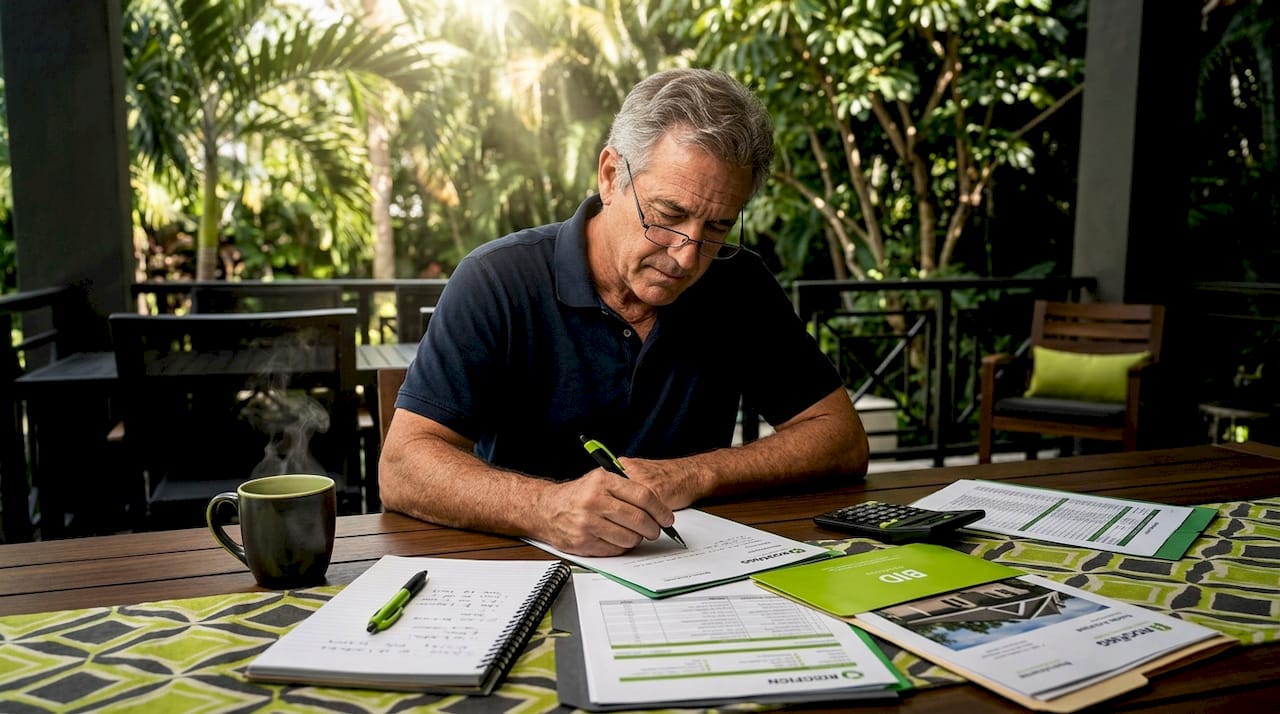
How to Compare Roofing Contractor Bids in Florida
Roofing Contractor Bids vary in scope, materials, and warranties; compare itemized estimates, exclusions, timelines, and guarantees to evaluate offers and ask informed questions.
Last updated: August 8, 2026
Comparing roofing contractor bids effectively means evaluating detailed, itemized quotes and verifying contractor credentials to get fair pricing and quality work. Florida homeowners face a unique challenge: the state’s storm-heavy climate creates constant demand for roofing services, which attracts both skilled contractors and opportunistic ones. Knowing how to read a bid beyond the total price is the skill that separates homeowners who get a fair deal from those who end up with surprise costs mid-project. This guide walks you through every step, from what a proper bid must contain to how to spot a scam before it costs you thousands.
What should a roofing bid include to compare bids accurately?
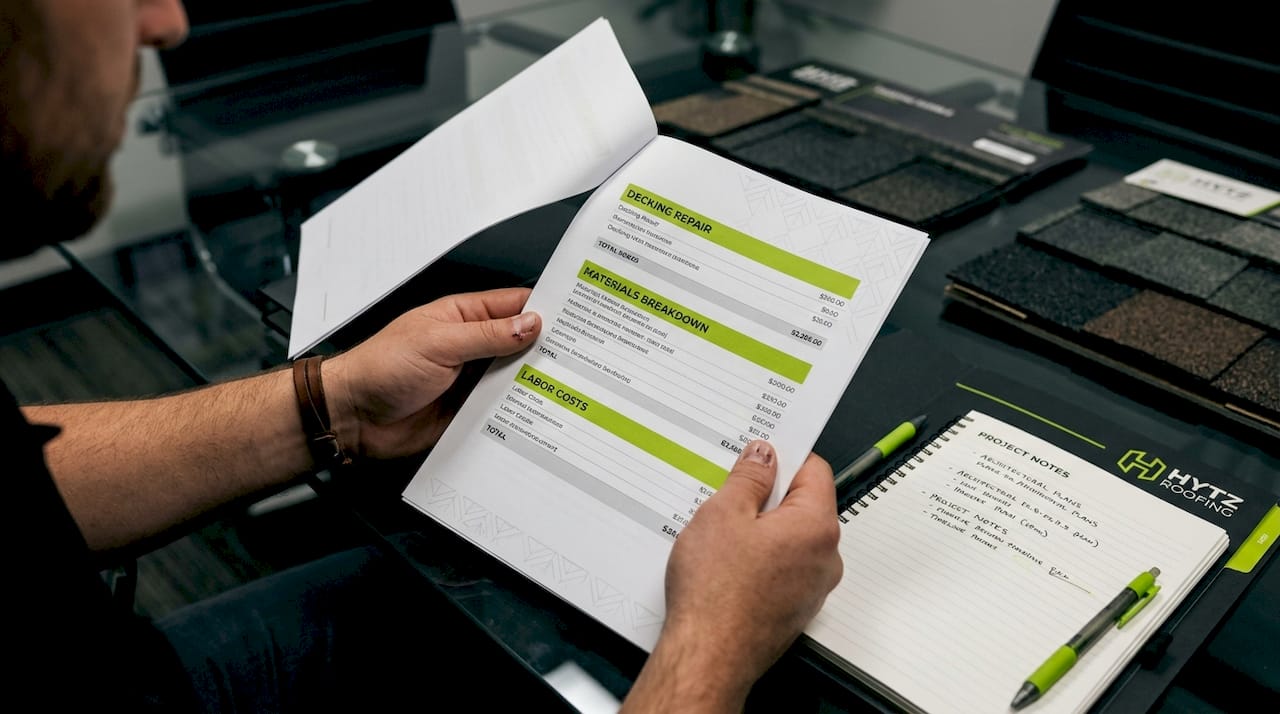
A roofing bid is a formal scope-of-work document, and itemized bids are critical for comparing proposals accurately. A total price with no breakdown tells you almost nothing. Two bids at the same dollar amount can represent completely different jobs depending on what each contractor plans to do.
Here is what every legitimate roofing bid must include before you take it seriously:
- Scope of work: Tear-off of existing layers, decking inspection and repair, underlayment type (synthetic vs. felt), and flashing replacement around chimneys, vents, and valleys.
- Material specifics: Brand names and product lines matter. A bid listing “GAF Timberline HDZ shingles” is verifiable. A bid listing “architectural shingles” is not.
- Separate labor and material line items: Bundled pricing hides where money is going. Separate line items let you compare labor rates and material costs independently.
- Warranty details: Manufacturer warranty (covering materials) and workmanship warranty (covering installation) should both appear in writing with specific durations.
- Project timeline: Start date, estimated completion, and what happens if weather causes delays.
- Permit costs: In Florida, roofing permits are legally required. Any bid that omits permit fees is either hiding them or planning to skip them entirely.
- Disposal and cleanup fees: Debris removal is a real cost. If it is not listed, it may show up as an add-on charge later.
Pro Tip: Ask every contractor to break out the cost of decking repair separately. Decking damage is often unknown until tear-off begins, and knowing the per-sheet price upfront prevents sticker shock when the crew finds rot.
Getting at least three written estimates is the standard recommendation from Angi and most roofing guides. Three bids give you enough data to spot outliers, both high and low, without overwhelming you with paperwork.
How to verify Florida roofing contractor licenses before comparing bids
License verification is not optional in Florida. The state requires roofing contractors to hold a valid license issued by the Florida Department of Business and Professional Regulation (DBPR). Skipping this step means you could be comparing bids from contractors who are not legally allowed to do the work.
Follow these steps to verify every contractor before you evaluate their bid:
- Visit MyFloridaLicense.com. Go to the DBPR’s official license lookup portal. Search by the contractor’s name or license number.
- Check for “Current/Active” status. A license that is expired, suspended, or under investigation is a disqualifying factor regardless of price. The DBPR lookup guide explains how to read each status clearly.
- Confirm the license type. Florida issues “Certified” licenses (valid statewide) and “Registered” licenses (valid only in specific counties). Make sure the contractor’s license covers your location.
- Request proof of general liability insurance. Ask the contractor to provide a certificate of insurance directly from their insurer, not a document they printed themselves.
- Confirm workers’ compensation coverage. If a worker is injured on your property and the contractor lacks workers’ comp, you could be held liable. This is not a technicality. It is a real financial risk.
Pro Tip: Call the insurance company listed on the certificate to confirm the policy is active. Fraudulent certificates exist, and a 60-second phone call eliminates that risk entirely.
Hytzroofing, for example, carries Florida Contractor License #CCC1332551, full general liability insurance, and workers’ compensation coverage. That level of documentation is what a verified contractor looks like. Use it as your benchmark when reviewing other bids.
How to do an apples-to-apples roofing estimate comparison
The most common mistake Florida homeowners make is comparing total bid prices without accounting for scope differences. A $9,000 bid and a $13,000 bid are not directly comparable if one includes full flashing replacement and the other does not. Normalized bid comparison tables make scope gaps and pricing differences immediately visible.
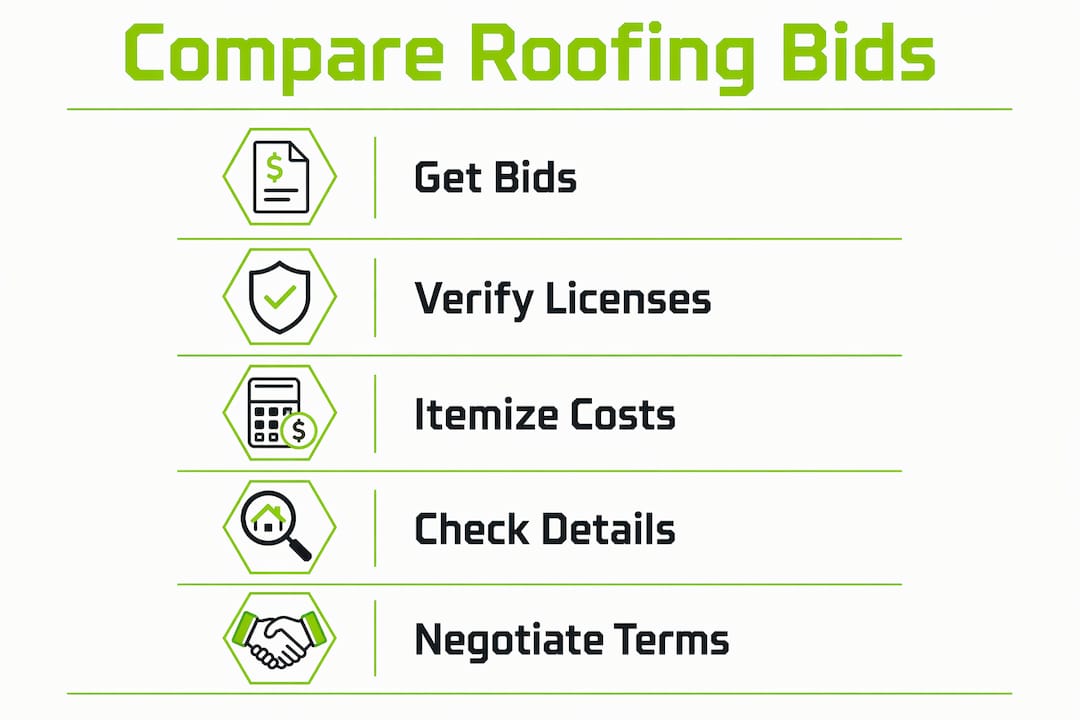
Build a simple table with each contractor as a column and each key variable as a row. Here is what that looks like in practice:
| Variable | Contractor A | Contractor B | Contractor C |
|---|---|---|---|
| Shingle brand and product | GAF Timberline HDZ | Generic architectural | Owens Corning Duration |
| Underlayment type | Synthetic | Felt | Synthetic |
| Full tear-off included | Yes | Yes | No (overlay) |
| Flashing replacement | Full | Partial | Not listed |
| Decking repair (per sheet) | $85 | Not listed | $110 |
| Manufacturer warranty | Lifetime | 25 years | Lifetime |
| Workmanship warranty | 10 years | 1 year | 5 years |
| Permit fees included | Yes | No | Yes |
| Disposal fees included | Yes | Yes | Not listed |
| Total bid price | $13,200 | $9,400 | $11,800 |
When you lay bids out this way, the $9,400 bid stops looking like a bargain. It uses felt underlayment, offers only a one-year workmanship warranty, and does not include permit fees. Add those missing items at market rates and the gap closes fast.
Pro Tip: When a line item is “not listed” in a bid, do not assume it is included. Ask the contractor in writing to confirm whether that item is in scope. Their answer tells you a lot about how they operate.
Constructing this kind of table also helps when managing a commercial roofing contractor bid, where the variables multiply and the dollar amounts make every line item more consequential.
What are the red flags when comparing roofing bids in Florida?
Florida’s active storm season creates a predictable pattern: after a major weather event, unlicensed or underqualified contractors flood the market with low bids. Knowing the warning signs protects you before you sign anything.
Watch for these red flags in any roofing contractor quote:
- Dramatically low pricing. Bids that are far below competitors almost always omit essentials like flashing, decking repair, disposal fees, or permits. The savings are an illusion.
- Large upfront payment demands. Full payment upfront is a red flag indicating potential fraud. A reasonable deposit is up to 50% of the total, with the remainder due on completion.
- No permit mention. Florida law requires permits for roofing work. A contractor who does not mention permits is either planning to skip them or passing the cost to you later.
- Refusal to provide documentation. Contractors who refuse to supply license numbers, insurance certificates, warranty documents, or product brand names should not be trusted with your home.
- Pressure to decide immediately. Legitimate contractors give you time to review. Pressure tactics are a manipulation strategy, not a sign of high demand.
A note on storm chasers: After hurricanes or major storms, out-of-state contractors often appear in Florida neighborhoods offering fast, cheap repairs. Many are unlicensed in Florida and disappear after collecting payment. Always verify the Florida DBPR license before signing anything, regardless of how urgent the damage feels.
Understanding why contractors underbid helps you recognize the pattern. Some do it to win work and then charge for extras. Others cut corners on materials or labor to protect their margin. Either outcome costs you more in the long run.
How to negotiate roofing bids and get the best value
Negotiating roofing bids is not about demanding the lowest price. It is about getting the most complete scope for a fair price. Here is how to do it effectively:
- Ask for itemization before negotiating. You cannot negotiate intelligently without knowing what each line item costs. Request a fully broken-out bid from every contractor.
- Use competing bids as a conversation tool. Show a contractor a competing bid and ask them to explain the differences rather than simply demanding a price cut. This approach surfaces scope gaps and gives the contractor a chance to match or beat the competition on specific items.
- Ask about timing discounts. Roofing contractors in Florida are busiest after storm season. Scheduling work during slower periods, typically late winter or early spring, can result in better pricing and faster scheduling.
- Negotiate scope additions, not just price. If a contractor will not lower their price, ask them to add value instead. Extended workmanship warranties, upgraded underlayment, or free gutter cleaning are reasonable asks.
- Walk away from bids that cannot be itemized. A contractor who refuses to break out their pricing has something to hide. There are enough reliable roofing contractors in Florida that you do not need to work with one who operates this way.
Pro Tip: Get all negotiated changes confirmed in writing before signing the contract. A verbal agreement to upgrade the underlayment means nothing if the written scope still lists the cheaper product.
Key takeaways
Comparing roofing contractor bids in Florida requires itemized estimates, verified credentials, and a structured comparison table to expose scope gaps that total prices alone will never reveal.
| Point | Details |
|---|---|
| Demand itemized bids | Every bid must list materials by brand, labor separately, warranty terms, permit fees, and disposal costs. |
| Verify licenses and insurance | Check every contractor on MyFloridaLicense.com and confirm insurance certificates directly with the insurer. |
| Build a comparison table | Map each bid against the same variables to make scope gaps and pricing differences visible at a glance. |
| Recognize red flags | Dramatically low prices, full upfront payment demands, and refusal to provide documentation are disqualifying signs. |
| Negotiate scope, not just price | Use competing bids to ask for clarifications and added value rather than arbitrary price reductions. |
What I’ve learned from watching homeowners compare roofing bids
After years in the Florida roofing industry, the pattern I see most often is this: homeowners focus on the bottom line and miss everything above it. They receive three bids, pick the middle one, and assume they made a smart decision. Sometimes they did. Often, they did not.
The bids that hurt people are not always the cheapest ones. I have seen mid-range bids that omitted flashing replacement entirely, which is a $1,500 to $2,500 item that becomes a leak source within two years. The homeowner thought they were being careful. They just were not looking at the right line items.
The other mistake I see regularly is skipping license verification because the contractor seemed professional and had good reviews. Florida’s licensing system exists precisely because charm and good reviews do not tell you whether someone is insured or legally authorized to work on your home. A storm-damaged roof is already a stressful situation. Adding an unlicensed contractor to it turns a repair into a legal and financial problem.
My honest advice: slow down. Give yourself at least a week to collect bids, build your comparison table, and verify credentials. The roof is not going anywhere, and the right contractor will respect your process. Any contractor who pressures you to decide in 24 hours is not the right contractor.
— Anthony
Get a transparent, itemized roofing estimate from Hytzroofing
Ready to put your comparison table to work? Hytzroofing makes it easy.
Hytzroofing is a GAF Master Elite® Roofer in Tampa, an honor held by fewer than 2% of roofing contractors in North America. Every estimate from Hytzroofing is fully itemized, listing materials by brand, labor separately, warranty terms, permit fees, and disposal costs. You will know exactly what you are paying for and why. Hytzroofing also holds the GAF President’s Club Award, the 2024 Brava Roof Tile Excellence Award, and the Angi Super Service Award 2025, backed by a BBB A+ rating and Florida Contractor License #CCC1332551. Contact Hytzroofing today for a detailed quote you can actually compare.
FAQ
What should I look for when comparing roofing contractor bids?
Look for fully itemized bids that list material brands, separate labor and material costs, warranty terms, permit fees, and disposal charges. Itemized estimates are the only way to compare bids accurately and avoid hidden costs.
How many roofing bids should I get in Florida?
Get at least three written, itemized bids before making a decision. Three quotes give you enough data to identify outliers and negotiate from a position of knowledge.
How do I verify a Florida roofing contractor’s license?
Visit MyFloridaLicense.com and search by the contractor’s name or license number. Confirm the status reads “Current/Active” and that the license type covers your county or region.
What is a red flag in a roofing bid?
Bids dramatically below competitors often omit flashing, permits, or disposal fees. Demands for full payment upfront and refusal to provide license or insurance documentation are also disqualifying warning signs.
Can I negotiate a roofing bid after receiving it?
Yes. Show the contractor a competing bid and ask them to explain the differences. This method surfaces scope gaps and gives contractors a fair opportunity to adjust pricing or add value rather than simply cutting their margin.
Recommended
- Weathering the Storm Expert Tips for Roof Leak Repair in Tampa Fl
- GAF Master Elite Roofer in Tampa, FL | Hytz Roofing
- Why We’re Tampa’s Top Choice for Roofing Services
- Its Not Just a Roof
Related Hytz Roofing Services