tl;dr
The tile is cladding, not waterproofing — a cracked-through tile exposes the underlayment and needs prompt repair. Florida Building Code Section 706.1.1 (the 25% Rule) means multiple small repairs within 12 months can trigger a full re-roof requirement. Hairline cracks can be monitored; shattered or missing tiles need immediate attention.
A cracked tile or two might not seem like a big deal — until you understand what's actually happening underneath it. In Central Florida, cracked tiles are one of the most common issues we get called about, and the right response depends on more than just how the crack looks. Here's what's actually going on, and how Florida's building code affects the decision to repair versus replace.
What Causes Tiles to Crack in Florida
A handful of things drive tile cracking here, and it's rarely just one:
- Foot traffic — Concrete and clay tiles are only rated to be walked on at the bottom few inches, where they're supported by the tile beneath. Stepping in the middle, or anywhere unsupported, snaps them.
- Storm and impact damage — Falling branches and wind-driven debris are the leading cause of cracked and broken tiles after Florida's storm season.
- Thermal cycling — Florida's daily heat-and-cool cycle causes tiles to expand and contract, and over years that creates hairline cracks at stress points.
- Age and brittleness — Concrete tile roofs can last 30 to 75 years, but tiles do become more brittle over time, especially with minimal maintenance.
- Manufacturing or handling issues — Less common, but tiles handled roughly during shipping or installed before the concrete fully cures can develop early cracks.
Why the Tile Itself Isn't the Real Problem
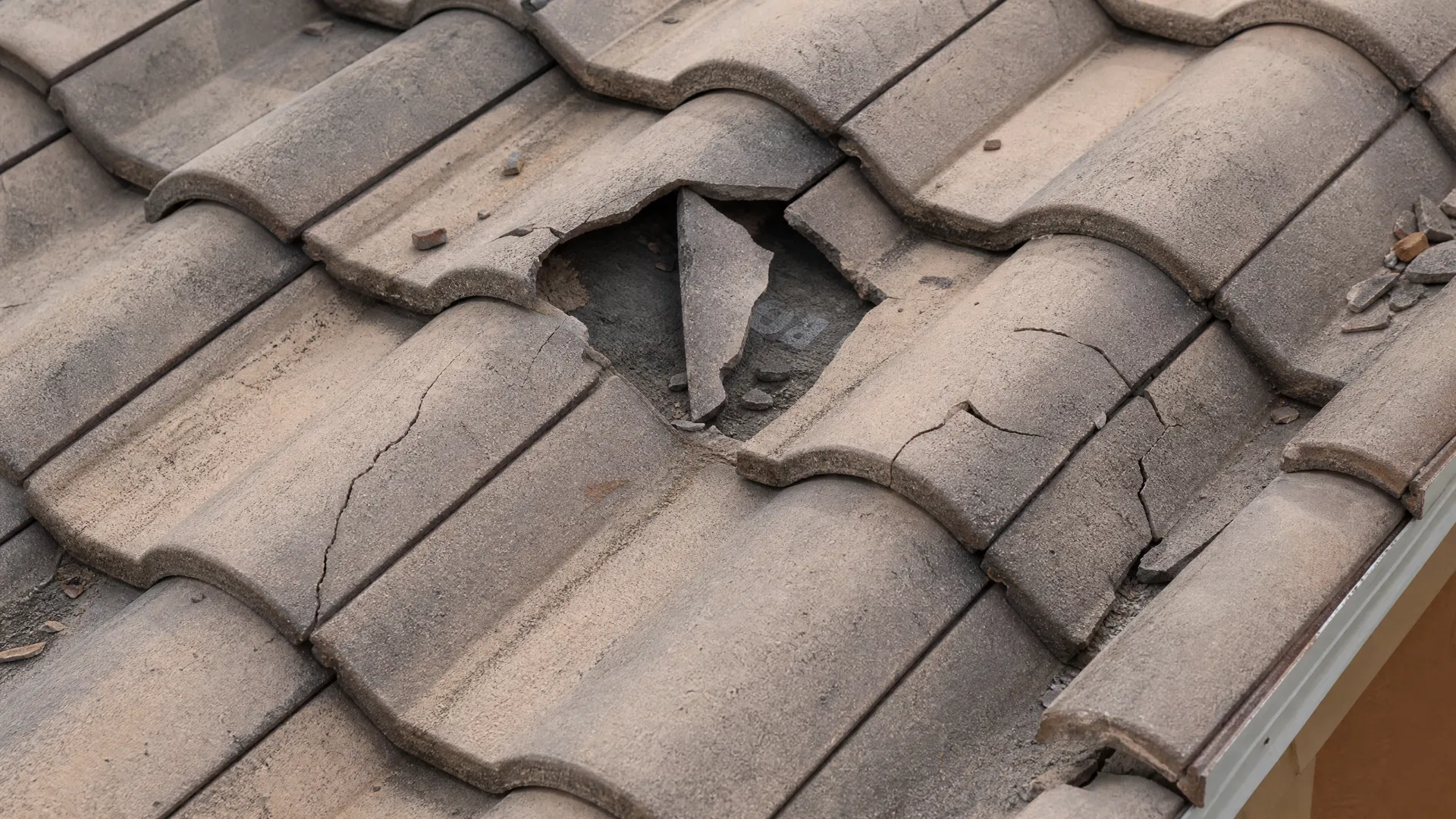
Here's the piece most homeowners don't realize: the tile is cladding, not waterproofing. The actual waterproof layer of your roof is the underlayment underneath it. A tile's job is to protect that underlayment from sun and impact — so once a tile cracks all the way through, you're not just looking at a cosmetic issue. You're looking at exposed underlayment, and underlayment that's exposed to UV and water starts breaking down fast.
That's the distinction that should guide how urgently you respond:
- Hairline cracks — Cosmetic to minor for now. Worth monitoring, since they can widen with continued thermal cycling.
- Cracked-through tiles — Urgent. The underlayment beneath is exposed, and left alone this leads to leaks, deck rot, and interior damage.
- Shattered, displaced, or missing tiles — Immediate repair needed. Full exposure means active risk every time it rains.
When Does a Repair Become a Full Re-Roof?
This is where Florida code makes the decision for you, whether you want it to or not. Under Florida Building Code Section 706.1.1 — commonly known as the 25% Rule — no more than 25% of a roof can be repaired or replaced within a rolling 12-month period without bringing the entire roof section up to current code. Multiple smaller repairs within that window get added together toward the 25% total.
There's an important exception, though: if your roof was originally built or fully replaced under the 2007 Florida Building Code or later (generally, permitted on or after March 1, 2009), that threshold no longer automatically triggers a full replacement — only the actual repaired area has to meet current code.
Where this gets complicated for tile specifically: even when the visible tiles survive a storm just fine, the underlayment beneath them often doesn't, and bringing that up to code frequently means a full tear-off and re-set of the existing tile — even though the tile itself is reusable. That's a very different, more involved job than swapping a few broken pieces, and it's worth understanding before you're mid-insurance-claim.
Matching Discontinued Tile
If you're only replacing a handful of tiles, matching matters. Tile profiles and colors have changed constantly over the decades, and a lot of older profiles are no longer manufactured. When we can't get an exact match, the usual approach is pulling tiles from a less visible slope (like the back of the house) to patch the front, or using the closest available match somewhere less noticeable. It's not always a perfect fix, which is one more reason larger storm-related tile damage sometimes makes more sense to address as a full re-roof rather than patchwork repairs.
What This Means for Your Insurance Claim
Florida's Ordinance or Law insurance provision is what typically covers the code-mandated portion of a job — meaning if code forces additional work beyond just the damaged tiles, that provision is what determines whether it's covered. This is exactly the kind of detail worth having a professional walk through with you before you file, since the difference between "replace a few tiles" and "code requires a full re-set" can significantly change both the cost and the insurance conversation.
Frequently Asked Questions
How many cracked tiles is too many?
There's no fixed number — it depends on how much of the roof area is affected and whether it crosses Florida's 25% threshold within a 12-month window. A professional inspection is the only reliable way to know where you stand.
Can I walk on my tile roof to inspect it myself?
We'd recommend against it. Tiles are only rated to bear weight at specific supported points, and even careful foot traffic can crack tiles that were otherwise fine — turning an inspection into new damage.
Will my insurance cover cracked tile repair?
Often yes, particularly for storm-related damage, but coverage details depend on your policy's Ordinance or Law provision and how the damage is documented. We can help identify and document damage in a way that supports your claim.
Do all cracked tiles need to be replaced immediately?
Hairline cracks that haven't gone all the way through can often be monitored. Cracked-through, shattered, or missing tiles should be addressed promptly since they expose the underlayment.
What if my exact tile is discontinued?
We source close matches when possible and can advise on strategic placement — patching from less visible areas — to minimize how noticeable a mismatch is.
Get an Honest Assessment
Cracked tiles are easy to underestimate from the ground. Our GAF Master Elite certified team (FL License #CCC1332551) can tell you exactly what's happening underneath — and whether you're looking at a simple repair or something Florida code requires to go further.
Request a free inspection and we'll give you a straight answer, not an upsell.
"Chad is an absolute pleasure to work with! He made the process so seamless, from getting permits to HOA requirements, he was on top of everything from start to finish." — Kristin Driscoll
"Hytz roofing and project manager, Shane Amy, did an exceptional job with our roof replacement. From the estimate process through the final inspection, Shane handled everything with professionalism and expedience." — Stephen Zielinski