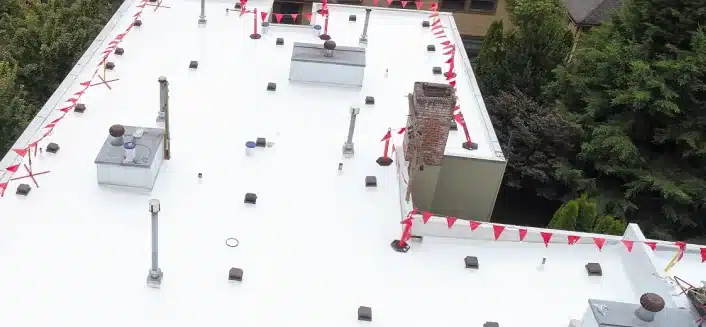
Commercial Roofing Solutions cover TPO, EPDM, modified bitumen, and metal systems and outline the factors to consider when selecting a system for a commercial building. This guide covers every major commercial roofing option, how to evaluate contractors, and what to expect from a commercial roof replacement.
Table of Contents
- Why Commercial Roofing Decisions Are High-Stakes
- Common Commercial Roofing Systems in Florida
- Comparing Commercial Roofing Materials
- Florida Code Requirements for Commercial Roofing
- Signs Your Commercial Roof Needs Attention
- How to Evaluate a Commercial Roofing Contractor
- Commercial Roofing Maintenance Best Practices
- Hytz Roofing's Commercial Roofing Services
Choosing the Right Commercial Roofing Solutions for Your Property
When it comes to maintaining a commercial property, one of the most consequential decisions you will make is selecting the right roofing system. The roof is the first line of defense against environmental elements, protecting your business, employees, assets, and inventory. In Tampa Bay's climate — with its hurricane threats, intense UV radiation, and heavy seasonal rainfall — the stakes are even higher.
Unlike residential roofing, commercial roofing involves larger surface areas, different structural requirements, and roofing systems specifically engineered for flat or low-slope applications. Understanding the options available, how they perform in Florida's conditions, and what to look for in a commercial roofing contractor is essential to making a sound investment. For best practices, consult the NRCA.
Why are commercial roofing decisions considered high-stakes?
Commercial roofing decisions are high-stakes because a roof failure can lead to significant business interruption, inventory loss, structural damage, and substantial financial and liability consequences.
A commercial roof failure is not just an inconvenience — it can mean business interruption, inventory loss, structural damage, and significant liability exposure. The financial consequences of a poorly specified or improperly installed commercial roof can far exceed the cost of the roof itself.
In Florida, commercial roofing decisions are complicated by:
- Hurricane exposure — The Insurance Institute for Business & Home Safety (IBHS) provides research and resources on hurricane resilience. commercial buildings must meet Florida Building Code wind resistance requirements Florida Building Code, which are among the most stringent in the country
- Flat roof drainage — most commercial buildings have flat or low-slope roofs that require carefully designed drainage systems to handle Florida's intense rainfall
- UV degradation — Florida's solar radiation accelerates the aging of roofing membranes, making material selection and maintenance schedules critical
- Energy costs — commercial buildings have large roof surfaces, and the thermal performance of the roofing system directly affects cooling costs in Florida's hot climate
Common Commercial Roofing Systems in Florida
Several roofing systems are commonly used on commercial buildings in the Tampa Bay area. Each has distinct performance characteristics, installation requirements, and maintenance needs:
TPO (Thermoplastic Polyolefin) is currently the most widely installed commercial roofing membrane in the United States. TPO is a single-ply membrane that reflects UV radiation, reducing cooling costs. It is heat-welded at seams, creating a watertight bond, and is available in white, grey, and tan. TPO is lightweight, relatively affordable, and performs well in Florida's climate.
EPDM (Ethylene Propylene Diene Monomer) is a synthetic rubber membrane that has been used in commercial roofing for decades. EPDM is highly durable, resistant to UV and ozone degradation, and performs well in temperature extremes. It is typically black, which absorbs heat — a consideration in Florida's climate. White-coated EPDM is available for improved energy performance.
Modified Bitumen is an asphalt-based system that has been modified with polymers for improved flexibility and durability. It is installed in multiple layers, providing redundant waterproofing. Modified bitumen is well-suited to Florida's climate and is a common choice for re-roofing over existing built-up roofing systems.
Metal Roofing is increasingly used on commercial buildings, particularly standing seam systems. Metal roofing offers exceptional wind resistance, longevity of 40–70 years, and good energy performance with reflective coatings. It is well-suited to Florida's hurricane zone.
Built-Up Roofing (BUR) is a traditional multi-layer system using alternating layers of bitumen and reinforcing fabric. BUR systems are durable and provide excellent waterproofing, but they are heavier than modern single-ply systems and require more labor to install.
Comparing Commercial Roofing Materials
| System | Lifespan | Wind Resistance | Energy Performance | Relative Cost |
|---|---|---|---|---|
| TPO | 15–25 years | Good (with proper fastening) | Excellent (reflective) | Moderate |
| EPDM | 20–30 years | Good | Moderate (black absorbs heat) | Moderate |
| Modified Bitumen | 15–20 years | Good | Moderate | Moderate |
| Metal (Standing Seam) | 40–70 years | Excellent | Good (with coating) | Higher |
| Built-Up (BUR) | 15–30 years | Good | Moderate | Moderate–Higher |
For Tampa Bay commercial properties prioritizing energy efficiency and hurricane resistance, TPO and standing seam metal are typically the strongest performers.
Florida Code Requirements for Commercial Roofing
Florida's Building Code imposes specific requirements on commercial roofing systems, particularly in coastal counties and the High Velocity Hurricane Zone (HVHZ) that covers Miami-Dade and Broward counties Miami-Dade County. Key requirements include:
- Wind uplift resistance — roofing systems must be designed and installed to resist the wind uplift forces specified for the building's location and exposure category
- Product approval — roofing materials used in Florida must carry Florida Product Approval (FPA) for the specific application
- Permitting and inspection — all commercial roofing work requires permits and must pass building department inspections
- Contractor licensing — commercial roofing contractors must hold a Florida State Roofing License (CCC or CBC)
Working with a licensed, experienced commercial roofing contractor ensures that your project meets all applicable code requirements and that the installation is properly documented.
What are the key signs that your commercial roof needs attention?
Key signs include ponding water, membrane blistering, seam separation, flashing failures, interior water stains, and the roof's age exceeding 15 years.
Commercial roofs often fail gradually, with problems developing over months or years before a catastrophic failure occurs. Watch for these warning signs:
- Ponding water — water that remains on the roof surface 48 hours after rainfall indicates drainage problems that accelerate membrane degradation
- Membrane blistering or bubbling — indicates moisture trapped beneath the membrane, which will eventually cause delamination
- Seam separation — failed seams are the most common point of water entry in single-ply systems
- Flashing failures — deteriorated or improperly installed flashing at penetrations, walls, and drains is a primary source of leaks
- Interior water stains — visible evidence that water is already entering the building
- Age over 15 years — most commercial roofing systems should be inspected annually once they reach 15 years of age
How to Evaluate a Commercial Roofing Contractor
Selecting the right contractor for a commercial roofing project requires more due diligence than a residential project. Key evaluation criteria include:
- Florida CCC or CBC license — verify through the DBPR website
- Commercial roofing experience — ask for references from comparable commercial projects in the Tampa Bay area
- Manufacturer certification — certified installers have access to enhanced warranty products and are trained on proper installation techniques
- Project management capability — commercial projects require coordination with building occupants, scheduling around business operations, and detailed project documentation
- Insurance coverage — verify adequate general liability and workers' compensation coverage for the project scope
Commercial Roofing Maintenance Best Practices
Proactive maintenance is the most cost-effective way to extend the life of a commercial roofing system. A structured maintenance program should include:
- Bi-annual inspections — spring and fall inspections to identify and address developing problems before they become failures
- Post-storm inspections — after any significant weather event, inspect the roof for damage, debris accumulation, and drainage blockages
- Drain and scupper cleaning — keeping drains clear prevents ponding water that accelerates membrane degradation
- Seam and flashing checks — regular inspection of seams, flashings, and penetrations where failures most commonly originate
- Documentation — maintaining records of inspections, repairs, and maintenance activities supports warranty claims and helps track the roof's condition over time
Hytz Roofing's Commercial Roofing Services
Hytz Roofing provides comprehensive commercial roofing services for Tampa Bay businesses, including:
- New commercial roof installations (TPO, EPDM, modified bitumen, metal)
- Commercial roof replacements and re-roofing
- Emergency leak repairs and storm damage restoration
- Preventive maintenance programs and annual inspection contracts
- Insurance claim documentation and support
Our team holds Florida State Roofing License #CCC1332551 and has experience with commercial projects ranging from small retail buildings to large industrial facilities. Every commercial project begins with a thorough inspection and a detailed written proposal.
Contact Hytz Roofing to schedule a commercial roof assessment.
Related Resources: Commercial Roofing Services | Storm Damage Restoration | Roof Inspection Tampa | Cost Guide | Get a Free Estimate